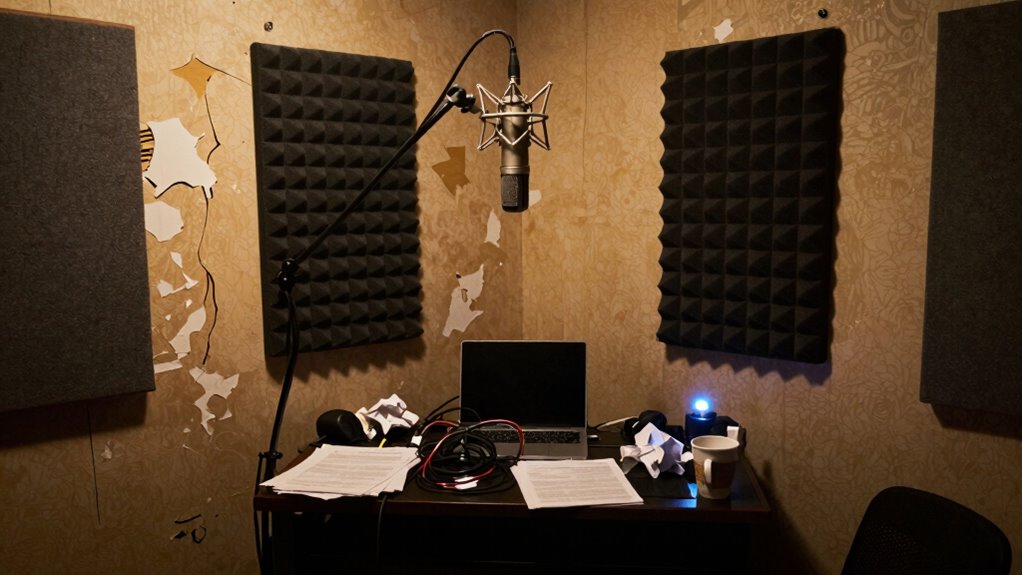

Small rooms can trick you into thinking you’re getting professional sound because size alone doesn’t determine quality. Improper acoustics and reflections can make a space seem less capable, but with proper treatment like bass traps and diffusers, a small room can produce clear, accurate mixes. Larger spaces often cause unwanted echoes, which mislead many into thinking bigger is better. If you want to understand how to make your small room work effectively, keep exploring these concepts further.

Get audio and creator gear delivered free with Prime
- Fast, free delivery on millions of items
- Prime Video, Amazon Music and more included
- Member-only deals all year
Key Takeaways
- Small rooms can sound professional with proper acoustic treatment, despite common misconceptions.
- Reflections and standing waves in small spaces can be managed effectively, not necessarily indicating poor quality.
- Larger rooms often introduce unwanted echo and low-frequency issues, making them not inherently better.
- Sound clarity depends more on acoustic design and treatment than on room size alone.
- Properly treated small rooms can produce accurate mixes that translate well across different listening systems.
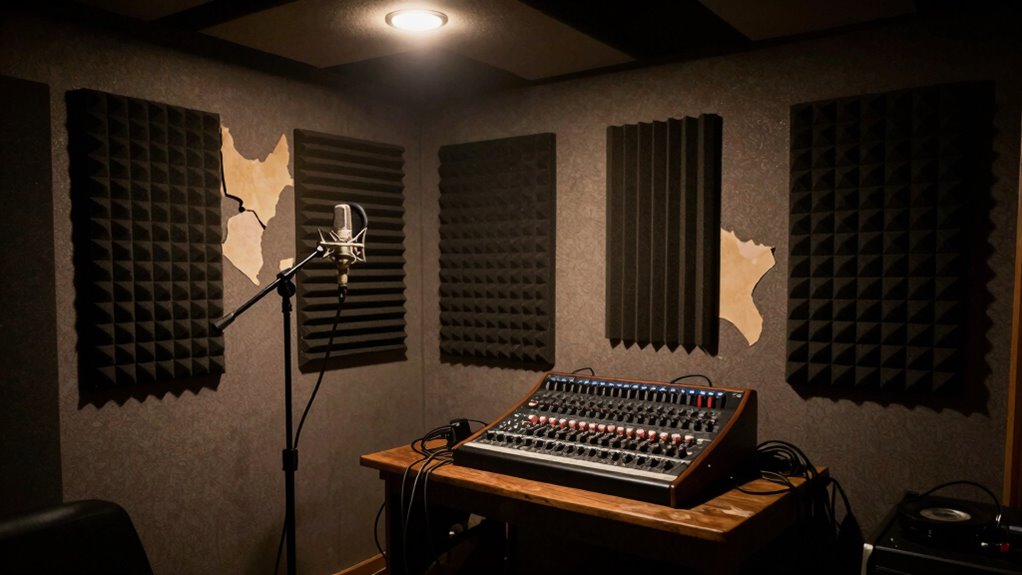
Have you ever wondered if the size of a recording room truly reflects the quality of your sound? It’s a common question among producers, especially when working with small spaces. The truth is, room size alone doesn’t determine how good your recordings will sound. What really matters is *room acoustics*—the way sound behaves within your space. Many producer misconceptions stem from thinking that a larger room automatically equals better sound or that a small room can’t produce professional-quality recordings. But that’s not the case. Small rooms can sound fantastic if you understand how to manage acoustics effectively.
Room acoustics influence everything from clarity to balance in your mix. When you record in a small space, you might notice issues like muddiness or excessive reverberation. These aren’t necessarily linked to the room’s size but to how sound waves bounce and interact within it. Surfaces reflect sound differently depending on their materials, and if you don’t treat your space properly, those reflections can cause comb filtering, standing waves, or uneven frequency responses. This results in a misleading sense of how your mix will translate on other systems. So, a small room can deceive you into thinking your sound is inferior, when in reality, it’s just a matter of proper acoustic treatment. Understanding room acoustics can help you make smarter decisions about your space. Additionally, using acoustic treatment techniques tailored to your room size can dramatically improve your monitoring accuracy. Knowing how sound reflections behave in confined spaces can help you optimize your setup more effectively.
Proper acoustic treatment prevents reflections and ensures your small space delivers accurate, professional-quality sound.
Many producers hold misconceptions that larger rooms are always better because they seem to provide a more “natural” sound. However, bigger spaces can introduce their own problems, like unwanted echo or difficulty managing low-end frequencies. Small rooms, with the right acoustic treatment, can actually give you tight, controlled sound that’s easier to manage. The key is understanding how to optimize your space—adding bass traps, diffusers, and absorbers to tame reflections and improve sound clarity. These adjustments help you hear your recordings more accurately, giving you a true sense of what’s happening sonically.
Ultimately, the size of your room doesn’t have to limit your creativity or the quality of your recordings. It’s all about how you approach *room acoustics* and dispel *producer misconceptions*. A small space, when treated correctly, can produce mixes that translate well across all playback systems. Don’t let size fool you into thinking your room isn’t capable of professional results. Instead, focus on acoustic design and learn how to make your space work for you. Good sound isn’t about room dimensions; it’s about understanding and controlling the acoustic environment you create.
Products Worth Considering

Jackery Explorer 2000 v2 Portable Power Station with Two 200W Solar Panels

DJI Osmo Mobile 7P with Mic Mini TX (Infinity Black) Gimbal Stabilizer

Apple iPad Air (2025) 13‑inch Wi‑Fi 256 GB – Space Gray (M3 chip)
As an affiliate, we earn on qualifying purchases.
Frequently Asked Questions
How Can I Tell if My Room’s Acoustics Are Misleading Me?
You can tell if your room’s acoustics are misleading you by performing room calibration and listening for acoustic illusions. Use measurement tools or software to analyze frequency response and reverberation times, ensuring accurate calibration. If your mixes sound great in your room but not elsewhere, acoustic illusions might be at play. Trust your measurements over your ears alone, and consider treating your space to reduce misleading reflections and resonances.
What Are Common Signs of a Distorted Listening Environment?
You might notice your room’s acoustics playing tricks, like a funhouse mirror distorting reality. Signs include uneven sound, with certain frequencies booming or vanishing. If your room isn’t symmetrical or has excessive sound reflections, it’s like listening through a warped glass. These issues can mask true mixes, making you think your sound is perfect when it’s not. Trust your ears, and address room symmetry and sound reflections to get a clearer picture.
Do Small Room Issues Affect Music Mixing Accuracy?
Yes, small room issues can profoundly affect your music mixing accuracy. Limited space impacts how sound waves behave, making room size essential. Poor speaker placement in a small room causes uneven sound distribution and early reflections, distorting your perception of the mix. To improve accuracy, optimize speaker placement and consider acoustic treatments, ensuring your monitoring environment accurately reflects your mix, regardless of the room’s size.
Can Room Treatments Fully Correct Acoustic Distortions?
Room treatments can’t fully fix acoustic distortions—they’re like putting a band-aid on a sinking ship. You might reduce problematic bass nulls and tame reflection points, but some issues stubbornly persist. Proper placement of bass traps and diffusers helps, yet complete correction remains elusive. While treatments improve sound clarity, they can’t eliminate every reflection or null, so trust your ears and keep experimenting for the best results.
How Often Should I Reassess My Room’s Acoustic Properties?
You should reassess your room’s acoustic properties whenever you change room dimensions or adjust speaker placement. Regular checks every few months help you identify new issues and fine-tune treatments. As your setup evolves, acoustics can shift, affecting sound accuracy. Keep an eye on how your room responds, especially after modifications, to guarantee your mixes stay balanced and true to the source.
Conclusion
In the end, small rooms often wear masks, whispering false promises to producers. They seem cozy and perfect, but beneath that surface, they hide limitations that can distort your vision. Don’t let their charm deceive you—like a mirage in the desert, they promise more than they can deliver. Stay vigilant, measure carefully, and trust your instincts. Only then can you see through the illusion and create something truly great, no matter the size of the space.