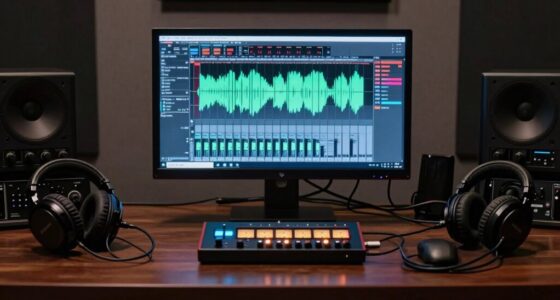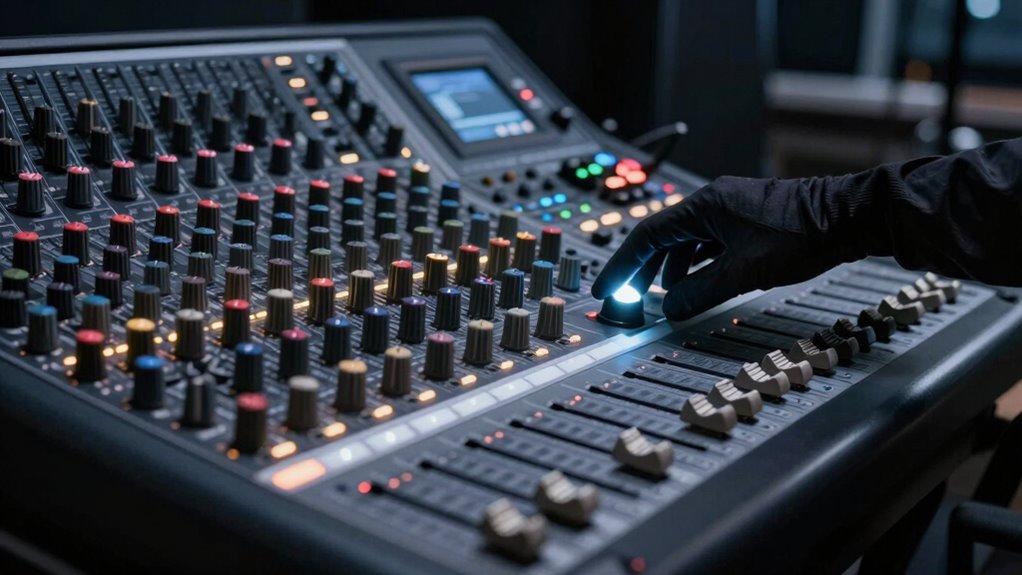

Relying on the master bus to fix all your mix flaws can hurt your track’s transparency and emotional impact. Overusing compression and limiting on the master can flatten dynamics and dull the mix’s vibrancy. It’s tempting to do it for efficiency, but this often masks issues that need addressing earlier. To get a clearer, more lively sound, it’s better to fix problems during the mixing stage and consider analog summing. Keep going to discover how to improve your process further.

Get audio and creator gear delivered free with Prime
- Fast, free delivery on millions of items
- Prime Video, Amazon Music and more included
- Member-only deals all year
Key Takeaways
- Relying on the master bus to fix flaws masks issues that should be addressed earlier, reducing mix transparency.
- Overcompression and limiting on the master flatten dynamic range, diminishing punch and emotional impact.
- Using the master bus for fixes can lead to lifeless, overly processed sound rather than a vibrant, natural mix.
- Fixing problems late encourages neglect of proper gain staging, EQ, and dynamic control during initial stages.
- Proper mixing involves addressing issues early and using analog summing to preserve nuance and musicality.
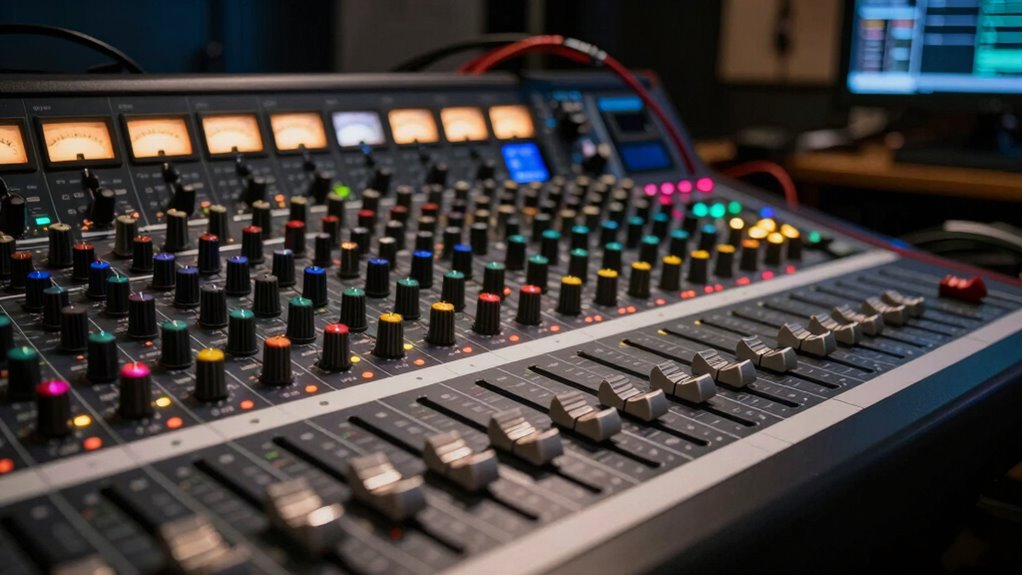
Have you ever relied on the master bus to fix every flaw in your mix? It’s a common temptation, especially when you’re trying to streamline your workflow or when your mix sounds close but not quite right. But this approach can mask issues that should be addressed earlier in the process, leading to a less transparent and less dynamic final product. One of the key issues with fixing everything on the master bus is that it often involves overusing compression or limiting, which can flatten the dynamic range of your mix. When you push your master too hard, you risk losing the natural punch and emotional impact that come from a well-preserved dynamic range. Instead of enhancing your mix, you might be dulling it, making it sound lifeless or overly processed.
Analog summing plays a significant role in this equation. Many engineers prefer analog summing because it can add warmth, depth, and a certain musicality to a mix that’s often hard to achieve with digital summing alone. When you rely solely on the master bus for fixing issues, you miss out on the subtle nuances that analog summing can bring. These nuances help preserve the integrity of your sounds and prevent your mix from sounding overly compressed or “glued” together in a way that sacrifices clarity. Using analog summing earlier in the process allows each element to retain its character and dynamic flexibility, which ultimately results in a more balanced and vibrant final mix.
Furthermore, understanding the importance of dynamic range preservation can help you make smarter decisions during the mixing process. Focusing too much on the master bus also encourages a mindset where you’re constantly trying to fix problems after they’ve been created, rather than addressing them at the source. This can lead to a cycle of over-processing, where you’re constantly chasing your tail instead of making meaningful adjustments during tracking, editing, or mixing. When you try to fix everything in the final stages, you risk introducing artifacts or unintended side effects that diminish the overall quality of your work. It’s better to catch issues early and make mindful decisions about gain staging, EQ, and dynamic control throughout the mix process.
In the end, the master bus shouldn’t be your catch-all for problems. Instead, use it as a destination for final polishing, not a crutch for fixing fundamental flaws. By paying attention to how you manage dynamic range and incorporating analog summing techniques earlier on, you’ll create mixes that sound more lively, transparent, and true to your artistic vision. This approach helps ensure your final product isn’t just loud, but also rich in detail and emotional impact.
Products Worth Considering

Samsung 27-Inch Odyssey QD-OLED G8 4K 240Hz Gaming Monitor

Samsung 27-inch Odyssey OLED G6 QD-OLED QHD Gaming Monitor

Sonos Era 100 SL Compact Microphone-Free Speaker, Black
As an affiliate, we earn on qualifying purchases.
Frequently Asked Questions
How Does Fixing Everything on the Master Bus Affect Mix Clarity?
Fixing everything on the master bus can hurt mix clarity by reducing stereo imaging and dynamic range. When you heavily process the master, it can squash the stereo spread, making the mix sound less open and spacious. It also diminishes dynamic range, causing sounds to blend together and lose punch. Instead, focus on balancing individual tracks first, so your master bus processing enhances clarity without compromising stereo imaging or dynamics.
What Are Common Mistakes When Applying Master Bus Processing?
A stitch in time saves nine, and rushing master bus processing can cause more harm than good. You might overdo stereo imaging or disrupt frequency balancing, making your mix sound unnatural or muddy. Common mistakes include applying heavy compression without listening carefully, boosting or cutting frequencies excessively, and neglecting the overall balance. Always aim for subtle adjustments, ensuring your final mix remains clear, natural, and well-balanced across all playback systems.
Should Mastering Be Done Before or After Fixing Issues in the Mix?
You should fix issues in the mix before mastering, as this guarantees your dynamic range and stereo imaging are balanced. Addressing problems early helps prevent your master from becoming overly compressed or washed out. Once your mix sounds clear and well-defined, mastering then enhances the overall sound without masking flaws. This approach guarantees a polished result, preserving the integrity of your dynamic range and stereo image throughout the process.
How Can I Tell if My Master Bus Processing Is Overdone?
You can tell your master bus processing is overdone if the stereo imaging feels unnatural or overly wide, and the dynamic range seems squashed or lifeless. Trust your ears—if the music loses its punch or sounds less lively, you’ve gone too far. Subtle adjustments preserve clarity and balance, so monitor how these changes affect the overall sound. Always compare with unprocessed tracks to guarantee your processing enhances rather than harms your mix.
What Are Alternative Methods to Fixing Issues Without Using the Master Bus?
Instead of fixing issues solely on the master bus, try using parallel compression to subtly enhance your mix’s body without overprocessing. Adjust stereo imaging by panning individual elements or applying stereo widener effects, which can improve clarity and space. These methods let you target specific problems more precisely, maintaining overall mix balance and avoiding the risk of overdoing effects on the master bus.
Conclusion
So, next time you’re tempted to fix everything on the master bus, remember: sometimes, less really is more. You might think you’re saving your mix with a quick fix, but you’re probably just masking problems that could be better addressed elsewhere. Ironically, the more you try to fix in the master, the more you risk turning your mix into a muddy mess. Sometimes, letting go and fixing things earlier actually saves you time—and a lot of frustration.