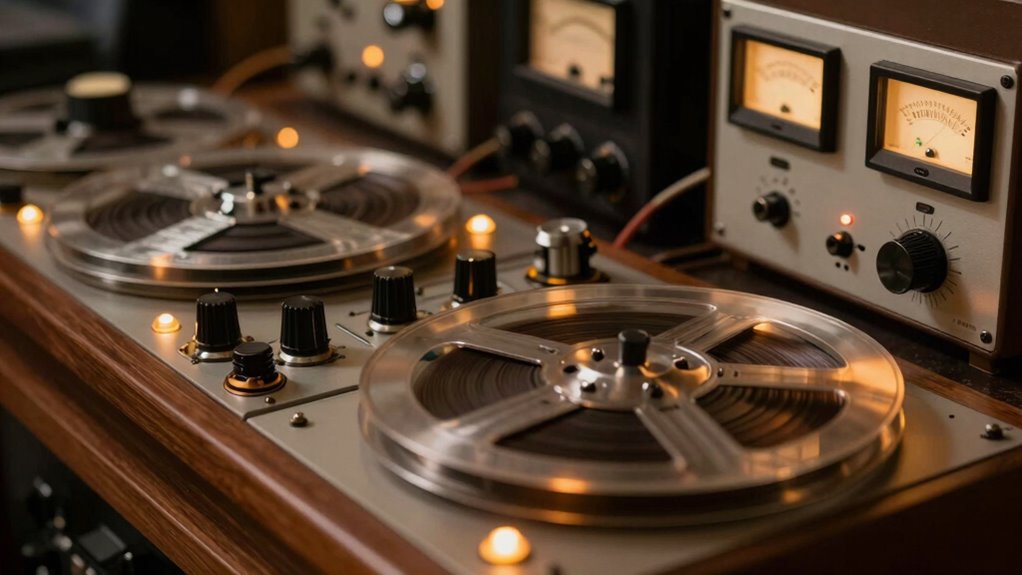

Choosing your recording chain is the pivotal decision that shapes your entire project’s sound and character. Whether you lean toward warm, organic analog gear or prefer the clarity and precision of digital systems, your choice impacts everything from capture to final mix. Blending both can release creative potential. Understanding how each component influences your sound helps you make better decisions. Keep exploring to discover how to optimize your setup for your unique artistic vision.
Key Takeaways
- Selecting between analog and digital gear early influences the entire sound character and workflow of the project.
- Choosing high-quality microphones and preamps impacts the initial sound capture and downstream processing.
- Deciding on a hybrid or pure system determines the balance between warmth, clarity, and editing flexibility.
- Properly configuring the signal flow ensures optimal sonic quality and minimizes noise or distortion.
- Making intentional upstream equipment choices shapes the final artistic expression and professional sound.
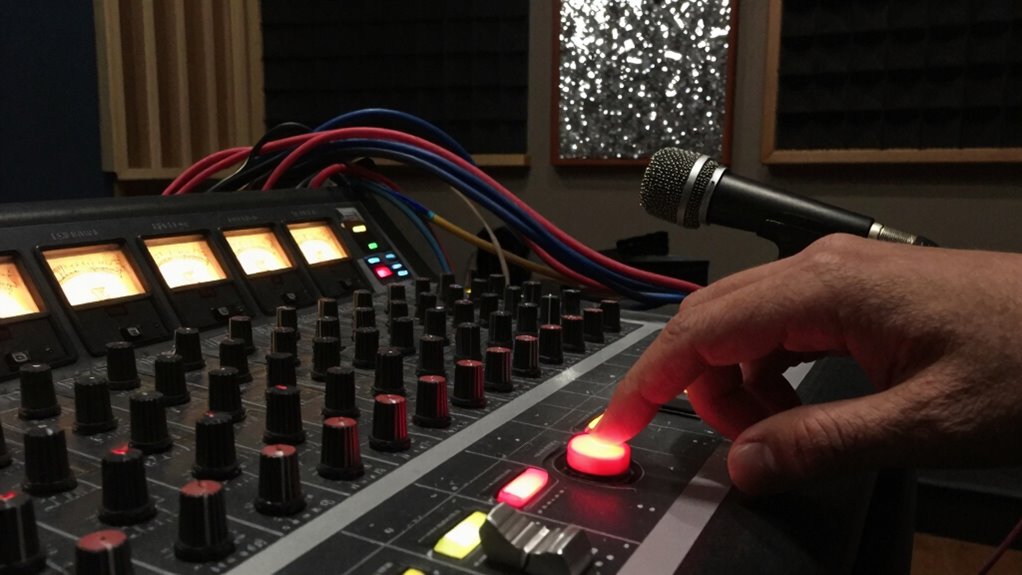
Have you ever wondered how audio recordings maintain clarity and quality from start to finish? The secret lies in the recording chain you choose and how you set it up. This decision influences every step of your process, from capturing the sound to delivering the final product. One of the most critical choices involves balancing analog warmth with digital precision. Analog gear, like tape decks or tube preamps, injects a rich, textured sound that feels warm and organic. Many engineers swear by this warmth, as it adds a layer of depth and character that digital systems often lack. On the other hand, digital equipment offers unmatched precision, clarity, and consistency, making it easier to edit, process, and preserve your recordings without degradation.
Choosing your recording chain influences sound clarity and character from start to finish.
When you start with analog gear, you’re embracing a certain musicality and vibe that can elevate your recordings. The subtle imperfections and natural saturation of analog equipment contribute to a sense of immediacy and intimacy, which many artists and producers find irresistible. However, this warmth can sometimes introduce noise or slight variations, which might not be suitable for all projects. Conversely, digital systems excel at capturing every detail with pinpoint accuracy, allowing you to edit with precision, add effects, and ensure a clean, transparent sound. This clarity is invaluable when you need consistency across multiple takes or want to craft a polished, professional final product.
Your choice impacts more than just sound quality—it shapes your workflow and creative process. If you opt for an analog approach, you might find yourself working more intentionally, embracing the imperfections as part of the artistic expression. With digital precision, you can work faster and more flexibly, making adjustments on the fly and experimenting without fear of damaging the original recording. The key is understanding how these characteristics influence your sound and project goals. Some producers blend both worlds, capturing with analog warmth and then transferring to digital for editing and mixing. This hybrid approach maximizes the best qualities of each, enabling you to create recordings that are both emotionally rich and technically flawless.
Additionally, understanding how the recording chain affects the overall quality can help you make more informed decisions tailored to your specific needs. This includes knowing how the signal flow impacts the final outcome and how each component contributes to the sonic character. Exploring the components of the recording chain, such as microphones, preamps, converters, and monitors, can further refine your setup and improve your sound. Ultimately, the recording chain decision you make is foundational. It sets the tone for the entire project and can transform your raw inputs into a compelling, professional-sounding piece. Whether you lean toward analog warmth or digital precision—or find a way to combine both—you control the sonic destiny of your recordings. Making informed choices here guarantees your sound remains clear, expressive, and true to your artistic vision from start to finish.
high quality condenser microphone
As an affiliate, we earn on qualifying purchases.
As an affiliate, we earn on qualifying purchases.
Frequently Asked Questions
How Does the Recording Chain Impact Overall Sound Quality?
Your recording chain considerably impacts sound quality through proper microphone placement and acoustic treatment. When you position your microphone correctly, you capture clearer sound with less noise and unwanted reflections. Acoustic treatment reduces echo and background noise, ensuring your recordings sound professional. Together, these choices shape the overall tone and clarity, making your recordings more polished and engaging. Pay attention to these details, and you’ll notice a marked improvement in your sound quality.
What Are Common Mistakes in Choosing the Recording Chain?
You often make mistakes in choosing your recording chain by ignoring noise reduction and equipment compatibility. Overlooking noise reduction can lead to unwanted background sounds, while incompatible gear causes signal loss or distortion. Always check that your microphones, preamps, and interfaces work well together and prioritize noise reduction features. These mistakes compromise sound quality, so carefully select equipment that complements each other and minimizes noise for the best results.
How Do Different Recording Chain Setups Affect Different Genres?
Different recording chain setups influence genres by emphasizing genre-specific techniques and ensuring instrument compatibility. For example, vocals in pop benefit from clean preamps and EQ, while jazz might need warm tube amplifiers to capture subtle nuances. Metal recordings often rely on high-gain microphones and powerful DI boxes for distorted guitars. Your choice of gear shapes the sound, so tailoring your recording chain to the genre helps achieve authentic, professional results.
What Are the Cost Considerations for Upgrading the Recording Chain?
Upgrading your recording chain is like planting a seed—you need to take into account costs and compatibility carefully. Budget constraints shape your options, guiding you toward essential upgrades without overspending. Equipment compatibility is vital; mismatched gear can turn a smooth workflow into a tangled mess. Prioritize upgrades that yield the most noticeable quality improvements, and plan your investments wisely to guarantee your gear works harmoniously, saving you headaches and money down the line.
How Can I Troubleshoot Issues Related to the Recording Chain?
To troubleshoot recording chain issues, start by checking your microphone placement to guarantee it’s ideally positioned for clear sound. Next, verify your equipment connections and settings. Add acoustic treatment to your space to reduce unwanted noise and reflections, which can cause problems. If issues persist, test each component individually, like cables and preamps, to isolate the source. Regularly monitor your setup for changes that could impact sound quality.
Conclusion
Remember, choosing the right recording chain isn’t just about equipment—it’s about shaping the entire sound of your project. You might think upgrading is unnecessary or too costly, but investing now can save you time and frustration later. Don’t settle for mediocre sound; your audience will notice the difference. In the end, every decision you make upstream has the power to elevate your work and truly make your recordings stand out.