📊 Full opportunity report: AI Report Writing For Private Investigators And Legaltech on IdeaNavigator AI — validation score, market gap, and execution plan.

Get audio and creator gear delivered free with Prime
- Fast, free delivery on millions of items
- Prime Video, Amazon Music and more included
- Member-only deals all year
TL;DR
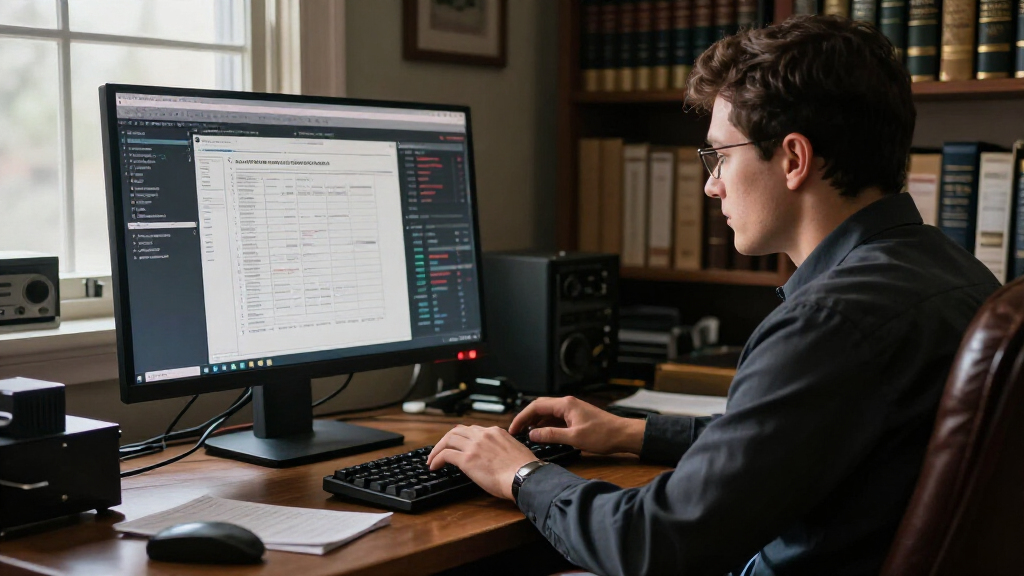
IdeaNavigator AI has outlined a proposed report-writing tool for independent private investigators and small firms. It would organize field notes, timestamped photos and GPS tracks into a chronological draft, but its courtroom suitability and time savings have not been demonstrated; the suggested test is to review reports from ten firms with attorneys.
IdeaNavigator AI has proposed an AI report-writing workflow for independent private investigators and small firms, aimed at turning field notes, timestamped photos and GPS logs into chronological draft reports. The concept is not presented as a released product or a proven legal tool: its proposed next step is to test reports from ten firms with attorneys and measure time saved per report, according to the company’s proposal.
According to IdeaNavigator AI’s proposal, the system would take in several records investigators may collect during surveillance: written field notes, timestamped photographs and GPS tracks. It would arrange observations chronologically, produce a report in a firm’s template, refer to supporting exhibits and flag gaps in the timeline. The proposal includes a human review pass rather than treating generated text as a finished filing.
IdeaNavigator AI describes the underlying business problem as the time investigators spend assembling formal narratives after surveillance. The proposal says those hours can go unbilled and that report quality can affect whether casework holds up in court. It provides no independent figures on writing time, billing practices or court outcomes.
The proposal suggests a monthly subscription per seat, with pricing tiers tied to report volume. To assess whether the idea works, it calls for converting recent case files from ten firms into reports, having attorneys review their admissibility quality and measuring time saved per report. IdeaNavigator AI identifies no participating firms, attorney assessments, pricing or product launch date.
AI report writing for investigators
IdeaNavigator AI has proposed a tool to turn field records into chronological report drafts. Its courtroom suitability and time savings have not been demonstrated.
From records to a draft
The proposed workflow organizes investigation materials for human review.
Use written notes, timestamped photos and GPS tracks.
Arrange observations, reference exhibits and flag timeline gaps.
Prepare a draft in the firm’s template for human review.
Potential value and open questions
Less drafting work?
Time saved could free staff for other work, but no savings have been measured.
Evidence must stay clear
Errors in chronology or exhibit links could undermine a report’s credibility.
Safeguards unspecified
Retention, access controls, security and model training use are not described.
Proposed validation
The company’s suggested exercise would examine both legal quality and drafting efficiency.
- Generate reports from recent case files at ten firms.
- Ask attorneys to assess report quality.
- Measure time saved per report.
- No results or participating firms are identified.
- Attorney review alone would not prove acceptance in every court.
- Pricing and launch timing are unspecified.
Testing Time Savings and Legal Quality
For small investigation firms, report preparation is a practical operational challenge: it follows fieldwork, draws on records in different formats and may consume time that could otherwise go to billable work. If a tool reliably reduces drafting time while preserving accurate chronology and links to evidence, it could make the administrative part of an investigation more efficient. IdeaNavigator AI’s proposal supplies no results showing that it does so.
The legal dimension makes accuracy more consequential than simple document formatting. A draft that misstates a time, omits an observation or points to the wrong exhibit could create problems for a report’s credibility. The attorney review suggested by IdeaNavigator AI is therefore a meaningful part of validation, but an assessment of generated reports would not by itself establish that they are admissible or accepted in every court. Those questions depend on the case and applicable legal standards.
The idea also raises a purchasing question for small firms: whether a subscription would cost less than the staff time it saves. Measuring time per report and testing output quality, as the proposal recommends, could help firms judge that trade-off. Until such findings are available, the commercial case remains a hypothesis rather than a demonstrated benefit.
Products Worth Considering

Apple AirPods Pro (2nd Generation) Wireless Earbuds with USB-C MagSafe Charging Case

Bose QuietComfort True Wireless Earbuds with Active Noise Cancellation, Bluetooth 5.3, USB-C Charging, IPX4, Black

Jackery Explorer 2000 v2 Portable Power Station, 2042Wh, 2200W
As an affiliate, we earn on qualifying purchases.
From Field Records to Draft Reports
IdeaNavigator AI places the proposed product within investigation services software, a category it describes as underserved by modern tools. Its focus is narrower than general-purpose AI writing: it targets one buyer group—independent investigators and small firms—and one recurring task, assembling a chronological report from observations and supporting records.
That narrow scope shapes the suggested minimum viable product. In the proposal, the tool would draw on specified inputs, preserve exhibit references, flag apparent timeline gaps and use the firm’s own report template, rather than generate an account from an open-ended prompt. The proposal also includes human review. These are design goals, not verified features of an available service.
The distinction matters because source records can be incomplete or inconsistent. A timestamped image or location log may help organize a sequence, but IdeaNavigator AI’s proposal does not specify how the software would handle conflicting timestamps, missing data, edits or uncertainty in handwritten notes. It also does not describe technical safeguards for sensitive case files. Those details would need to be addressed in product development and evaluation.
Accuracy, Admissibility and Data Handling
IdeaNavigator AI reports no test results or operating product, so it is not yet clear how accurately a generator could preserve events, timestamps and exhibit references across real case files. The proposed attorney review could identify concerns, but the proposal does not define the number or type of reviewers, the evaluation criteria or the meaning of “admissibility quality.”
The plan also leaves open how the tool would treat contradictory records, incomplete timelines or uncertain observations, and whether it would distinguish information taken directly from a record from text inferred by a model. IdeaNavigator AI provides no details about data retention, access controls, security, or whether firms’ case files would be used to train a model. These are important questions for work involving confidential investigations.
The proposal states no price, report-volume threshold or launch timeline, and provides no evidence that firms are willing to pay for the service. Its suggested ten-firm exercise is a validation plan, not a completed study; results could show that time savings or legal quality vary by firm and case.
A Ten-Firm Validation Test
IdeaNavigator AI outlines a next step of using recent case files from ten firms to generate reports, then asking attorneys to assess the output’s admissibility quality. The proposed exercise would also measure time saved for each report, providing a basis to compare drafting efficiency with review needs.
IdeaNavigator AI has announced no schedule or results. A useful account of any follow-up would need to explain how firms and cases were selected, what attorneys were asked to assess, how accuracy was checked against original records, and whether time spent reviewing and correcting drafts was included in the savings calculation. Until that work is reported, the proposal remains an early product concept rather than evidence that AI-generated investigator reports are ready for courtroom use.
Source: IdeaNavigator AI proposal
Key Questions
Is an AI report generator for private investigators available now?
The development described is a proposed product concept from IdeaNavigator AI. No available service or launch date is identified.
What would the proposed tool do?
According to IdeaNavigator AI’s proposal, it would organize field notes, timestamped photos and GPS tracks into a chronological draft, add exhibit references, flag timeline gaps and export the report in a firm’s template for human review.
Has the tool been shown to produce admissible reports?
No results are reported. IdeaNavigator AI’s proposal recommends attorney review as part of a future test, but that would not establish acceptance or admissibility in every case or court.
How would the idea be tested?
The validation proposed by IdeaNavigator AI is to turn recent case files from ten firms into reports, have attorneys review their legal quality and measure time saved per report. The test has not been reported as completed.
How might the service charge customers?
IdeaNavigator AI suggests a monthly per-seat subscription with tiers based on report volume. No prices or customer commitments are provided.
Source: IdeaNavigator AI