
You’ll notice closed-back headphones feel more isolated and immersive because their solid outer shell blocks out external sounds, creating a physical barrier around your ears. In contrast, open-back headphones allow air and sound to pass through vents, making the sound more natural and spacious but less private. These design choices greatly affect your listening experience, from sound clarity to noise control. If you want to understand how these differences impact your audio, keep exploring these key distinctions.
Key Takeaways
- Closed-back headphones create a physical barrier, resulting in a more isolated and intimate listening experience.
- Open-back headphones allow air and sound to pass through vents, producing a more natural and spacious sound.
- The structural design affects sound leakage, with closed-backs containing sound and open-backs allowing it to escape.
- Closed-back models often have less ambient sound, making them feel more enclosed, while open-backs feel more open and airy.
- Different sound management and external noise handling contribute to the distinct listening sensations of each type.
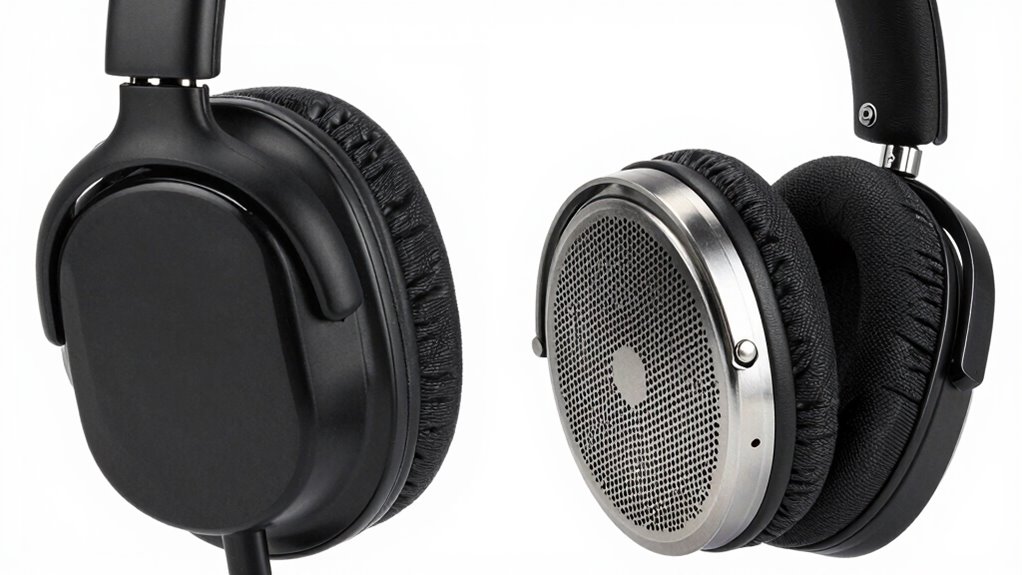
When choosing between closed-back and open-back headphones, understanding their fundamental differences can considerably impact your listening experience. These differences mainly revolve around how each type manages sound, which influences sound isolation and audio leakage. Closed-back headphones have a solid outer shell that completely enclosures the ear cups. This design creates a physical barrier, helping to block out external noise so you can immerse yourself in your music or audio without distractions. Because of this, they excel in sound isolation, making them ideal for noisy environments like public transit or busy offices. You won’t have to worry about external sounds bleeding into your listening, and others around you are less likely to hear what you’re listening to. The design also prevents audio leakage, meaning your music stays contained within the headphones, so you don’t disturb colleagues or fellow commuters. This makes closed-back headphones a popular choice for studio recording, gaming, or commuting. Studio dividers can further enhance your sound isolation in a recording environment. Open-back headphones, on the other hand, feature ear cups with perforations or vents, allowing air and sound to pass freely through the ear cups. This creates a very different listening environment. Because they don’t form a tight seal, open-back headphones don’t block out external noise well—they’re not suited for noisy settings. However, this openness markedly enhances the sound quality, especially in terms of spaciousness and natural acoustics. The sound feels more expansive, almost like listening to speakers in a room rather than headphones. Since the design doesn’t contain sound within the cups, audio leakage is inevitable. Others nearby can often hear what you’re listening to, which can be a drawback if privacy is important. But for home use, studio mixing, or casual listening in quiet environments, open-back headphones deliver a more authentic and immersive sound experience. A sound environment that promotes clarity and natural sound is a defining feature of open-back designs. Additionally, understanding the technology behind each can help you choose the best option for your needs. Recognizing these distinctions can help you select headphones that best suit your specific listening needs and environment. Moreover, being aware of modern design features can assist in selecting headphones that combine comfort with high audio fidelity.
closed-back headphones for noise isolation
As an affiliate, we earn on qualifying purchases.
As an affiliate, we earn on qualifying purchases.
Frequently Asked Questions
How Do Closed-Back Headphones Affect Sound Isolation?
Closed-back headphones enhance sound isolation by creating a sealed environment around your ears. This design reduces external noise, giving you better noise cancellation and allowing you to focus on your music or audio. It also improves sound quality by preventing sound leakage, so you hear clearer, more immersive audio. If you want to block out distractions, closed-back headphones are a great choice, especially in noisy settings.
Are Open-Back Headphones Better for Mixing and Mastering?
Open-back headphones are generally better for mixing and mastering because they offer superior soundstage enhancement, allowing you to hear more natural and spacious audio. While they don’t provide noise cancellation like closed-back models, their open design helps you identify subtle details and spatial cues more easily. This clarity makes them ideal for critical listening, where accurate sound representation is essential. However, they’re less suitable for noisy environments due to limited noise isolation.
Can Open-Back Headphones Cause Sound Leakage?
Yes, open-back headphones can cause sound leakage. Their design aesthetics prioritize open ear cups, which allow sound to escape and ambient noise to enter. This makes them less private and suitable for quiet environments. Also, you’ll notice price differences; open-back models often cost more due to their construction quality. Be aware that sound leakage can affect others nearby, so choose based on your environment and needs.
Which Type Is More Comfortable for Long-Term Wear?
Open-back headphones are generally more comfortable for long-term wear because they often feature better ergonomic design and lighter weight distribution. Their open design allows for more airflow, reducing heat buildup and pressure around your ears. You’ll notice less fatigue over extended periods, making them ideal if you wear headphones for hours. Closed-back models, while offering better noise isolation, tend to be heavier and less breathable, which can cause discomfort over time.
Do Closed-Back Headphones Have Better Bass Response?
Closed-back headphones generally have better bass response because they isolate sound more effectively, enhancing soundstage perception and making bass feel deeper and more powerful. Their design also boosts headphone durability, protecting internal components from dust and damage. This focused sound isolation not only improves bass but also provides a more immersive experience, especially in noisy environments. So, if you crave punchy bass and sturdiness, closed-back headphones are the way to go.
Conclusion
So, next time you pick between closed-back or open-back headphones, remember that their design influences more than just sound. Some say open-backs create a more natural, immersive experience because they mimic how we hear sounds in real life, while closed-backs isolate you better, making them great for privacy. The truth? It’s likely a mix—your preference depends on what kind of listening experience you crave. Experiment and see which one truly feels right for you.