


Your mix feels flat even when everything is loud because it likely lacks dynamic range and proper stereo separation. When loudness is overused, it causes compression, making the sound dull and lifeless, and reduces contrast between quiet and loud parts. Poor stereo imaging can also make your mix sound one-dimensional and confined. To fix this, focus on creating space through panning, maintaining contrast, and managing volume levels—if you keep exploring, you’ll discover how to bring your mixes to life.

Get audio and creator gear delivered free with Prime
- Fast, free delivery on millions of items
- Prime Video, Amazon Music and more included
- Member-only deals all year
Key Takeaways
- Excessive compression reduces dynamic contrast, making loud parts sound dull and lifeless.
- Narrow stereo imaging collapses the sense of space, resulting in a flat, mono-like sound.
- Lack of proper volume variation causes a squashed mix with little movement or interest.
- Poor acoustic treatment and visualization tools hinder accurate judgment of depth and balance.
- Insufficient use of panning and sound shaping techniques leads to a cluttered, unengaging mix.
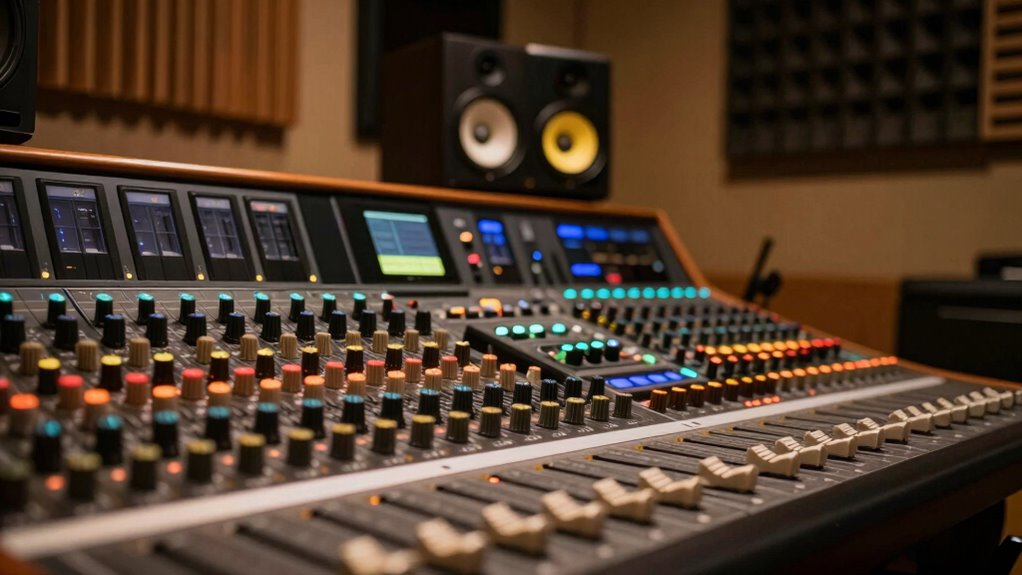
Have you ever noticed your mix sounds loud but still feels flat and uninspiring? This common frustration often boils down to issues with dynamic range and stereo imaging. When your mix lacks proper variation in volume, it becomes compressed and squashed, leaving little room for the music to breathe. This restriction makes your track sound loud but also dull and lifeless, because there’s no contrast between the quiet and loud moments. If your dynamic range is too narrow, even the loudest parts won’t stand out, making everything feel flat and monotonous. To fix this, you need to carefully manage your volume levels throughout the track, allowing certain elements to sit back while others come forward. This creates a sense of movement and interest that draws listeners in, even if the overall loudness is high. Proper dynamic range control is essential for maintaining a lively and engaging mix. Stereo imaging is equally important. If your mix lacks good stereo separation, it will sound narrow and confined, more like a mono signal than a full, immersive experience. Imagine the difference between listening to music through headphones that place instruments all around you versus a mix that’s centered and one-dimensional. When you improve stereo imaging, you give each element a distinct space, which adds depth and clarity. This not only makes your mix feel more lively but also prevents it from sounding cluttered and flat. Proper panning and placement of sounds across the stereo field help create a sense of width and dimension that engages the listener’s ear, making your music feel more dynamic and less static. Additionally, understanding the importance of projector technology can help you visualize and plan your mixing environment better, ensuring your setup supports high-quality sound reproduction. Using visualization tools can further enhance your ability to judge your mix accurately and make precise adjustments. An optimized listening environment with acoustic treatment can also significantly improve your ability to judge your mix accurately and achieve a more balanced sound. Achieving a balanced dynamic range combined with effective stereo imaging isn’t about cranking everything to maximum volume. It’s about thoughtfully shaping your sound so that each part has its place, with enough contrast to keep the listener interested. Use compression sparingly to control peaks without squashing the life out of your track. Experiment with panning to spread your sounds across the stereo field, ensuring each element has space to breathe. When you do this, you’ll notice your mix becomes more vibrant, even if the overall loudness remains the same. In the end, mastering these aspects transforms a flat, loud-sounding track into an engaging, compelling mix that captures attention and invites listeners to explore every detail.
Products Worth Considering

Samsung 27-inch Odyssey OLED G6 QD-OLED QHD Gaming Monitor

LG UltraGear 32GX850A-B 32-Inch 4K UHD Glossy OLED Gaming Monitor

LG 34GX90SA-W 34-inch Ultragear WQHD OLED Curved Gaming Monitor
As an affiliate, we earn on qualifying purchases.
Frequently Asked Questions
How Can I Tell if My Mix Has Enough Dynamic Range?
To tell if your mix has enough dynamic range, listen for a balanced frequency spectrum and harmonic richness. If your mix sounds overly compressed or flat, it likely lacks variation between loud and soft parts. You should notice clear contrast in volume and energy, with some moments feeling more intense and others more relaxed. Use your ears to identify these differences, ensuring your mix maintains natural dynamics without sounding dull or lifeless.
What Role Does Stereo Imaging Play in Making a Mix Sound Lively?
Stereo imaging plays a vital role in making your mix sound lively by enhancing spatial awareness and stereo width. When you widen the stereo field, instruments and vocals feel more distinct and immersive, creating a sense of depth and dimension. You actively shape this by panning and using stereo effects, which prevents your mix from sounding flat. A well-balanced stereo image keeps listeners engaged and makes your mix sound vibrant and alive.
Should I Use Automation to Improve Perceived Loudness?
Yes, using automation techniques can markedly improve perceived loudness in your mix. By subtly adjusting volume levels throughout the track, you create dynamic variation that keeps listeners engaged and makes your mix feel more lively. Automation helps emphasize key elements at the right moments, preventing your mix from sounding flat or monotonous, even when overall loudness is consistent. It’s a powerful tool to bring life and energy to your production.
How Does EQ Affect the Perceived “Flatness” of a Mix?
EQ influences perceived flatness by shaping the spectral balance of your mix. If certain frequencies are overly boosted or cut, it can create a dull or lifeless sound. Poor spectral balance also leads to frequency masking, where important elements get buried under others. To avoid this, carefully carve and boost frequencies to maintain clarity and punch, ensuring your mix feels lively and well-balanced rather than flat despite loudness.
Can Overly Compressed Tracks Make a Mix Feel Dull?
Overly compressed tracks are like a garden where all the flowers bloom equally; it flattens the natural variation, making your mix dull. Dynamic compression reduces contrast, and harmonic saturation can add warmth, but too much of either strips the life from your sound. When you overdo it, your mix loses its vibrancy, becoming monotonous. Balance compression wisely to preserve dynamics and keep your mix lively and engaging.
Conclusion
Remember, loudness isn’t everything—sometimes, less is more. If your mix feels flat despite everything being loud, it’s like trying to fill a cup that’s already overflowing; you lose clarity and balance. Focus on EQ, dynamics, and space to give each element room to breathe. Like a garden needs careful tending, your mix needs subtlety and patience. Keep refining, and soon your sound will bloom with vibrancy, proving that true power lies in quality, not just volume.



![The Power Of Dreams [War & Peas]](https://strongmocha.com/wp-content/uploads/2026/10/the-power-of-dreams-war-peas-featured-260x140.jpg "The Power Of Dreams [War & Peas] 37")