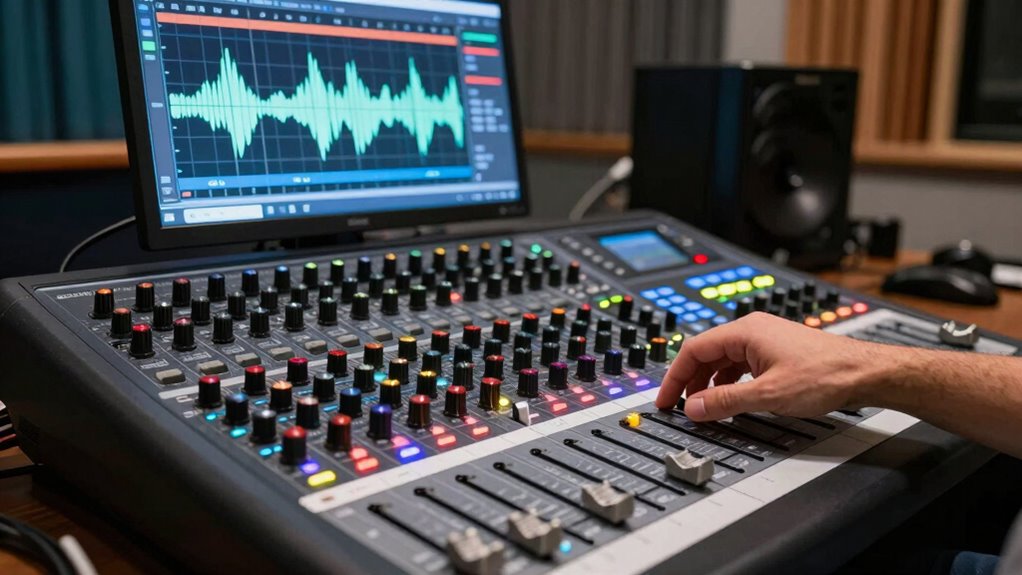

Many new producers mistake compression as just volume control, focusing only on reducing loud peaks. They often ignore that settings like attack and release shape the sound’s feel and emotion, not just loudness. Fast attack can dull transients, while slow attack preserves punch. Improper release times may cause unnatural pumping or sluggishness. If you understand how these parameters really work together, you’ll shape your sound more naturally and effectively—there’s more to discover if you keep exploring.

Get audio and creator gear delivered free with Prime
- Fast, free delivery on millions of items
- Prime Video, Amazon Music and more included
- Member-only deals all year
Key Takeaways
- New producers often focus solely on volume reduction rather than using compression to shape dynamics and emotional impact.
- They may misjudge attack and release settings, causing unnatural pumping or dulling of transients.
- Over-compression is common, leading to a squashed, lifeless sound instead of balanced dynamics.
- Many overlook how attack and release interact, affecting the natural feel and punch of the mix.
- Visual feedback tools are underused, making it harder to understand and refine compression parameters effectively.
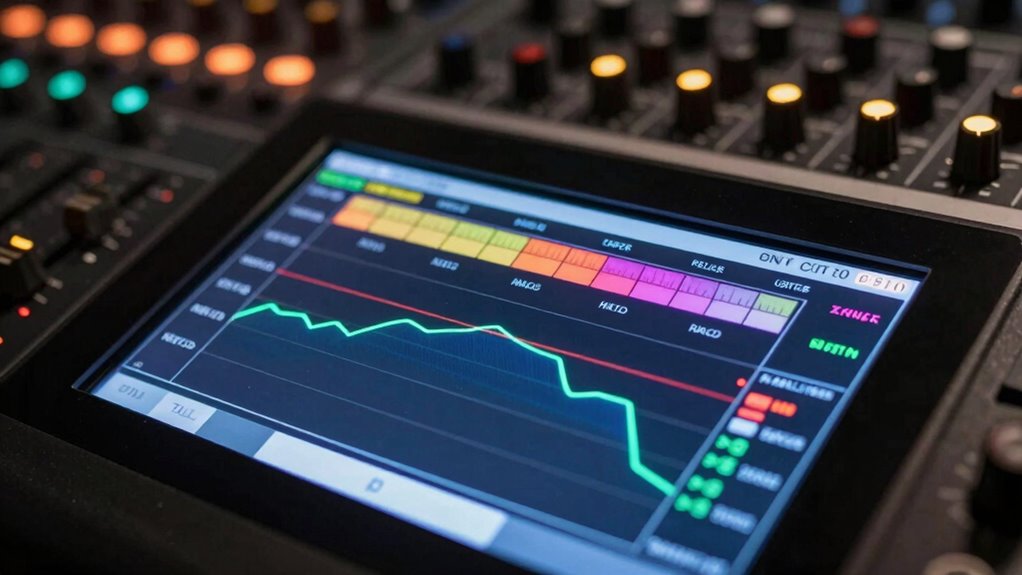
Many new producers struggle to understand compression settings because they often focus on the numbers without grasping what they actually do to the sound. Compression isn’t just about reducing volume; it’s about controlling the dynamic range—the difference between the loudest and softest parts of a track. When you set a compressor incorrectly, you risk squashing the natural dynamics that give a recording its life, or leaving it too loose, causing inconsistency. Instead of just aiming for specific ratio or threshold numbers, you should think about how compression will shape the sound’s overall feel and punch.
Focus on how compression shapes the sound’s feel and punch, not just the settings or volume reduction.
One of the most misunderstood aspects is the attack and release parameters. Attack controls how quickly the compressor responds when the sound exceeds the threshold, while release determines how fast it stops compressing once the signal drops below that threshold. If you set a fast attack, you’ll catch transients—those sharp, punchy peaks—immediately, which can smooth out the sound but might also dull it and remove its impact. Conversely, a slower attack allows transients to pass through, preserving the punch but risking some peaks slipping through uncontrolled. Similarly, with release, a fast setting can make the compression more noticeable, causing the sound to breathe unnaturally or pump, while a slow release keeps the compression more transparent but may cause the sound to feel overly squashed or sluggish. Proper parameter adjustment is essential for achieving a natural sound.
Understanding how attack and release influence the dynamic range is vital. If your goal is to retain punch and clarity, you might opt for a faster attack but a moderate release. If you want a more natural, musical compression, slower attack and release times often work better. Keep in mind that these settings interact; a fast attack paired with a slow release can shape the sound differently than other combinations. It’s a delicate balance that requires listening carefully and adjusting until you find the sweet spot. Proper measurement tools help you analyze these parameters more precisely, leading to better-informed adjustments. Additionally, recognizing how sound characteristics respond to different compression settings can help you make more intuitive choices during mixing.
Many beginners overlook this interplay, focusing solely on making the sound quieter rather than shaping its dynamics effectively. Remember, compression isn’t just about controlling volume—it’s a creative tool to enhance the emotional impact of your track. By paying attention to how attack and release affect the dynamic range, you’ll gain more control over your sound and avoid common pitfalls like over-compression or unnatural pumping. Incorporating visual feedback from meters and analyzers can further improve your understanding of how these settings influence the overall mix. Ultimately, understanding these settings helps you craft a balanced, lively mix that maintains the integrity of the original performance while adding polish. Recognizing the importance of attack and release parameters enables producers to craft more natural and emotionally engaging mixes.
Products Worth Considering

Logitech MX Master 4 for Mac, Ergonomic Bluetooth Mouse with Haptic Feedback, Ultra-Fast Scrolling, USB-C Charging, for MacOS, iPadOS, Windo

Sony WH-1000XM4C Wireless Noise-Cancelling Headphones, Black

Amazon Kindle Scribe Colorsoft 64GB (1st Generation)
As an affiliate, we earn on qualifying purchases.
Frequently Asked Questions
How Do I Choose the Right Threshold for My Track?
To choose the right threshold, start by listening to your track and identify where the dynamic range is too wide or too narrow. Set the threshold just below the peaks you want to tame, balancing compression without losing punch. Remember, different compressor types (like VCA, optical, or FET) respond differently; try each to see which preserves your track’s character while controlling dynamics effectively.
What’s the Best Ratio for Vocals Versus Drums?
For vocals, aim for a ratio around 3:1 to 4:1 to maintain vocal clarity without sounding squashed. For drums, go higher, around 5:1 to 6:1, to add punch without losing dynamics. Keep in mind, a lower ratio preserves natural feel, while a higher ratio emphasizes punch and control. Adjust based on your mix’s needs, always listening for a balanced, lively sound.
How Does Attack Time Affect Overall Sound Quality?
Imagine a sprinter with a slow start—attack time in compression controls how quickly your dynamics respond. A fast attack tightens the sound, catching peaks and reducing compression artifacts, but can make the mix feel harsh or unnatural. Conversely, a slow attack lets transients slip through, preserving dynamics but risking uneven compression. Finding the right attack time balances clarity and punch, ensuring your sound remains lively without sounding overly processed.
Should I Use Different Settings for Different Genres?
Yes, you should use different compression settings for different genres. Mixing techniques vary, and genre-specific effects help achieve the desired vibe. For example, pop might need transparent compression, while electronic music benefits from more aggressive settings. Adjust attack, release, and ratio based on the genre’s characteristics. Customizing compression ensures your mix sounds balanced and professional, fitting the style perfectly and enhancing the overall sound quality.
When Is It Better to Avoid Compression Altogether?
You should avoid compression when maintaining dynamic range is your priority, like in classical or acoustic music. Over-compression reduces the natural variation in loudness, making tracks sound flat. If you’re aiming for consistent loudness, especially with loudness normalization in streaming, minimal compression helps preserve dynamics. Use compression thoughtfully, only when it enhances clarity or control, not just for loudness. This approach keeps your music lively and true to its character.
Conclusion
Don’t plunge into distortion without dedication. Understanding compression’s quirks can quench your quest for quality. Remember, rushing results risks ruining your rhythm, reputation, and resonance. Instead, take time, test, and tune your settings thoughtfully. With patience and practice, you’ll produce tracks that pop with punch and perfection. So, stay savvy, stay sincere, and let your sound soar smoothly—success stems from subtle, smart settings, not shortcuts.