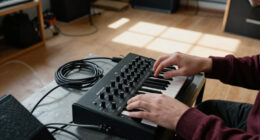
For a budget microphone for field recording, I’d pick the Zoom H1essential as the most versatile choice because it records independently, while the Movo X1-Mini suits people who want one mic for cameras, phones, and computers. The RØDE VideoMicro II is a strong alternative for a compact camera rig, and the Movo VXR10 offers a simpler shotgun-style option. The main tradeoff is between recording directly to a portable device and sending audio to a camera or phone, where compatibility and handling noise can matter as much as the microphone itself. USB podcast mics such as the TONOR TC-777 and FIFINE models are better suited to controlled indoor recording than mobile outdoor work. Read on for the full comparison and guidance on choosing for your field setup.

Get audio and creator gear delivered free with Prime
- Fast, free delivery on millions of items
- Prime Video, Amazon Music and more included
- Member-only deals all year
Complete the kit


Key Takeaways
- The Zoom H1essential is the most self-contained field option in this group because it records without relying on a camera, phone, or computer.
- The Movo X1-Mini has the broadest connection flexibility among the microphone-style picks, which helps when switching between compatible devices.
- The RØDE VideoMicro II and Movo VXR10 fit camera-mounted recording, but neither replaces a dedicated recorder when you need independent capture.
- The TONOR TC-777 and both FIFINE USB mics are indoor-first choices; their desk-oriented setup is less suited to moving through outdoor locations.
- Field readiness depends on more than the mic capsule: device compatibility, mounting, wind protection, and a reliable recording path can matter more than studio features.
| Movo X1-Mini Video Shotgun Microphone for Camera – Supercardioid, 3.5mm/USB-C, Compatible with DSLR, Smartphones, and Computers |  | Best for Multi-Device Flexibility | Microphone type: Shotgun | Polar pattern: Supercardioid | Connector: 3.5 mm jack | VIEW ON AMAZON | See Our Full Breakdown |
| TONOR TC-777 Podcast Microphone, USB Condenser Mic with Tripod Stand and Pop Filter for Streaming and Recording | 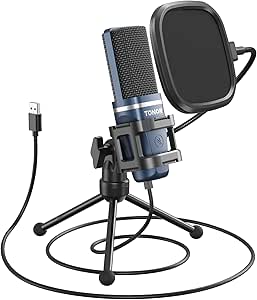 | Best for Desk-Based Beginners | Microphone form factor: Table array | Polar pattern: Unidirectional | Connector: USB Type-A | VIEW ON AMAZON | See Our Full Breakdown |
| RØDE VideoMicro II Ultra-Compact On-Camera Shotgun Microphone | 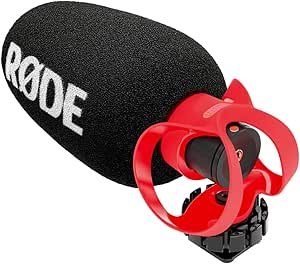 | Best Compact Camera Mic | Microphone type: Shotgun | Polar pattern: Unidirectional | Connector: 3.5 mm jack | VIEW ON AMAZON | See Our Full Breakdown |
| Movo VXR10 Universal Shotgun Microphone |  | Best Value Accessory Bundle | Microphone type: Shotgun | Polar pattern: Unidirectional | Connectivity: 3.5 mm jack | VIEW ON AMAZON | See Our Full Breakdown |
| Zoom H1essential Portable Audio Recorder |  | Best Standalone Field Recorder | Microphone type: Built-in X/Y stereo microphones | Recording format: WAV | Recording mode: 32-bit float | VIEW ON AMAZON | See Our Full Breakdown |
| FIFINE T669 Studio Condenser USB Microphone for Recording and Streaming |  | Best Desktop Kit for Voice Recording | Microphone type: Condenser | Connection: USB | Frequency response: Wide | VIEW ON AMAZON | See Our Full Breakdown |
| FIFINE K669B USB Microphone – Condenser Recording Mic for Vocals, Meetings, Streaming, YouTube |  | Best Simple USB Mic for a Small Desk | Microphone type: Condenser | Connection: USB-A | Pickup pattern: Cardioid | VIEW ON AMAZON | See Our Full Breakdown |
| budget microphone for field recording | Microphone type | Polar pattern | Compatible devices |
|---|---|---|---|
| Movo X1-Mini Video Shotgun Mic | Shotgun | Supercardioid | Audio mixer, camcorder, camera, personal computer, smartphone |
| TONOR TC-777 Podcast Microphon | — | Unidirectional | Personal computer, laptop, PS4, PS5 |
| RØDE VideoMicro II Ultra-Compa | Shotgun | Unidirectional | Camera, smartphone |
| Movo VXR10 Universal Shotgun M | Shotgun | Unidirectional | Camcorders, cameras, smartphones, tablets |
| Zoom H1essential Portable Audi | Built-in X/Y stereo microphones | — | — |
| FIFINE T669 Studio Condenser U | Condenser | — | — |
| FIFINE K669B USB Microphone | Condenser | — | — |
More Details on Our Top Picks
Movo X1-Mini Video Shotgun Microphone for Camera – Supercardioid, 3.5mm/USB-C, Compatible with DSLR, Smartphones, and Computers
The Movo X1-Mini is a practical pick for field recordists who want one directional mic to move between a camera, phone, or computer. Its supercardioid pattern favors sound from in front, which can help separate a nearby subject from surrounding ambience, though it is less suited to capturing a broad outdoor soundscape than the Zoom H1essential’s built-in stereo microphones. The aluminum enclosure and shock mount address two common location-recording concerns: durability and handling noise. Its listed 3.5 mm connection and plug-in power keep the setup simple when the host device supports them, but the product title’s USB-C compatibility should not be read as a built-in USB-C connector; check the connection and adapter needs for your specific device. With no battery, it depends on the connected device for power.
Pros:- Supercardioid pickup is suited to emphasizing a subject in front of the mic.
- Aluminum enclosure is a durable choice for portable recording.
- Shock mount helps limit handling noise.
- Works with several device types when their connections are compatible.
Cons:- No built-in battery, so recording depends on power from the connected device.
- Directional mono pickup is less suited to wide stereo ambience than the Zoom H1essential.
- Device ports and adapter requirements may limit compatibility.
Best for: Mobile creators who record close-up dialogue on compatible cameras, smartphones, and computers and want to reuse one compact directional microphone.
Not ideal for: Field recordists capturing stereo ambience or working with devices that lack a compatible 3.5 mm microphone input or plug-in power.
- Microphone type:Shotgun
- Polar pattern:Supercardioid
- Connector:3.5 mm jack
- Connectivity:Auxiliary
- Compatible devices:Audio mixer, camcorder, camera, personal computer, smartphone
- Impedance:2200 ohm
- Signal-to-noise ratio:80 dB
- Power source:Corded electric; runs on plug-in power
- Enclosure material:Aluminum
Our verdict“Choose the X1-Mini for directional dialogue across compatible devices, but pick the Zoom H1essential for standalone stereo field recording.”
TONOR TC-777 Podcast Microphone, USB Condenser Mic with Tripod Stand and Pop Filter for Streaming and Recording
The TONOR TC-777 is the only desk-oriented option here, which makes it a poor match for walking interviews but a straightforward starting point for recording narration indoors. Its USB connection, tripod, shock mount, and pop filter provide a ready-to-use computer setup; the included accessories reduce the need to assemble a separate stand and windscreen kit. Unlike the Movo VXR10, it is not a compact camera-mounted shotgun mic, and its unidirectional pickup is aimed at a voice in a stationary setup rather than sounds encountered outdoors. The supplied mute and volume controls are useful for basic sessions, but the mic offers fewer recording options than the Zoom H1essential, which can capture to an SD card. USB power also ties it to a compatible host.
Pros:- USB connection offers a simple setup with compatible computers and consoles.
- Tripod stand, shock mount, and pop filter are included.
- Unidirectional pickup is suited to a single speaker at a desk.
- Mute and volume controls provide convenient basic operation.
Cons:- Desk stand and USB-powered design are poorly suited to mobile field recording.
- Does not record independently to a memory card like the Zoom H1essential.
- Limited audio controls offer less flexibility for changing recording conditions.
Best for: New podcasters and streamers recording seated voice tracks at a computer or supported PlayStation console.
Not ideal for: Traveling interviewers, nature recordists, and anyone who needs a battery-powered mic that can record independently of a computer.
- Microphone form factor:Table array
- Polar pattern:Unidirectional
- Connector:USB Type-A
- Power source:USB
- Compatible devices:Personal computer, laptop, PS4, PS5
- Impedance:680 ohm
- Signal-to-noise ratio:80 dB
- Weight:345 g
- Dimensions:5.91 × 1.97 × 1.57 inches
Our verdict“Pick the TC-777 for simple indoor voice recording at a computer, not for capturing sound while moving through the field.”
RØDE VideoMicro II Ultra-Compact On-Camera Shotgun Microphone
For a kit where every gram and inch counts, the RØDE VideoMicro II is the most compact camera-mounted choice in this group. At a listed 24 g and 80 mm long, it adds little bulk, while the included HELIX isolation mount and foam and furry windshields make it more prepared for movement and outdoor air than a bare mic. It requires no batteries, so there is no separate power pack to carry. Compared with the Movo VXR10, it comes with more specified connection accessories, including camera and smartphone cables; the VXR10, by contrast, includes a carrying case and two shock-mount options. The VideoMicro II remains a wired, mono directional mic, not a standalone recorder, and its 3.5 mm connection still requires a compatible device or adapter.
Pros:- Compact listed size and 24 g weight suit lightweight camera kits.
- No batteries are required.
- Includes foam and furry windshields for different wind conditions.
- HELIX isolation mount and camera and smartphone cables are supplied.
Cons:- Wired connection limits placement away from the recording device.
- Mono directional pickup is less suitable for stereo ambience than the Zoom H1essential.
- Requires a compatible 3.5 mm connection or appropriate adapter.
Best for: Travel videographers and run-and-gun creators seeking a very light on-camera mic with included wind protection and cables.
Not ideal for: Recordists who need independent recording, stereo ambience, or flexibility to place the microphone far from the camera.
- Microphone type:Shotgun
- Polar pattern:Unidirectional
- Connector:3.5 mm jack
- Length:80 mm
- Listed weight:24 g
- Signal-to-noise ratio:78 dB
- Audible noise:22 dB
- Included accessories:HELIX isolation mount, foam windshield, furry windshield, SC7 TRS-to-TRRS cable, SC13 TRS-to-TRS cable
- Compatible devices:Camera, smartphone
Our verdict“Choose the VideoMicro II when a light camera-mounted directional mic matters more than standalone recording or stereo capture.”
Movo VXR10 Universal Shotgun Microphone
The Movo VXR10 makes sense for a budget field kit that needs a directional mic plus useful carrying and mounting accessories. Its aluminum body weighs 51 g, and the package includes a fuzzy windscreen, case, cables, and both original and Rycote shock mounts. That gives it a more complete travel setup than the RØDE VideoMicro II’s simpler compact kit, while the RØDE is lighter and specifies a HELIX mount plus two windshields. The VXR10’s unidirectional pickup is aimed at sound in front of the mic, not a wide stereo recording of a place; for that, the Zoom H1essential is the better fit. It needs a 3.5 mm microphone input and plug-in power, so newer phones may need an adapter and some cameras may not accept an external mic.
Pros:- Includes a fuzzy windscreen, carrying case, cables, and two shock-mount options.
- Aluminum body and 51 g weight suit portable kits.
- Unidirectional pickup is suited to foreground dialogue.
- Does not require a separate battery.
Cons:- Requires a compatible 3.5 mm microphone input and plug-in power.
- Some newer phones need a separate adapter.
- Mono directional capture is less suitable for ambience than the Zoom H1essential.
Best for: Budget-conscious camera and smartphone users who want a directional mic with a case, wind protection, cables, and mounting options.
Not ideal for: Recordists whose phone or camera lacks a compatible 3.5 mm input, or those seeking standalone stereo ambience recording.
- Microphone type:Shotgun
- Polar pattern:Unidirectional
- Connectivity:3.5 mm jack
- Compatible devices:Camcorders, cameras, smartphones, tablets
- Weight:51 g
- Dimensions:3.1 × 1.2 inches
- Frequency response:100–20,000 Hz
- Impedance:200 ohm
- Included accessories:Fuzzy windscreen, carrying case, camera cable, smartphone cable, original and Rycote shock mounts
Our verdict“Choose the VXR10 for an accessory-rich directional camera setup, provided your device supports its 3.5 mm input and plug-in power.”
Zoom H1essential Portable Audio Recorder
The Zoom H1essential is the clearest choice here when field recording means capturing a place or performance without relying on a camera’s audio input. Its built-in X/Y stereo microphones record directly to an SD card, and 32-bit float recording gives more room to handle changes in sound level than the fixed-input approach of the Movo X1-Mini or Movo VXR10. The tradeoff is that this is a handheld recorder with built-in mics, not a shotgun you mount to aim at a subject; the RØDE VideoMicro II is better suited to a lightweight camera rig focused on dialogue. USB-C also lets the Zoom act as a microphone with computers or mobile devices. It runs on two AAA batteries, and the SD card is not specified as included, so plan for those separately.
Pros:- 32-bit float recording provides flexibility when sound levels change.
- Built-in X/Y microphones capture stereo audio.
- Records WAV files to an SD card without relying on a camera or computer.
- USB-C microphone mode supports use with computers and mobile devices.
Cons:- Two AAA batteries are required.
- An SD card is not stated as included.
- Built-in stereo microphones do not provide the same aimed pickup as the Movo shotgun options.
Best for: Solo field recordists, interviewers, and musicians who want stereo capture, onboard recording, and a USB-C connection in one portable device.
Not ideal for: Videographers who need a camera-mounted shotgun to isolate a subject, or anyone unwilling to manage AAA batteries and separate SD-card storage.
- Microphone type:Built-in X/Y stereo microphones
- Recording format:WAV
- Recording mode:32-bit float
- Hardware interface:USB Type-C
- Headphone jack:3.5 mm
- Storage:SD card; memory capacity listed as 1 TB
- Power:Two AAA batteries required
- Recording time:Up to 10 hours
- Weight:92 g
Our verdict“Pick the H1essential for independent stereo field recording and choose a shotgun mic instead when close, directional camera audio is the priority.”
FIFINE T669 Studio Condenser USB Microphone for Recording and Streaming
The FIFINE T669 is the most complete desktop setup in this pair: its boom arm, shock mount, and pop filter help position a voice consistently and reduce some handling and plosive noise. That makes it a better fit than the compact FIFINE K669B for a fixed desk used for narration, streaming, or close-miked indoor recordings. Its USB connection also keeps setup simple on a compatible PC or laptop.
For field recording, though, the arm-and-desk design is a real limit. It is not a portable recorder or an on-camera microphone like the Movo X1-Mini, and a condenser can capture surrounding noise if the recording space is loud or the mic is poorly placed. Choose it for controlled, stationary voice work rather than outdoor ambience or mobile recording.
Pros:- USB connection supports straightforward setup with compatible PCs and laptops.
- Included boom arm allows flexible positioning for consistent close-miked recording.
- Shock mount and pop filter help limit handling noise and plosive bursts.
- Includes an 8.2-foot USB cable and key desk-recording accessories.
Cons:- The boom arm and accessories make it a desk-focused kit rather than a practical portable field setup.
- Ambient noise can enter recordings if the room is not quiet or the mic is poorly positioned.
- Not compatible with Xbox consoles.
Best for: PC or laptop users recording podcasts, voiceovers, or close-miked material at a dedicated desk who want the mic-positioning accessories included.
Not ideal for: Field recordists who need a portable setup for outdoor ambience, on-camera audio, or recording away from a desk; the boom arm needs desktop space and the mic may pick up surrounding noise.
- Microphone type:Condenser
- Connection:USB
- Frequency response:Wide
- Included stand:Adjustable boom arm
- Included accessories:Shock mount and pop filter
- USB cable length:8.2 feet
- Compatibility:PC and laptop; not Xbox
Our verdict“Choose the T669 for an accessory-rich desk setup for voice work, but pick a compact on-camera mic or portable recorder for genuine field recording.”
FIFINE K669B USB Microphone – Condenser Recording Mic for Vocals, Meetings, Streaming, YouTube
The FIFINE K669B is a pared-back USB condenser for buyers who want a sturdy, straightforward mic without the T669’s boom arm and accessory bundle. Its cardioid pickup pattern favors sound from the front, which can help reduce some room noise when the mic is aimed carefully. The metal body and onboard volume knob also give it a more direct, compact desktop setup than the larger T669 kit.
That simplicity does not make it a dedicated field microphone: it still needs a computer or compatible console, and its 5.9-foot USB-A cable ties placement to the recording device. Compared with the Movo X1-Mini, it is better suited to a stationary desk than a camera or mobile rig. Skip it for outdoor recording where a portable recorder and less tethered setup matter more.
Pros:- Plug-and-play USB setup keeps computer voice recording simple.
- Cardioid pickup pattern favors sound from the front and can reduce some background pickup.
- Metal construction gives the compact mic a sturdy build.
- Adjustable volume knob provides direct level control.
Cons:- USB-A connection may require an adapter for computers with other port types.
- Not compatible with phones or Xbox consoles.
- Some applications may require sound activation to be disabled for recording to work as intended.
Best for: Windows or Mac users recording meetings, streaming, or voice content at a small desk who want a compact USB mic with physical level control.
Not ideal for: Outdoor field recordists, phone users, or anyone needing a self-contained recorder; it connects by USB-A and is not compatible with phones or Xbox.
- Microphone type:Condenser
- Connection:USB-A
- Pickup pattern:Cardioid
- Cable length:5.9 feet
- Design:Metal
- Power:USB-powered; no phantom power required
- Compatibility:Windows, Mac OS, PS4, and PS5
Our verdict“Pick the K669B for simple, stationary computer recording in a compact setup, not for untethered outdoor capture.”
How We Picked
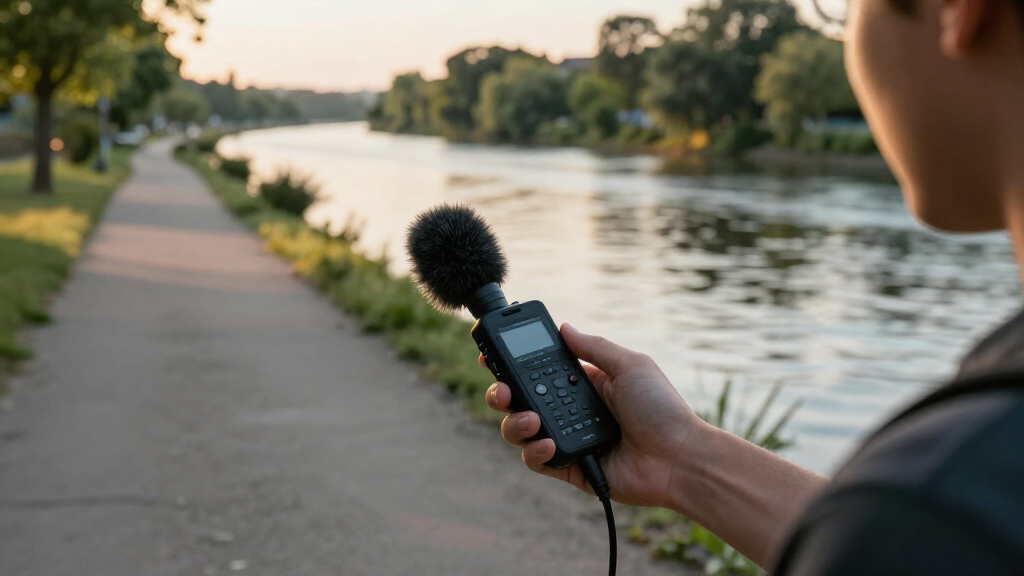
I ranked these products by how naturally they support recording away from a desk: whether they can capture audio independently or connect to portable devices, how practical their form factor is on location, and how many extra adapters or pieces of equipment a buyer may need. I also weighed usability and versatility, since a budget field setup is less useful if it only works with one device or requires a fixed recording space.
The Zoom H1essential leads because it is a portable recorder as well as a capture device, while the Movo X1-Mini and RØDE VideoMicro II follow as more specialized mic options for portable-device and camera workflows. The Movo VXR10 offers a straightforward camera-oriented alternative. The TONOR and FIFINE USB microphones rank lower for this use because their desk-based connections and stands suit stationary recording better than location work. This ordering reflects field fit, not a claim that lower-ranked products are poor choices for their intended settings.
| budget microphone for field recording | Microphone type | Polar pattern | Compatible devices |
|---|---|---|---|
| Movo X1-Mini Video Shotgun Mic | Shotgun | Supercardioid | Audio mixer, camcorder, camera, personal computer, smartphone |
| TONOR TC-777 Podcast Microphon | — | Unidirectional | Personal computer, laptop, PS4, PS5 |
| RØDE VideoMicro II Ultra-Compa | Shotgun | Unidirectional | Camera, smartphone |
| Movo VXR10 Universal Shotgun M | Shotgun | Unidirectional | Camcorders, cameras, smartphones, tablets |
| Zoom H1essential Portable Audi | Built-in X/Y stereo microphones | — | — |
| FIFINE T669 Studio Condenser U | Condenser | — | — |
| FIFINE K669B USB Microphone | Condenser | — | — |
Factors to Consider When Choosing Budget Microphone For Field Recording
Before choosing a mic, decide how your recording will travel from the source to a saved file. The same microphone can be convenient on a camera and awkward with a phone, while a USB model can be easy at a desk but impractical outdoors. These factors help separate a genuine field setup from a studio mic being carried outside.
Choose Between a Recorder and a Camera-Mounted Mic
A camera-mounted microphone sends audio into the device you are filming with, which keeps the setup compact but ties your recording to that device and its input. A portable recorder captures audio separately, giving you an independent file but adding another device to operate and manage. For interviews or location sound where missing a take would be costly, independent recording can be reassuring. For quick video clips, direct-to-camera capture may be simpler. Avoid buying a mic based only on its pickup pattern; first map out where the audio file will be saved. That workflow choice can matter more than small differences between microphones.
Check the Connection at Both Ends
Connector names alone do not guarantee that a mic will work with your camera, phone, or tablet. Check the device’s input type, whether it accepts microphone-level audio, and whether a suitable adapter is required. USB microphones generally expect a compatible USB host, while a 3.5 mm plug may need a different wiring standard or adapter on a phone. A connection that fits physically can still fail to pass usable audio. Make a short test recording before relying on a new combination outdoors. Include adapters and cables in your setup plan, since loose or awkward connections can slow a field session.
Plan for Wind and Handling Noise
Outdoor recordings face wind gusts, clothing rub, cable movement, and vibration from the device or mount. A directional microphone can help focus on sound in front of it, but it does not remove wind noise or make poor positioning harmless. Check what wind protection is supplied and whether it can be replaced or upgraded for your conditions. A handheld recorder may pick up handling noise unless it is held carefully or placed on a stable surface. A camera-mounted mic can also inherit movement from the camera itself. Budget for practical protection and mounting before spending extra for features that do not address your main noise source.
Match the Pickup Pattern to the Sound
Shotgun-style microphones are designed to favor sound from the direction they face, making them useful when the subject is in front of the camera or operator. They are not a universal fix for distant voices, busy backgrounds, or subjects moving out of range. A recorder with built-in microphones can be more convenient for ambient sound, group scenes, or quick notes where pointing a mic precisely is less important. Think about whether you need a focused voice or the character of a whole location. Buying a highly directional mic for broad environmental ambience may leave the recording sounding narrower than intended. For changing scenes, flexible placement often beats a more specialized pickup pattern.
Treat USB Desk Mics as a Different Category
USB condenser microphones are appealing for voice recording because they connect directly to a computer and often include a desktop stand. That convenience does not make them equivalent to portable camera mics or recorders: they need a compatible host and a stable setup, and their stands are designed for desks rather than movement. They can still serve field work if you are recording at a fixed indoor location with a laptop. For outdoor use, consider the complete rig, including power, wind protection, and a secure mount. Avoid choosing a USB mic for a trip simply because it is easy to use at home. Match the mic to the place and method of recording.
Spend on the Weakest Part of Your Recording Chain
A recording can be limited by the microphone, the input device, the room or location, or the way the mic is positioned. Before paying for a more specialized mic, identify the issue you are trying to fix: incompatible connections, noisy wind, insufficient portability, or a recording path that depends on a camera. A better accessory may solve the problem more directly than replacing the microphone. If you are new to field recording, prioritize a setup that is easy to connect and monitor over extra controls you may not use. Buyers who record regularly in varied locations may benefit from a more flexible capture system. The right upgrade is the one that removes the actual bottleneck in your workflow.
Frequently Asked Questions
Can I use a USB podcast microphone outdoors for field recording?
Yes, but it is most practical when you have a stable indoor or sheltered location and a compatible computer or host device. A desk stand, cable, and USB connection can make a moving setup cumbersome, and the mic may need separate wind protection. Check how the host will be powered and where the recording will be stored before leaving home. For mobile camera or phone recording, a mic designed for those connections is usually easier to manage. The TONOR TC-777 and FIFINE models in this roundup are better fits for stationary voice work than roaming outdoor capture.
Is a portable recorder a better first purchase than a shotgun microphone?
It depends on whether you need a separate audio file or audio directly attached to video. A portable recorder is a strong first choice for sound effects, ambience, and situations where you want a self-contained capture device. A shotgun mic is simpler when your camera or phone is already the center of your setup and you want synchronized audio. Separate recording can add steps during editing, so it is not automatically easier. For this lineup, the Zoom H1essential suits independent capture, while the RØDE VideoMicro II and Movo VXR10 are more camera-oriented options.
Will a 3.5 mm microphone work with my smartphone?
Not always: phones may lack a 3.5 mm jack, and adapters vary in whether they support microphone input. Some devices also use connection standards that differ from a camera’s mic input. Confirm the phone’s supported adapter and recording-app input behavior, then make a test recording with the exact cable combination you plan to use. A microphone that supports USB-C may simplify some setups, but compatibility still depends on the phone and its software. Do not assume a plug fitting the port means the phone is recording from the external mic.
Do I need a separate windscreen for recording outdoors?
Often, yes, especially if the supplied protection is not suited to the wind where you plan to record. Wind can overwhelm speech or ambience even when the microphone is aimed correctly, and a directional pickup pattern does not prevent that. Check what protection is included and whether it fits the microphone securely. For light outdoor use, basic protection may be enough; exposed or gusty locations call for more effective coverage. Test outdoors before an important recording, since wind behavior can change quickly between sheltered and open areas.
Which option makes the most sense if I record both interviews and nature sounds?
Start by deciding whether you need focused speech, broad environmental sound, or both in separate takes. A camera-mounted shotgun can help capture a person in front of the camera, while a portable recorder is more flexible for ambience and independent capture. You may need to adjust placement and direction between those jobs rather than expecting one setup to excel at both. The Zoom H1essential is the most versatile starting point in this group for standalone recording, while the Movo X1-Mini offers a flexible mic connection path for supported devices. If both kinds of recording are frequent, choose the workflow you use most and plan for a second tool when the other task demands it.
Conclusion
For the best overall field fit, I recommend the Zoom H1essential if independent portable recording matters most. The best value in flexibility is the Movo X1-Mini for buyers who want a microphone that can serve compatible cameras, phones, and computers; the RØDE VideoMicro II is the better pick for a compact camera rig. For a simple camera-mounted alternative, consider the Movo VXR10. The best choice for beginners depends on the setup: the Zoom is a straightforward starting point for standalone capture, while a camera owner may find the RØDE simpler to add to an existing rig. I’d treat the TONOR TC-777 and FIFINE T669 or K669B as specific picks for stationary computer recording, not primary outdoor microphones. Choose based on where you record and how you need the audio saved, rather than buying a studio mic for a field job.