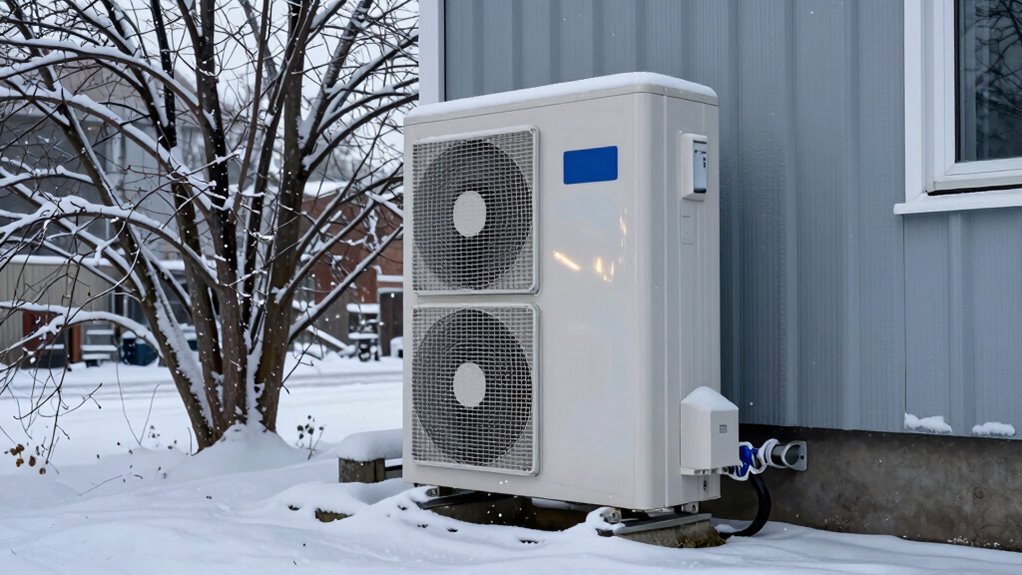

In cold weather, your heat pump’s efficiency drops because the outdoor air isn’t as warm, making it harder for the system to transfer heat. Manufacturers often show ideal COP values based on lab conditions, which don’t account for real-world factors like frost buildup or low ambient temperatures. This causes actual performance to fall short of rated specs. To understand how to keep your system running smoothly in winter, keep exploring these common issues and solutions.
Key Takeaways
- Actual COP declines in cold weather due to reduced heat transfer efficiency at lower outdoor temperatures.
- Frost and ice buildup on outdoor coils obstruct airflow, decreasing heat absorption and system performance.
- Defrost cycles temporarily interrupt heating, causing short-term efficiency drops during winter.
- Refrigerant properties and refrigerant cycle dynamics are less effective at lower temperatures, reducing COP.
- External factors like shading, snow accumulation, and maintenance issues further lower real-world heat pump efficiency.
heat pump frost cover
As an affiliate, we earn on qualifying purchases.
As an affiliate, we earn on qualifying purchases.
How Do Heat Pumps Work in Moderate Climates?
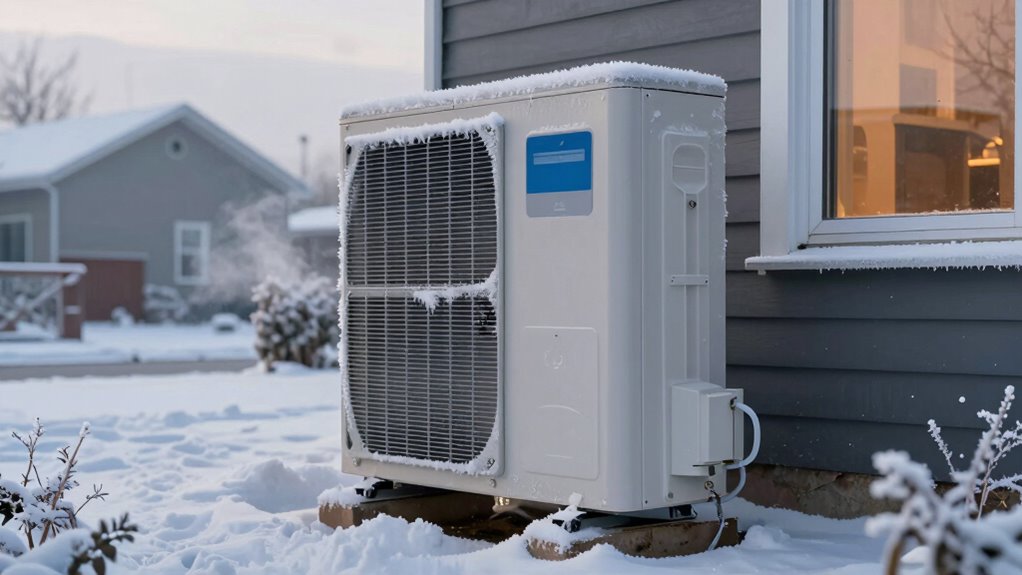
In moderate climates, heat pumps operate efficiently because the outdoor temperatures stay within a range that allows the system to easily extract heat from the air. When temperatures drop slightly, the heat pump relies on refrigerant flow to transfer heat indoors. The refrigerant absorbs heat as it circulates, maintaining a steady flow that keeps your home warm. Occasionally, the system initiates defrost cycles to prevent ice buildup on the outdoor coil. During these cycles, the heat pump temporarily reverses operation to melt any ice, ensuring continued efficiency. Because outdoor temperatures are mild, these defrost cycles are less frequent, and refrigerant flow remains ideal. This balance helps the heat pump deliver reliable heating without significant drops in performance, making it suitable for moderate climates.
outdoor heat pump coil cleaner
As an affiliate, we earn on qualifying purchases.
As an affiliate, we earn on qualifying purchases.
What Is the Coefficient of Performance (COP) and Why Does It Matter?
Have you ever wondered how efficiently your heat pump converts energy into heat? That’s where the coefficient of performance (COP) comes in. COP is an essential efficiency metric that measures how much heating or cooling energy you get from a unit of electrical energy used. Basically, a higher COP means your heat pump is performing better, providing more heat with less energy. Understanding COP helps you compare different models and assess real-world performance. Energy modeling tools often rely on COP values to predict how well your system will work under various conditions. Keep in mind, COP varies depending on temperature and other factors. Knowing this helps you make smarter decisions about your heating system’s efficiency, especially during cold weather when performance can dip. Additionally, the impact of temperature on COP is significant, as colder conditions typically cause a decline in efficiency. Moreover, real-world factors such as humidity levels can further influence the actual efficiency experienced during operation. For example, ambient humidity can affect heat transfer rates, impacting overall system performance, and advancements in European cloud innovation are improving data efficiency in energy management systems.
refrigerant leak detector for heat pumps
As an affiliate, we earn on qualifying purchases.
As an affiliate, we earn on qualifying purchases.
Why Do Manufacturers Show Ideal COP Values?
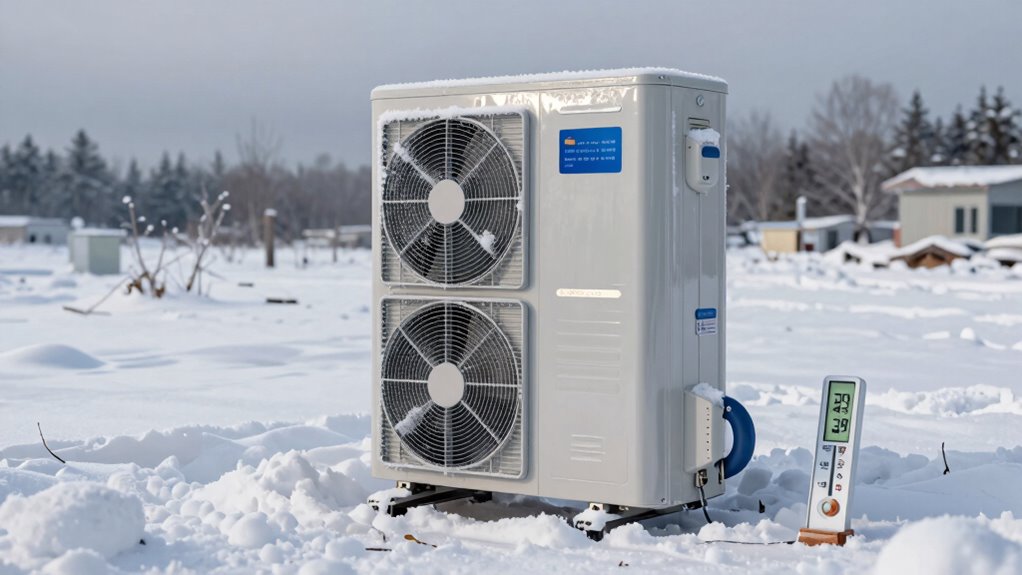
Manufacturers display perfect COP values to give consumers a clear benchmark of their heat pumps’ maximum potential under ideal conditions. These numbers help you understand the best possible energy efficiency, which can translate into cost savings and a lower environmental impact. However, real-world performance often falls short because actual conditions vary. The ideal COP assumes perfect operating temperatures and ideal settings, making it unrealistic for daily use. Recognizing the influence of market volatility on energy efficiency can help you better interpret these ratings and manage expectations. Additionally, factors such as ambient temperature fluctuations significantly impact the actual performance of heat pumps in colder climates. Incorporating advanced manufacturing techniques into heat pump design can also influence how well these systems perform under variable conditions, especially when environmental factors challenge their efficiency. Understanding how performance variability affects real-world results is crucial for selecting the most suitable system for your needs.
heat pump defrost sensor
As an affiliate, we earn on qualifying purchases.
As an affiliate, we earn on qualifying purchases.
How Cold Weather Affects Your Heat Pump’s Efficiency
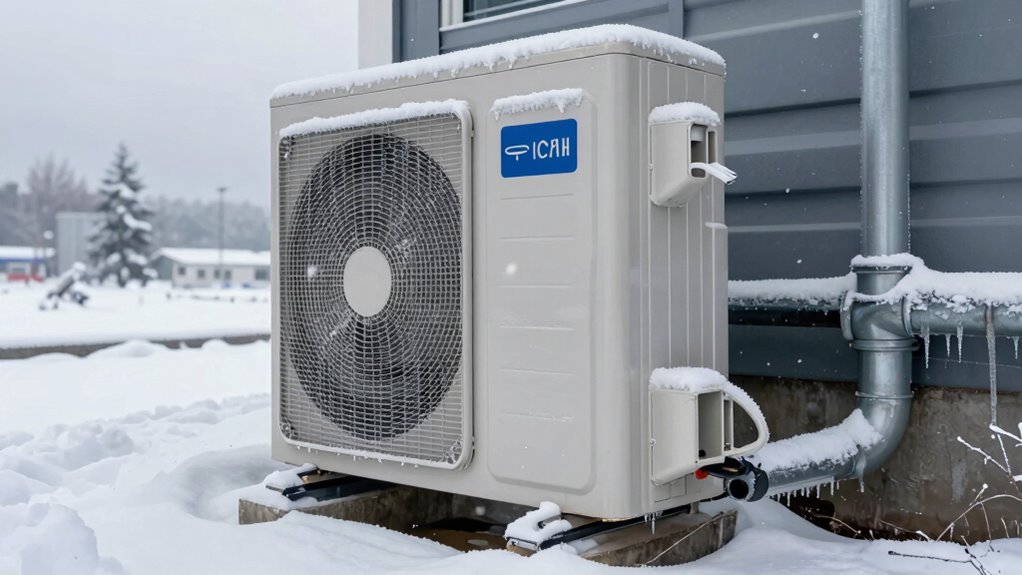
Cold weather directly impacts your heat pump’s efficiency by making it work harder to extract heat from the chilly outdoor air. As temperatures drop, frost formation can develop on the outdoor coil, reducing airflow and making the system less effective. Frost acts as an insulator, hindering heat transfer and forcing your heat pump to run longer. Additionally, colder air reduces the temperature difference between the outdoor air and indoor space, meaning your unit needs more energy to maintain comfort. Poor outdoor airflow caused by snow or ice buildup can further diminish performance. All these factors cause your heat pump’s coefficient of performance (COP) to drop, making it less efficient and increasing your energy bills. Proper maintenance, like clearing frost and ensuring airflow, can help mitigate these effects. Understanding how filtration and airflow impact system efficiency can help you optimize performance during cold months. Regularly inspecting and maintaining outdoor components is crucial for ensuring consistent efficiency in winter conditions. For example, airflow management can significantly improve system operation in harsh weather, and investing in a proper defrost system can prevent frost buildup from impairing performance. Additionally, ensuring your system’s refrigerant levels are correct can also influence efficiency during colder periods.
How Refrigerant Properties Impact Cold Weather Performance
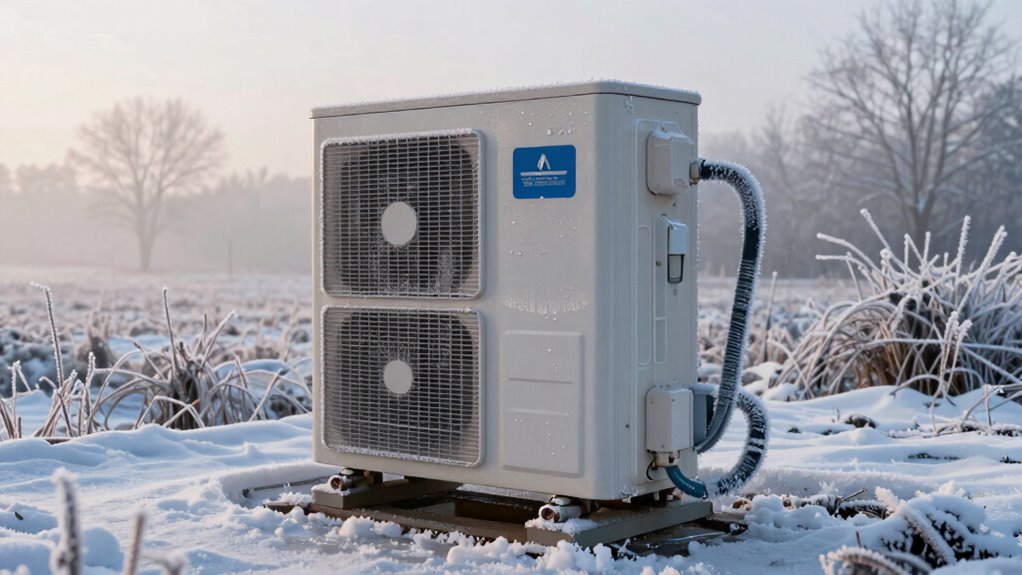
The type of refrigerant you use directly affects how well your heat pump performs in cold weather. Its pressure and heat transfer abilities determine how efficiently heat is moved inside your home. Understanding these properties helps you choose the right refrigerant for colder conditions. Additionally, selecting a refrigerant with appropriate glycolic acid benefits can enhance heat transfer efficiency in low temperatures. Proper refrigerant selection also involves considering thermal conductivity and compatibility with your heat pump system to maintain optimal performance during winter months. Being aware of refrigerant properties enables you to optimize your system’s efficiency and avoid issues caused by temperature fluctuations. Recognizing the importance of pressure characteristics in refrigerants can further improve performance in chilly climates, ensuring consistent heating throughout the season. Moreover, understanding phase change behavior of refrigerants can help prevent operational problems in extreme cold.
Refrigerant Type and Efficiency
Choosing the right refrigerant is essential when it comes to maintaining heat pump efficiency in cold weather. Your refrigerant choice directly impacts how well your system performs in low temperatures. Some refrigerants are better suited for cold climates because they evaporate and condense efficiently at low pressures, ensuring consistent heat transfer. Additionally, refrigerant properties influence environmental impact; newer, eco-friendly options like R-32 or R-410A have lower global warming potential compared to older types. Selecting an appropriate refrigerant can help minimize efficiency loss and reduce your system’s environmental footprint. Proper refrigerant selection is crucial for optimizing performance and sustainability in cold weather conditions. By understanding how refrigerant type affects performance, especially in cold weather, you can make informed decisions that optimize comfort while supporting sustainability. The refrigerant’s chemical composition also plays a significant role in its cold weather performance, affecting how well it adapts to temperature fluctuations. Moreover, understanding the refrigerant’s thermodynamic properties can help ensure optimal system operation in low temperatures.
Pressure and Heat Transfer
Refrigerant properties, especially pressure and heat transfer capabilities, directly influence how well your heat pump performs in low-temperature conditions. When outdoor temperatures drop, pressure fluctuations in the refrigerant cycle become more pronounced, impacting overall system stability. These fluctuations can reduce heat transfer efficiency by disrupting the flow and pressure needed for ideal heat absorption from the cold air. If the refrigerant’s pressure isn’t maintained properly, it struggles to absorb enough heat, causing a decline in performance. Additionally, refrigerants with better heat transfer properties can improve efficiency in cold weather, but if pressure drops too low, heat transfer slows considerably. Understanding and managing these pressure fluctuations ensures your system maintains better heat transfer, helping your heat pump operate more effectively during cold conditions. Proper system maintenance and selecting the right refrigerant are crucial for optimizing performance in winter weather. Moreover, the performance of the refrigerant is also affected by its pressure-temperature relationship, which determines how effectively it can transfer heat in varying outdoor temperatures. A deeper understanding of refrigerant cycle dynamics can help identify potential issues before they impact system efficiency. Properly monitoring pressure levels can prevent many of these issues and keep your system running efficiently in extreme cold. Recognizing how refrigerant pressure behavior responds to temperature changes is essential for troubleshooting and system optimization.
How Outdoor Temperature Influences Heat Pump Output
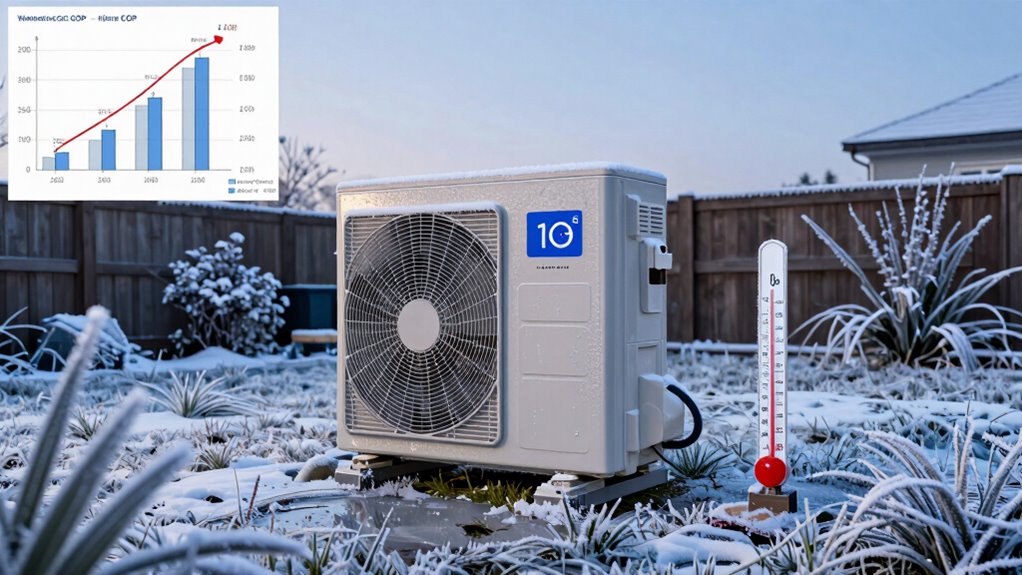
Outdoor temperature has a direct impact on a heat pump’s efficiency and heating performance. When temperatures drop, the heat pump must work harder to extract heat from the cold air, reducing its overall output. Snow accumulation around the outdoor unit can further hinder performance by blocking airflow and insulating the coil, making it harder to transfer heat. Additionally, outdoor shading from trees or structures can lower the ambient temperature around the unit, which can cause it to operate less efficiently. As the temperature decreases, your heat pump’s capacity to produce heat diminishes, leading to longer run times and reduced comfort. Proper maintenance, including cleaning or replacing filters, can help maintain efficiency during colder months, and understanding heat transfer principles can guide you in making effective adjustments. Being aware of environmental factors that influence heat transfer can further improve system performance during winter.
Why Do Defrost Cycles Reduce Efficiency?
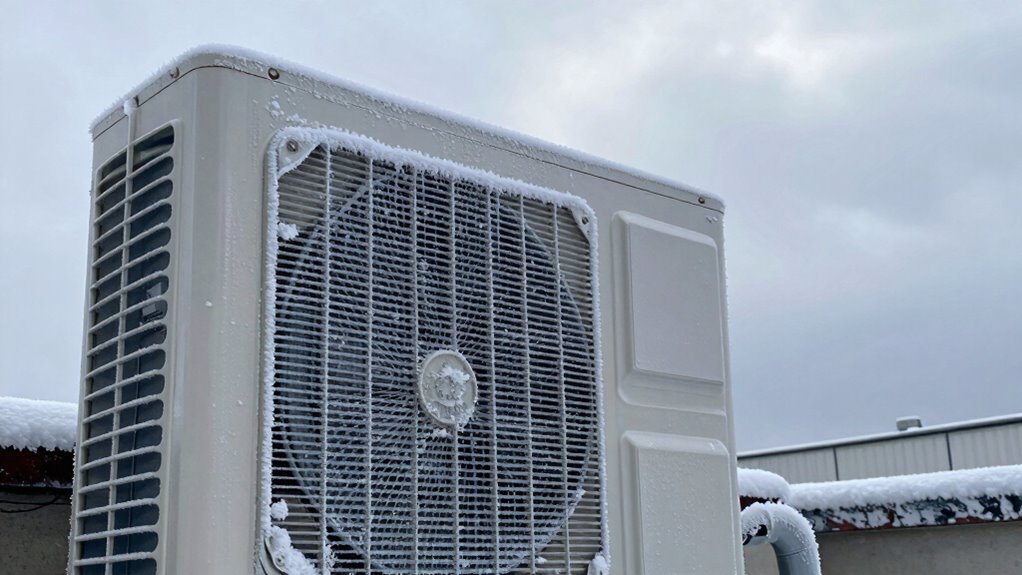
When your heat pump switches to defrost mode, it temporarily reduces its heating efficiency. This happens because the system runs a defrost cycle to melt accumulated frost on the outdoor coil. During this time, the heat pump temporarily stops heating your home, causing an efficiency loss. The defrost cycle involves reversing the refrigerant flow, which uses energy and reduces overall performance.
Here’s a quick look at how defrost cycles impact efficiency:
| Effect | Description |
|---|---|
| Temporary Shutdown | Stops heating while defrosting |
| Extra Energy Use | Uses power for defrost cycle |
| Short-Term Loss | Efficiency dips during defrosting |
Common Challenges Heat Pumps Face During Freezing Temperatures
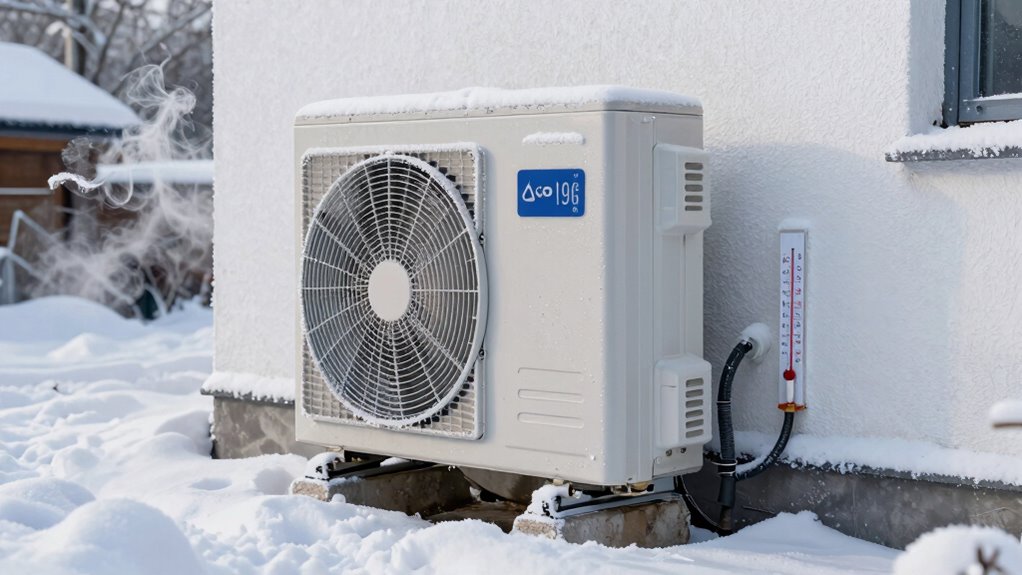
During freezing temperatures, heat pumps encounter several common challenges that can affect their performance. Frost formation on the outdoor coil is a major issue, blocking airflow and decreasing efficiency. As frost builds up, the heat pump must initiate a defrost cycle, which temporarily halts heating to melt the ice. This process consumes extra energy and reduces overall output. Other challenges include:
- Reduced heat transfer due to ice accumulation
- Increased wear on components from frequent defrosting
- Slower heat exchange efficiency during cold snaps
- Potential for refrigerant issues caused by low temperatures
These challenges make it harder for your heat pump to operate ideally in winter, causing a drop in performance and increased energy consumption. Understanding these issues helps you better prepare for cold weather.
Why Does COP Drop When It Gets Really Cold?
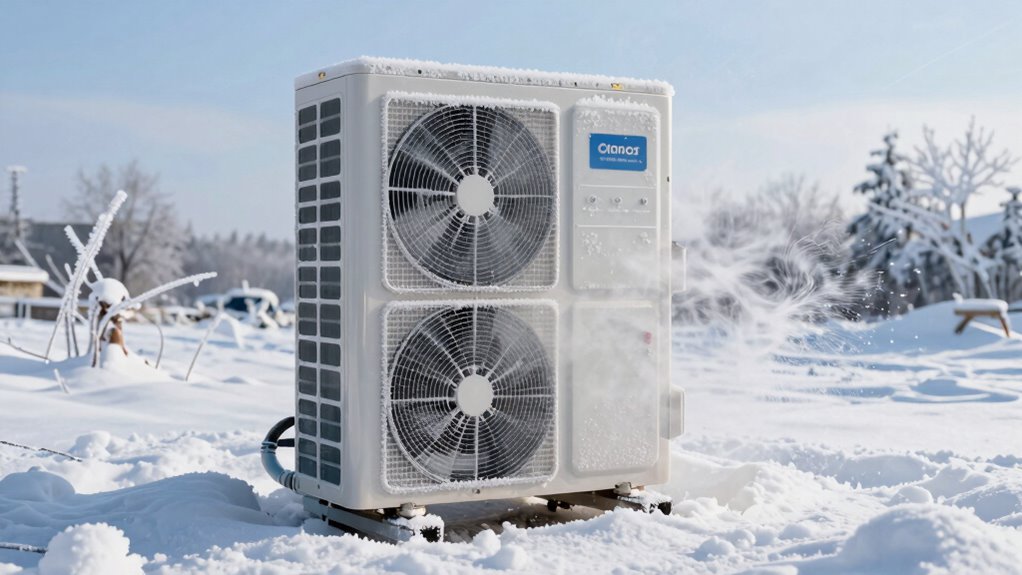
As temperatures plunge, the efficiency of your heat pump declines because its ability to transfer heat diminishes in colder air. When it’s really cold outside, the heat pump relies on extracting heat from the low-temperature outdoor air, but colder air contains less thermal energy. Poor thermal insulation around the system can worsen this issue, allowing heat to escape before transfer. As a result, the heat pump works harder to extract the remaining heat, reducing its coefficient of performance (COP). The reduced heat transfer efficiency means your system consumes more energy to provide the same warmth, making it less effective. This decline in COP is a natural consequence of the limited heat available in frigid conditions and the challenges of efficient heat transfer at low temperatures.
The Thermodynamics Behind Reduced Efficiency in Cold Weather
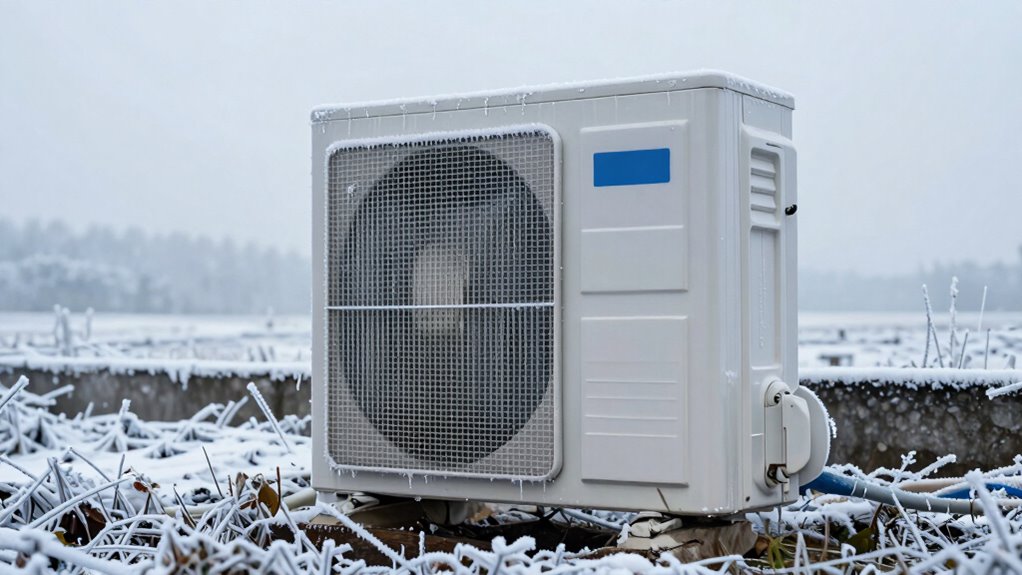
The efficiency of a heat pump drops in cold weather because of fundamental thermodynamic principles. When outdoor temperatures fall, heat transfer becomes less efficient, making it harder for your system to extract warmth. This occurs because:
- The temperature difference between the outside air and the refrigerant widens, reducing heat transfer efficiency
- Lower outdoor temperatures mean less thermal energy available for extraction
- The compressor works harder to move heat, increasing energy consumption
- The refrigerant’s ability to absorb heat diminishes at colder temperatures
These thermodynamic principles dictate that as the temperature gap widens, your heat pump struggles to transfer heat effectively. Consequently, the system’s overall efficiency declines, making it harder to maintain desired indoor comfort levels in freezing conditions.
Rated COP vs. Actual Performance: What You Need to Know
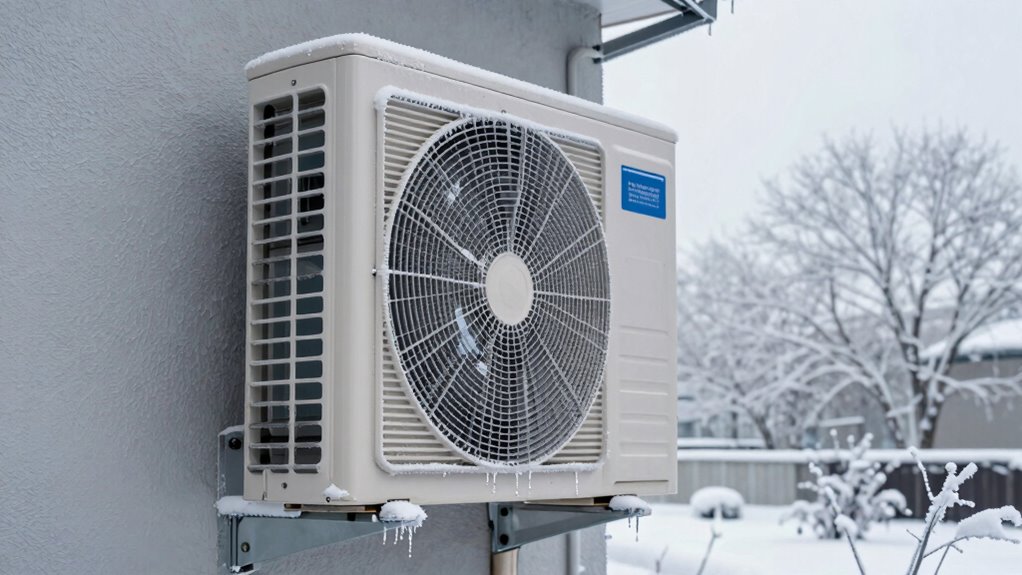
Your heat pump’s rated COP gives a baseline, but actual performance depends on external temperatures and other factors. As outdoor conditions change, your system may not match its rated efficiency. Understanding these differences helps you better assess real-world performance and energy savings.
Rated vs. Real Coefficient
While the rated COP provides a standardized measure of a heat pump’s efficiency, it often doesn’t reflect real-world performance, especially in cold weather. Your actual energy efficiency can differ markedly from the rated value, affecting both your energy bills and climate impact. Factors such as outdoor temperature, system age, installation quality, and maintenance influence performance. Keep in mind that:
- Rated COP is based on ideal laboratory conditions, not your local climate
- Real-world factors often cause COP to drop as temperatures fall
- A lower actual COP means higher energy consumption and emissions
- Understanding this gap helps you make better choices for energy-saving and climate-conscious living
Knowing the difference empowers you to optimize your system and reduce environmental impact.
External Temperature Effects
As outdoor temperatures drop, the efficiency of your heat pump often declines, causing its actual COP to fall well below the rated value. Geographical considerations play a significant role here; colder regions experience more pronounced drops in performance during winter months. Seasonal variations also impact efficiency, as heat pumps are designed to operate ideally within a specific temperature range. When temperatures fall outside this range, the system must work harder to extract heat, reducing its effectiveness. This is especially true in areas with harsh winters, where external temperatures can remain below the system’s ideal operating conditions for extended periods. Understanding these external temperature effects helps you anticipate performance changes and adjust your expectations accordingly during colder seasons.
Performance Variability Factors
Understanding the difference between rated COP and actual performance is essential for managing expectations and optimizing your heat pump’s operation. Several factors influence how well your system performs in real life. Frost formation on the outdoor coil can reduce efficiency, as ice buildup insulates the coil and hampers heat transfer. Compressor noise may increase as the system works harder to maintain heating, indicating strain. External conditions like wind chill or sudden temperature drops also play a role, causing fluctuations in performance. Additionally, improper maintenance—such as dirty filters or low refrigerant levels—can further diminish efficiency. Recognizing these variability factors helps you troubleshoot issues and improve performance, especially during cold weather, ensuring your heat pump operates as close to its rated COP as possible.
How Heat Pump Size and System Design Matter in Winter
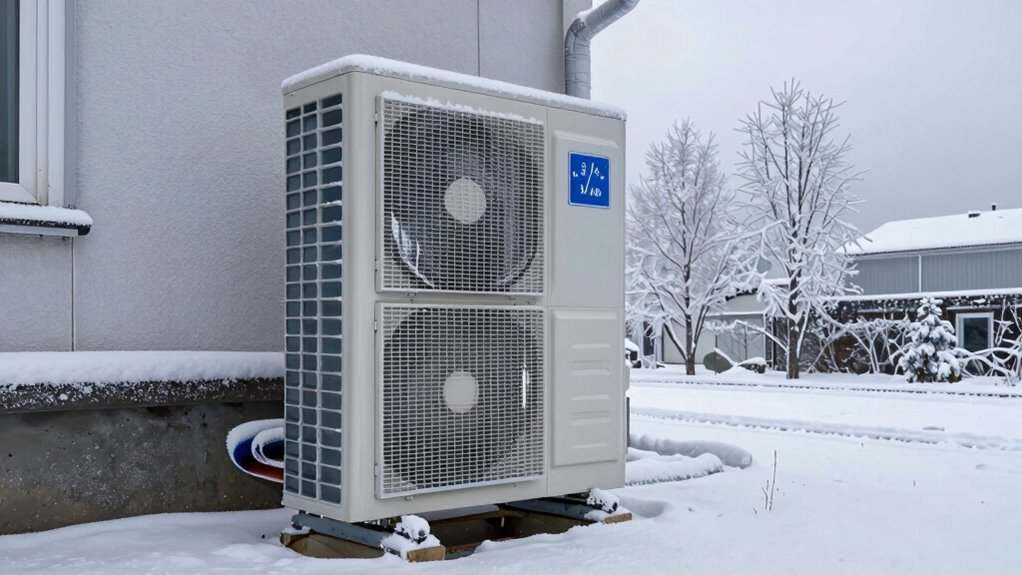
Choosing the right heat pump size and designing the system properly are essential for maintaining efficiency during cold weather. An appropriately sized unit ensures it doesn’t work harder than necessary, reducing energy loss and preventing short cycling. Proper system zoning allows you to target specific areas, improving overall comfort and efficiency. Insulation upgrades also support your system by reducing heat loss, helping the heat pump operate more effectively in colder temperatures. If the system is too large, it’ll cycle on and off frequently, wasting energy and decreasing performance. Conversely, a system too small won’t meet your heating needs efficiently. Thoughtful sizing and design, combined with insulation upgrades and effective zoning, help your heat pump perform at its best during winter’s coldest days.
Why Proper Installation Can Improve Cold Weather Performance
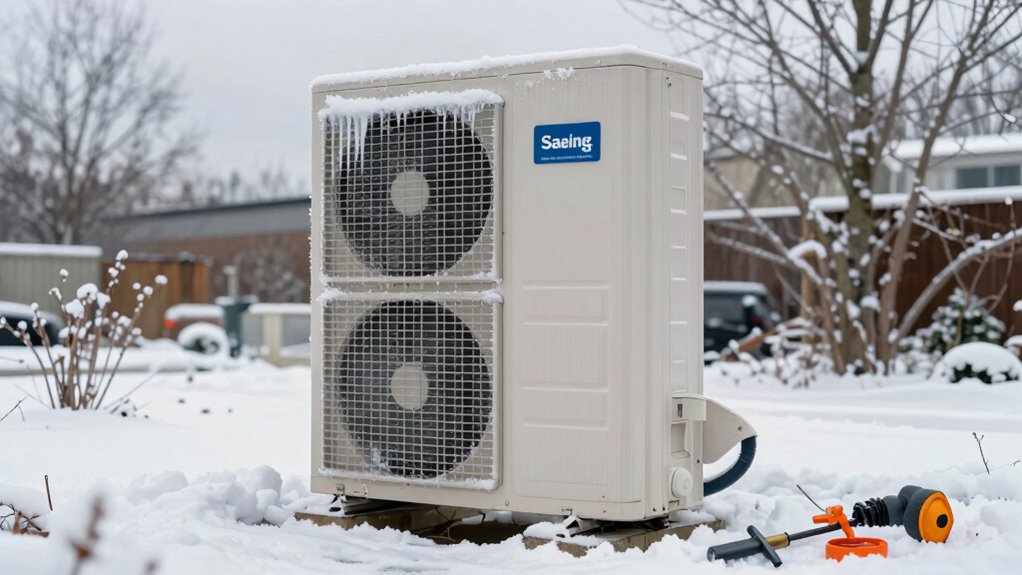
Proper installation is essential for guaranteeing your heat pump performs well in cold weather. When installed correctly, you unlock key installation benefits that directly boost efficiency improvements. Proper placement ensures ideal airflow and prevents issues like short cycling, which can reduce performance. Sealing ductwork minimizes leaks, helping your system operate at peak efficiency. Correct refrigerant charge allows the heat pump to absorb and transfer heat effectively, especially in low temperatures. Additionally, a professionally installed system ensures proper electrical connections, reducing operational hiccups. These steps help your heat pump maintain a higher COP in winter, saving you energy and money. Investing in proper installation isn’t just about compliance; it’s about maximizing your system’s cold-weather capabilities and ensuring reliable, efficient heating whenever you need it.
Upgrading Components to Boost Winter Efficiency
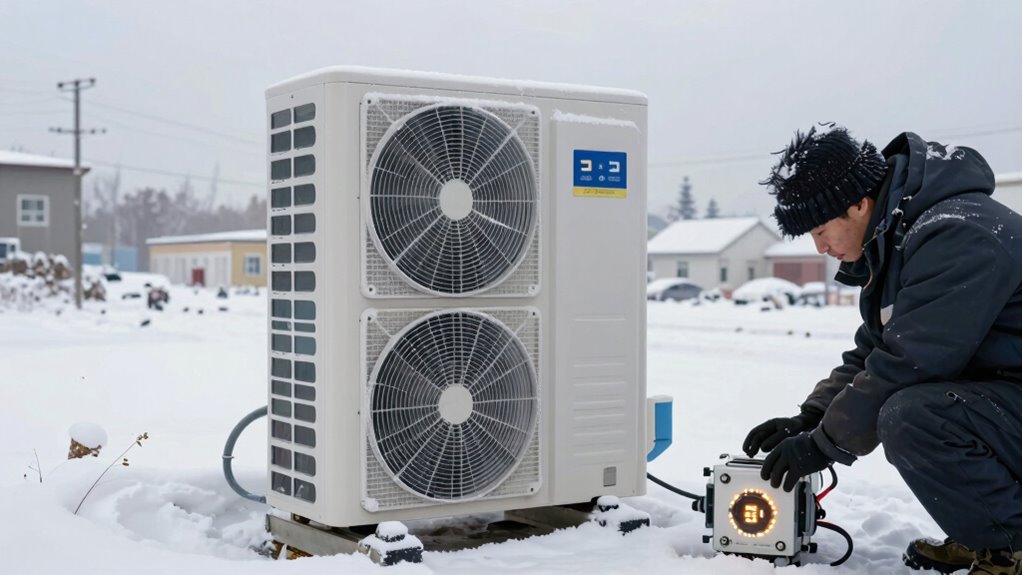
Upgrading key components of your heat pump can considerably improve its performance during cold weather. Many heat pump myths suggest that efficiency naturally drops in winter, but the truth is that choosing the right parts can make a difference. For example, replacing an outdated compressor or upgrading the reversing valve can enhance cold-weather operation. Some efficiency misconceptions claim that larger or more powerful units always perform better, but properly matched components are essential. Installing high-efficiency fans, better coils, and advanced thermostats can optimize heat transfer and reduce energy loss. These upgrades help your system operate more effectively, ensuring consistent warmth without overworking. Don’t fall for heat pump myths—investing in quality upgrades makes your system more resilient and reliable during winter’s coldest days.
How Home Insulation and Sealing Help Your Heat Pump Work Better
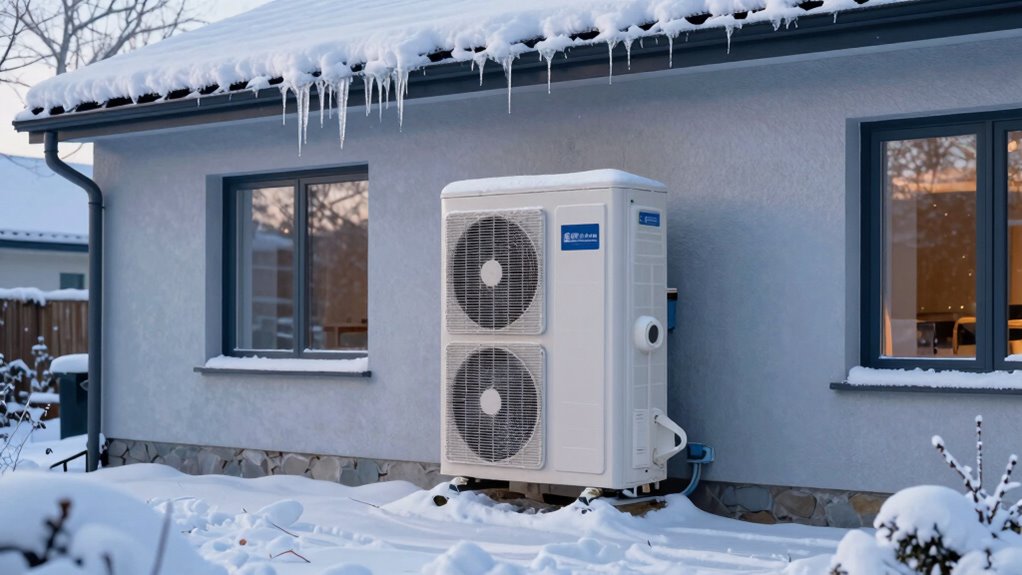
When your home is well-insulated and properly sealed, your heat pump doesn’t have to work as hard to maintain comfortable temperatures. Reducing air leakage keeps warm air inside and prevents cold drafts from creeping in. Proper insulation upgrades in walls, attic, and floors help retain heat more effectively. This means your heat pump can operate efficiently without overworking during cold weather.
To improve performance:
- Seal gaps around windows and doors
- Add insulation to attic and walls
- Install weatherstripping on entry points
- Address air leakage sources promptly
Tips to Maximize Heat Pump Efficiency During Winter
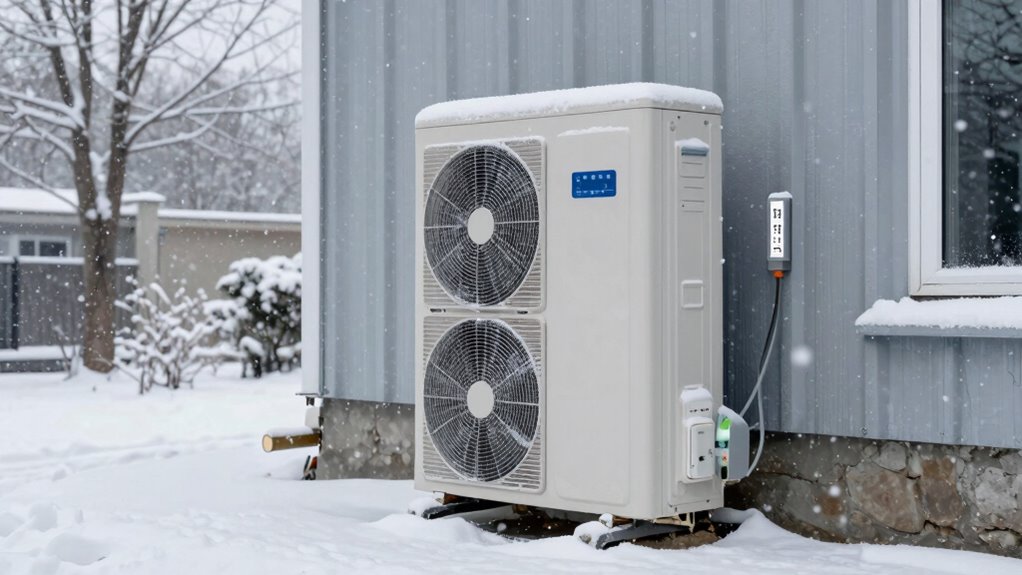
Keeping your heat pump running efficiently during winter requires more than just good insulation; it also involves specific strategies to enhance its performance in cold weather. One way to boost efficiency is to consider geothermal benefits, as ground-source heat pumps maintain consistent temperatures underground, reducing strain and increasing COP. Regularly cleaning or replacing filters helps keep airflow ideal and prevents heat pump noise caused by dirt buildup. Additionally, scheduling professional maintenance ensures your system operates smoothly and identifies issues early. During extreme cold, use a programmable thermostat to prevent unnecessary cycling. These steps help your heat pump work more effectively, saving energy and reducing wear. Implementing these tips ensures you maximize your heat pump’s performance and longevity throughout winter.
Is Auxiliary Heating Necessary in Cold Climates?

In cold climates, your heat pump faces challenges maintaining efficient heating, especially during the coldest days. You might need auxiliary heating options to keep your home comfortable when the temperature drops too low. Considering the costs and energy use, it’s important to weigh whether backup systems are necessary for your situation.
Cold Weather Challenges
Cold weather can substantially challenge heat pump performance, making it harder for you to extract enough heat from the outside air. As temperatures drop, frost formation on the outdoor coil becomes more common, reducing efficiency. The outdoor airflow also decreases because colder air carries less heat, further straining the system. You might notice the heat pump struggling to keep your home warm, especially during severe cold snaps. Frost buildup can block airflow, forcing the system to work harder or activate defrost cycles. In low temperatures, the heat pump’s ability to maintain ideal efficiency diminishes, potentially requiring auxiliary heating. Being aware of these challenges helps you understand why your system’s performance drops and why additional measures might become necessary during extreme cold conditions.
Backup Heating Options
When frost buildup and reduced outdoor airflow challenge your heat pump’s efficiency, relying solely on it may not be enough to keep your home warm during the coldest days. Backup heating becomes essential in such conditions, ensuring comfort when the heat pump struggles. You might consider electric resistance heaters, gas furnaces, or pellet stoves as reliable options. In some cases, emergency power systems can activate backup heating automatically if the main system fails.
| Backup Heating Type | Pros |
|---|---|
| Electric Resistance | Fast response, simple install |
| Gas Furnace | Cost-effective, reliable |
| Emergency Power | Ensures continuous warmth |
Backup heating options provide peace of mind during extreme cold, minimizing discomfort and maintaining consistent indoor temperatures.
Cost and Energy Impact
Auxiliary heating can considerably impact both your energy bills and overall comfort during the coldest months. When temperatures drop, your heat pump’s efficiency declines, often requiring supplemental heat. This auxiliary heating can increase your energy consumption, reducing potential cost savings.
To manage this impact:
- It raises energy costs during extended cold spells
- It diminishes overall energy efficiency
- It may lead to higher maintenance costs
- It guarantees consistent indoor comfort despite outdoor cold
While auxiliary heat adds to expenses, it’s often necessary for maintaining warmth in harsh climates. Understanding when and how it’s used helps you optimize cost savings and maximize your heat pump’s efficiency, especially during extreme cold snaps.
New Technologies That Make Heat Pumps Work Better in the Cold
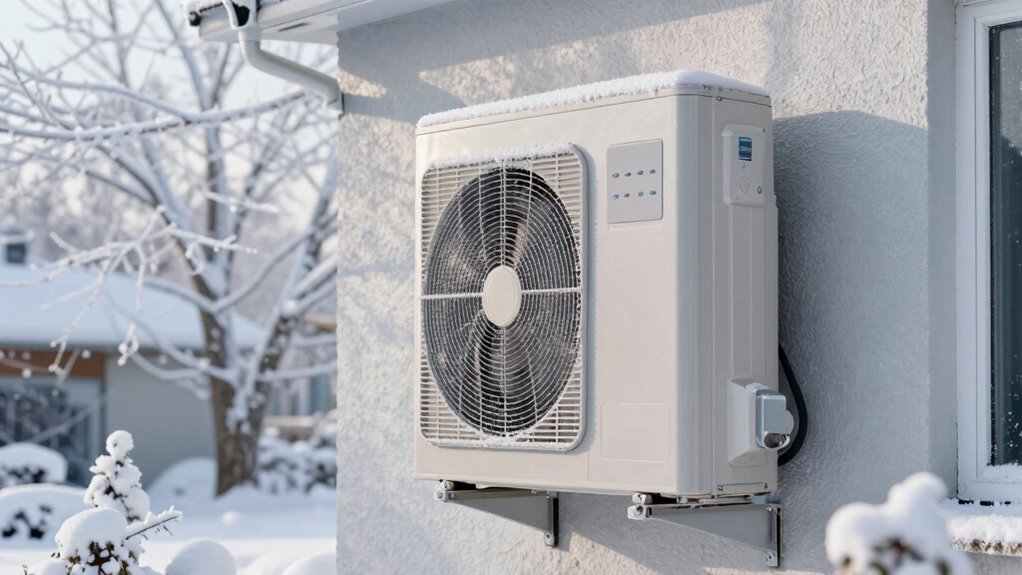
Advancements in heat pump technology have introduced innovative solutions that enhance performance in low temperatures. One key development is improved frost resistance, which prevents ice buildup on outdoor coils, ensuring reliable operation during winter. Manufacturers now incorporate advanced defrost cycles that activate only when needed, reducing energy waste. Additionally, refrigerant innovation plays a vital role; newer refrigerants with better thermodynamic properties allow heat pumps to operate efficiently even in colder climates. These refrigerants enable the system to extract more heat from the air, maintaining better COP levels despite low outdoor temperatures. Together, frost resistance improvements and refrigerant advancements make modern heat pumps more resilient and efficient in cold weather, helping you stay warm without sacrificing energy savings.
Practical Tips for Homeowners to Use Their Heat Pumps in Winter
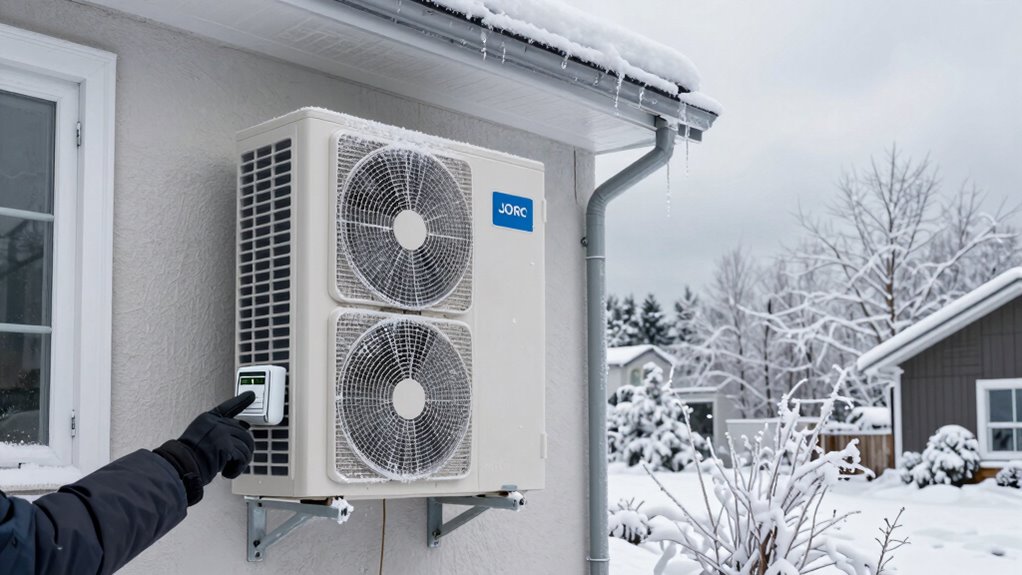
To get the most out of your heat pump during winter, you should regularly maintain and optimize its settings. Proper maintenance tips guarantee your system runs efficiently in cold weather, while installation tips help prevent performance issues. Keep your filters clean to improve airflow and reduce strain on the system. Schedule annual professional inspections to catch potential problems early. Adjust your thermostat settings to avoid overworking the unit, and consider installing a programmable thermostat for better control. Additionally, ensure your outdoor unit is clear of snow and debris, and insulate exposed pipes to prevent freezing. These simple steps boost comfort and efficiency, making your heat pump more reliable during cold months. Following these maintenance and installation tips keeps your system performing at its best when it’s needed most.
Reading Your Heat Pump’s Performance Data in Cold Weather
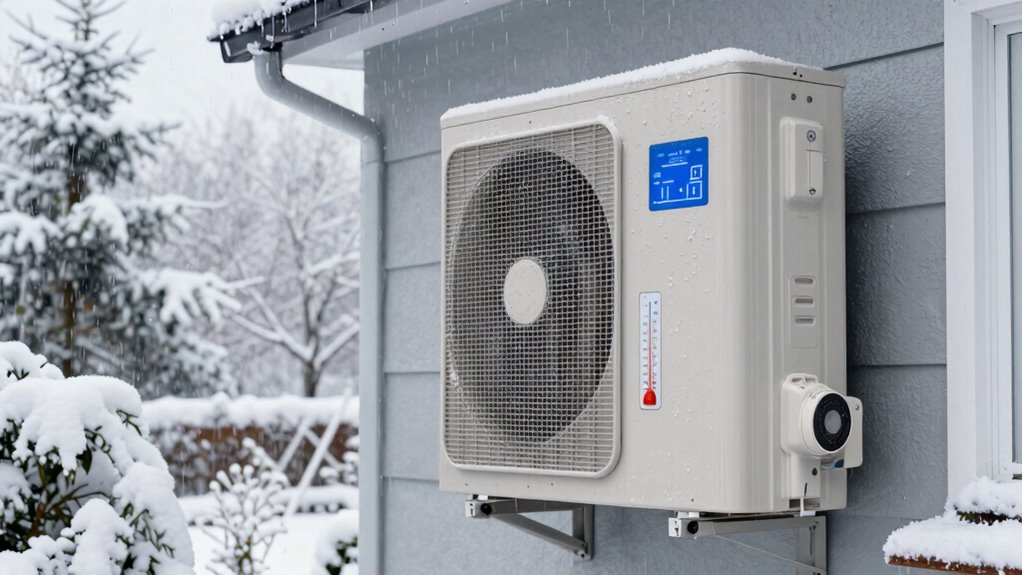
How can you tell if your heat pump is performing well in cold weather? By examining its performance metrics, you can gauge efficiency and identify potential issues. Check your system’s thermostat readings against outdoor temperature data to see if it’s maintaining your desired indoor temperature. Look at the compressor’s run time and the temperature difference between the outdoor coil and indoor air. Data interpretation involves understanding these metrics: a drop in performance might mean your heat pump is working harder than it should. Review the energy consumption data to see if your system is using more power than usual. Regularly monitoring these performance metrics helps you detect inefficiencies early, ensuring your heat pump operates best even during the coldest months.
Which Types of Heat Pumps Are Best for Cold Climates?
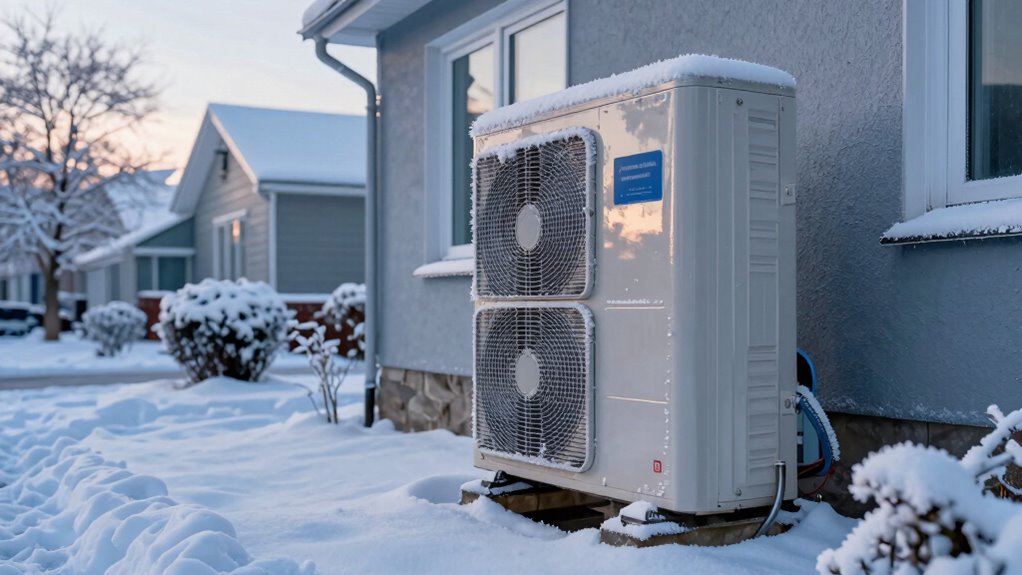
If you live in a cold climate, choosing the right heat pump is essential for efficiency and comfort. Some types are better suited to handle low temperatures, ensuring reliable heating even on the coldest days. Understanding which heat pumps perform best in cold weather helps you make an informed decision for your home.
Cold Climate Compatibility
When selecting a heat pump for cold climates, it’s important to choose models specifically designed to perform efficiently at low temperatures. Look for units that excel in geothermal stability, maintaining consistent operation despite the cold. These models often feature advanced compressors and refrigerants optimized for cold weather, enhancing geothermal efficiency. Consider these options:
- Cold climate heat pumps with inverter technology
- Dual-stage or multi-stage units for better temperature regulation
- Models with supplemental electric resistance heating for extreme cold
- Units designed with enhanced insulation and defrost systems
These features ensure your heat pump stays reliable and efficient, even during the harshest winters. Prioritizing cold climate compatibility helps you maximize geothermal efficiency and maintain comfort without sacrificing performance.
Optimal Heat Pump Types
Choosing the right type of heat pump is key to guaranteeing reliable performance during cold winters. For colder climates, ground-source (geothermal) heat pumps excel due to their high geothermal efficiency, maintaining consistent heat even when outdoor temperatures plummet. These systems leverage the stable underground temperature, delivering better performance than air-source models. If hot water integration is a priority, hybrid heat pumps that combine a traditional heat pump with a water heater can improve overall efficiency and comfort. Variable-speed compressors also help adapt to temperature fluctuations, maintaining efficiency in extreme cold. By selecting the appropriate heat pump type—preferably geothermal or hybrid—you ensure better performance, reduced energy costs, and reliable heating during the most challenging winter conditions.
Future Innovations Improving Cold Weather Resilience
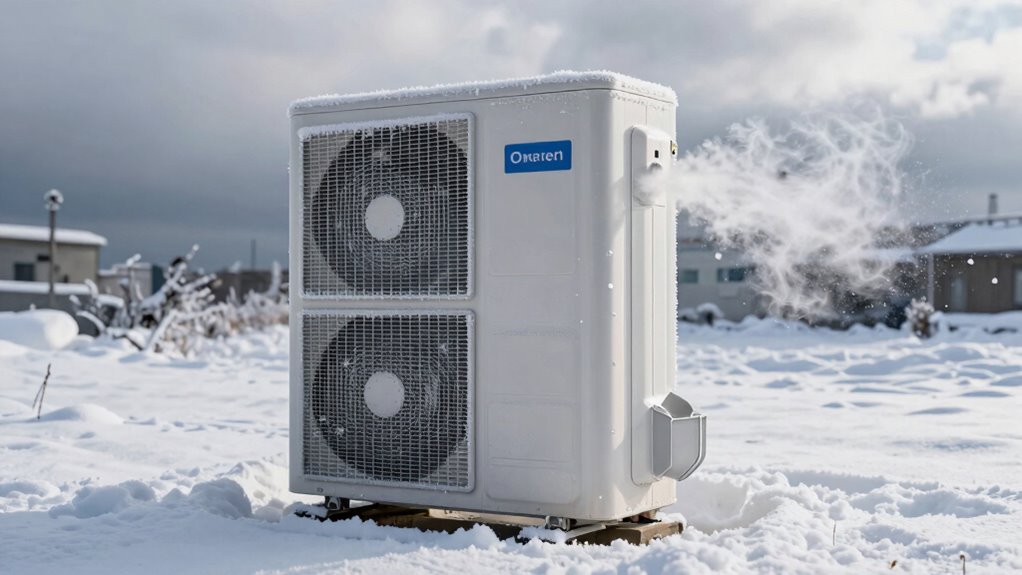
Advancements in heat pump technology are paving the way for greater cold weather resilience, ensuring efficient performance even in frigid conditions. Researchers are developing innovative solutions that leverage geothermal advantages and renewable integration to enhance reliability. These innovations include better compressor designs, advanced refrigerants, and hybrid systems that combine heat pumps with traditional heating. Future models may incorporate geothermal heat sources, providing consistent warmth regardless of outdoor temperatures. Additionally, integrating renewable energy sources like solar and wind can offset power needs and improve overall efficiency. These developments will help maintain high COPs in cold weather, reducing energy costs and increasing comfort. As technology progresses, you’ll find that future heat pumps are more adaptable, eco-friendly, and capable of handling the challenges posed by extreme climates.
Summary: Managing Expectations and Improving Cold Weather Performance
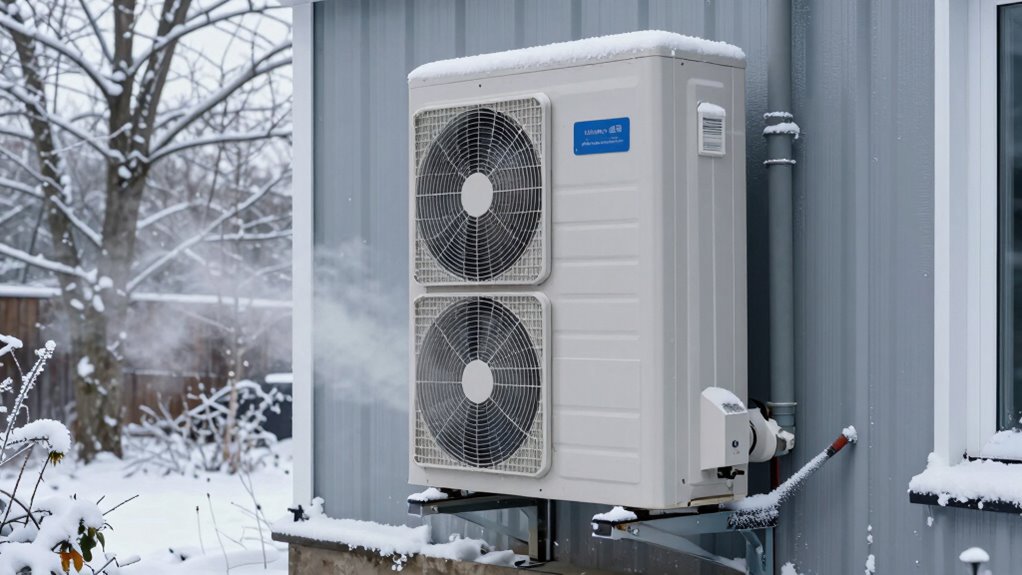
Managing expectations around heat pump performance in cold weather is essential, as even the most advanced systems face limitations in extreme conditions. Understanding these limits helps you plan for seasonal maintenance that keeps your system running efficiently. Regular upkeep, like cleaning filters and checking refrigerant levels, can maximize performance and extend your heat pump’s lifespan. It’s important to recognize that COP naturally drops as temperatures plummet, so adjusting user expectations prevents frustration. Educate yourself on how your system operates in cold weather and consider supplementary heating options if needed. By managing expectations and staying proactive with seasonal maintenance, you can optimize your heat pump’s performance, ensuring comfort and efficiency even on the coldest days.
Frequently Asked Questions
Can Regular Maintenance Prevent Efficiency Loss in Cold Weather?
Regular maintenance routines can help prevent efficiency loss in cold weather by keeping your heat pump running smoothly. You should check and clean filters, coils, and vents often. Additionally, component upgrades such as installing better insulation or advanced thermostats can improve performance. These steps guarantee your system operates effectively, even in low temperatures, reducing energy costs and extending its lifespan. Proper upkeep is key to maintaining ideal heat pump performance year-round.
How Does Humidity Affect Heat Pump Performance in Winter?
Humidity impact profoundly affects your heat pump’s winter performance. High moisture levels can cause frost buildup on the outdoor coil, reducing efficiency and increasing energy use. Conversely, low humidity can lead to dry air, making your system work harder to maintain comfort. Moisture effects like these influence how well your heat pump operates, so managing humidity with proper insulation and dehumidifiers helps optimize performance and prevents efficiency drops in cold weather.
Do Different Refrigerants Perform Better in Cold Climates?
You’ll find that certain refrigerants, like R-32 or R-410A, perform better in cold climates because of their refrigerant chemistry. These options adapt more effectively to low temperatures, maintaining higher efficiency levels. Climate adaptation is vital; choosing refrigerants designed for cold weather guarantees your heat pump operates reliably and efficiently even when temperatures drop, saving energy and reducing costs.
What Is the Impact of Wind Chill on Heat Pump Efficiency?
Wind chill can substantially decrease your heat pump‘s efficiency because it cools the outdoor coil faster, impairing heat exchange. When wind blows, it removes the warm air around the coil more quickly, making it harder for the heat pump to absorb heat from the outside air. This increased cooling of the coil reduces the system’s ability to transfer heat efficiently, leading to lower performance in windy, cold conditions.
Are There Specific Brands Known for Better Cold Weather Performance?
You might think all brands perform equally in cold weather, but some stand out. Brands like Mitsubishi and Fujitsu are renowned for better cold weather performance, thanks to their reliable technology. They also offer solid warranty coverage, giving you peace of mind in harsh conditions. Ironically, choosing a less reputable brand could cost you more in the long run with poor efficiency and limited support when you need it most.
Conclusion
Understanding why your heat pump’s efficiency drops in cold weather helps you set realistic expectations. Did you know that in extreme cold, some heat pumps can lose up to 50% of their efficiency? By choosing the right type and staying informed about performance data, you can optimize your system. With ongoing innovations, cold climate heat pumps are improving rapidly, so you’ll soon see better reliability even during the chilliest days.