Indoor air quality may seem complicated, but understanding CO₂, PM2.5, and VOCs makes it clearer. CO₂ levels indicate how well your home ventilates, affecting comfort and alertness. PM2.5 are tiny particles that can reach deep into your lungs, often from cooking or outdoor pollution. VOCs come from household products and building materials, impacting your health with headaches or respiratory issues. Staying aware of these pollutants helps you improve your indoor environment—if you want to learn more, keep going.
Key Takeaways
- CO₂ levels indicate ventilation quality and can cause discomfort or fatigue when elevated.
- VOCs are gaseous pollutants from household products and materials, impacting air quality and health.
- PM2.5 are tiny particles from cooking, smoking, and outdoor pollution that penetrate deep into lungs.
- Monitoring these pollutants with reliable sensors helps identify sources and improve indoor air conditions.
- Implementing proper ventilation, filtration, and low-emission products effectively enhances indoor air quality.

GoveeLife Smart Air Quality Monitor for Home, CO2 Detector for Health, Sleep Quality & Energy Efficiency, Thermometer Hygrometer with Real-Time Display & Alarm, for Office, Bedroom, Kitchen
Fast & Accurate: Equipped with the SCD4x CO₂ sensor (photoacoustic NDIR principle), it ensures accuracy of ±(40ppm +…
As an affiliate, we earn on qualifying purchases.
As an affiliate, we earn on qualifying purchases.
What Is Indoor Air Quality and Why Does It Matter?
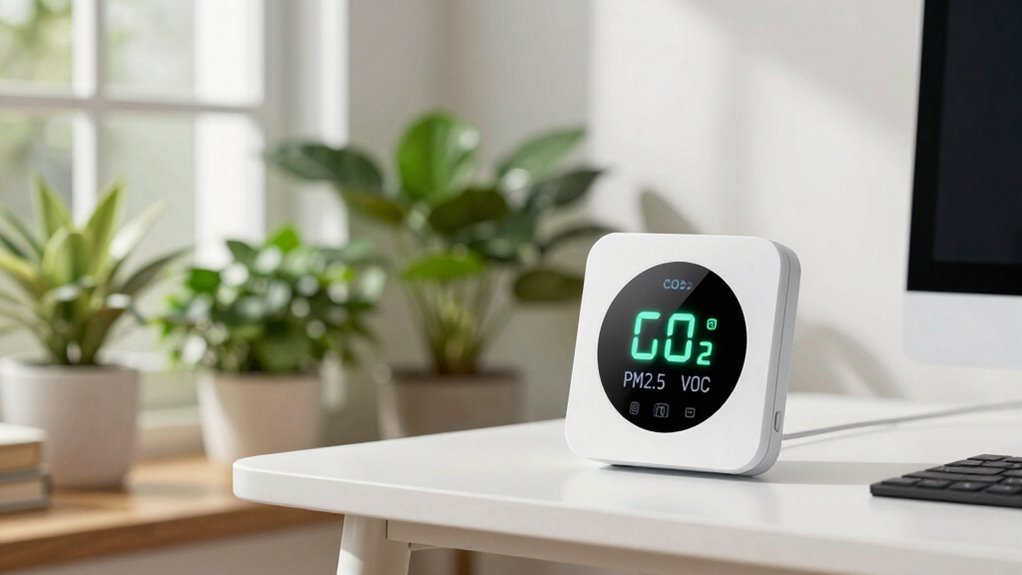
Have you ever wondered how the air inside your home affects your health and comfort? Indoor air quality (IAQ) refers to the cleanliness and safety of the air you breathe indoors. Good IAQ means meeting air quality standards set by health organizations, reducing health risks and creating a comfortable environment. Pollutant sources like tobacco smoke, cleaning products, or even indoor plants can introduce harmful particles into the air. Poor air quality can lead to headaches, allergies, or respiratory issues over time. Recognizing what affects IAQ helps you take control of your environment. By understanding pollutant sources and adhering to air quality standards, you can improve your indoor air, supporting better health and overall well-being. Additionally, monitoring factors like CO2 levels can help you assess ventilation effectiveness and maintain optimal indoor air conditions. Proper ventilation and air exchange are crucial for maintaining healthy indoor environments and preventing the buildup of indoor pollutants. Regularly evaluating your indoor air quality helps in timely identification and mitigation of potential hazards.
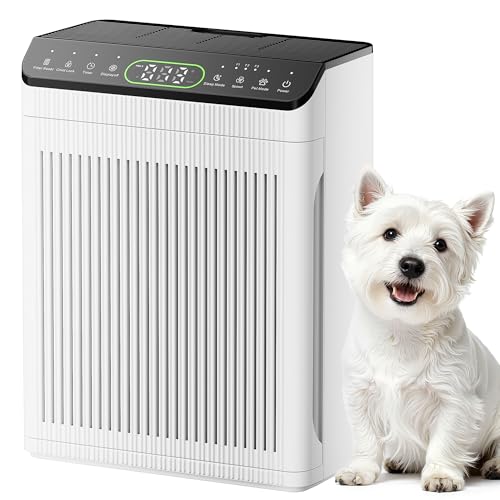
EVALIT Air Purifiers for Home Large Room, Air Purifier up to 2200sq.ft, PM2.5 Air Quality Display, Sleep Mode with Fragrance for Smoke Dust Odors, ET066, White, 1Pack+3Modes
Covers Up To 2200 ft² for Large Rooms: Specifically designed for spacious areas, this home air purifier effectively…
As an affiliate, we earn on qualifying purchases.
As an affiliate, we earn on qualifying purchases.
Common Indoor Pollutants That Affect Your Health
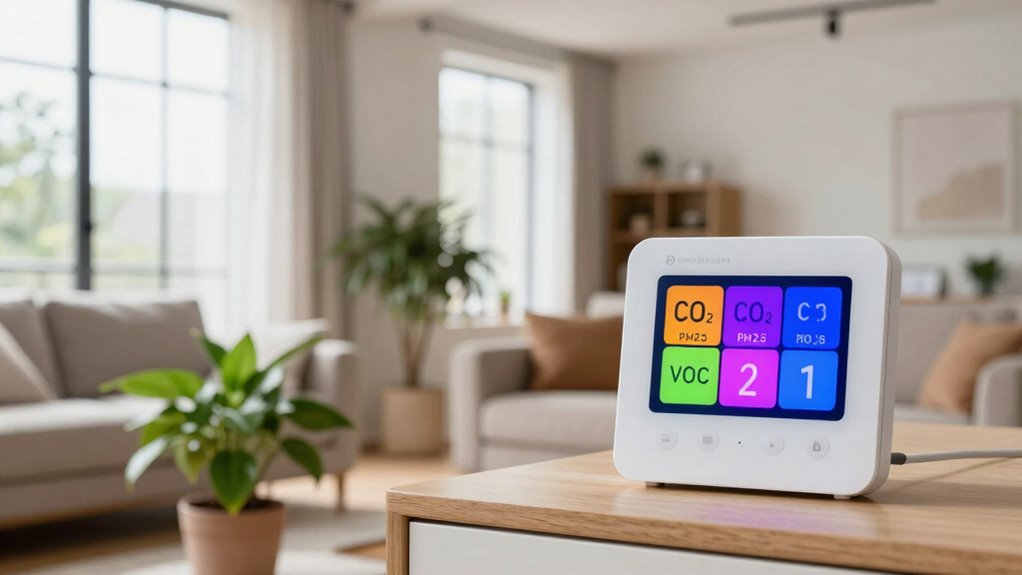
You’re often exposed to pollutants like VOCs, particulate matter, and elevated carbon dioxide levels inside your home. These contaminants can impact your health, causing respiratory issues, allergies, or dizziness. Understanding these common indoor pollutants helps you take steps to improve your indoor air quality. For example, monitoring CO2 levels can help ensure proper ventilation and reduce indoor air pollution. Recognizing the significance of indoor air quality measurements can empower you to make informed decisions about your living environment.
Volatile Organic Compounds (VOCs)
Volatile Organic Compounds (VOCs) are a group of chemicals emitted as gases from various household products and building materials, and they can considerably impact indoor air quality. You might notice strong chemical smells from paints, cleaning supplies, or air fresheners, which are often sources of VOCs. Exposure to these gases can cause health symptoms like headaches, dizziness, and respiratory irritation. To help you understand better, here’s a quick overview: Floating on Water substances can linger in the air for extended periods if not properly ventilated. Proper ventilation and choosing low-VOC or VOC-free products can significantly reduce these risks. Awareness of indoor pollutant sources is essential for maintaining a healthier living environment.
| Source | Common Chemical Smells | Possible Health Symptoms |
|---|---|---|
| Paints & Solvents | Strong chemical odors | Headaches, nausea |
| Cleaning Products | Sharp, pungent smells | Respiratory irritation |
| Air Fresheners | Fragrant chemical smells | Dizziness, throat irritation |
Reducing exposure can improve your indoor air quality profoundly.
Particulate Matter (PM2.5)
While VOCs contribute to indoor air pollution, particulate matter—specifically PM2.5—also poses significant health risks. PM2.5 particles are tiny, with a particle size less than 2.5 micrometers, making them easily inhalable deep into your lungs. These microscopic particles often come from sources like cooking, smoking, dust, and outdoor pollution that infiltrates your home. Because of their small size, PM2.5 particles can bypass many standard air filtration methods, increasing your risk of respiratory issues, allergies, and cardiovascular problems. To reduce exposure, you should consider using high-efficiency air filters designed to capture fine particles. Proper air filtration plays a vital role in maintaining healthier indoor air quality by removing these dangerous particles from your environment.
Carbon Dioxide Levels
Have you ever noticed a stuffy or stale feeling in your home even with the windows closed? That’s often a sign of high carbon dioxide levels. Indoor air quality sensors with carbon monitoring capabilities can help you track CO2 levels accurately. Elevated CO2 indicates poor ventilation, which can cause headaches, fatigue, and reduced concentration. By monitoring these levels regularly, you can identify when your indoor environment needs better airflow. Simple actions like opening windows or increasing ventilation can markedly improve air quality. Installing air quality sensors allows you to stay aware of CO2 fluctuations and maintain a healthier indoor space. Keeping carbon dioxide levels in check isn’t just about comfort—it’s about protecting your health. Regular monitoring is your best tool to ensure fresh, safe indoor air. Understanding indoor pollutants can help you make more informed decisions about improving your home’s air quality. Additionally, understanding the impact of indoor air quality on health emphasizes the importance of proactive monitoring. Being aware of indoor pollutants like CO2 can lead to better health outcomes and a more comfortable living environment. Recognizing the sources of indoor CO2 can help you implement more effective ventilation strategies. Regularly ventilating your home reduces indoor pollutant buildup, ensuring a healthier environment for everyone.

16 in 1 Air Quality Monitor Indoor 7" Large Display 9 AQI+7 Alerts, CO2 Monitor Air Quality Tester for CO2, TVOC, PM2.5 PM1.0 PM10, HCHO Temperature Humidity AQI & Time Air Quality Meter for Home
【16-in-1 Air Quality Monitor Indoor】Experience the ultimate indoor air quality monitoring with our 16-in-1 Air Quality Monitor, offering…
As an affiliate, we earn on qualifying purchases.
As an affiliate, we earn on qualifying purchases.
What Is Carbon Dioxide (CO₂), and Why Should You Care?

You might not realize it, but high levels of CO₂ can make your indoor space feel stuffy and uncomfortable. Monitoring CO₂ helps you keep the air fresh and safe for everyone. Understanding these levels also alerts you to potential health risks before they become serious. Keeping track of smart appliances and connected systems can assist in maintaining optimal air quality effortlessly. Additionally, being aware of VOCs and other airborne contaminants, such as odors from spoiled food or chemicals like bleach, can further improve indoor air quality. Incorporating air purification methods that target specific pollutants can also significantly enhance overall air safety. Recognizing the importance of air exchange rates can help ensure proper ventilation and reduce pollutant buildup indoors. Proper piercing aftercare and hygiene practices can prevent infections and maintain overall well-being in body modifications.
CO₂ and Indoor Comfort
Carbon dioxide (CO₂) levels in indoor spaces directly influence your comfort and well-being. When CO₂ accumulates, you might feel stuffy, sleepy, or less alert. Proper air circulation helps keep these levels in check, ensuring fresh air flows throughout your space. Incorporating indoor plants can naturally improve air quality, as they absorb CO₂ and release oxygen, creating a healthier environment. Good ventilation prevents CO₂ from reaching uncomfortable concentrations, making it easier for you to breathe comfortably and stay focused. Monitoring CO₂ levels can help you identify when to increase airflow, especially during busy gatherings or long periods indoors. Regularly checking CO₂ concentrations and implementing air quality management strategies can significantly enhance indoor comfort. Maintaining optimal CO₂ levels also supports indoor air quality, which is essential for overall health. Understanding air circulation principles can further help optimize your indoor environment. Additionally, awareness of how VOCs and PM2.5 impact air quality can guide you in creating a safer and more comfortable indoor space. Keeping CO₂ in balance isn’t just about air quality—it’s about maintaining a space where you feel comfortable, alert, and healthier every day. Introducing air quality monitoring devices can provide real-time data, making it easier to maintain ideal conditions.
Monitoring Health Risks
Did you know that elevated levels of carbon dioxide (CO₂) can pose real health risks? High CO₂ concentrations can lead to headaches, fatigue, and reduced concentration, impacting your well-being. Monitoring these risks is essential, and effective strategies include:
- Using air filtration systems to remove excess CO₂
- Incorporating indoor plants that naturally absorb CO₂
- Ensuring proper ventilation to circulate fresh air
- Installing CO₂ detectors to track levels in real-time
- Being aware of Gold IRA Markets, which exemplify the importance of transparency and reliable information in decision-making.
Additionally, understanding how market fluctuations can influence asset values helps in making informed investment choices. Recognizing the importance of indoor air quality can also help prevent long-term health issues associated with poor air conditions, especially when considering air pollutant levels and their impact on health. Furthermore, staying informed about air quality standards ensures you maintain a healthier indoor environment.
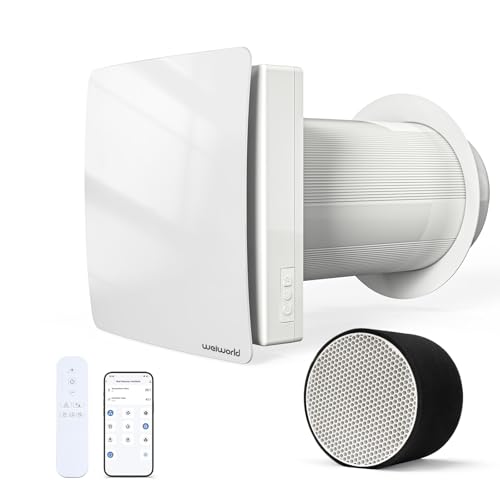
Weiworld Heat Recovery Ventilator with Ceramic Heat Exchanger, Wall-Mounted Fresh Air System with WiFi/Remote Control for Home, Attic, Garage – Supply, Exhaust & Recirculation Ventilation Fan
Heat Recovery Ventilator (HRV) for single room ventilation: Equipped with a high-efficiency ceramic heat exchanger that recovers up…
As an affiliate, we earn on qualifying purchases.
As an affiliate, we earn on qualifying purchases.
How Do PM2.5 Particles Enter Your Home?

PM2.5 particles can easily find their way into your home through several entry points, often without you noticing. Common pollutant sources like open windows, doors, or vents allow outdoor air to flow inside. Additionally, activities such as cooking, cleaning, and burning candles generate indoor particles that contribute to PM2.5 levels. Poor air filtration systems can also let fine particles slip through. To minimize entry, consider sealing gaps and upgrading filters. Regular maintenance of ventilation systems helps prevent airborne contaminants from entering. Proper ventilation practices and the use of high-efficiency filters can significantly reduce indoor PM2.5. Here’s a quick overview:
| Entry Point | Source Type |
|---|---|
| Open windows and doors | Outdoor pollution |
| HVAC and vents | Air circulation systems |
| Indoor activities | Cooking, smoking, candles |
| Cracks and gaps | Structural entry points |
What Are VOCs, and Why Are They Dangerous?

Have you ever wondered what VOCs are and how they can affect your health? Volatile Organic Compounds (VOCs) are gases emitted from everyday products and pollutant sources, like paints, cleaning supplies, and furniture. These compounds can linger in your indoor air, often unseen, but harmful over time. Poor air quality monitoring can help identify elevated VOC levels, so you can take action. Exposure to VOCs may cause headaches, dizziness, or respiratory irritation. Some VOCs are even linked to long-term health risks. To reduce your risk, be aware of pollutant sources and guarantee proper ventilation. Regularly checking indoor air quality helps detect VOC buildup early, keeping your environment safer and healthier.
How Indoor Air Quality Impacts Your Respiratory and Overall Health
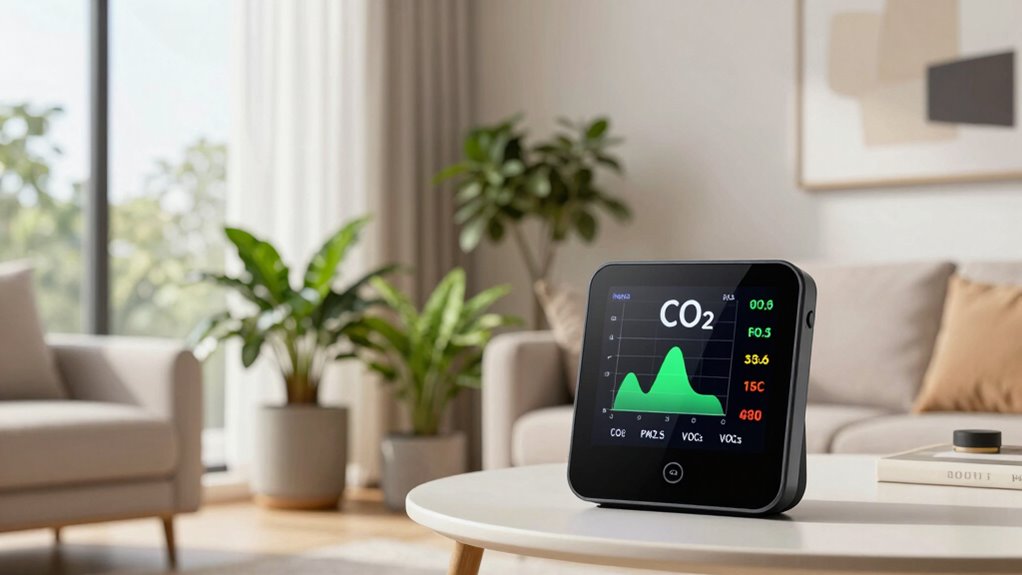
Poor indoor air quality can directly affect your respiratory health and overall well-being. When pollutants like VOCs, PM2.5, and high CO2 levels linger, they can cause symptoms like coughing, sneezing, and fatigue. Over time, exposure may worsen asthma or lead to respiratory infections. To improve air quality, indoor plants can naturally filter pollutants and boost oxygen levels. Additionally, air purifiers effectively remove airborne particles and harmful chemicals, creating a safer environment. Maintaining good ventilation and reducing sources of indoor pollutants also helps protect your health. By taking these steps, you reduce the risk of respiratory issues and support your overall health, ensuring your indoor space is a safe, healthy place to breathe and thrive.
Recognizing Symptoms of Poor Indoor Air Quality

You might notice symptoms like persistent coughing, sneezing, or headaches when indoor air quality drops. These signs can be early warnings of more serious health risks if ignored over time. Recognizing these symptoms helps you take action before long-term health problems develop.
Common Indoor Symptoms
Many people notice subtle changes in how they feel when indoor air quality declines, making it important to recognize common symptoms early. You might experience headaches, fatigue, or eye irritation without an obvious cause. Persistent coughing or sneezing can also signal poor air quality, especially if mold growth is present. You may notice a musty smell or difficulty breathing, particularly in damp areas. Using air purifiers can help reduce airborne pollutants, but if mold grows unnoticed, symptoms may worsen. Other signs include nasal congestion, sore throat, or skin irritation. Being attentive to these symptoms helps you identify indoor air issues sooner, preventing longer-term health effects. Regular cleaning and proper ventilation are key to maintaining a healthier indoor environment.
Long-term Health Risks
Prolonged exposure to indoor air pollutants can lead to serious long-term health problems that may not be immediately obvious. Long term exposure to substances like VOCs, PM2.5, and high CO2 levels can contribute to chronic health issues over time. You might not notice symptoms right away, but persistent exposure increases your risk of respiratory diseases, cardiovascular problems, and even neurological effects. Poor indoor air quality can cause ongoing inflammation and weaken your immune system, making you more vulnerable to illnesses. Recognizing these potential risks is vital. If you experience lingering symptoms such as fatigue, headaches, or breathing difficulties, it may indicate long-term exposure. Addressing indoor air quality early can help prevent these chronic health conditions from developing or worsening.
How to Measure Indoor CO₂ Levels Accurately

To measure indoor CO₂ levels accurately, selecting the right equipment is essential. You want reliable air quality sensors that provide precise readings, guaranteeing measurement accuracy. Focus on devices with real-time monitoring capabilities and consistent calibration. Look for sensors with digital displays for easy interpretation and data logging features to track changes over time. Consider environmental factors like temperature and humidity, which can influence readings. Ensure the sensor’s response time is quick enough to detect sudden CO₂ spikes. Investing in quality sensors not only improves accuracy but also helps maintain healthy indoor air quality. Remember, accurate measurements empower you to make informed decisions about ventilation and air circulation, ultimately promoting a healthier indoor environment.
How to Detect and Monitor PM2.5 in Your Indoor Environment
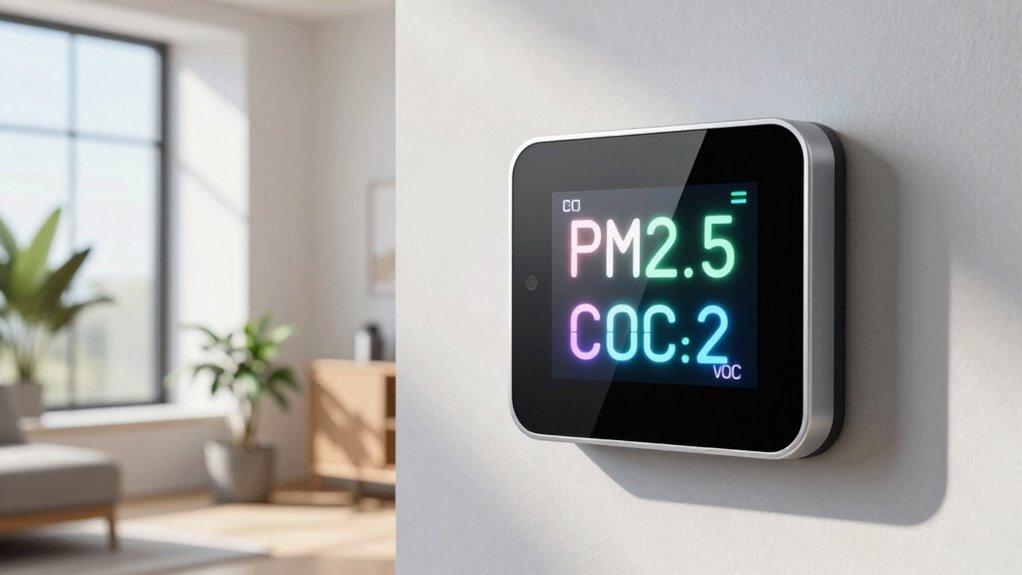
Wondering how to keep track of PM2.5 levels in your indoor space? The key is using reliable air quality monitors designed for fine particulate matter. These devices measure PM2.5 concentrations in real time, helping you stay within air quality standards set by health authorities. When selecting a monitor, look for features like digital displays, data logging, and smartphone connectivity for easier tracking. Being aware of pollutant sources, such as cooking, smoking, or nearby traffic, can help you interpret the readings accurately. Regular monitoring enables you to identify problem areas and take action to improve air quality, ensuring a healthier environment for you and your family. Consistent detection and awareness are essential steps in maintaining ideal indoor air quality.
Common Sources of VOCs in Homes and Offices
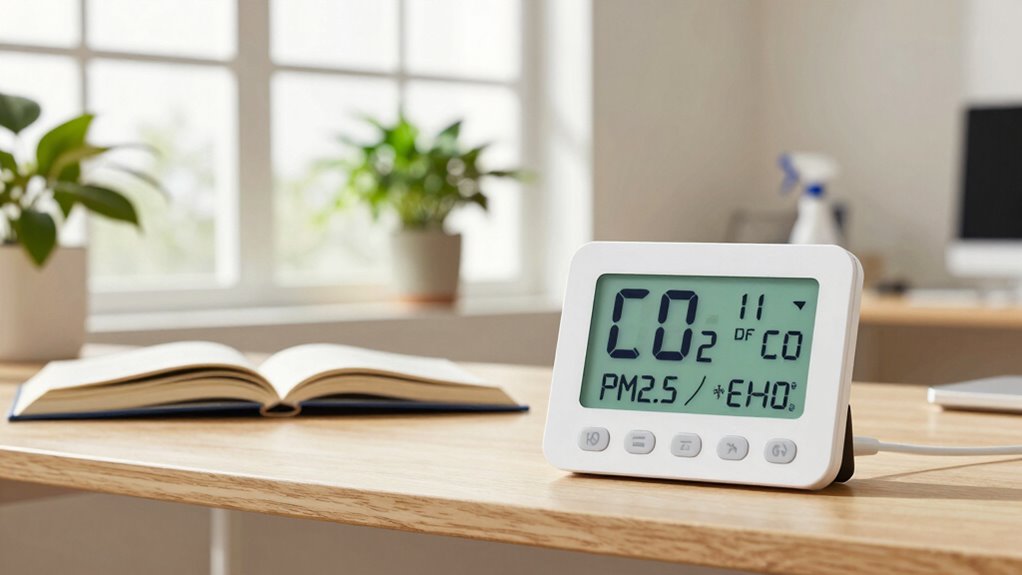
Many VOCs in your home or office come from everyday sources like building materials, cleaning products, and personal care items. These substances release chemicals into the air that can affect your health over time. Understanding where VOCs originate helps you make better choices to improve your indoor air quality.
Building Materials Emissions
Building materials are one of the primary sources of volatile organic compounds (VOCs) in indoor environments, releasing these emissions over time as they off-gas chemicals into the air. These building emissions stem from various products used in construction and finishing, contributing to indoor air pollution. Material off gassing occurs as materials like adhesives, paints, and finishes release VOCs long after installation. You might encounter VOCs from:
- Particleboard and pressed wood products containing formaldehyde
- Carpet adhesives and underlayments
- Paints, varnishes, and sealants
- Insulation materials like foam or fiberglass
These emissions can linger for months or even years, affecting indoor air quality. Awareness of building emissions helps you make better choices to reduce VOC exposure and improve your indoor environment’s air quality.
Household Cleaning Products
Household cleaning products can be significant sources of volatile organic compounds (VOCs) in your home or office, often releasing chemicals into the air during and after use. These VOCs can linger and impact indoor air quality, especially if natural ventilation isn’t sufficient. To reduce exposure, opt for eco-friendly, low-VOC cleaning options whenever possible. Proper use of natural ventilation—opening windows and doors—helps disperse VOCs and freshen the air. Additionally, regular cleaning can prevent mold growth, which can worsen indoor air quality and lead to health issues. Always read labels carefully, and avoid mixing different cleaning products, as this can increase VOC emissions. Taking these steps can create a healthier environment and minimize the risks associated with VOCs from household cleaning products.
Personal Care Items
Ever wonder how your personal care products affect indoor air quality? Many contain VOCs that contribute to indoor pollution through fragrance emissions. These emissions can linger in the air, impacting those sensitive to chemical odors. Personal care items like perfumes, deodorants, hair sprays, and lotions release VOCs that add to indoor pollution levels. To minimize exposure, consider:
- Choosing fragrance-free or natural products
- Using products in well-ventilated areas
- Limiting the use of aerosol sprays
- Reading labels to identify VOC-containing ingredients
Reducing fragrance emissions from personal care helps improve air quality and decreases potential health risks. Being mindful of the products you use daily can make a significant difference in maintaining a healthier indoor environment.
Easy Ways to Reduce CO₂ Concentrations Indoors
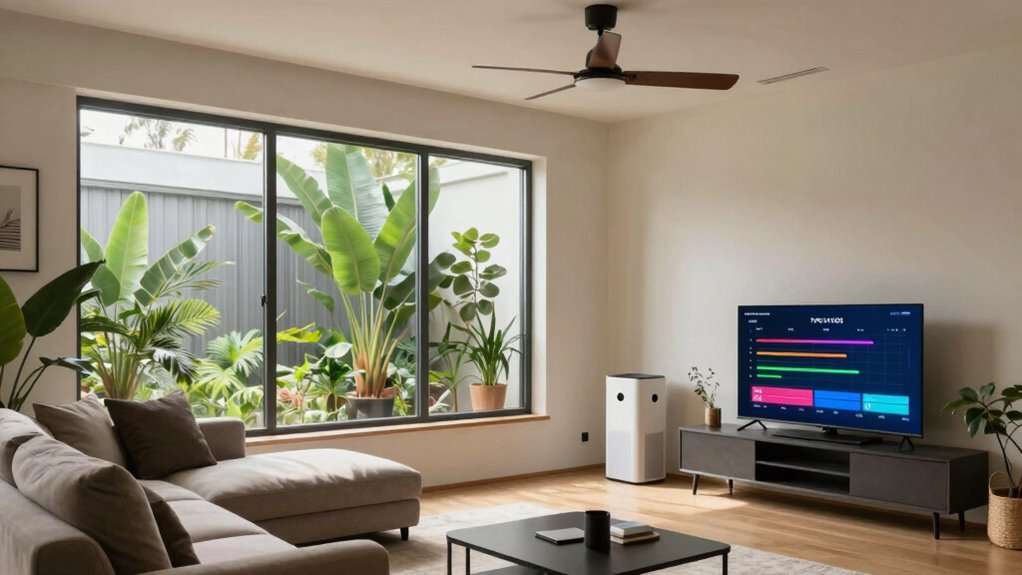
To effectively lower indoor CO₂ levels, increasing ventilation is one of the simplest and most immediate steps you can take. Proper airflow helps dilute CO₂ from pollutant sources like human respiration and appliances. Ensuring your space meets air quality regulations can guide ventilation practices. Open windows regularly or use exhaust fans to bring in fresh air. Consider air purifiers with fresh air intake capabilities for constant circulation. Be mindful of pollutant sources that contribute to CO₂ buildup, such as crowded rooms or poorly ventilated areas.
| Ventilation Method | Suitable Space | Tips |
|---|---|---|
| Opening Windows | Small to large | Do it daily for fresh airflow |
| Exhaust Fans | Bathrooms/Kitchens | Use during and after activities |
| Air Purifiers with Fresh Air Intake | Living rooms/Offices | Maintain filters regularly |
| Mechanical Ventilation | Whole house | Install for consistent air exchange |
| Air Quality Monitors | Any space | Track CO₂ levels and adjust flow |
Simple Tips to Minimize PM2.5 Levels at Home

Improving indoor air quality isn’t just about controlling CO₂; it also involves reducing fine particulate matter known as PM2.5, which can pose serious health risks. To keep PM2.5 levels low, consider using an air purifier regularly and maintaining it properly—clean filters ensure peak performance. Incorporate indoor plants, as they offer benefits like filtering airborne particles and increasing humidity, which helps trap PM2.5. Additionally, avoid smoking indoors, reduce dust sources like carpets and clutter, and ensure proper ventilation during cooking or cleaning. Regularly checking your air purifier’s filters and replacing them when needed is essential. Remember, combining these strategies creates a cleaner, healthier environment, minimizing your exposure to PM2.5 and supporting overall indoor air quality.
How to Reduce VOCs and Improve Indoor Air Quality

You can improve your indoor air quality by increasing ventilation to bring in fresh air and reduce VOC buildup. Using air purifiers with activated carbon filters helps remove airborne chemicals effectively. Additionally, choosing low-VOC products for cleaning, painting, and furniture minimizes emissions and keeps your indoor air cleaner.
Increase Ventilation Effectively
Increasing ventilation is one of the most effective ways to reduce volatile organic compounds (VOCs) and enhance indoor air quality. By improving air exchange, you remove pollutants and bring in fresh air. Focus on effective ventilation strategies to maximize results:
- Open windows and doors regularly to promote natural airflow
- Use exhaust fans in kitchens and bathrooms to vent VOCs directly outside
- Install mechanical ventilation systems for consistent air exchange
- Ensure ventilation systems are well-maintained and filters are clean
These steps help dilute indoor pollutants and prevent accumulation of VOCs. Tailoring your ventilation strategies to your home’s layout and activity levels ensures ideal indoor air quality. Remember, consistent air exchange is key to maintaining a healthier indoor environment.
Use Air Purifiers Wisely
While air purifiers can be effective tools for reducing VOCs and improving indoor air quality, using them wisely guarantees you get the best results. Regular air purifier maintenance is essential—clean filters and check for damage to guarantee peak performance. Replace filters as recommended by the manufacturer; neglecting this can diminish filtration efficiency and leave VOCs lingering. Position your purifier in areas with high pollutant sources, like kitchens or workshops, to maximize its effectiveness. Run the purifier continuously or during times of high VOC emissions for better results. Remember, an air purifier isn’t a set-it-and-forget-it device; consistent filter replacement and proper placement are key to reducing VOCs and maintaining healthier indoor air.
Select Low-VOC Products
Choosing low-VOC products is one of the most effective ways to reduce indoor air pollution. These products emit fewer volatile organic compounds, improving air quality and supporting a healthier environment. When selecting materials, look for labels indicating low or zero VOC content. Incorporate products designed for green building standards, which prioritize sustainable and non-toxic options. To maximize benefits, consider these strategies:
- Use air filtration systems that target VOCs and other pollutants
- Choose paints, finishes, and cleaning supplies labeled as low-VOC or VOC-free
- Opt for natural, sustainable materials like bamboo or recycled wood
- Prioritize products with certifications such as Greenguard or LEED compatibility
This approach helps create a healthier indoor environment by reducing chemical emissions and supporting sustainable building practices.
The Role of Ventilation in Improving Indoor Air Quality
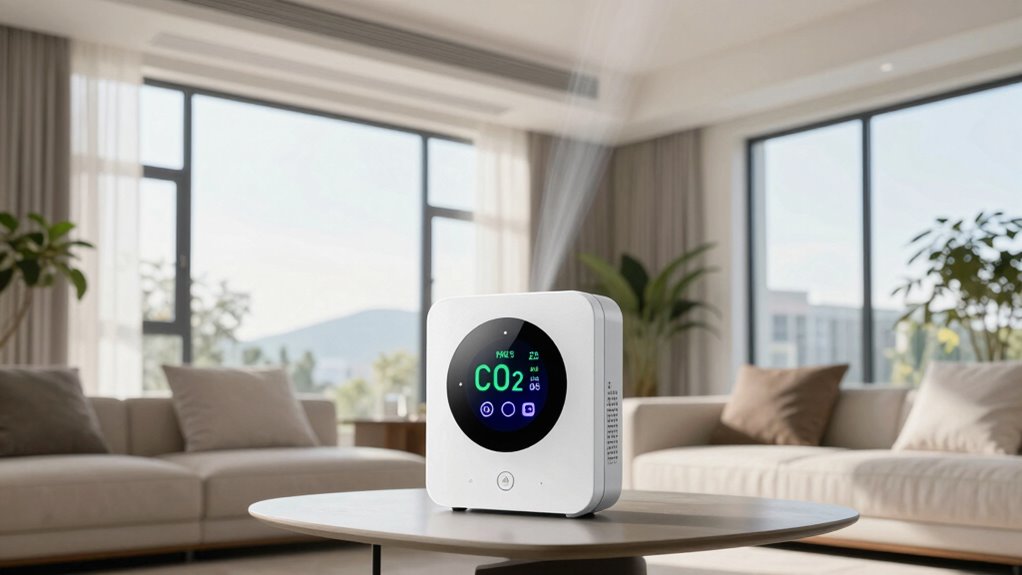
Ventilation plays a crucial role in maintaining healthy indoor air quality by continuously exchanging stale air for fresh air from outside. Proper air exchange helps reduce pollutants like CO2, VOCs, and PM2.5, creating a safer environment. You can improve air quality with various ventilation strategies, such as natural ventilation through windows or mechanical systems like HVAC. Choosing the right approach depends on your space and needs. Implementing effective ventilation ensures pollutants don’t accumulate and helps control humidity and odors. Here’s a quick comparison:
| Ventilation Strategy | Key Benefit |
|---|---|
| Natural Ventilation | Cost-effective, relies on outdoor conditions |
| Mechanical Ventilation | Consistent air exchange, better control |
| Exhaust Fans | Removes indoor pollutants locally |
| Air Purifiers (support) | Supplement ventilation, filter pollutants |
Do Air Purifiers Help? What You Need to Know About Filtering Pollutants

Air purifiers can be effective tools for improving indoor air quality, especially when used alongside ventilation systems. They help reduce pollutants like dust, VOCs, and PM2.5 particles, but their effectiveness depends on proper use and filter maintenance. To maximize benefits, choose a purifier with a HEPA filter, which captures small particles efficiently. Keep filters clean and replace them as recommended to maintain ideal air purifier effectiveness. Be aware that some models also include activated carbon filters for odors and VOCs, enhancing overall air quality. Remember, an air purifier isn’t a standalone solution; it works best when combined with good ventilation and source control. Regular filter maintenance ensures your device continues to perform effectively, providing cleaner, healthier indoor air.
Choosing the Right Air Quality Monitors for Your Home
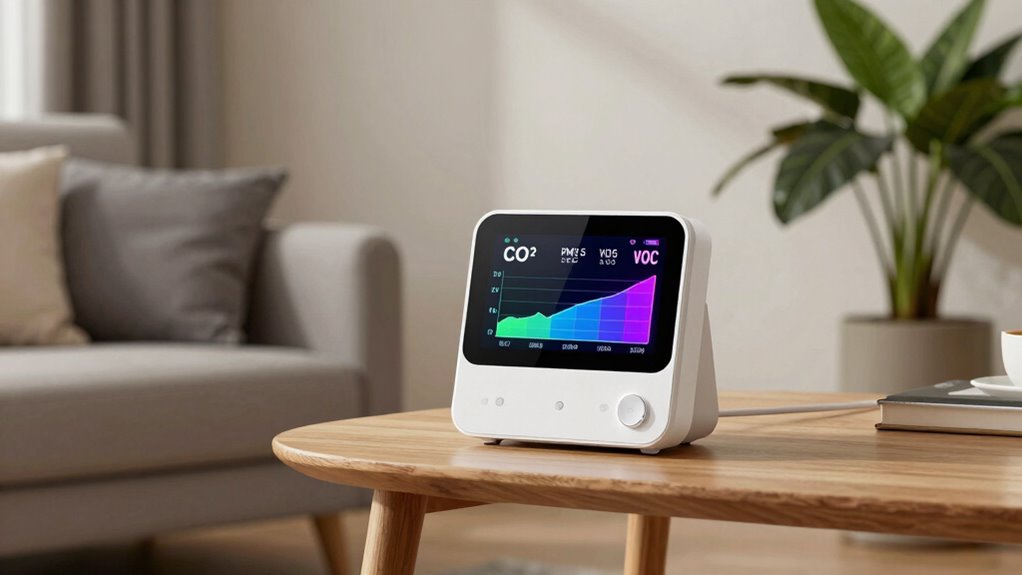
Selecting the right air quality monitor is essential for accurately evaluating your home’s indoor environment and identifying pollution sources. You want a device with reliable air quality sensors that measure key pollutants like CO2, PM2.5, and VOCs. Proper monitor placement ensures accurate readings; avoid corners, near windows, or vents that could skew data. Consider the monitor’s features, such as real-time alerts and data logging, to track changes over time. Here’s a quick guide:
| Key Feature | Why It Matters | Best Use Case |
|---|---|---|
| Multiple Sensors | Detect different pollutants | Holistic assessment |
| Wireless Connectivity | Easy data access and alerts | Smart home integration |
| Adjustable Placement | Optimize accuracy and convenience | Various room sizes |
Choose a monitor that fits your needs, ensuring accurate, actionable insights.
Practical Steps to Build a Healthy Indoor Environment
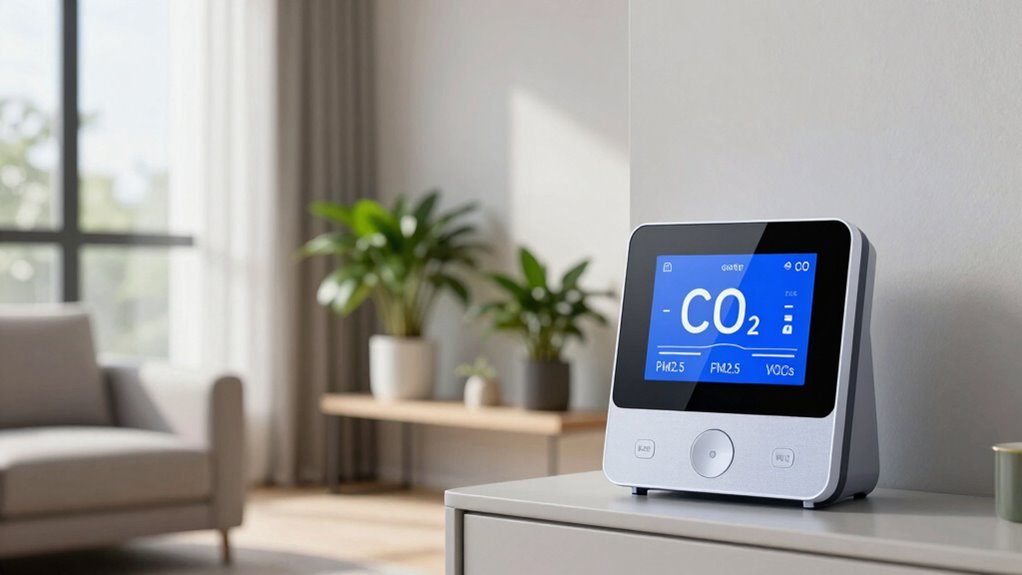
To create a healthier indoor environment, start by improving your ventilation systems to guarantee fresh air circulates effectively. Using air purifiers can help remove airborne pollutants, making the air safer to breathe. Additionally, minimizing indoor pollutants by controlling sources like smoke, chemicals, and clutter will further enhance your indoor air quality.
Improve Ventilation Systems
Improving your ventilation system is a essential step toward creating a healthier indoor environment. Effective ventilation ensures proper air exchange, reducing pollutants like VOCs, CO2, and PM2.5. To boost ventilation efficiency, consider these practical actions:
- Upgrade to energy-efficient exhaust fans in kitchens and bathrooms
- Regularly clean and maintain vents and filters
- Increase natural airflow by opening windows when weather permits
- Install ventilation systems with adjustable settings for ideal air exchange
These steps help remove stale air and bring in fresh air, lowering indoor pollutant levels. By focusing on air exchange and ventilation efficiency, you create a balanced environment that promotes better health and comfort. Proper ventilation isn’t just about airflow; it’s a essential component of indoor air quality management.
Use Air Purifiers
Enhancing your ventilation system helps remove indoor pollutants, but combining it with air purifiers can further improve air quality. When choosing an air purifier, consider different air purifier types such as HEPA, activated carbon, or combination units to target specific pollutants like PM2.5 and VOCs. Regular air purifier maintenance is essential to keep it functioning effectively; this includes replacing filters as recommended and cleaning components. Proper maintenance guarantees maximum performance and prolongs your device’s lifespan. Select a purifier suited to your room size for efficient cleaning, and always follow manufacturer instructions. Using the right air purifier and maintaining it correctly helps reduce airborne contaminants, creating a healthier indoor environment for you and your family.
Minimize Indoor Pollutants
Reducing indoor pollutants starts with identifying common sources like tobacco smoke, household cleaning chemicals, and mold. To improve air quality, focus on air purification and allergen control. You can:
- Ventilate regularly by opening windows or using exhaust fans
- Use low-VOC or natural cleaning products to reduce chemical emissions
- Control humidity levels to prevent mold growth
- Keep surfaces clean and dust-free to minimize allergens
These steps help decrease airborne irritants and improve overall indoor air quality. Proper ventilation and air purification work together to remove pollutants, while allergen control reduces triggers for allergies and asthma. By actively managing these sources, you create a healthier environment and breathe easier every day.
How Humidity and Temperature Affect Indoor Pollutants
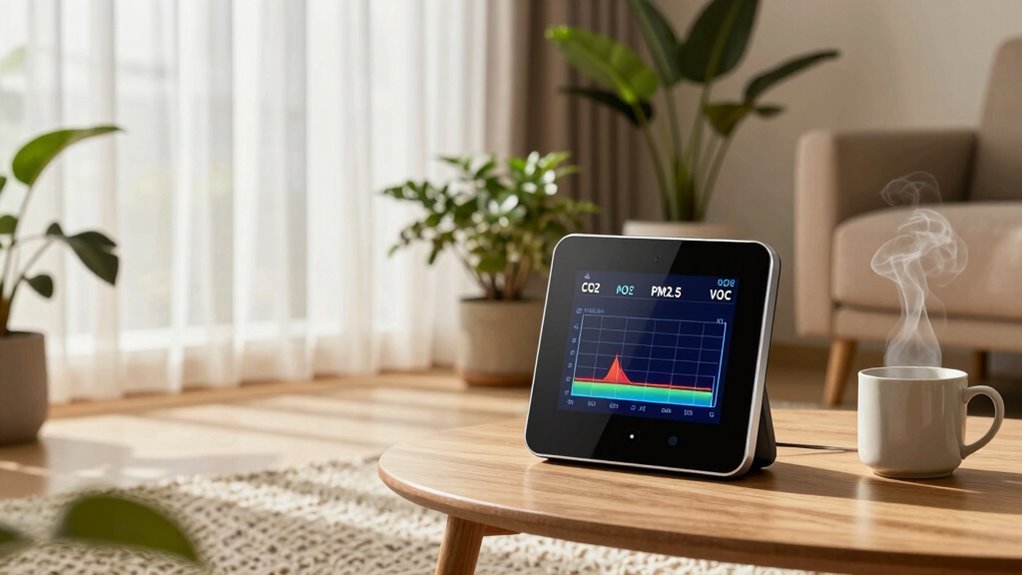
Humidity and temperature levels directly influence the presence and behavior of indoor pollutants. Humidity impact can cause certain pollutants like VOCs to linger longer or settle differently, while temperature variation affects how quickly pollutants disperse or react. High humidity encourages mold growth and increases dust mites, worsening air quality. Conversely, low humidity can cause respiratory discomfort and static electricity. Temperature fluctuations can alter the chemical reactions of indoor chemicals, impacting VOC levels.
| Humidity Impact | Temperature Variation |
|---|---|
| Promotes mold & dust mites | Changes pollutant dispersion |
| Affects VOC longevity | Alters chemical reactions |
| Influences particle settling | Impacts pollutant reactivity |
How Regular Cleaning Can Improve Indoor Air Quality
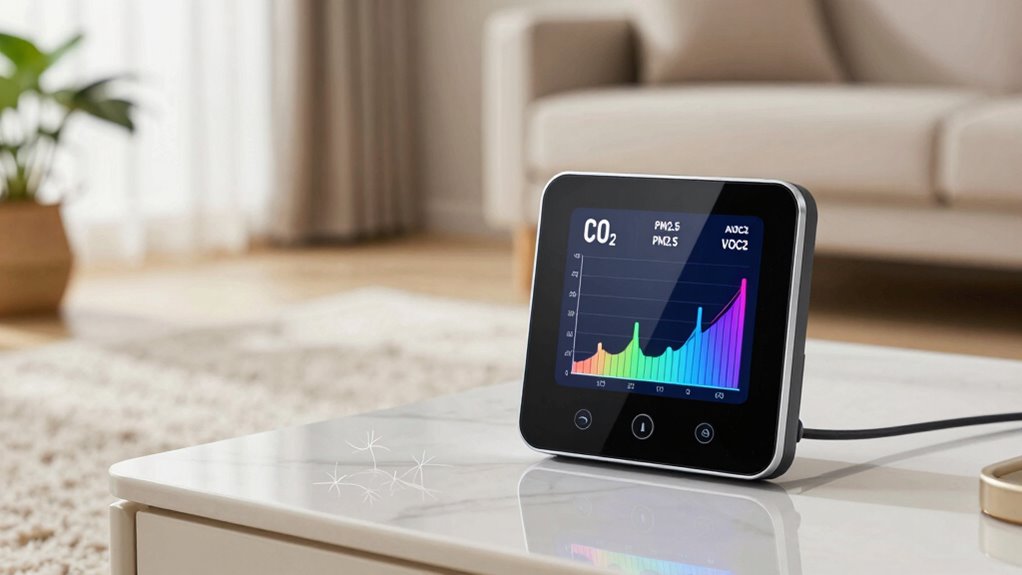
Regular cleaning plays a vital role in maintaining healthy indoor air quality by directly removing pollutants from your living space. It helps eliminate dust, allergens, VOCs, and PM2.5 particles that can worsen air quality. Many air quality myths suggest that cleaning isn’t necessary or that air purifiers alone suffice, but consistent cleaning routines are essential. To improve your indoor environment, focus on:
Regular cleaning is essential for healthy indoor air quality and pollutant removal.
- Dusting surfaces regularly to prevent allergen buildup
- Vacuuming with HEPA filters to trap fine particles
- Washing bedding and curtains frequently to reduce dust mites
- Cleaning air vents and filters to minimize airborne contaminants
Smart Devices That Help Monitor and Manage Indoor Pollutants
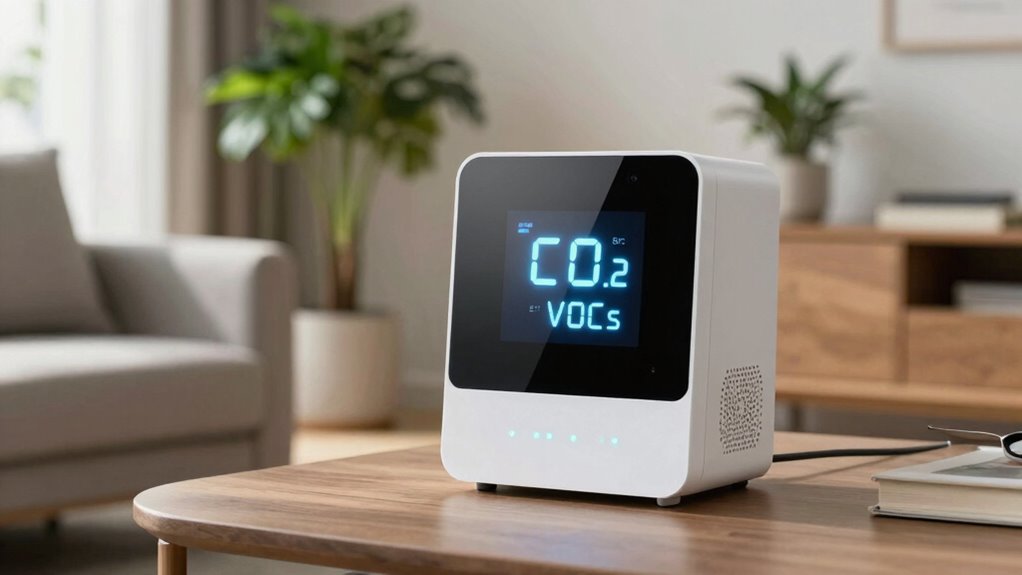
Smart devices have made it easier than ever to monitor and manage indoor air quality in real-time. With smart sensors, you can detect pollutants like CO2, VOCs, and PM2.5 instantly. These devices send pollutant alerts directly to your phone, so you’re always aware of air quality changes. Many smart monitors integrate with your home system, allowing automated responses, such as adjusting ventilation or activating air purifiers. To visualize this, consider the table below:
| Device Type | Functionality |
|---|---|
| Smart sensors | Detect pollutants and send alerts |
| Air purifiers | Automatically filter pollutants |
| Ventilation systems | Regulate airflow based on sensor data |
Using these tools, you gain control and peace of mind about your indoor environment.
When Should You Seek Professional Help for Indoor Air Quality?

While many indoor air quality issues can be managed with monitoring devices and simple ventilation adjustments, there are times when professional help becomes essential. If your efforts to improve air quality aren’t effective, or if symptoms like persistent allergies or respiratory problems worsen, it’s time to seek expert assistance. Professionals can evaluate air purifier selection options tailored to your needs and recommend indoor plant benefits that enhance air purification naturally. Consider consulting specialists if you notice mold growth, musty odors, or inexplicable health issues. They can conduct thorough testing for pollutants and identify sources you might overlook. Addressing these concerns early can prevent long-term health impacts and improve your indoor environment efficiently.
Indoor Air Pollution Myths and Facts You Should Know

Many people believe they understand indoor air pollution, but several common myths can lead to misconceptions and ineffective solutions. One myth is that indoor plants alone can significantly clean the air; while they add some oxygen, they don’t replace proper air filtration systems. Another misconception is that air filtration devices eliminate all pollutants instantly—many only reduce specific particles or VOCs over time. Some think opening windows always improves air quality, but this can introduce outdoor pollutants or allergens. Believing that only visible dirt affects air quality is false; many pollutants are microscopic. Understanding these facts helps you avoid relying solely on trendy solutions like indoor plants or superficial fixes and instead focus on proven air filtration methods for healthier indoor environments.
Key Tips to Keep Your Indoor Air Safe and Healthy

To maintain healthy indoor air, you need to implement practical strategies rather than relying on quick fixes. Understanding air quality myths is key, as they often lead to ineffective solutions. Identifying pollutant sources helps you target real problems. Regularly ventilate your home to dilute indoor pollutants and bring in fresh air. Use air purifiers with HEPA filters to reduce PM2.5 and VOCs. Keep your home clean, especially carpets and upholstery, to minimize dust and allergens. Avoid over-reliance on air fresheners, which can add VOCs. Be cautious about DIY air quality solutions based on myths; instead, focus on proven methods like source control and proper ventilation. Staying informed helps you make smarter choices to protect your indoor air quality effectively.
Frequently Asked Questions
Can Plants Improve Indoor Air Quality Effectively?
Yes, plants can improve indoor air quality effectively. They assist in plant detox by absorbing pollutants like VOCs and filtering air through their foliage. While they won’t completely eliminate all airborne contaminants, having a variety of indoor plants boosts your home’s air purification, making it fresher and healthier. Just remember, combining plants with good ventilation maximizes their foliage filtering benefits for a noticeable difference.
How Do Building Materials Impact Indoor Air Pollutants?
Building materials substantially impact indoor air quality by acting as emissions sources. You should choose low-emission or VOC-free materials to minimize indoor pollutant sources. For example, formaldehyde-releasing furniture or paints can release harmful pollutants over time. By selecting eco-friendly materials, you reduce building material emissions, creating a healthier indoor environment. Regular ventilation also helps disperse pollutants, ensuring your indoor air stays clean and safe.
Are There Seasonal Variations in Indoor Air Quality?
Yes, you’ll notice seasonal changes in indoor air quality due to weather patterns. During colder months, you might keep windows closed, trapping pollutants and increasing CO2 levels. In warmer seasons, open windows help ventilate, reducing indoor pollutants. Humidity shifts can also affect mold and VOC levels. Staying aware of these seasonal variations allows you to adjust ventilation and air purification to maintain healthier indoor air year-round.
How Does Indoor Air Quality Affect Children and Pets Differently?
Indoor air quality impacts children and pets differently because children are more vulnerable to child respiratory risks from pollutants like VOCs and PM2.5. Pets, on the other hand, often have allergy sensitivities that worsen with poor air quality. You should guarantee proper ventilation and reduce indoor pollutants to protect both. Regularly clean, avoid smoking indoors, and use air purifiers to create a healthier environment for your little ones and furry friends.
What Are the Long-Term Health Effects of Exposure to Indoor Pollutants?
Long-term exposure to indoor pollutants can lead to chronic respiratory issues, such as asthma or reduced lung function, and neurological impacts, including cognitive decline and headaches. You might notice symptoms worsening over time, especially if ventilation is poor or pollutant levels are high. To protect yourself and your loved ones, guarantee proper ventilation, use air purifiers, and minimize sources of indoor pollutants, reducing your risk of serious health consequences.
Conclusion
By paying attention to your indoor environment, you’re nurturing a sanctuary where health and comfort flourish. Addressing pollutants like CO₂, PM2.5, and VOCs isn’t just about safety—it’s about creating a space where you and your loved ones can breathe freely and thrive. With mindful awareness and simple steps, you can turn your home into a haven of well-being, where every breath feels like a gentle embrace, reminding you that your health truly matters.