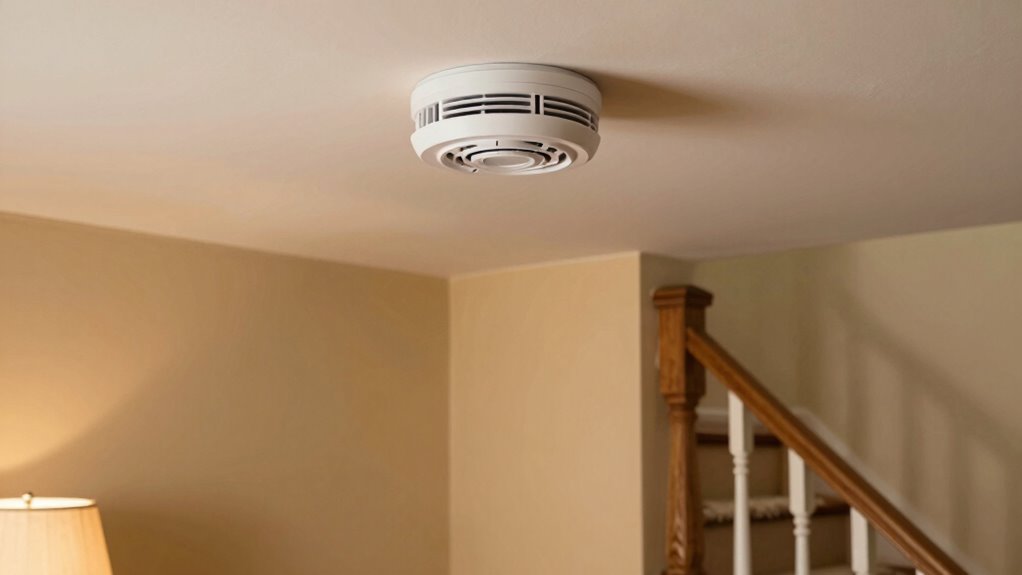

Many homeowners miss key smoke alarm placement rules that can compromise safety. To guarantee proper detection, install alarms on ceilings at least 4 inches from walls or on walls 4–12 inches below the ceiling, avoiding vents, windows, and ducts. Place alarms outside bedrooms and on each home level, especially near sleeping areas. Proper placement and regular maintenance are essential—continue exploring to discover essential tips for maximum protection.
Key Takeaways
- Smoke alarms should be mounted on ceilings or high on walls, at least 4 inches from the wall, to ensure proper detection.
- Alarms must be placed at least 10 feet away from kitchens, bathrooms, and vents to reduce false alarms.
- Install alarms inside bedrooms and outside sleeping areas on each level for maximum safety.
- Avoid placing alarms near airflow disruptions like HVAC ducts, windows, or doors that can prevent smoke detection.
- Regular testing, cleaning, and maintaining proper placement are essential for reliable smoke alarm performance.
hardwired smoke alarm with silence button
As an affiliate, we earn on qualifying purchases.
As an affiliate, we earn on qualifying purchases.
Why Proper Smoke Alarm Placement Matters for Home Safety
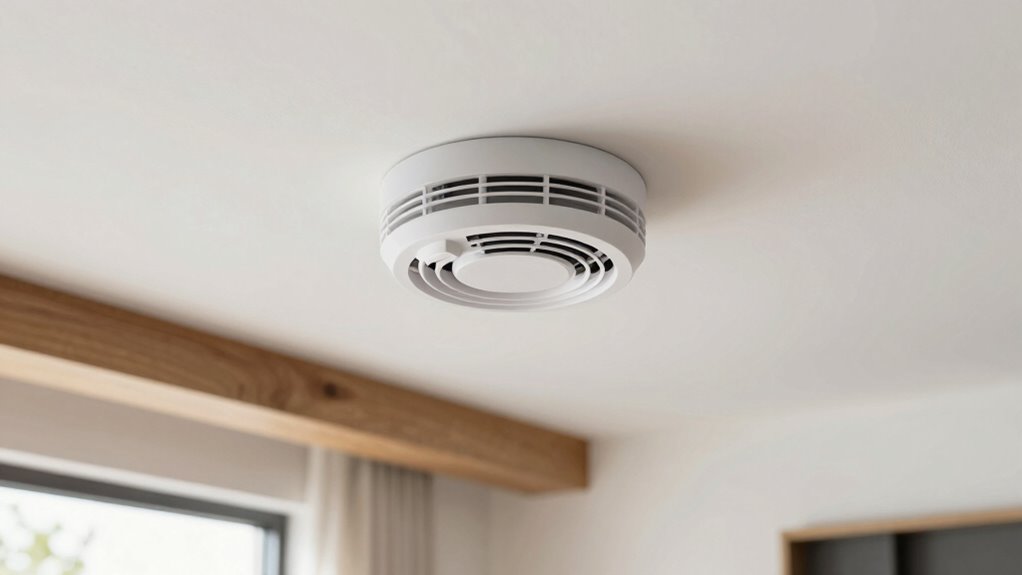
Proper smoke alarm placement is essential because it guarantees you’re alerted promptly in case of a fire. When you position alarms correctly, you maximize their effectiveness according to smoke detection standards. Modern fire alarm technology has advanced, but even the best devices won’t work if they’re not placed properly. For example, smoke alarms should be installed on every level of your home, especially near bedrooms and common areas. Avoid placing alarms near windows, vents, or kitchens where false alarms could occur. Correct placement ensures that smoke reaches the sensors quickly, giving you more time to react. Following smoke detection standards helps protect your home and loved ones, reducing the risk of injury or property damage during a fire emergency. Proper smoke alarm placement can significantly improve your home’s fire safety, especially when combined with regular testing and maintenance. Additionally, understanding smoke detection standards ensures that your alarms are positioned for optimal performance and compliance. Ensuring correct installation techniques are followed can further enhance the reliability of your smoke alarms, aligning with fire safety guidelines to provide comprehensive protection.
battery operated smoke detectors for bedrooms
As an affiliate, we earn on qualifying purchases.
As an affiliate, we earn on qualifying purchases.
How Many Smoke Alarms Do You Need in Your Home?
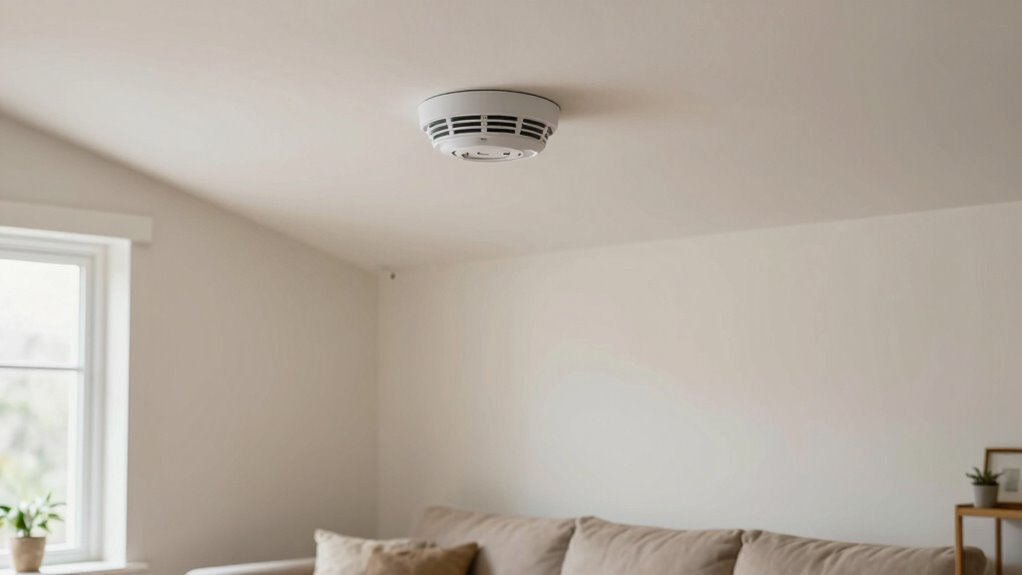
Knowing how many smoke alarms to install in your home can make a significant difference in fire safety. Generally, you should have at least one smoke alarm on every level, including the basement and attic. Place alarms inside bedrooms and outside sleeping areas to ensure alertness during sleep. Remember, a working smoke alarm with fresh alarm batteries is essential for reliable alerts. If a fire occurs, having multiple alarms increases your chances of early detection, giving you more time to reach your fire escape safely. Avoid relying on just one alarm; the more coverage you have, the better protected your family is. Properly spaced smoke alarms create an extensive safety net, minimizing the risk of missing a fire in any part of your home.
multi-level smoke alarm system
As an affiliate, we earn on qualifying purchases.
As an affiliate, we earn on qualifying purchases.
Where Should Smoke Alarms Be Installed on Each Floor?

You should install smoke alarms in central locations on each floor to guarantee maximum coverage. Place them near sleeping areas so you’re alerted early if a fire breaks out overnight. Just be sure to avoid installing alarms directly in the kitchen to prevent false alarms from cooking smoke. Additionally, ensure that smoke alarms are positioned at an appropriate height and away from vents or windows to optimize their effectiveness for reliable detection. Incorporating fire safety best practices into your smoke alarms can further enhance safety by providing real-time alerts and maintenance reminders. Recognizing the scientific skepticism surrounding certain safety claims can help you make informed choices about your home safety measures.
Central Location Placement
Where should smoke alarms be installed on each floor to guarantee maximum safety? Placing alarms in central locations ensures they detect smoke early and provide reliable alerts. Position alarms on the ceiling or high on the wall, as fire alarm technology works best there. Regular alarm maintenance keeps them functioning properly, reducing false alarms and failures. Avoid installing alarms near vents or windows to prevent drafts from triggering false alerts. Make sure each alarm covers a broad area without gaps. Proper alarm placement is vital for effective coverage on every floor. Ensuring alarms are installed at appropriate heights and locations maximizes their detection efficiency, which is crucial for early fire warning. Proper placement also minimizes false alarms, ensuring you respond only to real threats. Remember, central placement is crucial for ensuring early detection and quick response during a fire. Proper placement helps you respond faster and minimizes fire risks. Staying vigilant about alarm placement and maintenance can save lives and protect your home. Incorporating a reliable backup power source ensures your alarms continue functioning during outages, further enhancing your safety. Regularly reviewing fire safety guidelines can help keep your alarm setup optimal and up to date.
Near Sleeping Areas
Placing smoke alarms near sleeping areas guarantees you wake up quickly if a fire occurs during the night. To assure maximum safety, install alarms on each floor, especially outside bedrooms and in hallways leading to sleeping spaces. Follow the recommended fire alarm frequency; test alarms monthly and replace batteries at least once a year. Consider using different smoke alarm types, such as ionization for fast-flaming fires and photoelectric for slow, smoky fires. Both types help provide early warning. Proper placement minimizes the risk of false alarms caused by cooking or steam. Keep alarms at least 10 feet from kitchens and bathrooms to avoid interference. Regular maintenance and strategic placement near sleeping zones are crucial for effective fire detection and your safety while you rest. Additionally, alarm placement guidelines can help optimize your smoke alarm system for even better safety coverage. Ensuring correct alarm placement maximizes detection efficiency and reduces the chance of missed alerts. Proper smoke alarm positioning also helps prevent nuisance alarms and ensures quick alerting in case of an emergency. In addition, understanding the coverage area of each alarm helps in designing a comprehensive safety plan for your home. Considering environmental factors like humidity and dust can further improve alarm reliability and reduce false alarms.
Avoid Kitchen Interference
To prevent false alarms caused by cooking or steam, it’s important to install smoke alarms at strategic locations on each floor. Kitchen interference from cooking hazards can trigger false alarms, making you less likely to respond when there’s an actual fire. To avoid this, keep alarms away from kitchens and bathrooms where steam and smoke are common. Place alarms at least 10 feet from cooking appliances and vents. Ensure they’re installed on the ceiling or high on the wall for maximum detection.
- Avoid placing alarms directly above stoves or sinks
- Install alarms in hallways outside kitchens
- Keep alarms at least 3 feet from windows or doors
- Use interconnected alarms for better coverage
- Regularly test alarms to prevent false triggers
smoke alarm placement guide
As an affiliate, we earn on qualifying purchases.
As an affiliate, we earn on qualifying purchases.
Best Placement Tips for Bedrooms and Sleeping Areas
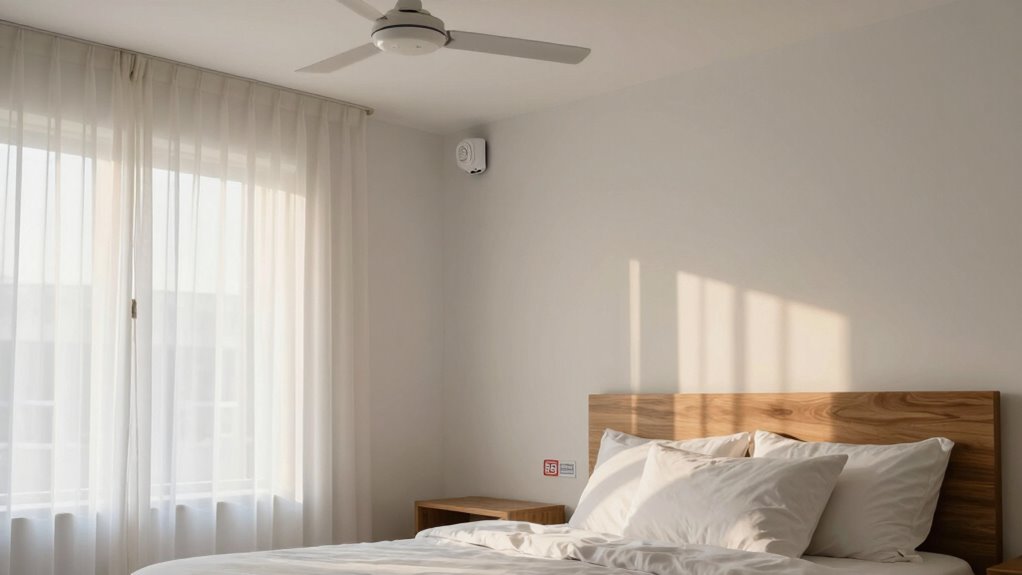
To guarantee your smoke alarms work effectively in bedrooms, position them at the right height—usually on the ceiling or high on the wall. Keep alarms at least a few feet away from sleeping areas to avoid false alarms, and make sure there are no obstructions or dead zones that could block the sound. Proper placement helps you wake up quickly and stay safe in case of fire.
Optimal Alarm Placement Height
For maximum safety, smoke alarms should be installed at a specific height in bedrooms and sleeping areas to guarantee they detect smoke quickly. Proper alarm height guarantees early warning without false alarms. Generally, alarms should be mounted on the ceiling or high on the wall near the ceiling for ideal ceiling placement. Keep in mind these key tips:
- Install alarms on the ceiling at least 4 inches from the wall
- If on a wall, position 4-12 inches below the ceiling
- Avoid placing alarms near vents, windows, or doors
- Use the same height guidelines for all sleeping areas
- Make sure alarms are accessible for maintenance and testing
- Field‑of‑view and imaging‑scale considerations can help ensure optimal placement for maximum detection efficiency. Additionally, considering sensor sensitivity can improve early smoke detection, especially in bedrooms with unique layouts. Incorporating proper installation techniques can further enhance alarm performance and reliability. Ensuring proper alarm placement can also reduce the risk of missed detections due to obstructions or poor coverage. Regularly reviewing smoke alarm maintenance routines can help maintain their effectiveness over time.
Distance From Sleeping Spaces
Placing smoke alarms at the right distance from sleeping spaces guarantees they respond promptly without false alarms. Proper fire alarm placement ensures you wake up in time to escape. Generally, position smoke detectors within 3 feet of sleeping areas but avoid placing them directly in or near bedrooms’ corners or vents. Additionally, ensuring the alarms are easy to access for maintenance and testing is crucial for ongoing safety. Proper placement can significantly improve your home’s fire safety strategy and electric power generation. Properly installed alarms can also help minimize false alarms, which can lead to disabling them altogether. To ensure effective operation, consider the influence of installation location on alarm sensitivity and performance.
Avoiding Obstructions and Dead Zones
Ensuring your smoke alarm isn’t blocked by furniture, curtains, or other objects is essential for reliable detection. Avoid dead zones by keeping alarms clear of obstructions that could delay alerting you during a fire. Proper placement helps ensure alarms are responsive, especially in bedrooms and sleeping areas. Remember to consider fire extinguisher placement so you can respond quickly if needed. Developing an escape plan also relies on clear, working alarms to wake everyone safely. Additionally, understanding home‑care techniques can help maintain your alarms and other safety devices in optimal condition. Regularly testing and cleaning your smoke alarms is crucial to ensure they function properly over time, preventing malfunctions that could compromise safety.
Common Mistakes to Avoid When Installing Smoke Alarms
Installing smoke alarms might seem straightforward, but many people make simple mistakes that can compromise their effectiveness. One common error is neglecting proper fire alarm maintenance, which guarantees alarms work when needed. You should regularly test each alarm and replace batteries at least once a year. Another mistake is choosing the wrong smoke alarm types; for example, ionization alarms are better for detecting fast-flame fires, while photoelectric alarms excel at sensing slow, smoldering fires. Failing to install alarms in the correct locations or ignoring the manufacturer’s instructions can create dead zones. Avoid installing alarms too close to kitchens or bathrooms, where steam or cooking fumes can cause false alarms. Proper installation and maintenance are key to reliable fire detection and home safety.
Top Locations to Steer Clear of When Placing Alarms
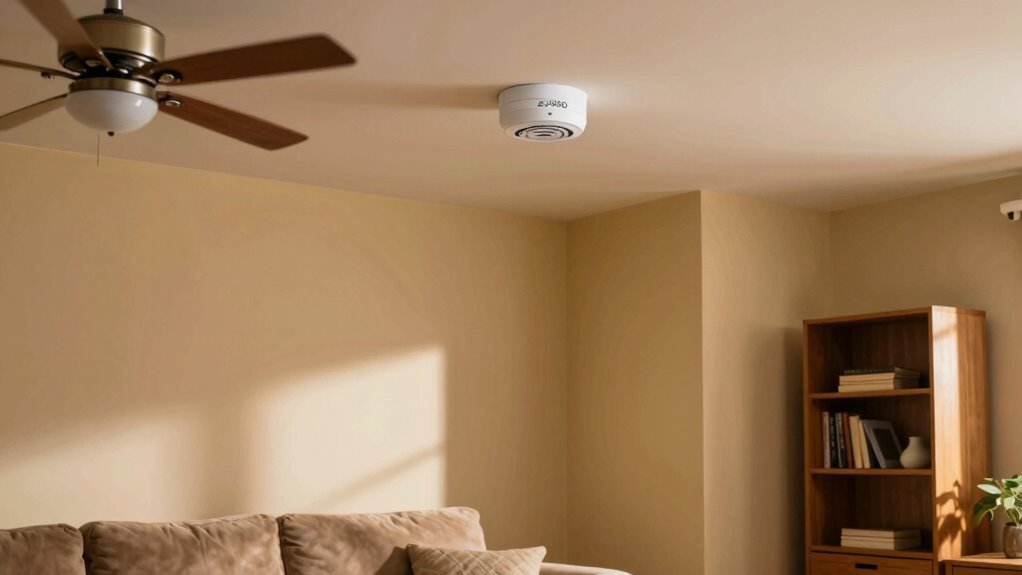
While it’s important to position smoke alarms effectively, certain spots should be avoided to ensure they work properly. Many fire alarm myths suggest placing alarms in convenient or visible spots, but alarm placement tips emphasize avoiding areas where they might malfunction or be ignored.
- Near vents or HVAC ducts, as airflow can prevent smoke detection.
- In bathrooms or kitchens, where steam or cooking fumes trigger false alarms.
- Close to windows or open doors, which can disrupt smoke accumulation.
- In dusty or humid areas that interfere with sensors.
- Directly on or above ceiling fans, as airflow can disperse smoke.
Steering clear of these locations helps prevent nuisance alarms and ensures your smoke detectors provide reliable alerts when needed. Proper placement is key to effective fire safety.
Ceiling or Wall? Choosing the Right Placement for Smoke Alarms
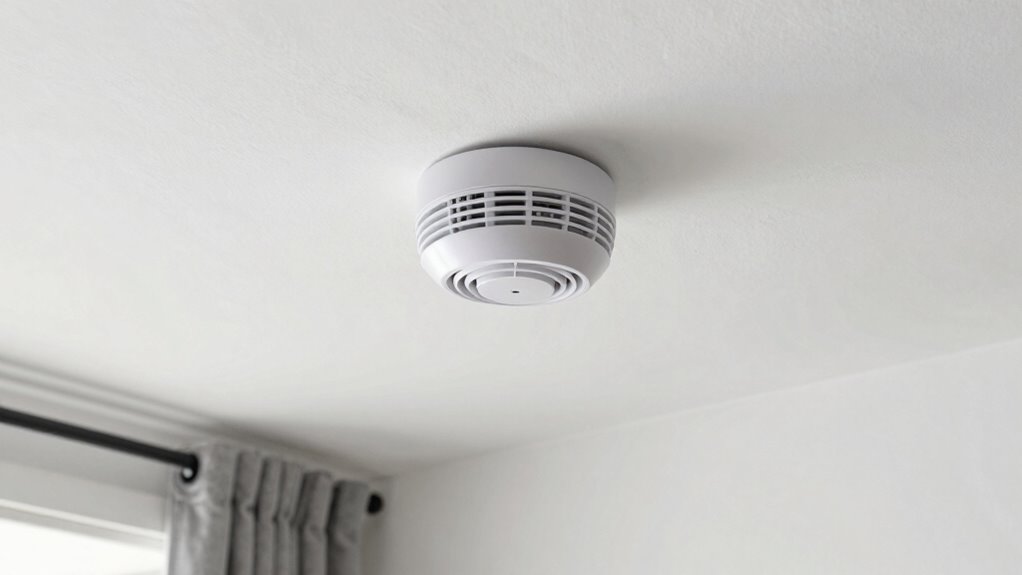
Have you ever wondered whether to place your smoke alarm on the ceiling or the wall? The right placement depends on fire alarm types and proper battery upkeep. Typically, smoke alarms should be installed on the ceiling, at least 4 inches from the wall, to detect smoke early. Wall-mounted alarms are ideal if placed 4 to 12 inches below the ceiling. Use the table below for guidance:
| Placement | Best Location | Notes |
|---|---|---|
| Ceiling | Center of ceiling, 4 inches from edges | Suitable for all fire alarm types |
| Wall (near ceiling) | 4–12 inches below ceiling, away from vents | Good for certain wall-mounted alarms |
| Avoid | Near windows, doors, or drafts | Can cause false alarms |
| Battery Maintenance | Check batteries monthly, replace yearly | Ensures reliable operation |
Choosing the right spot improves detection and safety.
How to Test and Maintain Your Smoke Alarms for Reliable Safety

Regularly testing your smoke alarms is essential to guarantee they function properly when you need them most. To do this effectively, perform alarm testing monthly by pressing the test button until you hear the alarm sound. During these checks, inspect and replace batteries as part of your battery maintenance routine—most alarms require new batteries annually or when they beep indicating low power. Clean your alarms regularly to remove dust and debris that can hinder performance. Remember to replace any alarms that are over 10 years old.
Test smoke alarms monthly, replace batteries yearly, and keep alarms clean and up to date for safety.
Here are key tips:
- Test alarms monthly with the test button
- Replace batteries at least once a year
- Clean alarms with a vacuum or soft brush
- Check for physical damage or dust buildup
- Replace alarms every 10 years
Frequently Asked Questions
How Often Should I Replace My Smoke Alarm Batteries?
You should replace your smoke alarm batteries at least once a year to guarantee peak battery life and safety. Even if your alarm has a low-battery warning, it’s best to change the batteries regularly to prevent failures. Make it part of your annual safety routine, and consider using long-life or 10-year sealed batteries for maintenance ease. Staying proactive with your replacement schedule keeps your home protected.
Can Smoke Alarms Be Interconnected Across Different Floors?
Sure, smoke alarms can be interconnected across different floors, providing multi-floor coverage. Following interconnection guidelines guarantees that if one alarm detects smoke, all alarms sound, alerting you instantly. It’s ironic how something so small can create a safety net spanning your entire home, turning a series of single alarms into a vigilant team. This setup not only saves lives but guarantees you’re instantly notified no matter where the fire starts.
Are There Specific Smoke Alarm Types Better for Certain Rooms?
You should choose room-specific alarms based on each room’s needs. For example, install smoke alarm types like photoelectric detectors in bedrooms to reduce false alarms caused by cooking or steam. In kitchens, consider heat alarms or combination smoke and carbon monoxide alarms. Living rooms benefit from photoelectric alarms for early smoke detection, while hallway alarms should be dependable, interconnected, and easy to hear. Selecting the right smoke alarm types guarantees maximum safety.
What Are the Signs a Smoke Alarm Needs Replacing?
When it’s time to replace your smoke alarm, don’t wait until it’s too late. If it chirps periodically, the alarm’s battery might be dying, or it’s time for a new unit. Follow installation guidelines and maintenance tips to keep it functioning properly. Additionally, if the alarm fails to respond during a test or sounds off randomly, it’s a clear sign you need a replacement. Stay proactive—don’t let your safety fall through the cracks.
How Does Humidity Affect Smoke Alarm Placement and Performance?
Humidity effects can cause false alarms or hinder your smoke alarm’s performance. You should avoid placing alarms in areas with high humidity, like bathrooms or near windows, since moisture can trigger false alerts. For ideal performance, consider placement considerations that keep alarms dry and well-ventilated. Use these guidelines to guarantee your smoke alarm functions properly, providing reliable alerts during a fire emergency.
Conclusion
Remember, proper smoke alarm placement isn’t just about following rules—it could save your life. Many believe alarms only need to be near kitchens or bedrooms, but research shows the right spots make all the difference in early fire detection. So, take the time to install and maintain your alarms correctly. It’s a simple step that offers peace of mind, proving that good safety habits really do keep you safer every day.