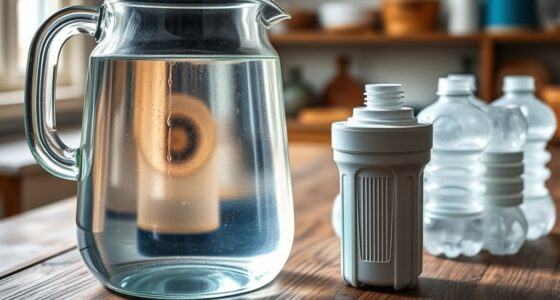
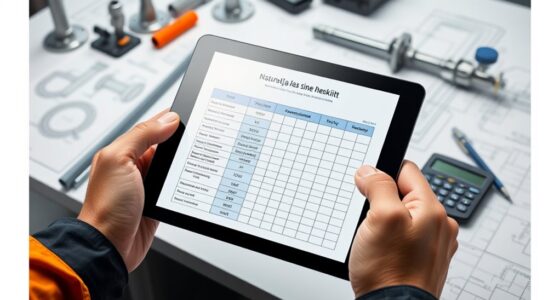
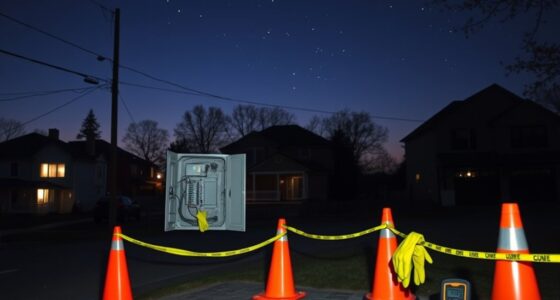
To protect your pipes during a freeze without power, insulate all exposed plumbing with foam sleeves or blankets and seal gaps to retain heat. Keep water flowing by letting faucets drip slowly, and drain outdoor hoses and faucets beforehand. Use manual valves to isolate vulnerable sections and employ battery-powered heat tapes or portable heaters safely in ventilated areas. If pipes freeze, apply gentle heat gradually to thaw without damage. Stay prepared with these tips to prevent burst pipes—more strategies await you.

Get audio and creator gear delivered free with Prime
- Fast, free delivery on millions of items
- Prime Video, Amazon Music and more included
- Member-only deals all year
Key Takeaways
- Insulate exposed pipes with foam, fiberglass, or rubber sleeves, sealing gaps and adding vapor barriers for extra protection.
- Leave faucets dripping slowly to reduce pressure and prevent freezing in vulnerable pipes.
- Use portable heat sources like space heaters or heat tapes, ensuring safe, supervised operation and proper insulation.
- Drain outdoor hoses, shut off exterior water supplies, and disconnect or drain sprinkler systems before cold weather.
- Monitor indoor temperatures and insulate critical pipes to maintain above-freezing conditions during power outages.
As an affiliate, we earn on qualifying purchases.
Insulate Exposed Pipes to Prevent Freezing

Insulating exposed pipes is one of the most effective ways to prevent freezing during cold weather. You can choose from foam pipe insulation sleeves, which are easy to install and budget-friendly, or fiberglass insulation, though it requires careful handling to avoid moisture issues. Rubber foam insulation offers durability and flexibility, conforming to irregular pipe shapes and handling temperature swings. For outdoor or unheated areas, pre-formed polyethylene or PVC foam tubes provide weather-resistant protection. Focus on pipes in attics, basements, crawl spaces, exterior walls, and those exposed outside, especially at elbows and bends, since these spots are prone to freezing. Make sure the insulation fits tightly, sealing gaps and joints, and consider adding vapor barriers to prevent moisture buildup that can weaken insulation effectiveness. Incorporating protective coverings can further shield pipes from harsh weather conditions. Additionally, ensuring proper ventilation around insulated pipes can help prevent moisture accumulation that could compromise insulation performance. Proper insulation installation techniques are essential to maximize protection and avoid gaps that could allow cold air to reach the pipes.
Maintain Water Flow and Drain When Power Is Out

When cold weather threatens to cause pipes to freeze, maintaining water flow becomes a key strategy. By keeping a slow drip from faucets, you help relieve pressure and prevent pipes from bursting. Run cold water through both hot and cold taps, especially those connected to exposed or vulnerable pipes. This continuous flow reduces the chance of freezing and damage. If you expect a prolonged outage, turn off the main water supply early to prevent damage from frozen or burst pipes. Drain all taps fully, and disconnect or remove drain plugs to empty the system. Use compressed air to clear stubborn traps and pipes. Draining water heaters and appliances protects them from internal freezing, ensuring your plumbing stays intact during a power outage. Additionally, knowing your plumbing system can help you identify vulnerable areas in your plumbing system before winter hits. Recognizing vulnerable pipe locations is essential for effective winter preparation and can prevent costly repairs caused by frozen pipes. Being aware of insulation techniques can further help in safeguarding your pipes from freezing temperatures. This simple step can help prevent costly repairs caused by frozen pipes.
Use Safe Auxiliary Heat Sources During Power Interruptions
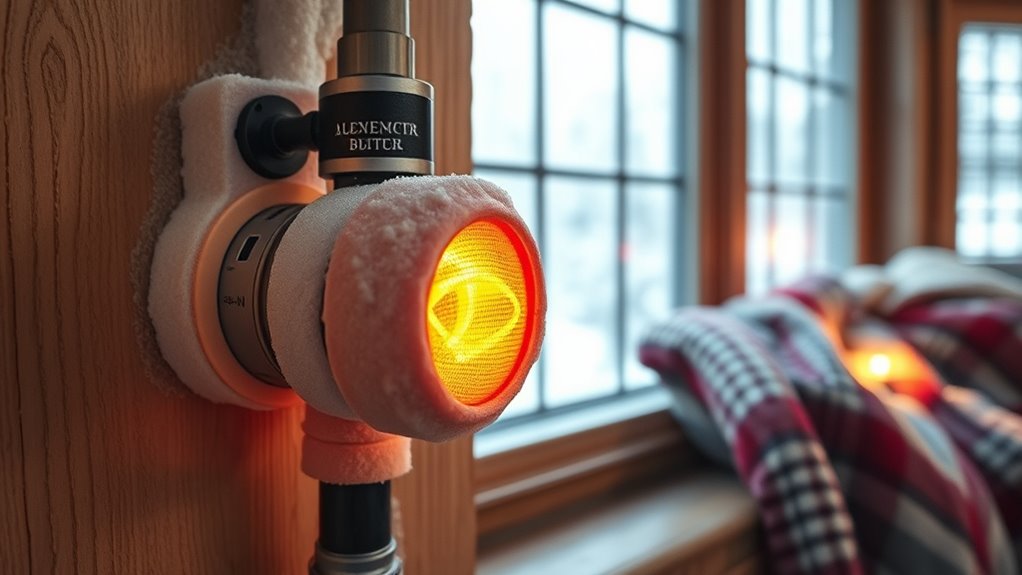
During a power outage, choosing the right auxiliary heat sources can make all the difference in protecting your plumbing from freezing. Portable electric space heaters, connected to a generator or battery backup, can provide targeted warmth to vulnerable pipes. Heat tapes and cables, properly certified and thermostatically controlled, prevent freezing when applied directly to pipes. Gas or propane heaters, used safely in well-ventilated areas, generate heat without relying on electricity. Oil or kerosene heaters can supply steady warmth in emergencies but require strict ventilation and fire safety. Battery-powered heated pipe wraps offer a safe, temporary solution, eliminating reliance on household power. Incorporating AI in Business technologies such as automated diagnostics can help monitor pipe conditions remotely, alerting you to potential freezing issues early. Additionally, understanding frost protection strategies can help you plan effectively before an outage occurs. Implementing vertical storage solutions for your emergency supplies ensures quick access to necessary tools and materials during a crisis. Properly insulating exposed pipes and using local resources such as community support or local hardware stores can further enhance your preparedness. Always keep heaters away from flammable materials, use safety features like tip-over switches, and ensure proper ventilation to minimize risks during extended outages.
Employ Manual Devices for Freeze Protection

Manual devices for freeze protection offer a practical and cost-effective way to safeguard your plumbing when power sources are unavailable or unreliable. You can control water flow with manual valves, opening or closing them to isolate vulnerable sections, reducing the risk of freezing. Manual drainage and isolation techniques allow you to remove water from pipes, preventing ice formation. Pairing manual valves with temperature sensors prompts timely action, giving you alerts for potential freezes. Using manual thermostatic valves can automatically bleed water at near-freezing temperatures, minimizing damage without electricity. Understanding the importance of proper nutritional value can help you maintain a healthy diet during winter] to support overall health and resilience.
Manual freeze protection devices provide reliable, cost-effective plumbing safety without electricity.
- Protect exposed pipes by shutting off and draining water before cold snaps
- Quickly respond to sensor alerts to prevent costly pipe bursts
- Save money with simple, reliable manual valves
- Maintain control over your plumbing even during outages
Prepare Long-Term Plumbing Winterization Strategies

Creating a thorough winterization plan is essential to protect your plumbing from freezing damage. Start by listing all plumbing components, including indoor and outdoor taps, valves, water heaters, and pumps, to ensure extensive coverage. Develop a step-by-step checklist to avoid overlooking any part before temperatures drop. Prioritize critical systems like hot water tanks and pressure tanks, which require special handling. Include contingency measures such as adding antifreeze to traps, toilets, and pumps where water might remain. If you’re short on time or expertise, schedule a professional inspection or winterization service to reduce risk. Regularly review and update your plan each season. Proper long-term strategies help prevent costly repairs caused by frozen or burst pipes, especially in unpredictable winter weather. Incorporating creative problem-solving techniques can also help identify innovative ways to safeguard your plumbing under challenging conditions.
Respond Quickly to Signs of Frozen or Burst Pipes

Recognizing the early warning signs of frozen or burst pipes is essential to preventing extensive damage. When you notice a sudden drop in water flow, frost on exposed pipes, or unusual noises like banging or dripping, act immediately. These signs indicate a potential freeze or burst that can escalate quickly. Somatic therapy techniques such as body awareness can help you stay calm and respond more effectively in emergency situations. To respond swiftly: – Shut off the main water supply to prevent flooding. – Open affected faucets to relieve internal pressure and help water escape. – Avoid open flames; instead, use safe methods like hair dryers or warm towels. – Turn off electricity if leaks threaten electrical outlets or appliances. Additionally, understanding pipe insulation methods can significantly reduce the risk of freezing during cold weather. Knowing how to prevent pipe damage and acting quickly minimizes damage, reduces cleanup, and keeps your home safe. Taking quick action minimizes damage, reduces cleanup, and keeps your home safe. Recognizing early signs and acting fast can save you from costly repairs and extensive water damage.
Safely Thaw Frozen Pipes Without Electricity

You can safely thaw frozen pipes without electricity by using heat wraps designed for plumbing, but always follow safety guidelines. Applying gentle, gradual heat—like warm towels or bottles—helps melt the ice without damaging the pipe. Keep a close eye on the pipe’s temperature and condition to prevent cracks or leaks during the process. Monitoring for changes in color or viscosity can help identify potential spoilage or damage during thawing. Using proper insulation techniques around exposed pipes can also prevent future freezing issues. Incorporating automation in home heating systems can further help maintain consistent temperatures and avoid freezing in the future, especially when combined with glycolic acid treatments to improve skin resilience and prevent damage from extreme conditions.
Use Heat Wraps Safely
When power outages occur during cold weather, safely thawing frozen pipes becomes a priority. Using heat wraps can help, but only if you follow safety guidelines. Always use certified heat tape approved by a recognized testing laboratory, especially in mobile homes. Never wrap the tape over itself, as this can cause overheating and fires. Ensure proper installation—wrap evenly, insulate beneath, and secure with electrical tape without compressing the pipe. Connect the tape to a grounded, GFCI outlet to prevent shocks. Keep an eye on the heat tape, inspecting for damage or fraying before use. Remember, never use direct heat sources like open flames or heat lamps near gas pipes. Your safety depends on careful, cautious use of heat wraps in freezing conditions. Properly installing and inspecting the heat tape can help prevent potential hazards and ensure effective thawing.
Apply Gentle Heat Method
Applying gentle heat is a safe and effective way to thaw frozen pipes without electricity, but it requires careful technique. Start near the faucet or pipe outlet, applying heat gradually and moving toward the frozen section to prevent pressure buildup. Use a hair dryer on a low, warm setting, directing airflow along the pipe’s length, or wrap hot towels soaked in water around the pipe, replenishing them as they cool. Infrared heat lamps can evenly warm the pipe without excessive heat. Avoid open flames or high-heat sources like propane torches, which can damage pipes or cause fires. Maintain steady, gentle warmth and monitor the pipe regularly for leaks or cracks. Turn on the water slowly after thawing to ascertain the pipe’s integrity before full use.
Monitor Pipe Temperature
How can you safely monitor pipe temperatures without electricity? You can use passive, non-electric methods to keep an eye on your pipes’ freeze risk. Attach liquid crystal strips that change color at key temperatures, or install mechanical dial thermometers directly on pipes for quick visual checks. Thermal paint or freeze indicators offer passive alerts if pipes near freezing, giving you early warning without power. Mercury or alcohol glass thermometers housed near critical pipes allow manual readings, helping you track temperature changes. Additionally, pipes with insulation embedded with indicators slowly reveal freeze risk as temperatures drop.
- Quick visual cues alert you before pipes freeze, so you can act fast.
- Passive indicators provide peace of mind during extended outages.
- Manual checks keep you informed without relying on electricity.
- Early warnings help prevent costly pipe bursts.
Regular Maintenance and Emergency Preparedness

Regular maintenance and emergency preparedness are essential for protecting your plumbing system during freezing weather. You should regularly inspect all visible faucets, pipes, and connections for leaks or moisture, especially in basements, crawl spaces, and under sinks. Fix minor leaks with plumber’s tape and call professionals for larger issues or hard-to-reach areas. Insulate exposed pipes with foam, securing it tightly to prevent cold air contact. Cover outdoor faucets with foam covers and drain hoses before winter. Keep indoor temperatures steady at no less than 55°F, open cabinet doors, and seal drafts around windows and doors. Drain sprinkler systems and water heaters in fall, and schedule annual professional checkups. Being proactive guarantees your plumbing stays safe, even during power outages or extreme cold.
Frequently Asked Questions
Can I Mix Different Insulation Materials for Better Protection?
Yes, you can mix different insulation materials for better protection, but you need to take into account their properties carefully. Use moisture-resistant options like closed-cell foam as a primary layer, then add other materials to address specific needs. Make sure to seal joints properly to prevent condensation and thermal bridging. Proper installation ensures continuous coverage, maximizing thermal efficiency and moisture control, giving your pipes better freeze protection.
How Often Should I Check Insulation and Protective Devices Before Winter?
You should check your insulation and protective devices at least seasonally before winter, ideally a few weeks beforehand. Conduct a thorough inspection of all outdoor and vulnerable indoor pipes, looking for damage, cracks, or moisture. Additionally, perform monthly visual checks on exposed pipes and insulation. Don’t forget to inspect heat cables, faucet covers, and sump pumps. Regular checks help catch issues early, preventing freezing and costly repairs during cold weather.
Are There Specific Areas of My Home More Vulnerable to Freezing?
You should focus on vulnerable areas like your basement, attic, garage, and crawl spaces, especially along exterior walls and inside cabinets. These spots lack proper insulation and are more exposed to cold temperatures. Pipes near outdoor faucets or in unheated spaces are also at higher risk. Regularly check these areas for insulation gaps, drafts, and signs of cold, and consider adding extra insulation or protective measures to prevent freezing.
What Backup Power Options Are Safest for Heating Pipes During Outages?
Think of backup power options like a lifeboat during a storm—crucial for safety. You should prioritize safe generators with automatic shutoff and proper ventilation, like those fueled by propane or natural gas, to prevent hazards. Battery backup systems for small heaters are also effective, especially in well-insulated areas. Always install and maintain these systems professionally, ensuring they’re safe, reliable, and ready to keep your pipes warm during outages.
How Do I Prevent Pipe Freezing if I Cannot Access the Main Water Shutoff?
If you can’t access the main water shutoff, you should keep water moving to prevent freezing. Let a faucet drip slightly, especially on outside walls, to keep water flowing. Open cabinet doors to warm pipes and insulate exposed ones. Keep your thermostat at least 55°F, and cover outdoor faucets with insulation. This helps maintain warmth and reduces the risk of pipes freezing without needing to shut off your water supply.
Conclusion
By taking these steps, you can protect your pipes even during a power outage. Did you know that a burst pipe can release up to 24,000 gallons of water in just a day? Staying proactive keeps your home safe and saves you from costly repairs. With quick action and proper preparation, you can prevent freezing disasters and keep your plumbing flowing smoothly, no matter the weather or power situation.
Fall Picks
fall essentials
As an affiliate, we earn on qualifying purchases.