Shutdown alarms activate safety controls quickly during emergencies, protecting both people and equipment. They trigger automatic responses like shutting down power sources, activating fire suppression, and securing essential systems to prevent hazards. Centralized systems improve coordination, and protective covers ensure safety from accidental activation. Understanding how relays, control circuits, and fire alarm integration work can save time during crises. To master how these alarms operate and ensure swift, effective responses, explore more detailed insights ahead.
Key Takeaways
- Shutdown alarms activate emergency power reduction systems remotely via fire alarm panels or building management systems.
- They open normally closed contacts to safely shut down inverters, rectifiers, and batteries during emergencies.
- Protective covers and lockout mechanisms prevent accidental or unauthorized activation of shutdown switches.
- Integration with fire alarm circuitry triggers automatic shutdown of HVAC, elevators, and safety systems for occupant protection.
- Regular testing, compliance with safety standards, and hierarchical control ensure quick, reliable emergency responses within 15 minutes.

Philips Wi-Fi Door Lock, WiFi Smart Lock Keyless Entry Deadbolt for Front Door, Compatible with Alexa & Google Assistant, Remote Control, Built-in WiFi, APP Fingerprint Passcode Unlock, Auto Locking
𝐅𝐥𝐞𝐱𝐢𝐛𝐥𝐞 𝐖𝐚𝐲𝐬 𝐭𝐨 𝐔𝐧𝐥𝐨𝐜𝐤: Unlock the way you want: app, passcode, fingerprint, physical key, or voice via Alexa/Google...
As an affiliate, we earn on qualifying purchases.
Understanding Emergency Power Shutdown Controls (EPO Systems)
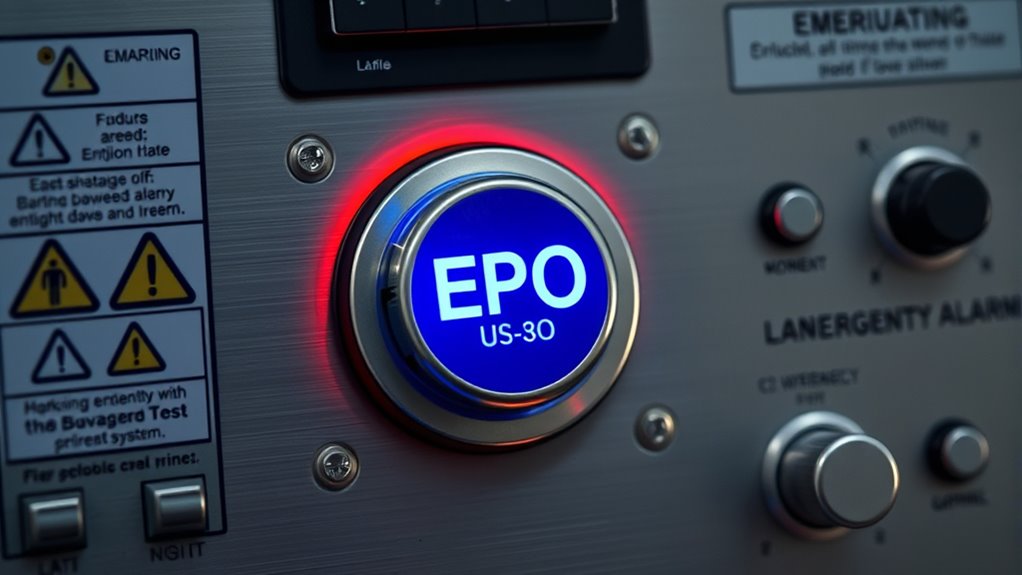
Emergency Power Off (EPO) systems are critical safety features that allow you to quickly shut down electrical power sources like UPS units, generators, and emergency power supplies during emergencies. These controls can be activated remotely through centralized push-buttons, fire alarm panels, or building management systems, often called Emergency Shutdown (EDS), Remote Shutdown (RSD), or REPO. The main goal is to eliminate electrical shock risks and prevent electricity from igniting fires or interfering with fire control systems like sprinklers. When activated, the EPO circuit opens normally closed contacts, shutting down inverters, rectifiers, and disconnecting batteries. Proper placement, labeling, and compliance with safety standards are essential for effective system performance. Ensuring the EPO system is regularly tested helps maintain its reliability during actual emergencies. Incorporating safety standards ensures the system functions correctly and minimizes risks during critical situations.

ULTRALOQ Bolt SE Smart Lock, Built-in Wi-Fi, Matter Over Thread, Works with Apple Home, Alexa, Google, 7-in-1 Keyless Entry Deadbolt with Fingerprint ID, App, Keypad, Remote Control, 18 Months Battery
𝟕-𝐢𝐧-𝟏 𝐊𝐞𝐲𝐥𝐞𝐬𝐬 𝐄𝐧𝐭𝐫𝐲 𝐃𝐨𝐨𝐫 𝐋𝐨𝐜𝐤: Fingerprint ID + Passcodes + Smartphone App + Web Portal + EKey /...
As an affiliate, we earn on qualifying purchases.
How Centralized Emergency Power Management Systems Enhance Safety

Centralized emergency power management systems coordinate control actions across multiple sites, ensuring quick and consistent responses to faults. This coordination minimizes downtime and helps prevent hazards by activating shutdown alarms and safety protocols swiftly. As a result, your facility benefits from faster system recovery and enhanced safety during emergencies. Implementing these systems also ensures compliance with fire safety regulations, which require emergency power systems to operate reliably during fires and power cuts and adhere to standards such as BS EN 50172 and BS5266.
Coordinated Control Benefits
Implementing a centralized emergency power management system substantially enhances safety by streamlining control and coordination across multiple facilities. It simplifies fault detection, improves response times, and guarantees consistent power delivery. Here’s how:
- Unified fault discrimination allows quick identification of issues, reducing downtime and risk.
- Simplified protection device coordination minimizes false trips and ensures reliable operation during emergencies.
- Advanced communication protocols like IEC 61850 enable seamless data exchange, boosting system responsiveness.
- Consolidated data from various sites improves fault location accuracy, facilitating faster repairs and maintaining safety standards.
- Effective energy management through centralized systems ensures critical power infrastructure remains resilient and less prone to outages, safeguarding safety across all sites. Additionally, centralized systems can incorporate predictive maintenance strategies that identify potential failures before they occur, further enhancing reliability.
This centralized control ensures your entire infrastructure operates cohesively, reducing operational risks and supporting safe, reliable power management across multiple buildings or campuses.
Faster System Recovery
A centralized emergency power management system enables rapid coordination of shutdown and restart procedures, minimizing downtime and reducing risks during outages. By managing system components collectively, it eliminates single points of failure and ensures quick, synchronized responses. The central control unit analyzes system status and swiftly sends commands to edge devices, enabling fast redistribution of power based on priorities. This coordinated approach streamlines recovery, reducing delays caused by manual or disconnected controls. Additionally, hybrid protection architectures provide backup functionality, further enhancing resilience. With centralized controls, you can execute shutdowns and restarts more efficiently, considerably shortening recovery times. This not only improves safety but also ensures critical systems resume operation swiftly, maintaining operational continuity even during complex power disruptions. Centralized control systems can also incorporate real-time monitoring, providing operators with immediate insights into system health and enabling proactive responses. Incorporating visualization tools can further assist operators in quickly diagnosing issues and making informed decisions during emergencies.

Amazon Echo Show 5 (newest model), Smart display, Designed for Alexa+, 2x the bass and clearer sound, Charcoal
Alexa can show you more - Echo Show 5 includes a 5.5” display so you can see news...
As an affiliate, we earn on qualifying purchases.
The Role of Protective Covers and Locking Mechanisms in Shutdown Switches
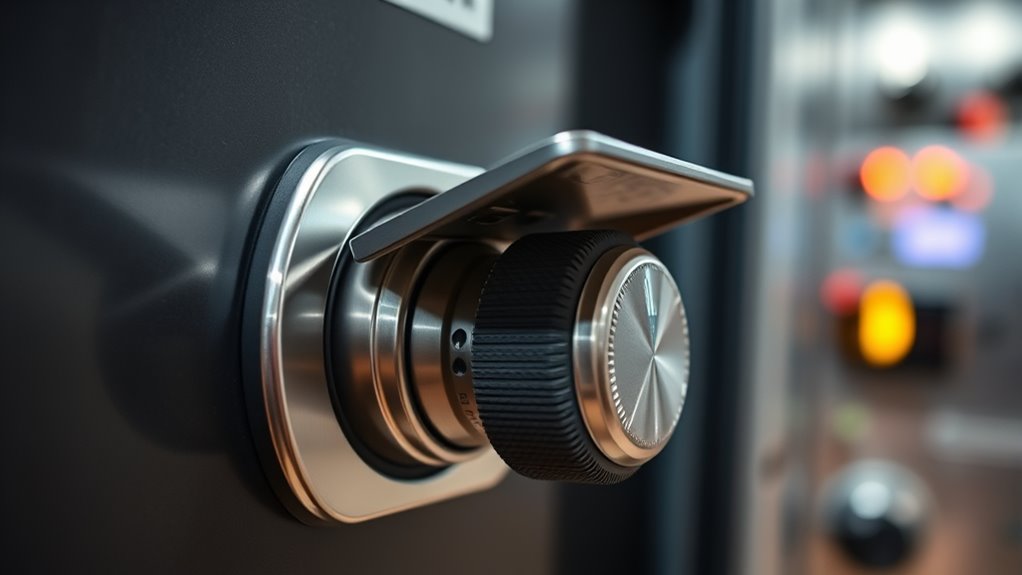
Protective covers and locking mechanisms play a crucial role in ensuring the safe operation of shutdown switches. They prevent accidental activation, safeguard against unauthorized use, and support compliance with safety standards. Here are four key points to consider:
- Protective covers shield switches from unintended operation and are often hinged for easy access. Durable materials like high-grade plastics or metals resist impact, corrosion, and harsh environments, ensuring longevity.
- Lockout/tagout features secure covers, requiring deliberate unlocking before use, blocking malicious or accidental engagement.
- Durable materials like high-grade plastics or metals resist impact, corrosion, and harsh environments, ensuring longevity.
- Certified covers with UL recognition or ANSI standards guarantee compliance, reliability, and safety in industrial shutdown procedures, and the Control with the CS-1 adds an additional layer of physical security and peace of mind during operations.

Amazon Echo Hub, 8” smart home control panel, Designed for Alexa+, Compatible with thousands of devices
Echo Hub — An easy-to-use Alexa-enabled control panel for your smart home devices—just ask Alexa or tap the...
As an affiliate, we earn on qualifying purchases.
Fire Alarm System Shutdown Functions and Critical Control Circuits

You need to understand how critical control circuitry automates shutdown functions to guarantee safety during emergencies. These circuits enable rapid, reliable disconnection of systems like HVAC and elevators, often triggered directly by the fire alarm control unit. By automating these processes, you minimize delays and reduce risks during fire incidents, keeping occupants safer. Emergency shutdown systems must adhere to established codes and standards, such as NFPA 70 and NFPA 75, to ensure effectiveness and safety. Understanding critical control circuitry is essential for ensuring that shutdown functions operate correctly during emergencies.
Critical Control Circuitry
Critical control circuitry in fire alarm systems guarantees that essential functions like system shutdowns and life-safety responses operate reliably during emergencies. These circuits coordinate critical building systems, ensuring safety measures activate promptly. They are powered by a dedicated 120V emergency circuit with 24-hour battery backup, maintaining operation during power failures. Key functions include:
- Managing fire life-safety functions such as elevator recall, HVAC shutdown, and smoke control.
- Integrating with building systems to coordinate emergency responses automatically.
- Monitoring devices like temperature gauges and fire suppression systems in real-time. This real-time monitoring is essential for accurate and prompt response to fire incidents.
- Linking with critical control circuits to trigger mechanical system shutdowns and safety measures during alarms. This integration is vital for comprehensive safety management.
This circuitry ensures exhaustive building protection, enabling rapid, coordinated responses during fire events.
Automated Shutdown Features
Automated shutdown features in fire alarm systems play a crucial role in controlling building responses during emergencies. When a fire is detected, signals are sent to activate controls that shut down HVAC, fans, and dampers, preventing smoke from spreading. Fire doors close automatically to contain flames, while elevator recall keeps occupants and responders safe. The fire alarm control panel (FACU) coordinates these actions, triggering shutdowns and alerting emergency services. These coordinated responses are essential for limiting fire and smoke damage. Visualize the following:
| Building Components | Emergency Response Actions |
|---|---|
| HVAC, Fans, Dampers | Shut down to stop smoke circulation |
| Fire Doors | Close automatically to contain fire |
| Elevators | Recall and prevent use during fire |
| Control Panel | Coordinates shutdowns and alerts |
These features speed up responses, minimize damage, and enhance occupant safety.
The Operation of Shutdown Relays and Fail-Safe Principles

The operation of shutdown relays is fundamental to guaranteeing safe control of high-power devices in industrial systems. These relays act as intermediaries, switching loads like motors or actuators based on low-voltage control signals. When activated, they open or close contacts to disconnect power, preventing hazards. Fail-safe principles ensure relays default to a safe state if failures occur, often by de-energizing to cut power. Key features include redundancy and feedback monitoring, which prevent unsafe restarts. Additionally, safety relays follow strict standards, such as EN 60204, to guarantee immediate shutdown in emergencies. Electromechanical and solid-state relays are commonly used in these safety-critical applications to provide reliable switching performance under various conditions.
Here are four key points:
- Relays switch high-power loads based on control signals.
- Fail-safe design defaults to safe state during faults.
- Redundant channels prevent single-point failures.
- Feedback contacts verify relay operation before re-energizing.
Automatic Emergency Shutdown (ESD) Systems in Industrial Settings

Automatic Emergency Shutdown (ESD) systems play a vital role in maintaining safety by promptly stopping equipment or processes when abnormal or hazardous conditions are detected. These systems prevent accidents by quickly shutting down processes upon sensing issues like high temperature, fire, or gas leaks. They serve as safety instrumented functions (SIF), mitigating risks and protecting personnel, environment, and assets. ESDs integrate sensors, logic controllers, final control elements, and communication networks to operate efficiently. They follow a hierarchical safety approach: Level 1 controls plant-wide shutdown, Level 2 isolates zones, and Level 3 manages fluid containment. Proper design and integration ensure rapid, reliable responses, reducing hazards and enabling swift recovery after incidents. Understanding safety system hierarchy is crucial for effective implementation and response.
| Level | Function | Activation Source |
|---|---|---|
| 1 | Plant-wide shutdown | Control room commands |
| 2 | Zone isolation | Sensor signals, manual inputs |
| 3 | Valve actuation for containment | Logic controllers, sensors |
Integrating Shutdown Alarms With Building Safety and Fire Systems
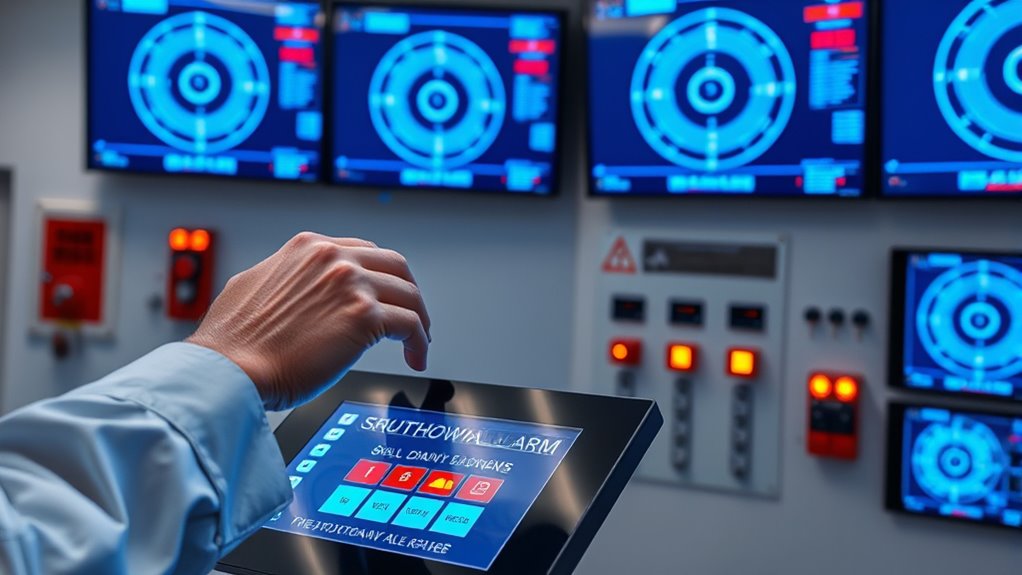
Integrating shutdown alarms with building safety and fire systems creates a cohesive safety network that improves emergency response and occupant protection. This integration guarantees all systems work seamlessly during emergencies, reducing confusion and delays. Modern smart alarms feature multi-sensor detection (smoke, heat, gas) to reduce false alarms. You benefit from:
Seamless shutdown alarm integration enhances emergency response and occupant safety through coordinated building system actions.
- Coordinated responses like HVAC shutdowns and smoke damper activation, limiting fire and smoke spread.
- Real-time access control updates, unlocking exit doors and disabling elevators for safe evacuation.
- Synchronization of lighting, signage, and public address systems, guiding occupants efficiently.
- Enhanced communication with emergency services, providing immediate alerts and situational awareness. System integration enhances overall safety performance.
This integration minimizes human error, streamlines safety protocols, and boosts overall emergency effectiveness, especially in high-occupancy or large facilities. It creates a safer environment through connected, automated responses.
Best Practices for Managing and Monitoring Shutdown Alarms

Effective management and monitoring of shutdown alarms require implementing clear strategies to prioritize, suppress, and verify alarms regularly. Start by classifying alarms into critical, warning, and advisory categories to ensure rapid response to the most severe issues. Use a Master Alarm Database to set rationalized priorities, prevent nuisance alarms, and adjust settings based on operational states. Apply advanced suppression techniques—dynamic during complex scenarios and static during maintenance—to minimize alarm floods. Group related alarms to focus operator attention on root causes. Regularly audit alarm configurations against the database to maintain consistency and compliance. Employ real-time tools that track alarm frequency, enabling swift adjustments. These practices help reduce overload, improve response times, and maintain an effective shutdown alarm system. Additionally, understanding regional resources and tools can enhance your ability to implement these best practices effectively.
Recovery Procedures and the Importance of Dealer Support

When a shutdown alarm occurs, following a structured recovery process is essential to guarantee safety, minimize downtime, and prevent equipment damage. Your first step is confirming the alarm condition is resolved safely, with no residual faults. Then, reenergize circuits one at a time, monitoring for reactivation. Use a slow startup, such as jogging or low-speed modes, to prevent mechanical or electrical damage. Proper documentation of conditions and actions ensures traceability and safety audits. Throughout recovery, coordinate with senior management and technical experts to make informed decisions. Dealer support plays a critical role by providing supervision, troubleshooting, spare parts, and training. Their expertise helps detect early malfunctions, improve safety compliance, and ensure a smooth, timely restart. Additionally, understanding maintenance and support hours can facilitate timely assistance when needed.
Frequently Asked Questions
How Do Shutdown Alarms Differentiate Between Emergency and Routine System Operations?
You can tell emergency shutdown alarms apart from routine ones by how they’re designed to respond. Emergency alarms are triggered by immediate hazards, prompting instant action like evacuations or system shutdowns, often linked to safety systems. Routine alarms signal less critical issues, like maintenance needs, allowing continued operation. They use distinct signals and controls, such as lockable Emergency Power Off switches, to prevent accidental activation and ensure quick, appropriate responses.
What Are Common Mistakes in Installing or Maintaining Shutdown Relay Circuits?
Think of installing or maintaining shutdown relay circuits like tending a delicate garden; each step matters. You might misidentify pins, causing the relay to “misfire” and disrupt safety signals. Using improper tools or neglecting to check wiring, ground connections, or fuse integrity is like watering the wrong plants or skipping fertilization. These mistakes can lead to system failures, so double-check connections, follow proper procedures, and handle components carefully to keep your system thriving.
How Can Remote Monitoring Improve Shutdown Alarm Response Times?
Remote monitoring can drastically cut your shutdown alarm response times by providing instant alerts through sensors that detect shutdown conditions in real-time. You get immediate notifications on your devices, enabling you to act quickly. Two-way voice communication and centralized dashboards further streamline your response, reducing delays. Plus, automated alerts and alarm prioritization help you focus on critical issues, ensuring you respond faster and minimize downtime during shutdown events.
What Training Is Recommended for Personnel Operating Shutdown Switches Safely?
You should undergo extensive training on electrical safety, including OSHA and NFPA standards, to operate shutdown switches safely. This training covers recognizing hazards, proper lockout/tagout procedures, and verifying de-energization before work. You’ll learn to use testing instruments correctly and understand emergency protocols. Regular refresher courses every three years ensure your knowledge stays current, helping you respond promptly and minimize risks during shutdown operations.
How Do Shutdown Systems Integrate With Fire Suppression and Building Management?
Your shutdown systems act as the heartbeat of emergency responses, seamlessly integrating with fire suppression and building management. They automatically trigger suppression, cut gas and power, and communicate through centralized panels. When connected to BMS, they control HVAC and ventilation, preventing fire spread. This coordination ensures lightning-fast action, protecting lives and property. Proper installation, maintenance, and compliance guarantee these essential systems work flawlessly in the chaos of an emergency.
Conclusion
Mastering shutdown alarms is like having a well-orchestrated symphony—every component plays a crucial role in harmony. By understanding these systems and following best practices, you guarantee safety isn’t just a goal but a reality. Remember, proper management and timely support are your guiding stars through emergencies. With this knowledge, you’re better equipped to keep your facility safe and resilient, turning chaos into a well-conducted performance.