
To stay warm without sweating, focus on layering smartly using moisture-wicking base layers, insulating mid-layers, and protective outer shells. Each layer should be fitted properly and allow for ventilation to manage moisture and temperature. Fabrics like merino wool, fleece, and breathable membranes trap heat while letting sweat escape. The right combination keeps you dry, comfortable, and prevents overheating—if you keep exploring, you’ll discover how to fine-tune this system for any winter condition.
Key Takeaways
- Use moisture-wicking base layers to draw sweat away from your skin, preventing dampness and heat loss.
- Incorporate insulating mid-layers that trap air and retain body heat without causing overheating.
- Ensure proper fit to avoid constriction or gaps, which can lead to cold spots or excessive sweating.
- Combine breathable outer shells with waterproof and windproof features to protect against elements while allowing moisture escape.
- Adjust layering dynamically based on activity level and weather conditions to maintain thermal comfort without sweating.
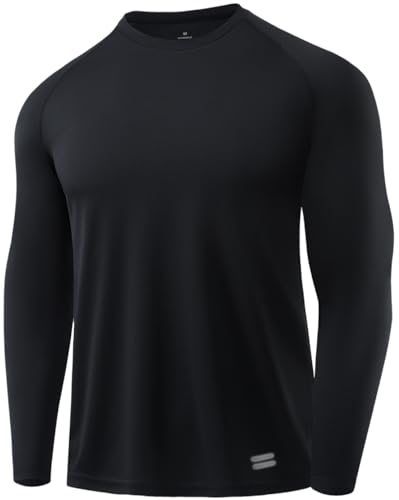
X-thud Breathable Men's Long Sleeve Base Layer Shirt – Quick Dry & Moisture Wicking for Sports,Hiking,Gym Black XL
Quick-Dry & Moisture Wicking – 100% polyester pulls sweat away from skin,keeping you dry during workouts,hiking or outdoor…
As an affiliate, we earn on qualifying purchases.
As an affiliate, we earn on qualifying purchases.
What Is Cold-Weather Layering and Why Is It Important?
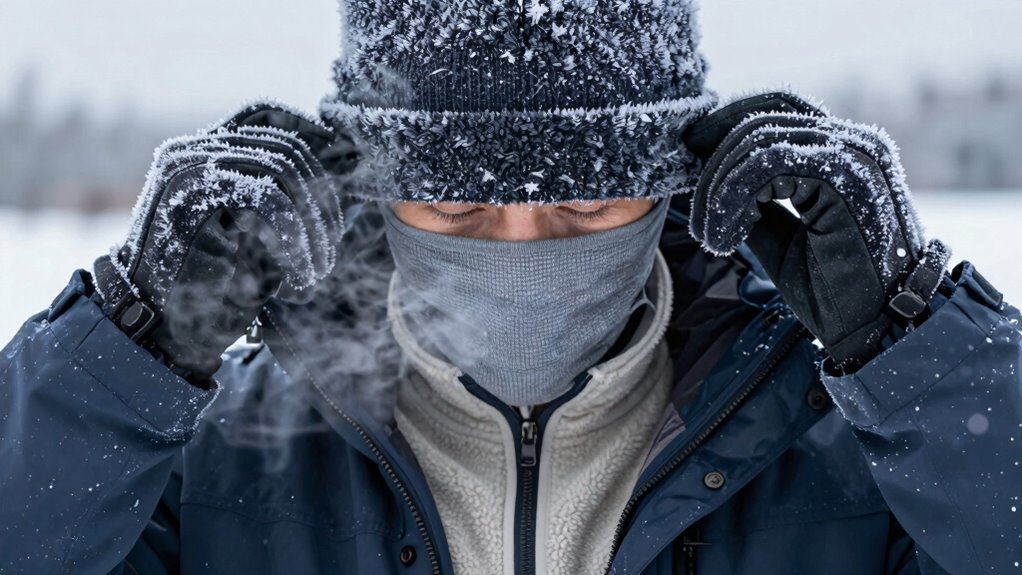
Have you ever wondered how to stay warm and comfortable in freezing weather? That’s where cold-weather layering comes into play. It’s a strategy that helps your body maintain ideal thermal regulation while managing moisture control. By layering properly, you create a barrier against the cold, trapping heat close to your skin. At the same time, effective layers wick away sweat and moisture, preventing dampness that can chill you. The right combination of base, insulating, and outer layers ensures you stay warm without overheating or sweating excessively. This approach isn’t just about warmth; it’s about controlling moisture and adapting to changing conditions. Proper layering keeps you comfortable, dry, and ready to face harsh winter elements without sacrificing mobility or safety. Utilizing innovative energy-efficient clothing can enhance this process, providing better insulation while reducing environmental impact. Being aware of moisture management is also crucial for preventing cold-related health issues. Incorporating materials with moisture-wicking properties helps keep sweat away from your skin, maintaining dryness and comfort during physical activity in cold weather. Additionally, understanding how sound vibrations influence cellular regeneration can inspire new approaches to health and wellness.

Pioneer Camp Mens Grid Fleece Jacket Full Zip Up Professional Mid Layer Outdoor Winter Thermal Sweatshirt with Chest Pocket
Lightweight and Portable with High Warmth-to-Weight Ratio:The fleece crafted from 94% polyester and 6% spandex, the fabric is…
As an affiliate, we earn on qualifying purchases.
As an affiliate, we earn on qualifying purchases.
How Insulation Fabrics Trap Heat to Keep You Warm
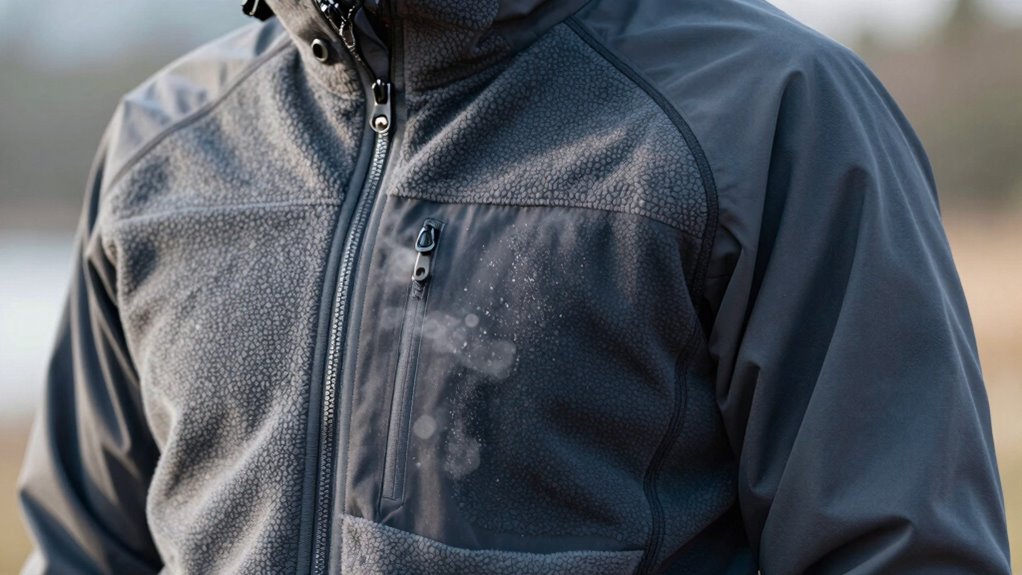
Insulation fabrics trap heat through their structure, creating tiny pockets that hold warm air close to your body. Air acts as an insulator, reducing heat loss even in cold conditions. Managing moisture is also vital, as staying dry helps fabrics maintain their insulating properties and keep you warmer longer. Incorporating moisture-wicking properties into your clothing can further improve thermal retention by drawing sweat away from your skin. Additionally, choosing fabrics with thermal regulation capabilities can optimize warmth without causing overheating.
Fabric Structure and Trapping
The structure of insulation fabrics plays a crucial role in trapping heat and keeping you warm in cold weather. The fabric structure determines how effectively heat trapping occurs, affecting overall insulation. Looser weaves create tiny pockets that trap warmth, while denser fabrics reduce heat loss. The choice of fiber and weave pattern influences insulation performance.
| Fabric Type | Structure | Heat Trapping Efficiency |
|---|---|---|
| Wool | Loosely woven, fibrous | High |
| Fleece | Plush, thick pile | Very high |
| Down | Layered, quilted | Excellent |
| Synthetic | Tightly woven, compact fibers | Moderate |
| Wool-blend | Mixed weave, varied density | Good |
Understanding fabric structure helps you select the best insulation to stay warm without sweating.
Air as Insulation
Ever wonder how fabrics keep you warm even when they seem lightweight? It’s all about air as insulation. When you wear layered clothing, tiny pockets of air get trapped between fibers. This trapped air acts as a barrier, reducing heat loss and aiding thermal regulation. Lightweight fabrics that trap air efficiently can keep you warm without adding bulk. The key is fabric breathability, which allows excess heat and moisture to escape while still holding in heat. This balance prevents overheating and sweating, keeping you comfortable in cold weather. Additionally, fabric weave plays a crucial role in how well air is trapped within the material. Well-designed fabrics with proper fiber construction can enhance air retention and insulation properties. The fabric density also influences how effectively air is trapped, impacting overall warmth. Proper fabric layering techniques further optimize heat retention while allowing moisture to escape, ensuring comfort in varying conditions. In addition, selecting fabrics with moisture-wicking properties can help maintain dryness and improve overall insulation performance. That’s how smart fabric design helps you stay warm without sacrificing mobility or comfort.
Moisture Management Strategies
Moisture management is crucial for keeping you warm in cold weather because moisture can quickly reduce insulation efficiency. When sweat or snow seeps into your layers, it creates dampness that pulls heat away from your body. Using moisture wicking fabrics helps move sweat away from your skin, keeping you dry and comfortable. This not only prevents chilling but also maintains the insulating properties of your clothing. Proper fabric technology ensures moisture is effectively transported away, enhancing your overall warmth and comfort. Additionally, selecting the right layering strategy allows you to adapt to changing conditions and maintain optimal insulation. Incorporating smart moisture-wicking fabrics that adjust to moisture levels can further optimize moisture management in varying weather. By managing moisture effectively, you ensure your layers work together to trap heat and stay dry, so you remain warm without the discomfort of dampness or overheating.

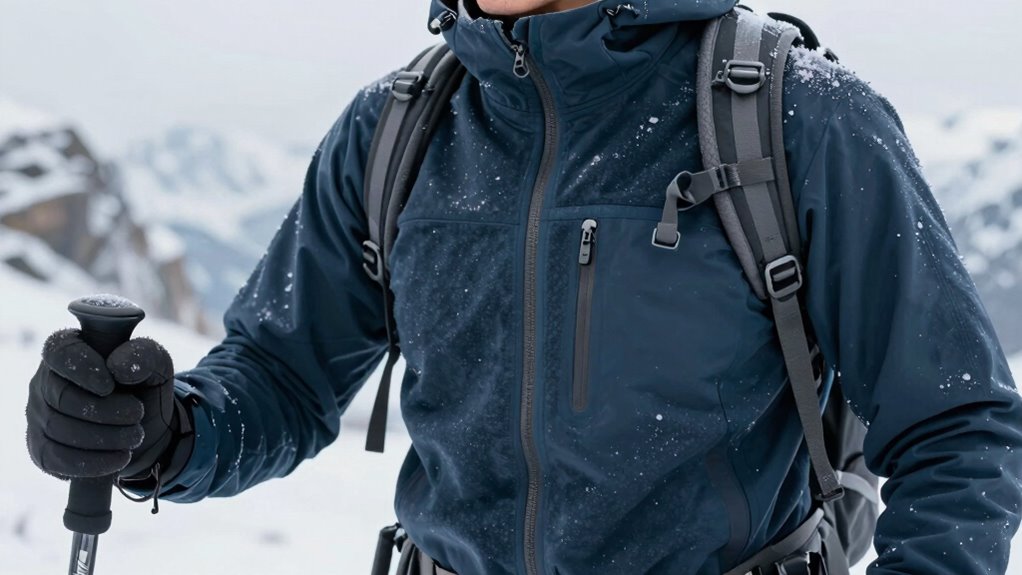
33,000ft Men's Hooded Softshell Jacket Waterproof Lightweight Insulated Windbreaker Fleece Lined Rain Shell Jacket
【WATERPROOF & BREATHABLE】33,000ft men's softshell jacket with hood features 3-layered material with outer soft shell, TPU membrane mid-layer…
As an affiliate, we earn on qualifying purchases.
As an affiliate, we earn on qualifying purchases.
Why Moisture Management and Wicking Matter in Winter Gear

When you’re active in cold weather, managing sweat and moisture becomes essential to staying warm and comfortable. Proper moisture control helps prevent sweat from lingering against your skin, which can lead to chills once you stop moving. Fabric wicking is key here—it pulls moisture away from your body and moves it to the outer layer of your gear, where it can evaporate. This keeps your skin dry, reducing the risk of hypothermia and frostbite. Without effective wicking, sweat can accumulate, making you feel damp and cold. Investing in moisture-wicking fabrics ensures your body stays dry and insulated, allowing you to stay active longer without discomfort. Ultimately, good moisture management keeps you warm, dry, and ready for whatever winter throws at you.

Merino.tech Merino Wool Base Layer Mens Set – Heavyweight, Midweight, Lite Merino Wool Thermal Underwear For Men Top, Bottom (Medium, 250 Charcoal Grey)
Midweight: Mens Merino Base Layer Available in: Lightweight = 165 g/m², Midweight = 250 g/m², Heavyweight = 320…
As an affiliate, we earn on qualifying purchases.
As an affiliate, we earn on qualifying purchases.
How Proper Ventilation Keeps You Comfortable and Prevents Overheating
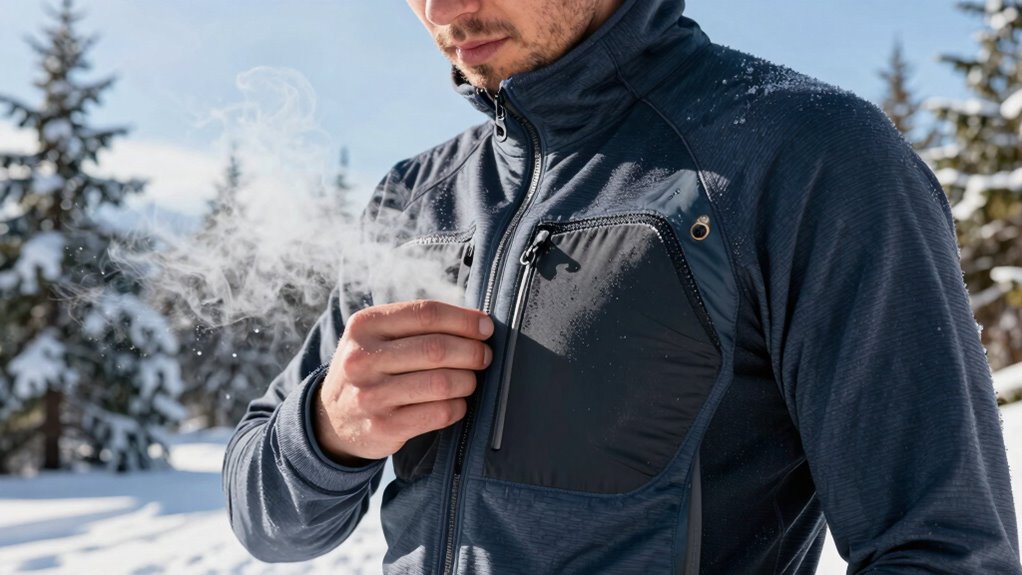
Proper ventilation is essential for maintaining comfort during outdoor activities in cold weather because it allows excess heat and moisture to escape, preventing you from overheating. Using effective ventilation systems helps regulate airflow control, ensuring fresh air circulates while excess warmth is vented out. This balanced airflow is crucial for preventing overheating and sweat buildup, which can lead to chilliness once you stop moving. Adjustable vents or mesh panels in your gear improve airflow control, allowing you to adapt to changing activity levels and weather conditions. Proper ventilation also minimizes condensation inside your clothing, keeping you dry and comfortable. Additionally, ventilation management can provide peace of mind during outdoor activities, especially in unfamiliar or remote areas. Good thermal regulation is vital for staying comfortable and preventing discomfort caused by excessive sweating or chilling. Incorporating moisture-wicking fabrics into your layering system enhances your body’s ability to stay dry and temperature-balanced during intense activity. By managing airflow effectively, you prevent overheating and maintain ideal warmth without sacrificing breathability, so you stay comfortable during your outdoor winter adventures.
Choosing the Best Base Layer for Cold Weather
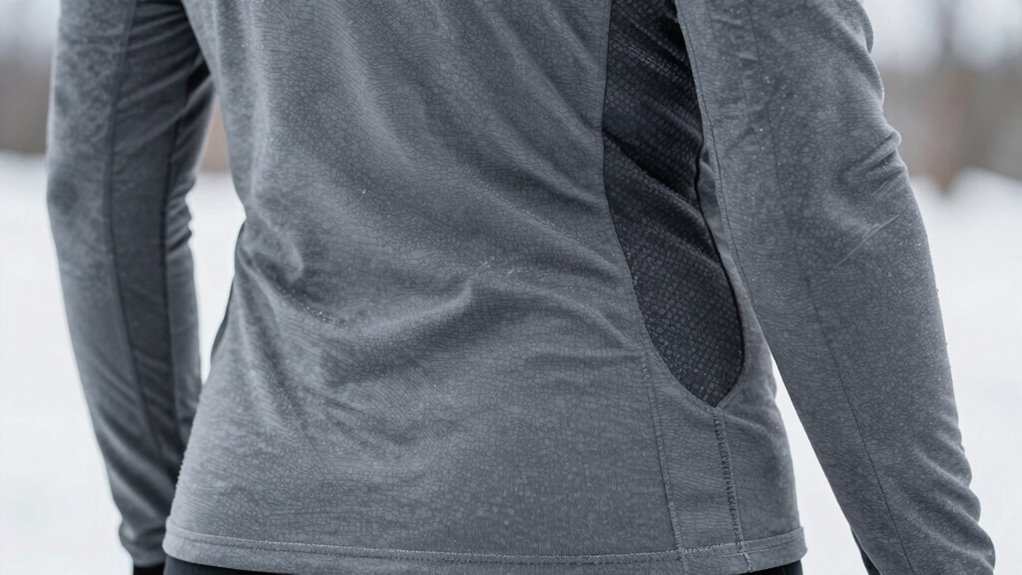
When selecting a base layer for cold weather, your focus should be on choosing fabrics that wick moisture and insulate effectively. Make sure it fits well without being too tight, so you stay comfortable and avoid restricting movement. Proper layering techniques can enhance your overall warmth and comfort during outdoor activities. Additionally, selecting high-quality precious metals can provide long-term value and stability for your investments. Incorporating moisture-wicking fabrics that also have excellent insulation properties is key to maintaining body heat without overheating. Understanding fabric technology can help you choose materials that optimize both moisture management and warmth, especially with innovations like advanced fiber blends that improve performance in cold conditions.
Optimal Fabric Choices
Ever wondered what makes a base layer truly effective in cold weather? The key is selecting fabrics that excel in thermal regulation and fabric durability. Merino wool naturally wicks moisture, keeps you warm even when wet, and resists odors, making it ideal for cold, damp conditions. It also offers antimicrobial properties, which help maintain freshness during extended wear. Additionally, merino wool’s biodegradability makes it an environmentally friendly choice. Understanding fabric categories helps you choose the right material for optimal performance. Recognizing the importance of fabric breathability ensures you stay comfortable without overheating during physical activity. Choosing fabrics with moisture-wicking capabilities further enhances comfort and performance. Polyester, on the other hand, offers excellent durability and quick-drying properties, ensuring your base layer lasts longer and stays functional in tough environments.
Proper Fit and Comfort
Choosing the right base layer starts with guaranteeing a proper fit, as even the best fabrics can’t perform ideally if they’re too tight or too loose. A well-fitting base layer promotes thermal regulation and fit flexibility, keeping you warm without overheating. When trying on layers, consider these points:
- Snug but not constrictive around your torso and arms
- Flat seams to prevent chafing
- Slight stretch for freedom of movement
- Adequate length to tuck in comfortably
- No pinching or bunching at the waistband or cuffs
A proper fit helps your body maintain consistent warmth and allows moisture to wick away effectively. Comfort is key, so prioritize a fit that feels natural and supports your activity without restricting movement. This balance ensures your base layer enhances insulation and keeps you dry. Additionally, understanding the importance of AI ethics can help manufacturers develop safer, more reliable outdoor gear with responsible technology integration. Moreover, paying attention to fabric composition can influence the breathability and moisture-wicking capabilities of your base layer, ensuring optimal performance in cold conditions.
Mid Layers: Insulation Options for Different Conditions

Mid layers are essential for providing insulation during cold weather, and selecting the right one depends on the conditions you’ll face. If you need lightweight warmth, fleece alternatives like synthetic insulation or wool provide excellent insulation layering without bulk. These options dry quickly and wick moisture away, keeping you warm and comfortable during active pursuits. For colder or more static conditions, thicker insulated mid layers—such as down or high-loft synthetic jackets—offer maximum warmth. Consider your activity level and weather when choosing: lightweight fleece or wool works well for moderate cold, while heavier insulated layers suit extreme cold. Proper insulation layering makes certain you stay warm without overheating or sweating, making your layering system adaptable and effective in a variety of winter conditions.
Selecting Waterproof and Windproof Outer Layers
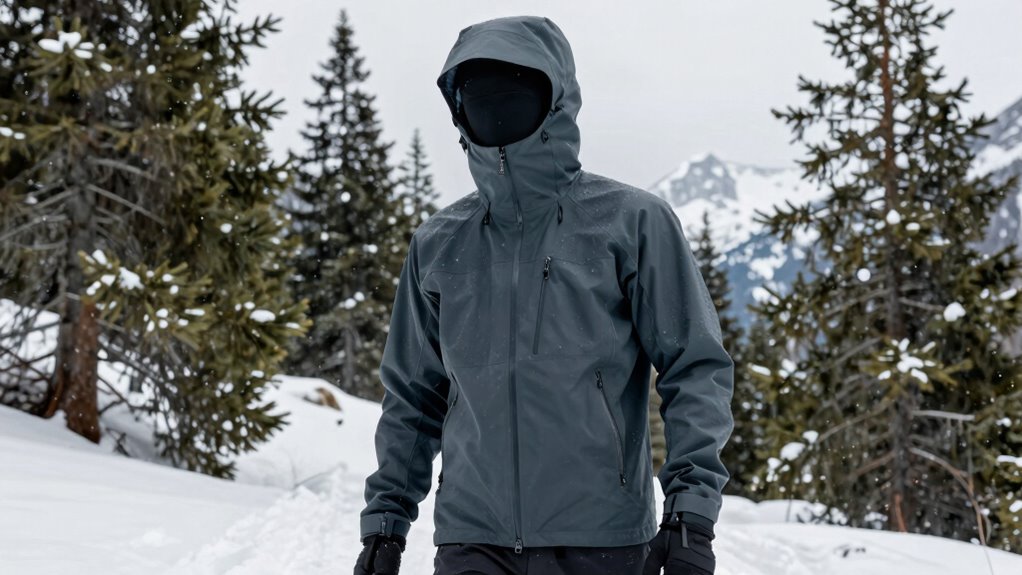
When selecting waterproof and windproof outer layers, it is crucial to prioritize materials that block moisture and wind effectively while remaining breathable. Focus on layers with advanced waterproof membranes that keep water out without trapping sweat. Windproof shells prevent chilly gusts from penetrating your clothing, keeping you warmer. Look for features like sealed seams and adjustable hoods for added protection. Consider these options:
- Lightweight, breathable waterproof jackets
- Gore-Tex or similar waterproof membranes
- Durable windproof shells with adjustable cuffs
- Breathable fabrics that wick moisture
- Packable layers for versatility
These features guarantee you stay dry and comfortable, even in harsh winter conditions. Proper outer layers help maintain your body’s heat while allowing excess moisture to escape, preventing sweating and chill.
How to Build a Versatile Winter Wardrobe Using Layering Principles
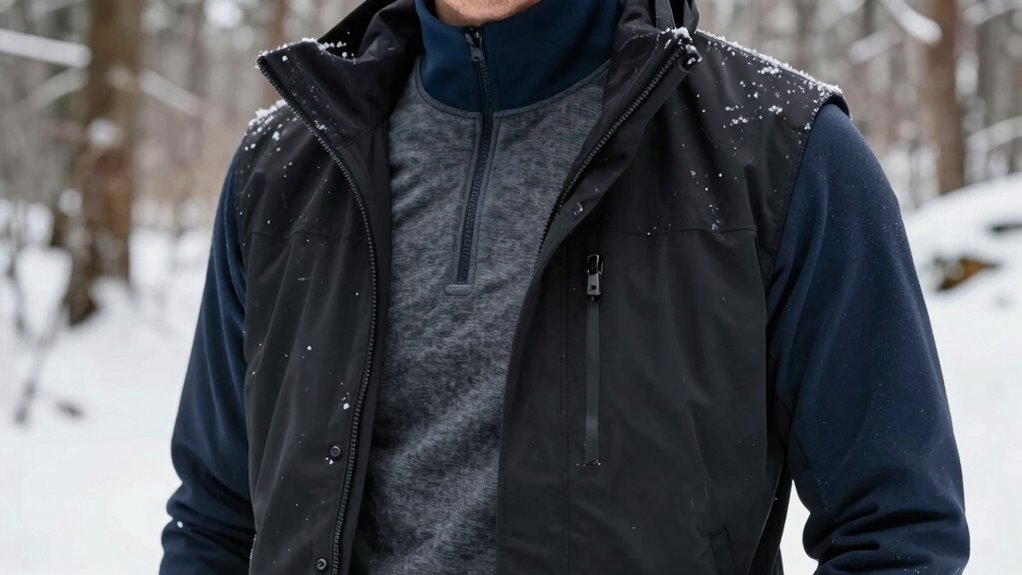
Building a versatile winter wardrobe starts with understanding the core layering principles that keep you warm, dry, and comfortable in changing conditions. Begin with a moisture-wicking base layer to manage sweat and keep your skin dry. Add an insulating mid-layer, like a fleece or down, for warmth. Your outer layer should be windproof and waterproof to shield you from the elements. Incorporate practical outdoor footwear designed for winter conditions to ensure traction and dryness. Enhance your look with functional fashion accessories—like hats, scarves, and gloves—that add warmth without bulk. Choose versatile pieces that can be mixed and matched for different activities. This approach allows you to adapt easily, stay comfortable, and build a wardrobe that performs well across various winter scenarios.
Common Mistakes That Cause Overheating or Cold Spots
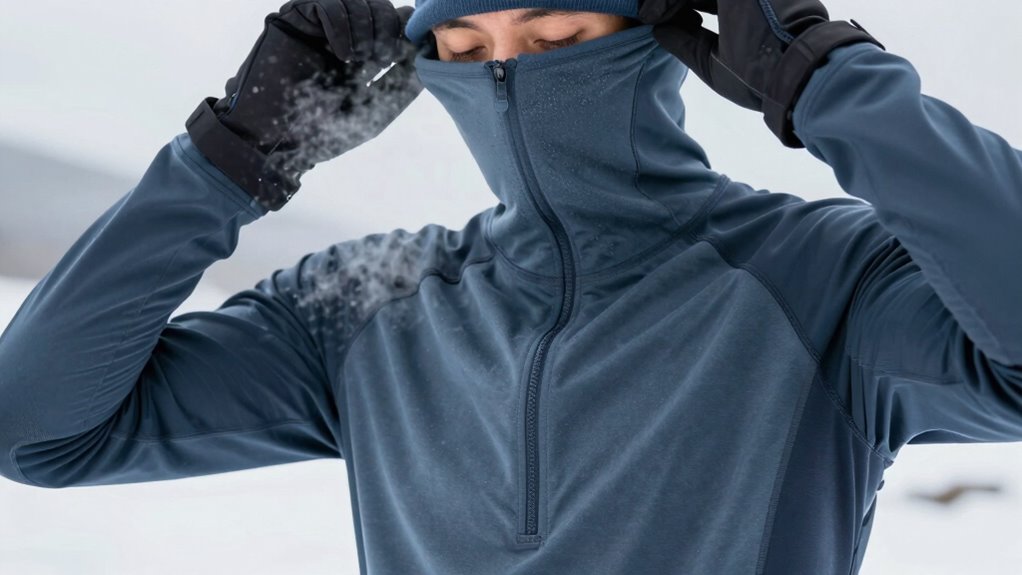
One common mistake is placing layers incorrectly, which can create cold spots or cause overheating. You might also overestimate how much insulation you need, leading to unnecessary bulk or sweating. Additionally, neglecting proper ventilation balance can trap moisture or make you feel too cold, so watch how you manage airflow.
Incorrect Layer Placement
Have you ever experienced overheating or cold spots while layering for cold weather? This often happens due to layering misconceptions and improper layer placement. When you misplace a layer, heat escapes or moisture gets trapped, making you uncomfortable. Proper placement ensures each layer works efficiently.
Imagine:
- Wearing a bulky outer shell over a lightweight base, causing overheating.
- Putting a moisture-wicking layer beneath a damp mid-layer.
- Failing to adjust layers when switching between active and stationary states.
- Combining insulation layers unevenly, creating cold spots.
- Wearing multiple similar layers instead of functional, purpose-specific ones.
These mistakes stem from not understanding how to position layers correctly. Correct layer placement optimizes warmth, breathability, and moisture management, preventing overheating and cold spots while keeping you comfortable.
Overestimating Insulation Power
Many people mistakenly believe that heavier or thicker insulation always keeps them warmer, but overestimating an insulation layer’s power can backfire, causing overheating or cold spots. This is a common insulation misconception rooted in layering myths that more is always better. You might think adding extra insulation will guarantee warmth, but excessive layers can trap heat unevenly, leading to sweating or discomfort. Conversely, relying on an overly thick layer without proper ventilation or adjustment can create cold spots as your body’s heat escapes or gets blocked. To stay comfortable, focus on layering intelligently—light, breathable layers that you can add or remove as needed. Recognizing these insulation misconceptions helps you avoid common mistakes and maintain consistent warmth without overheating.
Neglecting Ventilation Balance
Neglecting ventilation balance often leads to discomfort, as it causes your body to overheat or develop cold spots. When ventilation neglect occurs, moisture buildup inside your layers can trap heat or cold, making you feel unsteady. Without proper airflow, sweat can’t evaporate, increasing moisture and leading to dampness. This imbalance can result in:
- Excess heat trapped close to your skin
- Cold drafts penetrating layers
- Increased sweat accumulation
- Damp clothing causing chills
- Reduced breathability, trapping moisture
Failing to manage ventilation disrupts moisture control, making you feel clammy or chilly, depending on conditions. Proper ventilation ensures a steady exchange of air, preventing moisture buildup and maintaining consistent comfort. It’s essential to balance airflow to avoid overheating or cold spots during cold-weather activities.
Adjusting Your Layers for Changing Activity Levels and Weather
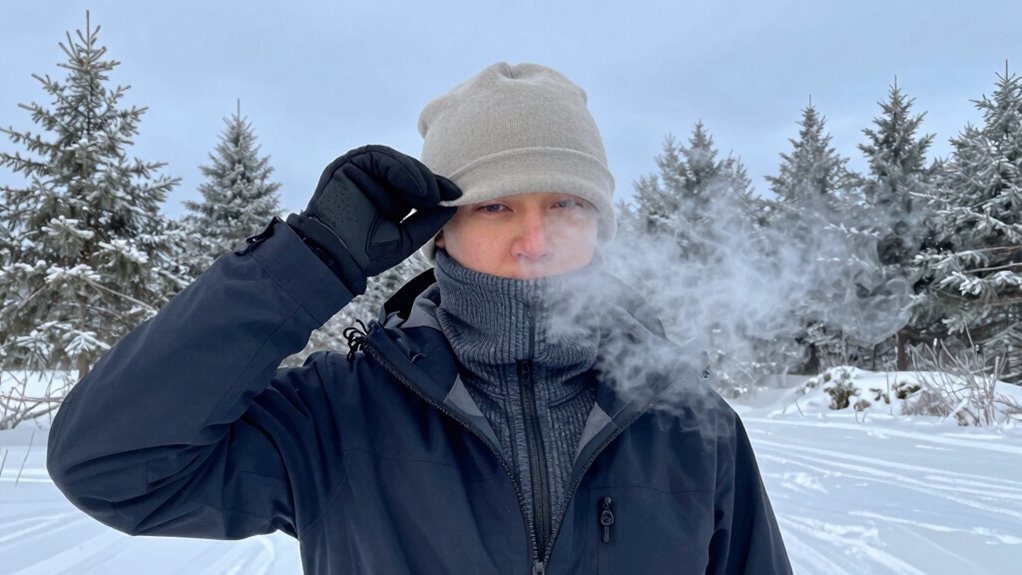
As your activity level or the weather changes, it’s important to adjust your layers accordingly to stay comfortable and safe. Don’t fall for layering myths that suggest stacking always keeps you warm; sometimes, too many layers trap sweat, causing chills. Focus on fabric durability—choose materials that breathe and wick moisture effectively. When activity increases, remove a layer to prevent sweating and overheating. Conversely, add layers when the temperature drops or activity slows. Use this chart to guide your adjustments:
| Activity Level | Weather Condition | Layer Adjustment |
|---|---|---|
| High | Sunny | Light, breathable layers |
| Moderate | Cloudy | Add or remove mid-layers |
| Low | Cold | Insulate with outer layers |
| Resting | Windy | Extra windproof and waterproof layers |
Layering Strategies for Skiing, Snowboarding, and Snowshoeing
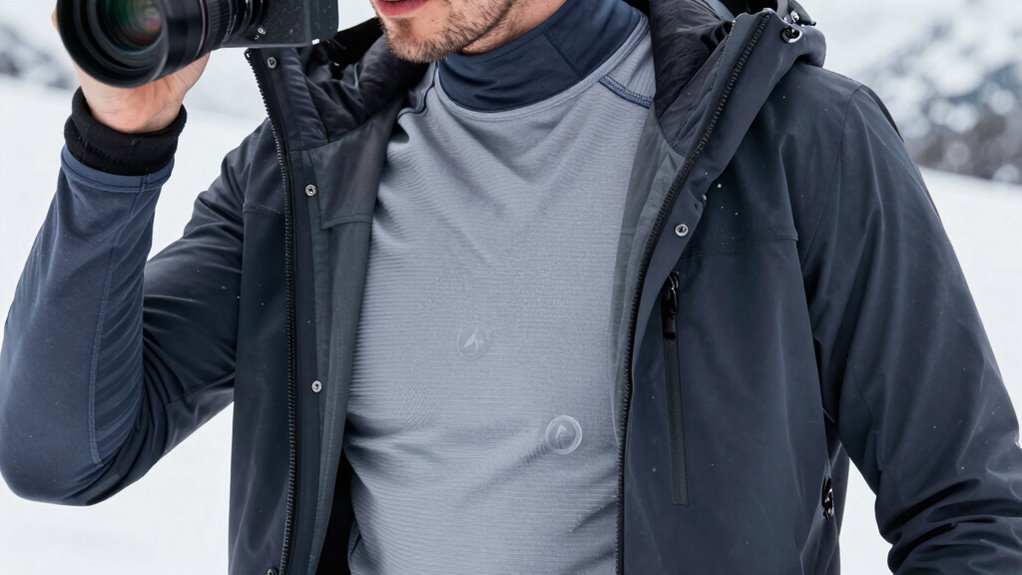
When layering for skiing, snowboarding, or snowshoeing, your goal is to stay warm without overheating or becoming uncomfortable. Focus on managing thermal regulation through a combination of moisture-wicking base layers, insulating mid-layers, and waterproof outer shells. Choose a moisture-wicking base to keep sweat away from your skin, preventing chills. Add an insulating layer like fleece or down for warmth, and top with a waterproof jacket and pants to block wind and snow. Consider these essentials:
- Lightweight, moisture-wicking base layer
- Insulating mid-layer for heat retention
- Waterproof, breathable outer shell
- Properly fitted gloves and hat
- Socks designed for moisture management
This strategy helps your body stay dry and temperature stable, ensuring comfort and safety during active winter pursuits.
How to Layer Effectively When Commuting in Cold Weather

To stay comfortable during your winter commute, layering effectively is essential, especially as temperatures fluctuate throughout the day. Many believe layering myths, like piling on thick fabrics or focusing solely on fashion over function. However, smart layering balances insulation with breathability, preventing sweating and chills. When commuting, start with a moisture-wicking base layer to keep sweat away from your skin. Add an insulating middle layer for warmth, and top with a windproof, waterproof outer shell. Avoid sacrificing function for fashion; trendy looks don’t always provide the necessary protection. Instead, choose practical, well-fitted pieces that adapt to changing weather. Proper layering ensures you stay warm without overheating or feeling clammy, making your commute more comfortable and efficient.
Top Fabrics for Cold-Weather Layering: Pros and Cons
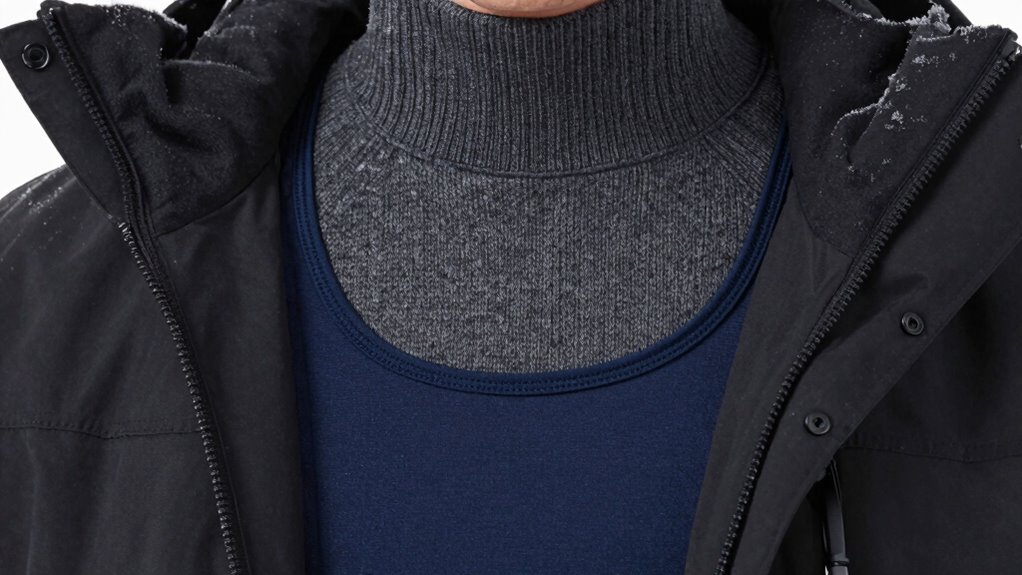
Choosing the right fabrics means balancing insulation and breathability to stay warm without overheating. You also need to contemplate durability versus comfort, as some materials last longer but may feel stiffer. Understanding these trade-offs helps you pick fabrics that perform best for your cold-weather layering.
Insulation and Breathability Balance
Finding the right balance between insulation and breathability is essential when selecting fabrics for cold-weather layering. You want materials that provide thermal regulation without trapping excess moisture, which can lead to chilling. Effective fabrics manage moisture control by wicking sweat away from your skin while allowing heat to escape when needed.
Consider these fabric traits:
- Lightweight insulation that traps heat without bulk
- Breathable membranes to prevent moisture buildup
- Moisture-wicking properties to keep you dry
- Fast-drying materials for quick moisture evaporation
- Layered systems that adapt to changing activity levels
Choosing fabrics with the right balance ensures you stay warm, dry, and comfortable, preventing overheating or cold stress during your outdoor activities.
Durability and Comfort Trade-offs
When selecting fabrics for cold-weather layering, you’ll need to weigh the trade-offs between layer durability and fabric comfort, since no material excels perfectly at both. Durable fabrics like nylon and polyester resist wear and tear, making them ideal for rugged conditions, but they can feel stiff or less comfortable against your skin. Conversely, natural fibers like merino wool or cotton offer superior fabric comfort, providing softness and breathability, but they may wear out faster or absorb moisture more readily. Striking the right balance depends on your activity and environment. If you need long-lasting gear, durability takes priority, but if comfort is key for extended wear, softer fabrics will serve you better—even if they sacrifice some resilience. Understanding these trade-offs helps you choose the right layer for your needs.
How to Properly Put on and Take Off Layers Without Losing Warmth
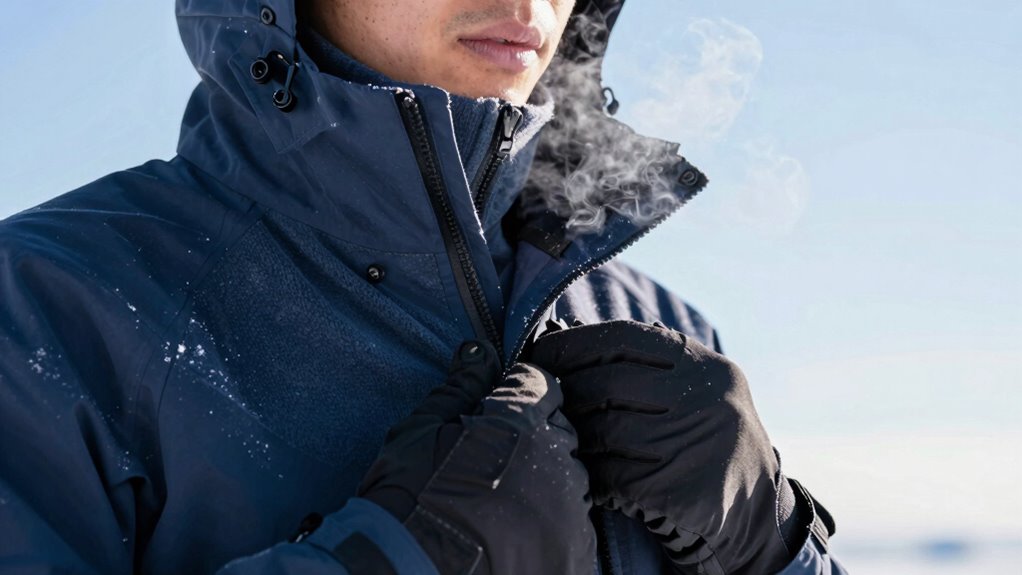
To keep your warmth locked in when layering in cold weather, it’s essential to put on and take off each layer carefully. Proper layering techniques prevent heat loss and moisture buildup. When putting on layers, start with a moisture-wicking base made from synthetic or merino wool material. Add an insulating layer, like fleece or down, for warmth. Top it with a windproof shell to block the elements. When removing layers, do so in reverse order, ensuring each layer stays close to your body to retain heat. Be mindful of the layer material to avoid trapping sweat or cold air.
- Wear gloves to handle layers without exposing skin
- Use smooth, deliberate movements
- Keep each layer snug but not tight
- Avoid pulling from the collar or sleeves excessively
- Adjust layers as needed for activity level
Maintaining and Washing Your Winter Layers for Long-Lasting Effectiveness
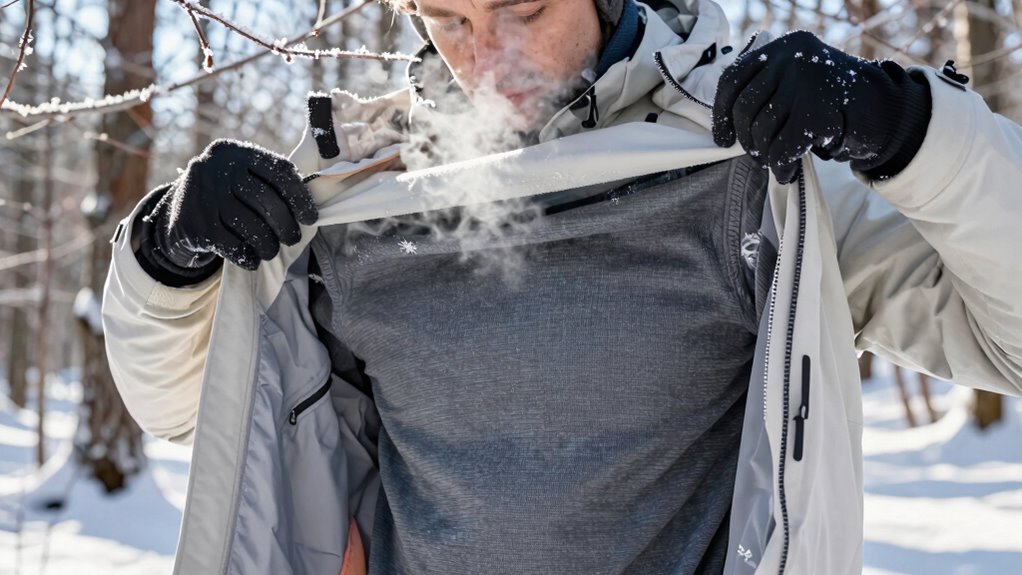
Proper maintenance and regular washing are essential to keep your winter layers performing at their best. To preserve the integrity of your layering material, always follow the care instructions specific to each item. Use gentle detergents to avoid damaging fabric durability, especially for technical fabrics designed for cold weather. Wash your layers separately to prevent abrasion and maintain their insulating properties. Avoid fabric softeners, which can break down waterproof or moisture-wicking features. After washing, air dry when possible, as high heat can weaken fibers. Properly stored layers in a cool, dry place help prevent mold and fabric deterioration. Regular maintenance ensures your layers stay effective, retain their insulating qualities, and last longer, providing reliable warmth season after season.
Innovative Fabrics and Technologies That Enhance Cold-Weather Layering
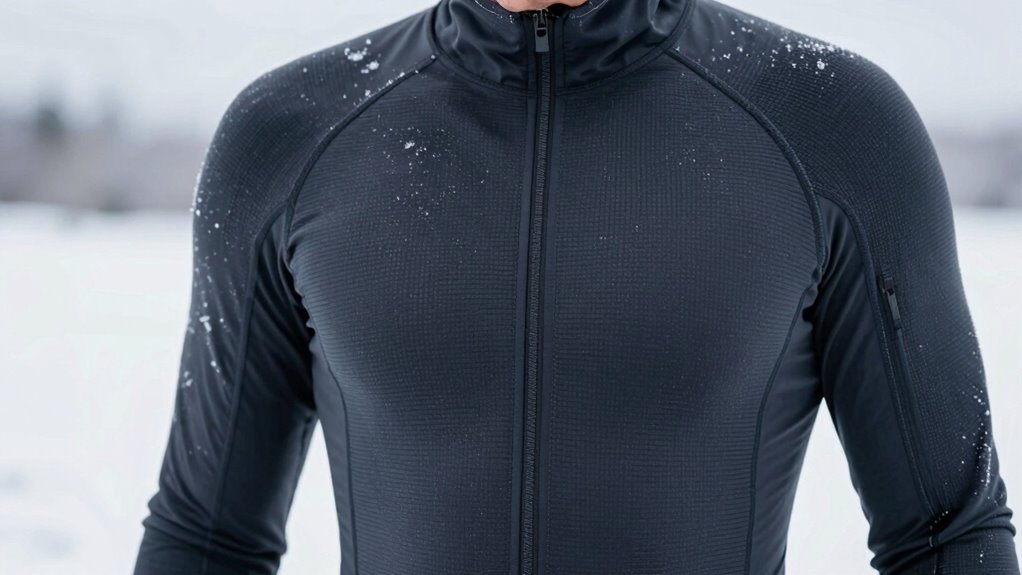
Advances in fabric technology are transforming how you layer for cold weather, offering smarter, more efficient options to stay warm. Modern materials now optimize thermal conductivity, trapping heat more effectively without overheating. Fabrics with high elasticity let you move freely, maintaining comfort during activity. Innovations include lightweight insulations that mimic down, moisture-wicking fibers that keep sweat away, and breathable membranes that prevent overheating. These fabrics often combine multiple functions, reducing the need for bulky layers. Additionally, some textiles incorporate phase-change materials that adjust their thermal properties based on temperature fluctuations. You benefit from gear that adapts to your body and environment, ensuring warmth without sacrificing mobility or comfort. This leap in fabric science helps you stay warm, dry, and agile in even the coldest conditions.
Building a Layering System for Extreme Cold Conditions
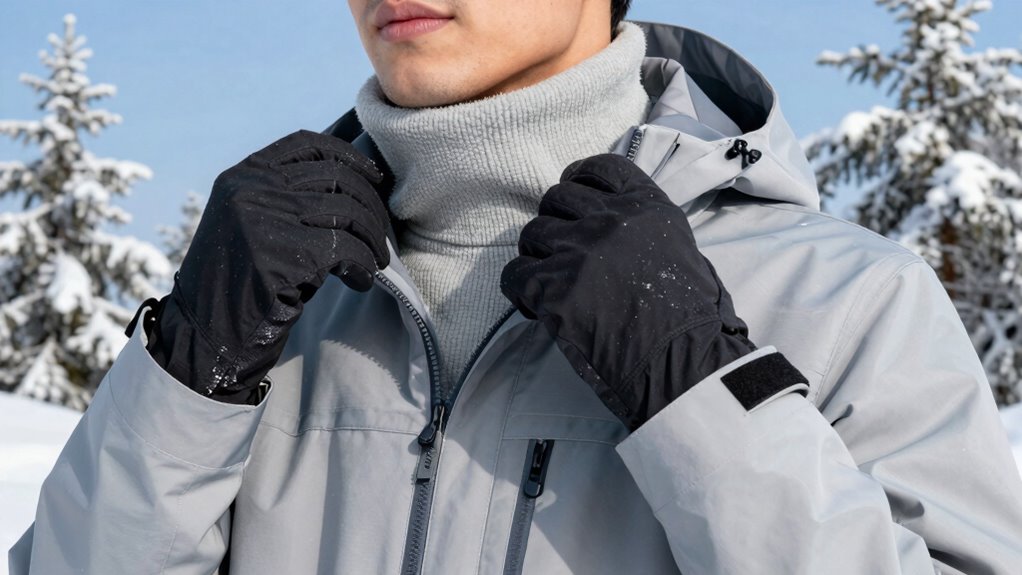
Building a layering system for extreme cold conditions requires a strategic approach that balances insulation, moisture management, and breathability. Your goal is to achieve ideal thermal regulation without overheating or sweating. Start with a base layer made of durable, moisture-wicking fabric to keep sweat away from your skin and maintain fabric durability. Add an insulating mid-layer, like a fleece or down piece, to trap heat effectively. The outer shell should be windproof and waterproof, providing protection without sacrificing breathability. Each layer must work together to prevent heat loss while allowing excess moisture to escape. Focus on choosing fabrics that are resilient in harsh conditions, ensuring your system remains reliable and durable over time. Proper layering enhances overall warmth and comfort in extreme cold.
How Science of Layering Helps You Stay Dry and Comfortable All Day
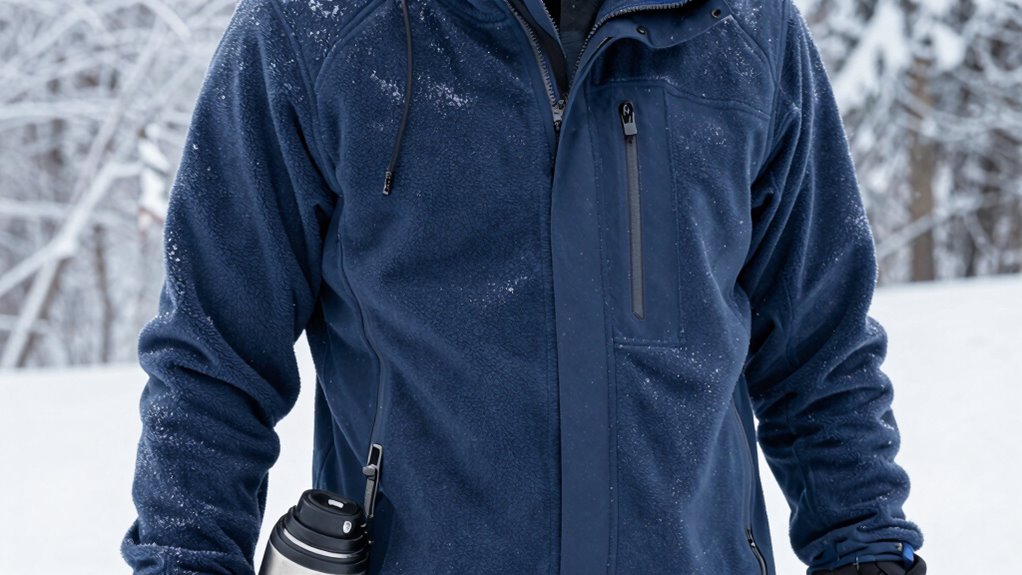
Understanding how layering works scientifically can substantially improve your comfort and dryness throughout the day. Proper layers manage thermal regulation, helping you stay warm when it’s cold and cool when you heat up. The right fabrics also guarantee fabric durability, so your gear withstands daily wear and tear. When you layer effectively, moisture from sweat stays away from your skin, preventing chills and discomfort. Imagine:
Layering scientifically boosts comfort, dryness, and durability—keeping you warm, cool, and protected all day long.
- Moisture-wicking inner layers draw sweat away from your skin
- Insulating mid-layers trap body heat while allowing evaporation
- Outer shells repel wind and water, keeping you dry
- Breathable fabrics prevent overheating and moisture buildup
- Durable materials resist abrasions and extend gear lifespan
Together, these elements optimize thermal regulation, keep you dry, and boost fabric durability, ensuring comfort all day long.
Final Tips for Mastering Cold-Weather Layering and Staying Warm Without Overheating
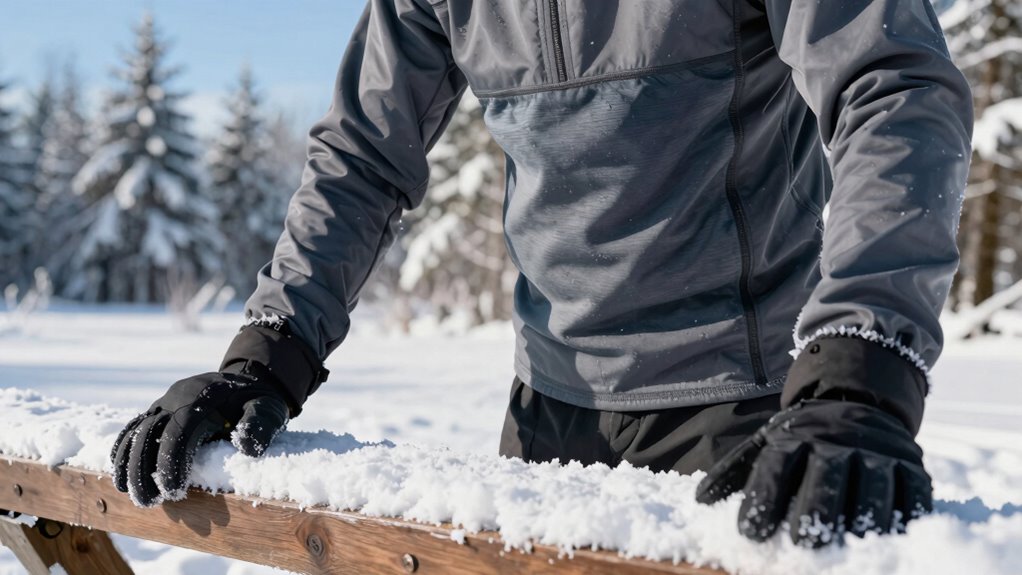
To stay warm without overheating, you need to adjust your layers based on activity levels and weather conditions. Using breathable fabrics strategically helps regulate moisture and temperature, keeping you comfortable. Keep an eye on your body temperature regularly so you can tweak your clothing as needed.
Adjust Layers Based on Activity
As your activity level changes, so should your layers to stay comfortable and prevent overheating. Adjusting layers helps regulate your body temperature and keeps you dry. When increasing activity, loosen or remove the outer layers to prevent excessive layer compression, which can restrict movement and sweat evaporation. During less intense moments, add or tighten layers for insulation. Consider fabric dyeing to choose colors that reflect heat or absorb sunlight, aiding temperature regulation. Also, switch to moisture-wicking base layers that dry quickly during high activity. Keep a lightweight, packable layer handy for sudden temperature drops. Remember, your goal is to balance warmth with breathability, adjusting layers to match your effort level while avoiding sweat buildup.
Use Breathable Fabrics Strategically
Using breathable fabrics is essential for staying comfortable and avoiding overheating during cold-weather activities. These fabrics facilitate moisture transfer, pulling sweat away from your skin so you stay dry and warm. Look for materials like merino wool, polyester, or nylon, which excel at moisture management and help you regulate your body temperature. Additionally, fabric durability matters; choose options that withstand frequent wear and washing without losing their effectiveness. Strategically selecting breathable layers allows you to stay warm without trapping excess heat or moisture. This balance prevents you from feeling clammy or chilled, keeping your body in a comfortable zone. By prioritizing moisture transfer and durability, you ensure your gear performs reliably, making your cold-weather adventures more enjoyable and less stressful.
Monitor Body Temperature Regularly
Monitoring your body temperature regularly is essential for maintaining ideal comfort during cold-weather activities. Keeping an eye on your body temperature helps you understand when your thermal regulation is working or if you’re overheating. Use a thermometer or simply check for signs like sweating, chills, or feeling too hot or cold. Pay attention to how your body responds as you move and adjust your layers accordingly.
Imagine:
- Feeling slightly cool but not chilled
- Noticing sweat or clamminess
- Experiencing shivering or goosebumps
- Breathing comfortably without overheating
- Maintaining a stable core temperature
These cues help you fine-tune your layering, ensuring you stay warm without overheating and keep your thermal regulation in check.
Frequently Asked Questions
How Do I Choose the Right Layering System for Varying Activities?
You choose the right layering system by matching layering materials to your activity. For high-intensity activities, pick moisture-wicking base layers to keep sweat away from your skin. Use insulating mid-layers for warmth, and add waterproof or windproof outer layers when needed. Always select activity-specific gear designed for your activity, whether skiing or hiking, ensuring comfort and protection without overheating or sweating.
What Are the Best Practices for Drying and Storing Winter Gear?
Don’t let your gear turn into a breeding ground for trouble. After each use, thoroughly dry your winter gear to prevent mold and odor, using breathable storage solutions like mesh bags or hanging racks. Clean and inspect gear regularly for damage, then store it in a cool, dry place away from direct sunlight. Proper gear maintenance and smart storage guarantee your gear stays in top shape and ready for your next adventure.
How Does Body Temperature Regulation Differ During Rest and Activity?
During rest, your body relies on slower thermoregulation strategies like blood vessel constriction to conserve heat, keeping your metabolic rate low. In activity, your body increases the metabolic rate to generate more heat, requiring active thermoregulation strategies like sweating to cool down and prevent overheating. You feel warmer during activity because your body adapts quickly, balancing heat production and dissipation through these strategies to maintain a stable core temperature.
Are There Eco-Friendly or Sustainable Materials Suitable for Winter Layering?
You’ll be glad to know eco-friendly materials like recycled wool and organic fleece are perfect for winter layering. Some might think sustainable fabrics lack durability, but these options are durable and insulating. Recycled wool repurposes discarded fibers, reducing waste, while organic fleece is made from sustainably farmed fibers that keep you warm without harming the environment. Choosing these materials helps you stay cozy responsibly, without sacrificing performance or sustainability.
How Can I Customize My Layers Based on Personal Comfort and Body Type?
You can customize your layers by choosing fabrics that match your personal comfort and body type. If you have a warmer body, opt for lighter, breathable materials to avoid overheating. For cooler body types, add insulating layers like merino wool or fleece. Adjust the fit—snug for warmth, looser for breathability. Experiment with layering combinations to find what keeps you warm without causing sweating, ensuring comfort throughout your outdoor activities.
Conclusion
Think of cold-weather layering as your armor against winter’s chill—each layer a shield that traps heat, wicks moisture, and breathes with you. When you master this science, you become a skilled explorer maneuvering icy terrains without fear of overheating or getting soaked. With the right combination, you stay warm, dry, and comfortable—like a steadfast traveler moving confidently through a snowstorm, protected by a thoughtful, layered suit of warmth.