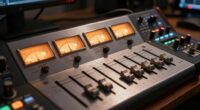
Channel strips still matter in digital studios because they add unique character, warmth, and vintage mojo that plugins often can’t replicate. They offer tactile control, making adjustments intuitive and precise, boosting your workflow and creativity. Using vintage or modern gear brings organic textures and inspiring personalities to your sound. If you want to discover how to incorporate these powerful tools effectively and access their full potential, there’s more to explore below.

Get audio and creator gear delivered free with Prime
- Fast, free delivery on millions of items
- Prime Video, Amazon Music and more included
- Member-only deals all year
Key Takeaways
- Analog channel strips add unique sonic character, warmth, and vintage mojo that digital processors often lack.
- They provide tactile, intuitive control, enhancing workflow, precision, and creative engagement during mixing sessions.
- Vintage gear offers organic saturation and harmonic richness, enriching digital recordings with authentic, timeless textures.
- Proper integration of analog gear preserves its sonic qualities while leveraging digital flexibility and editing capabilities.
- Continuous use and customization of channel strips foster mastery, improved response, and professional-quality results.
As an affiliate, we earn on qualifying purchases.
Are Analog Channel Strips Still Relevant Today?
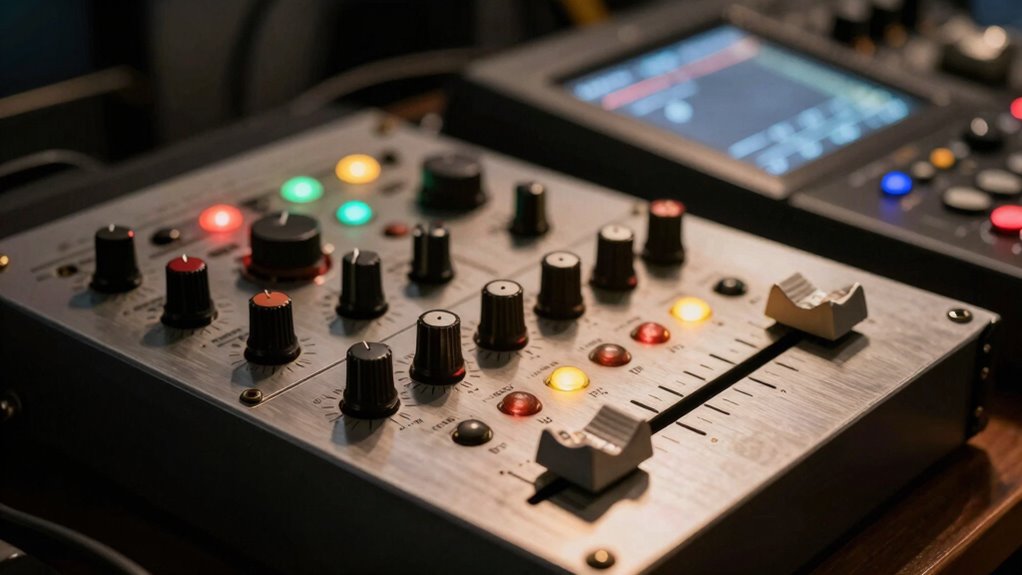
Despite the rise of digital technology, analog channel strips remain relevant in modern studios because many engineers and producers value their unique sound and tactile control. Digital limitations, like lack of real-time physical feedback, can hinder creativity and precise adjustments. Analog strips offer hands-on control that’s intuitive and immediate, enhancing studio ergonomics. This physical interface can also help reduce fatigue during long sessions. The tactile experience helps you quickly shape sounds without steering through menus or clicking knobs, making your workflow more efficient. Additionally, the attention to detail required when working with analog gear encourages a more focused and deliberate mixing process. Many professionals also appreciate how the audio coloration of analog equipment can add warmth and character to their mixes, which digital emulations often try to replicate but seldom fully capture. The sonic qualities of analog gear provide a distinct flavor that many find inspiring and motivating during creative sessions. Moreover, the analog character can inspire musicians and producers to experiment more freely, fostering a more innovative environment. Plus, the physical interface can reduce fatigue during long sessions. Even with advanced digital plugins, many professionals find that the tactile feel and distinct sonic qualities of analog channel strips improve their overall mixing process, keeping them relevant in a digital-dominated environment.
What Makes Analog Channel Strips Sound So Good?
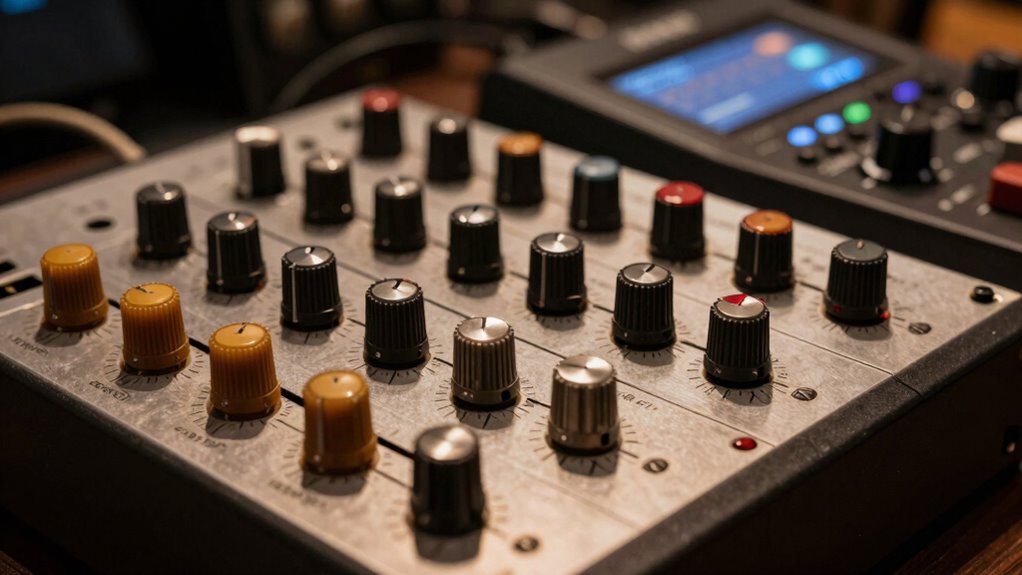
Analog channel strips are prized for their distinctive sound qualities, which often can’t be perfectly replicated by digital plugins. Their unique blend of analog warmth and vintage mojo creates a rich, musical character that adds depth and dimension to your recordings. The circuitry in these strips naturally compresses and saturates signals, giving vocals and instruments a pleasing glow and presence. This organic coloration enhances the emotional impact of your mix, making it feel more alive and inviting. The subtle harmonic distortions and nonlinearities inherent in analog circuitry contribute to their desirable sound. When you use an analog channel strip, you tap into decades of analog engineering craft, giving your tracks a timeless quality that’s difficult to imitate digitally. Understanding analog circuitry is key to appreciating how these subtle effects shape the overall sound. Recognizing how circuit design influences the sonic characteristics can deepen your appreciation for what makes analog strips so special, especially considering the emotional needs that these analog qualities fulfill in a mix. Additionally, the unique tonal qualities of these strips often evoke a sense of nostalgia, further enriching the listener’s experience.
Why Do Engineers Prefer Tactile Control?
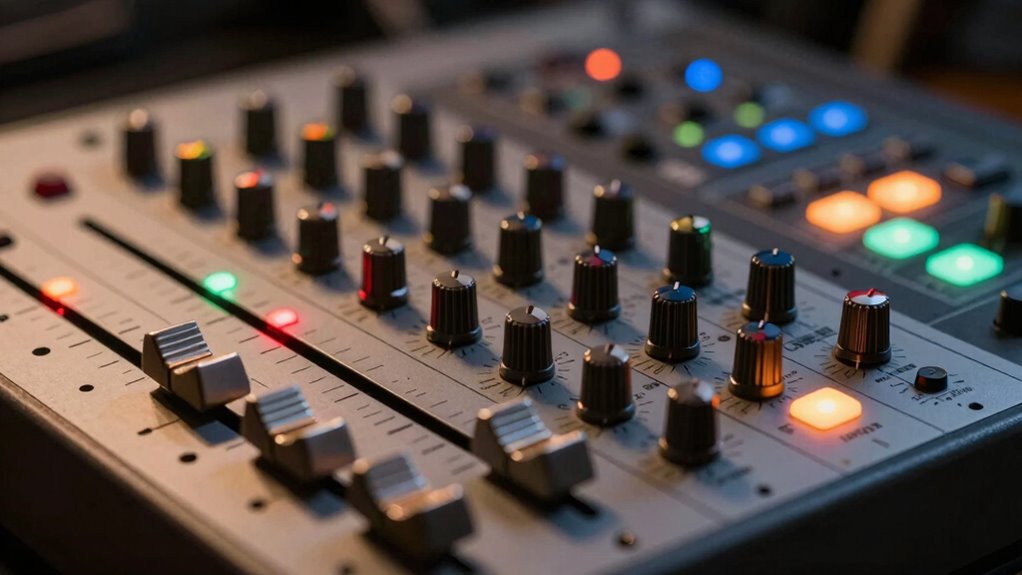
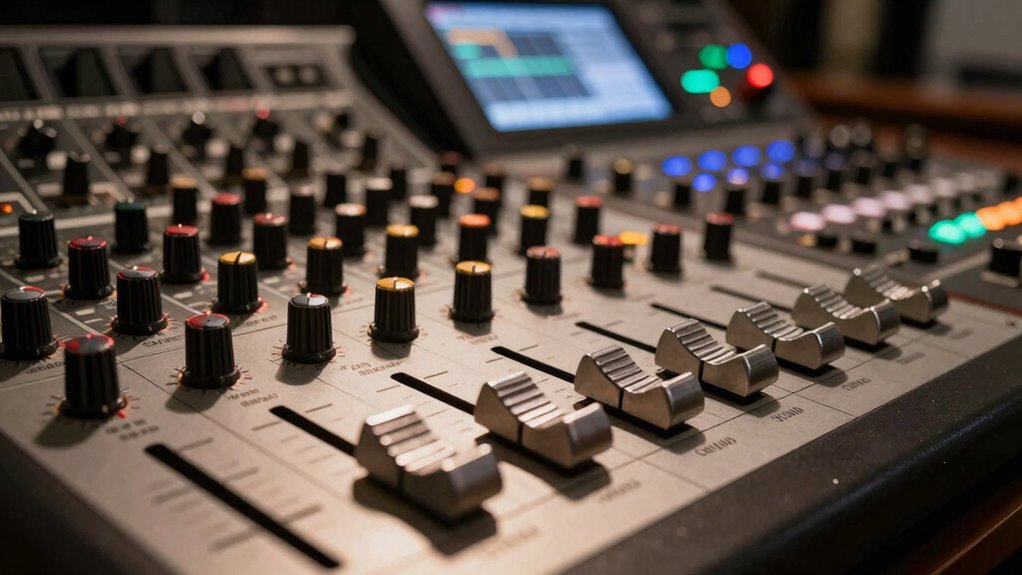
Engineers often prefer tactile control because it provides an immediate and intuitive way to shape sounds. Turning a physical knob or fader offers tactile feedback that digital controls can’t match, making adjustments feel more natural. This tactile sensation connects you directly to the sound, fostering a vintage aesthetics that many seek to emulate. The physical movement helps you gauge your changes quickly, reducing the need to constantly glance at screens. Tactile control also enhances precision, allowing for fine-tuning with confidence. Many engineers find that this hands-on approach keeps them more engaged and responsive during sessions. Overall, tactile feedback creates a more immersive experience, blending the nostalgic feel of vintage gear with the efficiency of modern technology. tactile control is also crucial in high-pressure situations where quick adjustments are necessary, especially considering how Free Floating designs can improve the flexibility and responsiveness of hardware interfaces. Additionally, the tactile feedback provided by channel strips can help prevent accidental adjustments, ensuring more consistent results during critical recording or mixing sessions. Incorporating hydrating ingredients in equipment design can also contribute to better user comfort and control during long sessions.
How Do Channel Strips Enhance Creativity and Workflow?
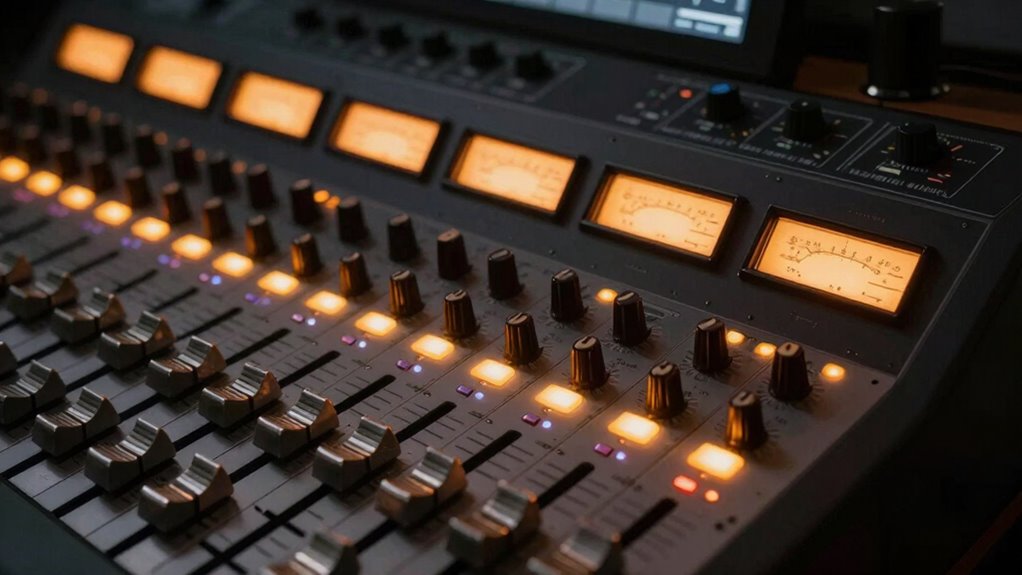
Channel strips streamline your workflow by integrating multiple processing functions into a single, intuitive interface. This setup allows you to focus on creativity rather than juggling separate plugins or hardware. When recording vocals or instruments, your microphone placement and acoustic treatment are essential; a good channel strip helps you instantly shape sound right at the source. With dedicated EQ, compression, and gain controls, you can quickly refine your tone without interrupting your flow. The tactile knobs and switches encourage hands-on engagement, fostering a more instinctive approach to sound design. This immediate access speeds up decision-making, letting you experiment freely and trust your ears. Additionally, understanding decoding slang and informal language can help you communicate more effectively with collaborators, making the entire production process smoother. As a result, your creative process becomes more fluid, and your workflow more efficient, even in a digital environment.
Choosing the Right Vintage or Modern Channel Strip
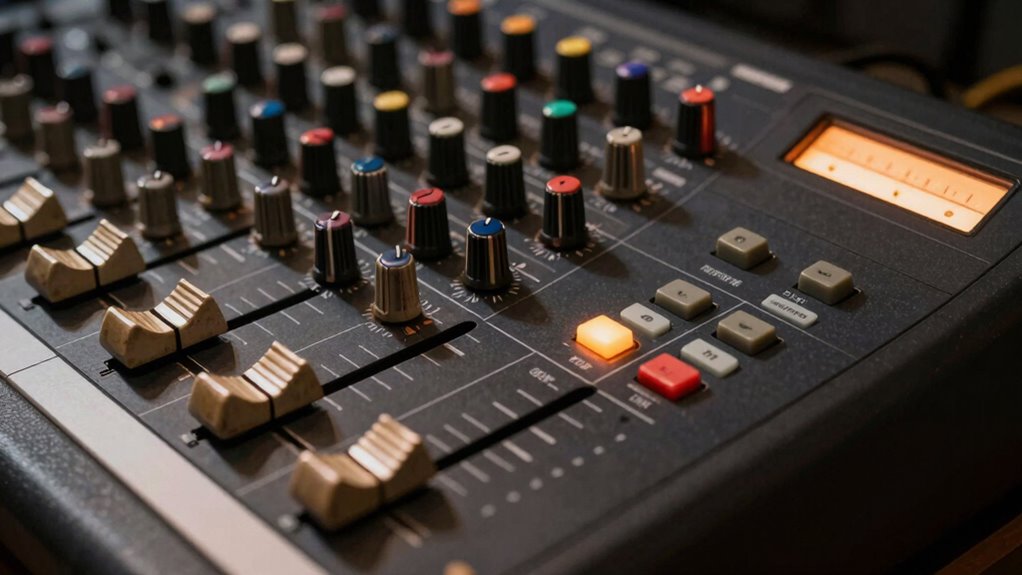
Choosing between vintage and modern channel strips depends on your specific needs and the sound character you want to achieve. Vintage channel strips often bring a warm, saturated tone, reminiscent of classic recordings, and pair well with vintage microphones for authentic textures. Modern channel strips, on the other hand, excel with clean, transparent processing, and seamlessly integrate with digital workflows and modern plugins. When selecting, picture yourself:
- Sweeping EQ curves shaping your tone effortlessly
- Rich, harmonic distortion from vintage components
- Crystal-clear transparency of digital emulation
- Classic analog warmth filling your tracks
- Precision control offered by advanced modern features
Your choice hinges on whether you seek timeless character or streamlined efficiency, shaping your studio’s unique sound.
Integrating Vintage Gear With Digital Studios

Integrating vintage gear into your digital studio adds unique character and warmth to your sound. You can achieve seamless signal flow while creatively shaping tones that digital plugins can’t replicate. This combination opens up new possibilities for crafting authentic, inspiring recordings. Just like maintaining proper gear care ensures longevity and optimal performance, thoughtful integration of vintage equipment enhances your overall production quality. Paying attention to home organization can also help keep your studio setup efficient and accessible. Additionally, understanding the best anime movies can inspire creative thinking and bring fresh ideas to your projects. Recognizing early symptoms of breast cancer can be crucial for prompt treatment and better outcomes, emphasizing the importance of awareness and early detection. As the demand for skilled AI software engineers grows, mastering the art of blending vintage and digital tools can give you a creative edge in your productions.
Vintage Gear Character
Vintage gear brings a distinct character to digital studios, adding warmth, richness, and unique sonic qualities that often can’t be replicated with modern hardware or plugins. Its vintage aesthetics evoke a sense of history, craftsmanship, and personality that immediately influences your sound. The analog durability of these units guarantees they develop a unique tonal aging, providing subtle variations and character over time. When you incorporate vintage gear, you tap into a sonic palette full of imperfections, harmonics, and textures that breathe life into recordings. Imagine:
- Warmth radiating from tube circuitry
- Slight saturation adding depth and dimension
- Subtle inconsistencies that create a lively feel
- Unique harmonic distortions for character
- Visual cues of aged, well-crafted hardware
These elements make vintage gear an invaluable tool for shaping authentic, compelling sounds.
Seamless Signal Integration
Ever wondered how to connect classic analog gear seamlessly into a digital workflow? Using a high-quality channel strip makes this process straightforward. These units act as a bridge, preserving vintage warmth while maintaining signal clarity. When integrated properly, your analog gear can feed into your digital setup without noise or signal loss, guaranteeing the tonal qualities you love are retained. You’ll find that proper impedance matching and clean converters are essential for smooth integration. This way, you get the best of both worlds: the rich character of vintage gear alongside the flexibility of digital editing. By investing in reliable interface options and maintaining consistent signal flow, you ensure your studio benefits from authentic tonal qualities without sacrificing clarity or workflow efficiency.
Creative Sound Shaping
- Sweeping vintage filters that transform dull signals into lively, textured sounds
- Using tube preamps for warm harmonic distortion
- Layering analog compression for punch and glue
- Incorporating classic EQs for tonal shaping
- Blending digital effects with vintage gear for unique sonic textures
- Exploring the subtle benefits of herbal infusions in your studio environment to enhance creativity and well-being, which can also include the use of analog gear to preserve a warm, organic tone.
This approach empowers you to shape sounds creatively, bridging the best of both worlds.
Myths About Analog Channel Strips Debunked
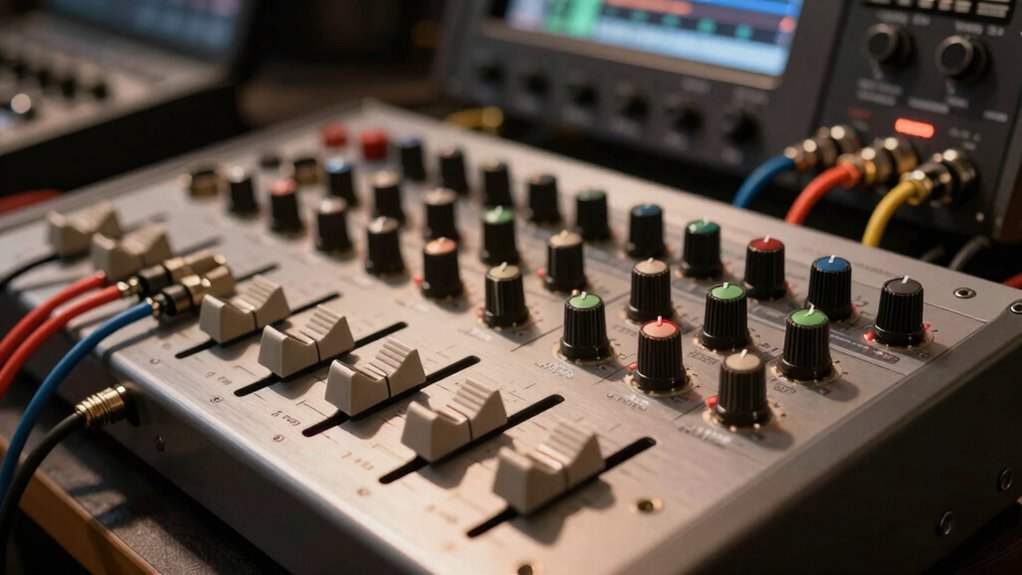
Many believe that analog channel strips offer unmatched authenticity, but digital models can replicate that warmth effectively. You might think analog gear is too costly and high-maintenance, yet modern options are more affordable and reliable than you expect. There’s also a myth that analog gear is outdated, but it continues to influence current technology and sound quality. Embracing Water parks can also help musicians approach gear choices with clarity and purpose. Additionally, understanding regional flavors and insights in audio equipment can deepen appreciation for how different technologies shape sound.
Analog vs Digital Authenticity
Is analog authenticity truly superior to digital? Not necessarily. While some believe analog gear offers a more “real” sound, digital plugins now emulate analog characteristics convincingly. With studio automation, you can precisely control every nuance, blending the best of both worlds.
Imagine:
- The warmth of analog circuitry captured in a plugin
- Seamless adjustments with studio automation
- The punch of classic analog compressors on your DAW
- The subtle saturation that digital models replicate perfectly
- Instant recall of your favorite analog settings
Digital gear and plugins continue to close the gap, making authenticity more about perceived character than physical limitations. It’s about choosing what fits your workflow and sound goals, not just sticking to one “superior” method.
Cost and Maintenance Concerns
Despite common misconceptions, owning and maintaining analog channel strips isn’t as costly or complicated as many believe. Modern equipment durability means these units are built to last, reducing long-term expenses. Plus, integrating channel strips into your studio improves ergonomics by providing dedicated controls, streamlining your workflow and minimizing setup time. The initial investment might seem higher, but the reliability and sound quality they offer can save you money on repairs and replacements over time. Maintenance is often straightforward, involving routine cleaning and occasional calibration, which most studios can handle without specialized skills. Additionally, understanding ownership and maintenance concepts from the industry can help studios make more informed decisions about their equipment investments. Far from being an outdated expense, channel strips enhance your studio’s efficiency and sound consistency, making them a practical choice even in digital-focused environments.
Perceived Obsolescence Myths
A common misconception is that analog channel strips are becoming obsolete in today’s digital-centric studios. Many believe they’re outdated, but this isn’t true. Analog gear offers exceptional equipment durability, often lasting decades with proper care, and provides superior sound preservation that digital models can’t replicate.
Imagine:
- A vintage strip still delivering warm, rich tones after years of use
- Hardware that ages gracefully, maintaining its value and performance
- Handcrafted components built for long-term reliability
- The tactile experience of adjusting physical knobs and sliders
- The authentic character that remains consistent over time
These qualities debunk myths of obsolescence, proving that analog channel strips continue to hold relevance for their durability and unmatched sound preservation qualities.
What’s the Cost of Adding a Channel Strip to Your Studio?
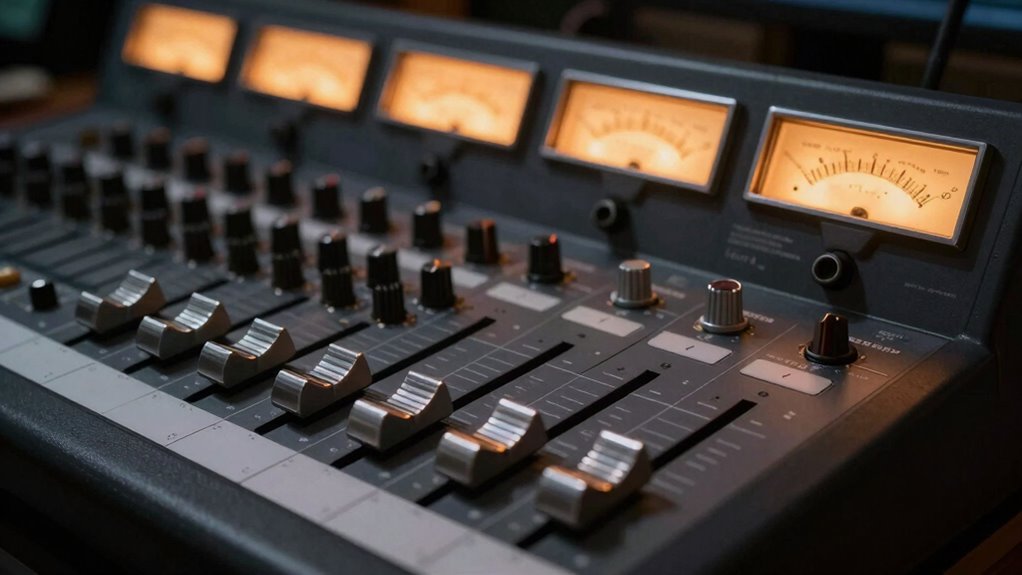
Adding a channel strip to your studio can vary widely in cost, depending on the features and quality you’re after. High-end models with advanced hardware integration can run into thousands of dollars, while more affordable options still offer solid functionality. The price often reflects the quality of components, such as preamps, EQs, and compressors, which directly impact sound. Additionally, consider the user interface—some strips offer intuitive controls that speed up workflow, while others may require a learning curve. If you’re on a budget, you might opt for a simple, compact unit, but investing in a more sophisticated strip can enhance your mixing precision and workflow. Overall, weigh the cost against your studio’s needs, workflow, and long-term goals.
Final Tips for Getting the Most Out of Your Channel Strips
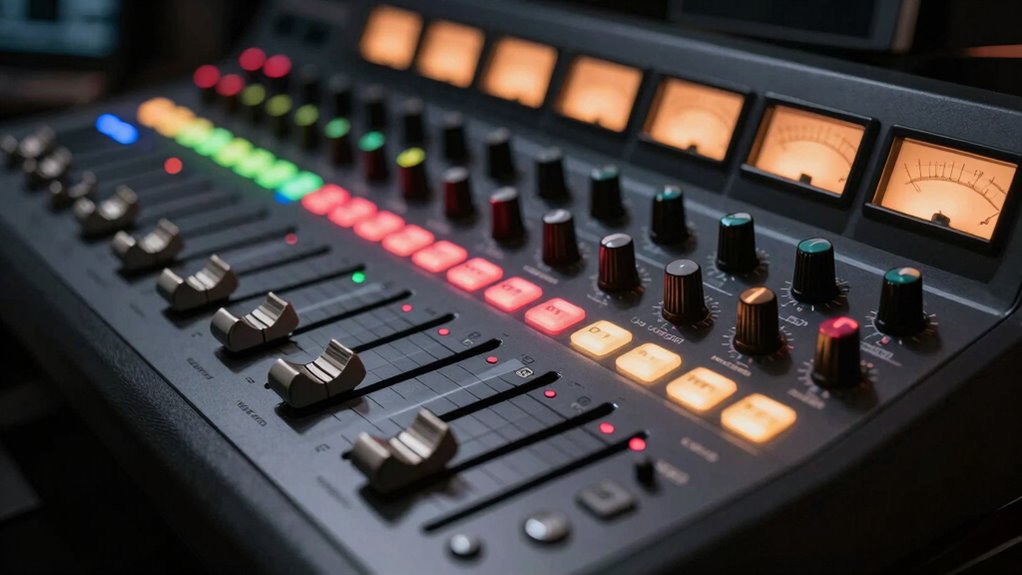
To maximize the potential of your channel strips, it’s essential to understand their full capabilities and tailor their use to your specific recording and mixing needs. Embrace creative workflows by experimenting with different settings, and don’t overlook the value of tactile feedback—physical controls help you make precise adjustments quickly. Keep these tips in mind:
Master your channel strips through experimentation, tactile control, and regular refinement for more expressive, professional mixes.
- Use your ears actively, trusting your instincts during tweaks
- Engage with each control physically to develop muscle memory
- Layer subtle EQ and compression for richer sounds
- Save custom presets to streamline your process
- Regularly revisit your settings to refine your tone
These practices help you unlock the full potential of your channel strips, making your mixes more intuitive, expressive, and professional.
Frequently Asked Questions
Can Digital Emulations Replicate the Sound of Analog Channel Strips Effectively?
Digital emulations can effectively replicate the sound of analog channel strips, but they have some limitations. While digital authenticity has improved, certain nuances and warmth of real analog gear are challenging to fully capture. You might notice subtle differences, especially in how the emulation responds to dynamic changes. Overall, though, modern plugins come close, making them valuable tools, but understanding their emulation limitations helps you decide when to use them for the best results.
How Do Channel Strips Impact the Overall Mix Clarity and Separation?
Channel strips enhance your mix clarity and separation by offering tonal consistency and versatile controls. They allow you to shape individual sounds precisely, making each instrument stand out without muddying the overall mix. Their all-in-one layout streamlines your workflow, ensuring consistent tonal quality across tracks. This versatility helps you craft a clean, well-defined mix, giving your project clarity and separation that digital emulations alone might not fully achieve.
Are There Specific Genres That Benefit More From Analog Channel Strips?
You might discover that genres like jazz, blues, and vintage-inspired rock benefit the most from analog channel strips. Why? Because they add a touch of vintage warmth and tonal character that digital plugins struggle to replicate authentically. This subtle richness can transform your recordings, giving them a unique depth and personality, making your mix stand out with a timeless vibe. Don’t underestimate what a classic channel strip can do for your sound.
What Maintenance Considerations Are Involved With Vintage Analog Channel Strips?
You need to regularly check vintage components for wear, dust, and corrosion. Maintenance routines include cleaning contacts, replacing worn-out tubes or capacitors, and calibrating the unit to guarantee peak sound quality. Vintage analog channel strips require careful handling to preserve their character and functionality. Staying consistent with these routines helps prevent issues, preserves the value of your gear, and keeps your studio sounding warm and authentic.
How Do Channel Strips Influence the Emotional Feel of a Recording?
Ever wonder how a recording can feel so emotionally rich? Channel strips influence this by adding dynamic warmth and tonal character, shaping the overall vibe. They inject personality into your sound, making it resonate more deeply with listeners. Without them, recordings risk sounding sterile. Their unique coloration and subtle nuances help evoke feelings, connecting your audience to the music on a more visceral level. Can you imagine your mix without that emotional depth?
Conclusion
Despite the rise of digital, over 70% of top engineers still swear by analog channel strips for their warmth and character. You don’t have to overhaul your entire studio to benefit—adding a well-chosen strip can boost your creativity and workflow. Embrace the tactile control and rich sound they offer, and you might just discover that vintage gear still holds its magic. Keep experimenting, and you’ll find your unique sound in the analog-digital balance.
Halloween Picks
halloween
As an affiliate, we earn on qualifying purchases.