
Smart locks need better planning than most front doors because they must fit into your daily habits, security system, and hardware setup. You should consider remote access, temporary codes, and app control to suit your needs. Ensuring compatibility with your existing devices and Wi-Fi is essential to avoid connection issues or vulnerabilities. Proper installation, durable materials, and ongoing updates protect your home long-term. Keep exploring to understand how to make your smart lock integration secure and seamless.

Get audio and creator gear delivered free with Prime
- Fast, free delivery on millions of items
- Prime Video, Amazon Music and more included
- Member-only deals all year
Key Takeaways
- Smart locks require integration with existing security systems and home automation, demanding detailed planning for compatibility and security.
- Proper installation and hardware assessment are essential to ensure reliable operation and avoid costly modifications.
- Planning for remote access features and temporary codes enhances convenience but increases cybersecurity risks if not managed properly.
- Power management and battery life are critical; neglecting maintenance can lead to lockouts or system failures.
- Seamless connectivity and future-proofing involve thorough system compatibility checks to prevent connectivity issues.
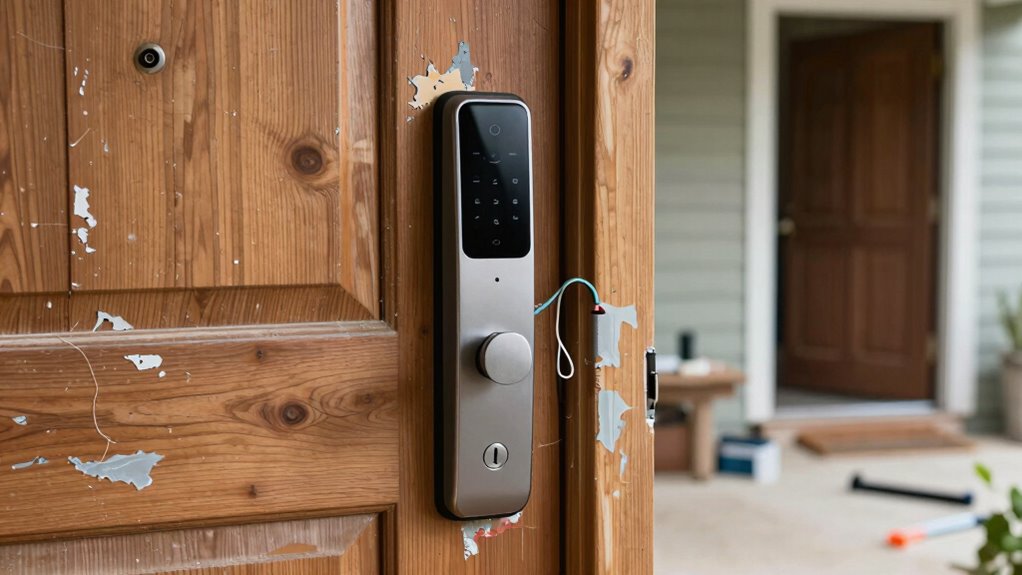
Planning for smart locks can considerably enhance your home’s security and convenience, but it requires careful consideration of your specific needs and existing infrastructure. Unlike traditional locks, smart locks aren’t just about securing your home—they’re about integrating technology seamlessly into your daily routine. This means evaluating how keyless convenience fits into your lifestyle and ensuring the device you choose can connect effectively with your current security system. This integration often involves understanding home automation principles to maximize efficiency. If you overlook these factors, you risk ending up with a solution that’s either inconvenient or vulnerable.
Keyless convenience is one of the primary reasons people opt for smart locks, but it’s not enough to simply install a device that allows keyless entry. You need to think about how you’ll use it daily. Will you unlock the door remotely for family members or delivery personnel? Do you want to set temporary access codes for visitors or service workers? Planning ahead lets you select a smart lock that offers features matching your habits. For example, some models support smartphone app controls, voice commands, or keypad entry, making it easier to manage access without carrying keys. But more importantly, you need to confirm that these features are compatible with your existing devices and Wi-Fi setup to prevent connectivity issues later.
Consider your daily routines and ensure smart lock features like app control or keypad entry fit seamlessly with your devices.
Security integration is equally critical in your planning process. A smart lock should complement your home’s overall security system, not work in isolation. You want a device that can communicate with your alarm system, cameras, or other smart home components. This integration helps create a comprehensive security network, making it easier to monitor and control access. Without proper planning, you might install a smart lock that’s incompatible with your security infrastructure, leaving gaps in your protection. It also means considering the lock’s encryption and cybersecurity features. A poorly secured device could become a vulnerability rather than a safeguard, so look for models with strong security protocols. Additionally, understanding the cybersecurity measures of your smart lock and other connected devices can further protect your home from potential hacking attempts.
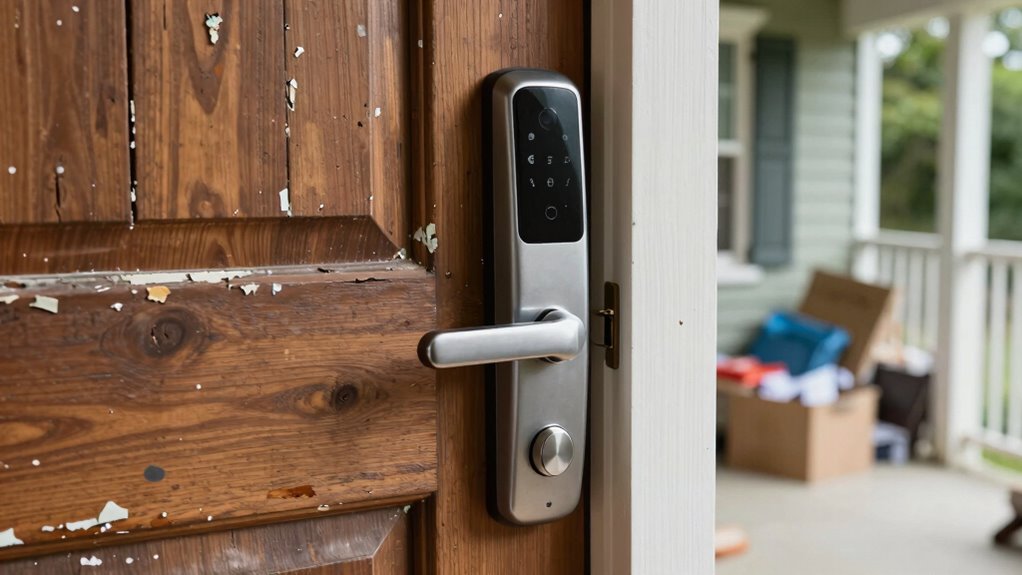
You should also think about the physical setup of your door and existing hardware. Some smart locks require specific types of deadbolts or handles, and not all doors are suitable candidates. Planning allows you to assess whether your door can support the weight and mechanism of the lock or if modifications are necessary. Additionally, consider the power source—battery-powered smart locks need regular checks to avoid lockouts, so choosing a model with easy battery access or alerts for low power is wise. Incorporating natural materials into your door hardware design can also improve both aesthetics and durability, especially in outdoor environments. Properly planning these aspects helps ensure your smart lock functions reliably over time. Being aware of installation requirements can also streamline the setup process and prevent costly mistakes later on.
As an affiliate, we earn on qualifying purchases.
Frequently Asked Questions
How Do Smart Locks Integrate With Existing Home Security Systems?
You can easily integrate smart locks with your existing home security system through wireless connectivity, allowing seamless communication between devices. Confirm the smart lock supports user authentication methods like PIN codes, biometric scans, or smartphone apps. By doing this, you enable remote access, real-time alerts, and a cohesive security setup. Proper integration enhances overall safety and convenience, making your smart lock an effective part of your home’s security ecosystem.
What Are the Common Installation Challenges for Smart Locks?
Did you know around 20% of smart lock users face installation challenges? You might struggle with keypad compatibility, ensuring it works seamlessly with your existing system. Battery life is another concern—if batteries die unexpectedly, you could get locked out. Proper planning helps avoid these issues by checking compatibility beforehand and choosing models with long-lasting batteries, making the installation smoother and your smart lock more reliable.
How Do Smart Locks Impact Home Insurance Policies?
Smart locks can influence your home insurance by potentially lowering premiums due to enhanced security, but they also impact liability coverage. If a smart lock malfunctions and causes damage or security breaches, your insurance might cover these issues, though some policies may require proof of proper installation and maintenance. As a result, informing your insurer about your smart lock system can help ensure you’re adequately covered and avoid surprises during claims.
What Backup Options Are Available if the Smart Lock Fails?
Ironically, when your smart lock fails, you’ll find your backup options surprisingly simple. You ought to have a battery backup system in place to power the lock during outages. Additionally, keep emergency access methods like a physical key or a backup code handy. These safeguards guarantee you can always enter your home, proving that even the smartest tech needs a reliable backup plan to avoid being locked out.
Are Smart Locks Suitable for Rental Properties or Airbnb Hosts?
Smart locks are generally suitable for rental properties and Airbnb hosts because of their rental compatibility and host convenience. You can easily change access codes or lock settings remotely, making check-ins smooth and secure. Plus, they reduce the need for physical key exchanges, enhancing guest experience. However, guarantee the smart lock system you choose integrates well with your existing setup and offers reliable backup options for seamless access in any situation.
Conclusion
So, next time you install a smart lock, remember—it’s not just about the fancy tech or the sleek design. Ironically, the most overlooked part is planning. You’d think locking up your home would be straightforward, but without proper thought, your smart lock could become your weakest link. Don’t let convenience turn into chaos. After all, sometimes the simplest plan is the smartest one—because neglecting it might just leave your home more vulnerable than a traditional lock ever could.
Fall Picks
fall essentials
As an affiliate, we earn on qualifying purchases.