
To save your basement during storms, follow the sump pump backup rule: install a reliable backup sump pump that activates if the primary fails or loses power. Make certain it’s properly maintained and tested regularly. Clear storm drains around your property to prevent overflow, reducing pressure on your sump system. Combining these steps offers strong protection, but there’s even more you can do to stay flood-safe—continue to explore essential strategies for complete peace of mind.

Get audio and creator gear delivered free — and shop member deals
- Fast, free delivery on millions of items
- Access to Prime Big Deal Days deals on October 6–7
- Prime Video, Amazon Music and more included
Key Takeaways
- Always install a backup sump pump to ensure continuous operation during power outages or primary pump failure.
- Regularly inspect and maintain both primary and backup pumps for reliable performance.
- Keep storm drains clear to reduce flooding pressure on sump systems.
- Ensure backup systems are properly connected and tested before storm seasons.
- Follow the backup rule: rely on redundancy to protect your basement from flooding.
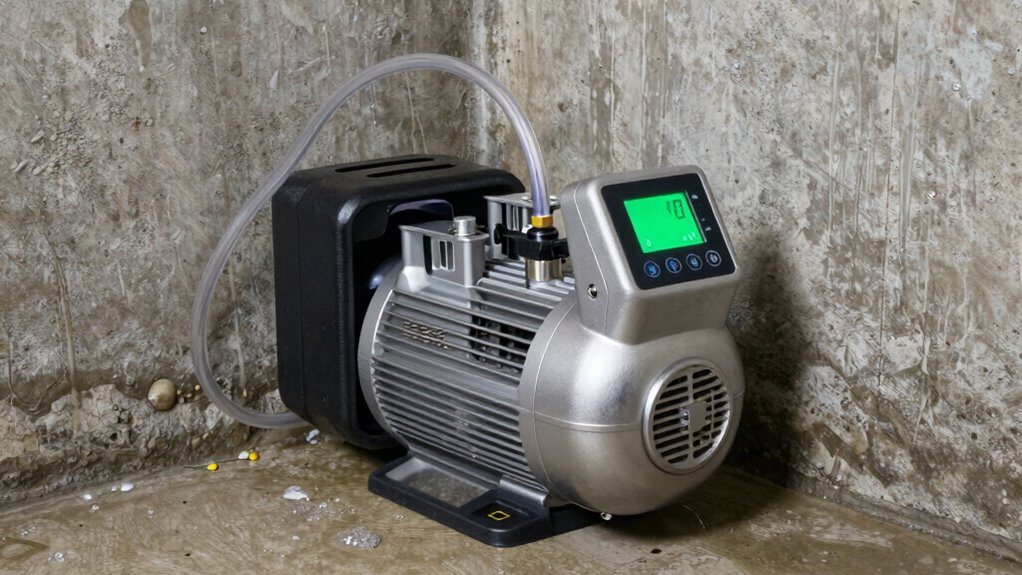
Have you ever considered what happens if your sump pump fails during a heavy storm? If your home’s basement is vulnerable to flooding, understanding the importance of a backup system can be a game-changer. When a major storm hits, rainwater rushes down from the roof and surrounding land, quickly overwhelming your regular drainage systems. This water often finds its way into your sump pit, the designated area where your sump pump operates to keep water at bay. If the storm drain system nearby is clogged or overwhelmed, the risk of water backing up increases considerably, putting your basement at serious risk.
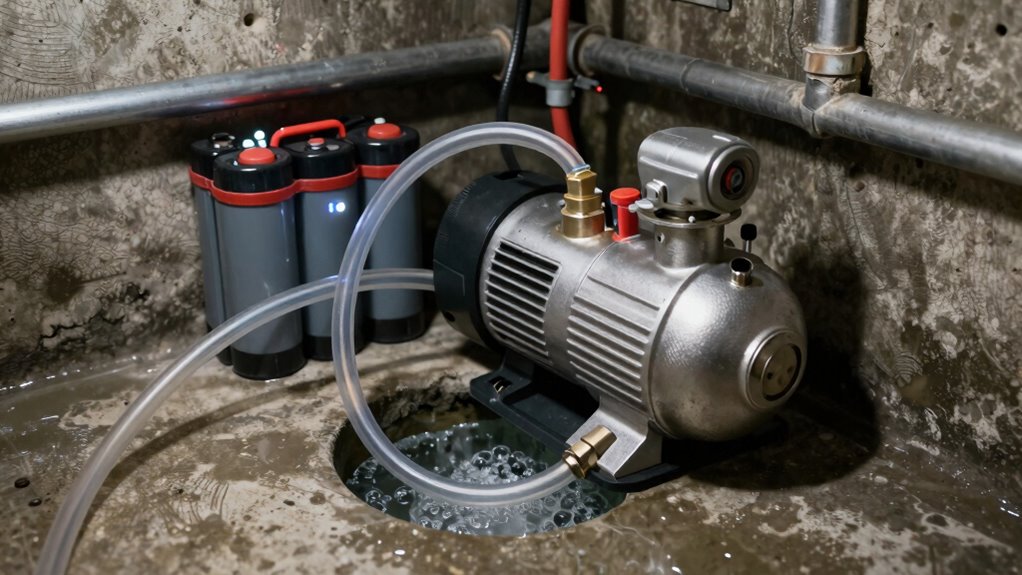
Without a functioning sump pump, water accumulates in the sump pit, gradually seeping into your basement. That’s why having a reliable backup is essential. You need to think beyond just your main sump pump; a backup system ensures that even if the primary fails, your basement stays dry. When a storm hits and your primary pump can’t keep up, a backup pump kicks in automatically. These backup systems are designed to activate when water levels in the sump pit reach a certain point, preventing flooding and avoiding costly repairs.
A backup sump pump keeps your basement dry if the primary fails during heavy storms.
A key aspect of this setup is understanding how your storm drain interacts with your property. If your storm drain is blocked or poorly maintained, water has fewer escape routes, increasing the likelihood of flooding. Making certain that your storm drain is clear allows excess water to flow away efficiently, reducing pressure on your sump system. This makes having a backup pump even more important, especially during intense storms when the storm drain might be overwhelmed. Proper storm drain maintenance can significantly reduce the risk of basement flooding. Additionally, understanding how your metabolic health can influence your body’s resilience to stress and recovery can support your overall home safety and health.
Ensuring your sump pump system is properly installed and regularly inspected can help you identify potential issues before they become emergencies. Installing a backup sump pump isn’t complicated, but it’s a fundamental step to safeguard your home. It can be battery-powered or connected to an external power source, so even if the power goes out during a storm, your sump pit remains protected. When a storm causes water to rise in the sump pit, the backup pump activates seamlessly, working in tandem with the main pump or independently, depending on your setup. This redundancy offers peace of mind, knowing you won’t wake up to a flooded basement after a heavy rain.
In the end, the sump pump backup rule is simple: don’t rely solely on your primary pump. The combination of a well-maintained storm drain, a properly installed sump pit, and a backup pump creates a reliable defense against basement flooding. Ensuring your sump system is properly maintained and includes a backup is a crucial step in your flood prevention strategy. When you follow this rule, you’re taking proactive steps to protect your home, your belongings, and your peace of mind during the worst storms.
As an affiliate, we earn on qualifying purchases.
Frequently Asked Questions
How Often Should I Test My Sump Pump Backup System?
You should test your sump pump backup system at least once every three to six months as part of your maintenance schedule. Regular testing guarantees it’s ready for emergencies and works properly when needed most. During these tests, verify that the backup activates correctly and efficiently pumps water away. Staying proactive with maintenance and testing keeps your basement safe and improves your emergency preparedness, preventing costly flooding or water damage.
What Is the Average Lifespan of a Sump Pump Backup?
You can expect a sump pump backup to last around 5 to 10 years with proper maintenance. Following a regular maintenance schedule, like inspecting and testing it annually, keeps it reliable. Emergency preparedness also involves replacing it promptly if it shows signs of wear or failure. Staying proactive guarantees your basement stays dry during storms, and your backup system functions effectively when needed most.
Can I Install a Backup System Myself, or Hire a Professional?
You can definitely do a DIY installation of a sump pump backup if you’re comfortable with basic plumbing and electrical work. However, for safety and proper functioning, hiring a professional installation is often the better choice. Professionals ensure your backup system is correctly installed, reducing risks of leaks or failure during heavy rain. If you’re unsure or lack experience, opting for professional installation guarantees peace of mind and reliable basement protection.
Are There Different Types of Sump Pump Backups?
Yes, there are different types of sump pump backups. Imagine a storm raging outside, power outages causing chaos, and your basement vulnerable. You might think a battery backup is enough, but what if the battery fails during the storm? You need a system that’s reliable—like a water-powered backup or a secondary pump. Each type offers peace of mind, ensuring your basement stays dry even when power and batteries fail.
How Much Does a Sump Pump Backup Typically Cost?
A sump pump backup usually costs between $150 and $500, depending on the type and features. You’ll want to take into account backup capacity and battery maintenance when choosing one. Higher capacity backups handle more water and last longer during power outages, but they tend to be more expensive. Regularly maintaining the battery ensures reliable operation. Investing in a quality backup system can protect your basement from flooding and costly damages.
Conclusion
By following the sump pump backup rule, you considerably reduce your risk of basement flooding. Did you know that homes with backup sump pumps are 80% less likely to experience water damage during heavy storms? Don’t wait until it’s too late—invest in a reliable backup system today. Protect your basement and peace of mind with this simple but essential rule, ensuring you stay dry no matter what Mother Nature throws your way.
Halloween Picks
halloween
As an affiliate, we earn on qualifying purchases.