The best studio headphones for creators are the Sony MDR7506, which deliver the most reliable, honest sound for the money and have been a studio standard for decades. If your budget stretches further, the Beyerdynamic DT 770 PRO (80 Ohm) offers superior isolation and long-session comfort, while the Audio-Technica ATH-M50X adds a detachable cable and foldable design for creators who record on the move. The core tradeoff in this category is between closed-back isolation for tracking vocals and open-back accuracy for mixing, plus how much comfort you can afford for multi-hour editing sessions. Cheaper options like the TASCAM TH-02 get you working today, but often at the cost of durability and detail. Read on for the full ranked breakdown, including who each pair suits and who should skip it.

Get audio and creator gear delivered free with Prime
- Fast, free delivery on millions of items
- Prime Video, Amazon Music and more included
- Member-only deals all year
Complete the kit


Key Takeaways
- The Sony MDR7506 took the top spot because its neutral, slightly bright tuning translates mixes well across speakers, and its price undercuts the ATH-M50X by a wide margin for comparable accuracy.
- Closed-back models dominated this list because creators need isolation for recording — only the AKG K240 Studio (semi-open) and Beyerdynamic DT 990 Pro (open-back) made the cut, and both are mixing-only picks you should not use while tracking vocals.
- The biggest price gap with the smallest performance penalty was between the ATH-M20x and ATH-M30x — the M30x is the smarter entry point, while the M40x is where the Audio-Technica line starts competing with headphones costing twice as much.
- The DT 990 Pro (250 Ohm) was the most demanding pick: it needs an audio interface or headphone amp to sound right, whereas the 80 Ohm DT 770 PRO works fine plugged straight into most interfaces and laptops.
- The TASCAM TH-02 is the only pick I would call disposable — fine for a first home studio or as a backup pair, but its fixed cable and lighter build mean it will likely be replaced within a year or two of regular use.
| Sony MDR7506 Professional Large Diaphragm Headphones |  | Best Overall | Driver Size: 40 mm | Magnet Type: Neodymium | Frequency Response: 10 Hz – 20 kHz | VIEW LATEST PRICE | See Our Full Breakdown |
| Sennheiser HD 280 Pro Headphones, Black |  | Best for Recording and Tracking | Type: Closed-back, over-ear | Noise Attenuation: Up to 32 dB | Cable Length: 9.8 feet, coiled | VIEW LATEST PRICE | See Our Full Breakdown |
| Audio-Technica ATH-M20x Professional Studio Monitor Headphones, White |  | Best Budget Pick | Driver Size: 40 mm | Magnet Type: Rare earth | Voice Coil: Copper-clad aluminum | VIEW LATEST PRICE | See Our Full Breakdown |
| Audio-Technica ATH-M30x Professional Studio Monitor Headphones, Black |  | Best Mid-Range Value | Driver Size: 40 mm | Design: Closed-back, circumaural | Cable: Single-side exit | VIEW LATEST PRICE | See Our Full Breakdown |
| AKG K240 Studio Semi-Open Studio Headphones | 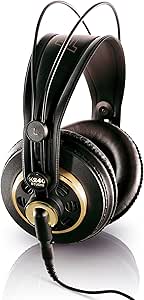 | Best for Mixing Accuracy | Transducer Size: 30 mm XXL | Design: Semi-open, over-ear | Headband: Self-adjusting | VIEW LATEST PRICE | See Our Full Breakdown |
| Beyerdynamic DT 770 PRO 80 Ohm Over-Ear Studio Headphones |  | Best for Recording and Tracking | Impedance: 80 Ohm | Design: Over-Ear, Closed-Back | Color: Gray | VIEW LATEST PRICE | See Our Full Breakdown |
| Audio-Technica ATH-M50X Professional Studio Monitor Headphones, Black |  | Best All-Around Studio Headphone | Driver Size: 45 mm | Design: Circumaural, Closed-Back | Earcup Swivel: 90 degrees | VIEW LATEST PRICE | See Our Full Breakdown |
| Beyerdynamic DT 990 Pro (250 Ohm) Open-Back Studio Headphones, Black |  | Best for Mixing and Mastering | Impedance: 250 Ohm | Design: Open-back, Over-Ear | Color: Black | VIEW LATEST PRICE | See Our Full Breakdown |
| TASCAM TH-02 Professional Studio Monitor Headphones, Wired, Over Ear |  | Best Budget Pick for Beginners | Design: Over Ear, Closed-back | Foldable: Yes | Headphone Type: Wired | VIEW LATEST PRICE | See Our Full Breakdown |
| Audio-Technica ATH-M40x Professional Studio Monitor Headphones, Black |  | Best Value for Accurate Monitoring | Driver Size: 40mm with rare earth magnets | Design: Circumaural, Closed-Back | Swiveling Earcups: 90 degrees | VIEW LATEST PRICE | See Our Full Breakdown |
| studio headphones for creator | Design | Color | Driver Size | Cable |
|---|---|---|---|---|
| Sony MDR7506 Professional Larg | Closed-back, foldable | — | 40 mm | — |
| Sennheiser HD 280 Pro Headphon | Collapsible | — | — | — |
| Audio-Technica ATH-M20x Profes | Closed-back, circumaural | White | 40 mm | — |
| Audio-Technica ATH-M30x Profes | Closed-back, circumaural | Black | 40 mm | Single-side exit |
| AKG K240 Studio Semi-Open Stud | Semi-open, over-ear | — | — | — |
| Beyerdynamic DT 770 PRO 80 Ohm | Over-Ear, Closed-Back | Gray | — | 3m straight cable |
| Audio-Technica ATH-M50X Profes | Circumaural, Closed-Back | Black | 45 mm | Detachable |
| Beyerdynamic DT 990 Pro | Open-back, Over-Ear | Black | — | 3m coiled |
| TASCAM TH-02 Professional Stud | Over Ear, Closed-back | — | — | — |
| Audio-Technica ATH-M40x Profes | Circumaural, Closed-Back | Black | 40mm with rare earth magnets | Detachable |
More Details on Our Top Picks
Sony MDR7506 Professional Large Diaphragm Headphones
The Sony MDR7506 earns the top spot because it nails the balance creators actually need: flattering but honest tuning, all-day comfort, and a price that leaves budget for a mic or interface. Compared with the Sennheiser HD 280 Pro, the Sony leans brighter and more detailed in the highs, which makes it easier to catch sibilance and harsh edits during mixing or podcast production. The 9.8-foot cord gives plenty of reach from a desk setup, and the foldable design plus soft case make it travel-friendly for location work. The tradeoff is permanence: the non-detachable cable means a damaged cord is effectively the end of the headphones, unlike swappable-cable rivals like the ATH-M50X further up this list. Still, for the price-to-performance ratio, nothing here beats it.
Pros:- Detailed, bright tuning that exposes flaws in mixes
- Comfortable closed-ear design with good passive noise reduction
- Foldable with included soft case for travel
- Includes 1/4-inch adapter for interfaces and mixers
Cons:- Non-detachable cord — damage it and the headphones are done
- Wired only, with no wireless alternative
Best for: Producers, podcasters, and video editors who want a reliable all-purpose studio headphone without spending over $150
Not ideal for: Creators who work wirelessly or move around a lot — there is no Bluetooth option and the fixed cable tethers you to the desk
- Driver Size:40 mm
- Magnet Type:Neodymium
- Frequency Response:10 Hz – 20 kHz
- Cord Length:9.8 feet
- Connector:Gold-plated 1/4-inch plug with 1/8-inch compatibility
- Design:Closed-back, foldable
- Included Accessories:Soft case, 1/4-inch adapter
Our verdict“The safest pick on this list for any creator building their first serious studio or upgrading from consumer headphones.”
Sennheiser HD 280 Pro Headphones, Black
When you’re tracking vocals or drums, isolation matters more than anything else, and that’s exactly where the Sennheiser HD 280 Pro separates itself. With up to 32 dB of passive attenuation, it out-isolates the Sony MDR7506 and the Audio-Technica M-series models here, keeping click tracks and backing tracks from bleeding into your microphone. The sound is more neutral and slightly darker than the Sony, which suits performers who don’t want a fatiguing, hyped top end in their ears for hours. A smart long-term detail: the replaceable ear pads mean you can refresh the headphones after a few years of sweat and wear instead of replacing them — something the cheaper ATH-M20x doesn’t offer. The clamping force that enables that isolation can feel tight during long sessions, so it’s a tracking tool more than a lounging headphone.
Pros:- Up to 32 dB passive noise attenuation — best isolation in this lineup
- Replaceable ear pads extend lifespan
- Lightweight and comfortable for extended tracking sessions
- Collapsible design with long coiled cable
Cons:- Tight clamping force may cause fatigue over long wears
- Wired only, coiled cable can feel heavy or drag on the desk
Best for: Home studio owners recording vocals or instruments who need maximum sound isolation at an affordable price
Not ideal for: Listeners with sensitive heads or those wanting a relaxed fit for casual listening — the clamp is firm by design
- Type:Closed-back, over-ear
- Noise Attenuation:Up to 32 dB
- Cable Length:9.8 feet, coiled
- Connectivity:Wired
- Design:Collapsible
- Ear Pads:Replaceable
Our verdict“The clear choice for tracking and recording sessions where bleed into the mic is the enemy.”
Audio-Technica ATH-M20x Professional Studio Monitor Headphones, White
For creators just starting out, the ATH-M20x proves you don’t need to spend much to get a legitimate monitoring tool. Its tuned low-frequency response gives bass and kick drums more presence than the step-up ATH-M30x, which some producers actually prefer when shaping low end on a budget. The circumaural, single-sided-cable design mirrors what Audio-Technica uses on its pricier M-series models, so you get a similar working experience for far less money. Where the savings show is in comfort and versatility: the ear pads aren’t replaceable like the Sennheiser HD 280 Pro’s, the headband gets warm over long sessions, and there’s no folding hinge for transport. It also sits below the M30x in mid-range detail, so intricate mixes are harder to read. As an affordable workhorse for editing, podcasting, and rough mixes, though, it punches above its price.
Pros:- Very low price for genuine studio-monitor tuning
- Boosted low-end response helps judge bass content
- Rugged build with rare-earth magnet drivers
- Circumaural isolation works well in loud rooms
Cons:- No replaceable pads or folding hinge
- Comfort degrades during long sessions
- Less mid-range detail than the step-up M30x
Best for: Beginner podcasters, video editors, and students who need honest monitoring on a tight budget
Not ideal for: Anyone doing detailed final mixes or mastering — the resolution isn’t there compared with the M30x or Sony MDR7506
- Driver Size:40 mm
- Magnet Type:Rare earth
- Voice Coil:Copper-clad aluminum
- Design:Closed-back, circumaural
- Cable Exit:Single-side
- Color:White
Our verdict“The cheapest credible entry point into studio monitoring, best treated as a starter tool you’ll eventually outgrow.”
Audio-Technica ATH-M30x Professional Studio Monitor Headphones, Black
Sitting between the budget M20x and the flagship ATH-M50X in this roundup, the ATH-M30x carves out its niche with mid-range clarity that matters most for vocals and spoken word. If you edit dialogue, mix podcasts, or tune vocal-heavy music, this is where your money goes furthest — voices sit forward and easy to judge, something the bass-forward M20x can’t match. It also adds collapsible ear cups that the cheaper model lacks, making it a better commuting companion for creators who mix on the move. Compared with the Sony MDR7506, the tuning is warmer and the highs are smoother, which reduces fatigue but hides some sparkle and fine detail at the top of the spectrum. Bass depth is also modest, so EDM and hip-hop producers may find the low end polite rather than punchy. For vocal-centric work, though, it’s arguably the best value in this batch.
Pros:- Standout mid-range clarity for vocals and dialogue
- Collapsible design for portability
- Strong sound isolation from circumaural fit
- Better build refinement than the cheaper M20x
Cons:- Bass response lacks depth for low-end-heavy genres
- Comfort varies during marathon sessions
Best for: Podcast editors, vocal producers, and content creators focused on spoken-word and mid-range-heavy material
Not ideal for: Bass-driven music producers — the low end is leaner than the M20x and rivals like the DT 770 PRO
- Driver Size:40 mm
- Design:Closed-back, circumaural
- Cable:Single-side exit
- Foldable:Yes
- Connectivity:Wired
- Color:Black
Our verdict“A smart middle path for vocal-focused creators who find the M20x too basic and the M50X more than they need.”
AKG K240 Studio Semi-Open Studio Headphones
The AKG K240 Studio is the only semi-open headphone in this batch, and that design choice defines both its appeal and its limits. The open, airy presentation gives mixes a more natural sense of space than any closed-back here — closer to the Beyerdynamic DT 990 Pro’s open-back character — making it easier to judge reverb tails, panning, and overall balance during mixing. The self-adjusting headband is also the most comfortable fit mechanism in this lineup, ideal for marathon mastering sessions. But that semi-open design leaks sound in both directions: it’s unusable for tracking vocals (unlike the sealed Sennheiser HD 280 Pro) and inappropriate for shared offices or coffee-shop work. It’s a specialist. If your workflow is mix at a desk, alone, with honest speakers as reference, the K240 delivers a level of accuracy the closed models here can’t fully replicate.
Pros:- Open, spacious soundstage that improves mixing judgments
- Self-adjusting headband is exceptionally comfortable
- Wide dynamic range from XXL transducers
- Includes 1/4-inch adapter and long 9.9-foot cable
Cons:- Sound leakage makes it unusable for recording or noisy environments
- Less engaging for casual, on-the-go listening
Best for: Mixing engineers and producers working solo in quiet rooms who want an open, speaker-like perspective
Not ideal for: Vocal tracking or shared workspaces — the semi-open design leaks sound both in and out
- Transducer Size:30 mm XXL
- Design:Semi-open, over-ear
- Headband:Self-adjusting
- Connectivity:Stereo 1/8-inch connector with 1/4-inch adapter
- Cable Length:9.9 feet
- Use Case:Recording, mixing, mastering
Our verdict“The choice for dedicated mixers with a quiet room, and the wrong tool for anyone tracking vocals or working alongside others.”
Beyerdynamic DT 770 PRO 80 Ohm Over-Ear Studio Headphones
For creators who record vocals or instruments, closed-back isolation is everything, and this is where the DT 770 PRO 80 Ohm pulls ahead of open options like the Beyerdynamic DT 990 Pro. The velour ear pads keep long tracking sessions comfortable while blocking enough room noise that a click track won’t bleed into your microphone. Compared with the Sony MDR7506, the DT 770 offers a more spacious soundstage for a closed-back design, though the Sony costs considerably less. The 80-ohm version runs acceptably from most audio interfaces without a dedicated amp — a real advantage over the 250-ohm DT 990. The tradeoff: a coiled cable is absent here (straight 3m instead), the fixed cable can’t be replaced at the jack if it fails, and the treble can feel sharp on fatiguingly bright mixes.
Pros:- Excellent closed-back isolation that prevents mic bleed and click-track leakage
- Velour ear pads stay comfortable through marathon sessions
- More forgiving impedance than the 250-ohm DT 990, running well from most interfaces
- German build quality with a durable spring-steel headband
Cons:- Fixed straight cable cannot be swapped out if damaged
- Requires an audio interface or headphone amp for proper volume
- Bright treble tuning can fatigue some listeners
Best for: Home studio owners recording vocals or instruments who need isolation and comfort during long tracking sessions
Not ideal for: Creators who mix primarily on mobile devices — the 80-ohm impedance needs an audio interface or headphone amp to sound its best
- Impedance:80 Ohm
- Design:Over-Ear, Closed-Back
- Color:Gray
- Cable:3m straight cable
- Adapter:1/4-inch adapter
- Ear Pads:Replaceable velour
- Headband:Spring-steel
- Made in:Germany
Our verdict“This pick makes the most sense for tracking and recording, where isolation and comfort matter more than portability.”
Audio-Technica ATH-M50X Professional Studio Monitor Headphones, Black
If one headphone has to handle tracking, mixing, and everyday listening, the ATH-M50X is the strongest compromise in this lineup. Its 45mm drivers deliver deeper bass than the ATH-M40x, which makes it more fun for content checks and casual listening while staying detailed enough for critical work. The detachable cable gives it a durability edge over the DT 770 PRO, since a damaged cable means a cheap replacement rather than a repair. The 90-degree swiveling earcups make one-ear DJ-style monitoring easy. What holds it back from pure reference status: the bass is slightly elevated compared with flatter monitors like the Sony MDR7506, so mixes that sound perfect here may need a second check on neutral gear.
Pros:- Detachable cable design extends the headphone’s lifespan dramatically
- Deep, engaging bass from the 45mm drivers
- 90-degree swiveling earcups suit one-ear monitoring
- Folds up for transport unlike many studio-only rivals
Cons:- Bass tuning is slightly hyped rather than neutral
- Bulky compared with lighter portable headphones
Best for: Podcasters, producers, and content creators who want one versatile headphone for tracking, editing, and daily listening
Not ideal for: Purists seeking a perfectly flat frequency response for mastering — the emphasized bass can color mix decisions
- Driver Size:45 mm
- Design:Circumaural, Closed-Back
- Earcup Swivel:90 degrees
- Cable:Detachable
- Material:Professional grade earpad and headband
- Color:Black
Our verdict“This is the pick for creators who want a single do-everything studio headphone without sacrificing everyday listenability.”
Beyerdynamic DT 990 Pro (250 Ohm) Open-Back Studio Headphones, Black
When the job is judging stereo placement and reverb tails, open-back design changes everything, and the DT 990 Pro offers a wider, more natural stereo image than any closed model here, including its sibling the DT 770 PRO. That spaciousness is why mixing engineers reach for it — panning decisions and spatial effects translate more predictably to speakers. The velour pads and spring-steel headband make hours of critical listening pleasant, something the tighter Sony MDR7506 can’t match. The tradeoffs are real, though: 250 ohms demands a headphone amp or capable interface, sound leaks both ways so it’s useless for recording vocals, and plugging straight into a phone leaves it quiet and thin. This model is better suited to the mixing desk than the tracking booth.
Pros:- Wide, natural stereo image that translates well to speaker mixes
- Velour pads keep long critical-listening sessions comfortable
- Robust German build with spring-steel headband
- Coiled 3m cable with 1/4-inch adapter included
Cons:- Requires a headphone amp or audio interface for adequate volume
- Open-back design leaks sound in and out, ruling out tracking
- Not practical for mobile or portable use
Best for: Mixing and mastering engineers with a headphone amp or audio interface who need accurate stereo imaging
Not ideal for: Vocalists recording with live mics or anyone working from a phone — the open back leaks sound and the high impedance needs amplification
- Impedance:250 Ohm
- Design:Open-back, Over-Ear
- Color:Black
- Cable:3m coiled
- Includes:1/4-inch adapter
- Ear Pads:Soft velour
- Made in:Germany
Our verdict“This option stands out for final mixing decisions where imaging accuracy matters more than isolation.”
TASCAM TH-02 Professional Studio Monitor Headphones, Wired, Over Ear
Not every creator can spend over a hundred dollars before their first upload, and the TH-02 exists for exactly that moment. At its price, it beats expectations with a closed-back design that offers genuine isolation for recording, plus a foldable build that the DT 770 PRO and ATH-M50X can’t offer at full size. Compared with the entry-level ATH-M20x, the TH-02 is easier to toss in a bag and comes with adapters for both 3.5mm and 1/4-inch jacks, making it plug-and-play with any gear. Realistic expectations are required: the bass is rich rather than accurate, detail retrieval falls well short of the M50X, and the fixed cable is a single point of failure. As a first studio headphone or a spare pair for guests, though, it’s hard to argue with.
Pros:- Very low price with usable closed-back isolation for recording
- Foldable design makes it genuinely portable
- Includes both 3.5mm and 1/4-inch adapters for any setup
- Comfortable padded headband and ear pads for the price
Cons:- Sound signature is bass-heavy and not reference-accurate
- Fixed wired cable with no detachable option
- Build quality reflects the price point
Best for: Beginners and budget-limited creators who need isolating, functional studio headphones without a big upfront investment
Not ideal for: Serious mixing work — the hyped bass and limited detail won’t reveal problems in a mix the way the ATH-M50X or DT 990 Pro will
- Design:Over Ear, Closed-back
- Foldable:Yes
- Headphone Type:Wired
- Included Adapter:1/4 inch (6.3 mm) adapter
- Additional Adapter:1/8 inch (3.5 mm) to 1/4 inch
- Padding:Padded headband and ear pads
Our verdict“This pick makes the most sense for first-time creators or anyone needing an affordable spare pair for sessions.”
Audio-Technica ATH-M40x Professional Studio Monitor Headphones, Black
The ATH-M40x is the tuner’s choice: compared with its sibling the ATH-M50X, it trades a bit of bass excitement for a flatter, more neutral response, which is precisely what you want when judging whether a mix actually translates. It undercuts the M50X on price while keeping the features that matter — detachable cables and 90-degree swiveling earcups for one-ear monitoring — making it a better pure-studio value. Against the Sennheiser HD 280 Pro, the M40x wins on replaceable cables and foldability, though the Sennheiser isolates slightly better in very loud rooms. The 40mm drivers with rare earth magnets don’t deliver the M50X’s low-end depth, and there’s no wireless option or inline controls, so this is a desk headphone, not a commute headphone. For editors and mixers on a budget, that trade is worth it.
Pros:- Flatter frequency response than the M50X for honest mix judgments
- Detachable cables make replacement cheap and easy
- Strong passive isolation for loud environments
- 90-degree swiveling earcups for flexible monitoring
Cons:- Less bass depth and excitement than the M50X
- Bulky design with no wireless option
- Wired connection limits mobility around the studio
Best for: Producers and audio editors who want a neutral, trustworthy monitoring sound at a midrange price
Not ideal for: Listeners who want a fun, bass-forward sound for casual music — the flat tuning prioritizes accuracy over enjoyment
- Driver Size:40mm with rare earth magnets
- Design:Circumaural, Closed-Back
- Swiveling Earcups:90 degrees
- Cable:Detachable
- Voice Coil:Copper-clad aluminum wire
- Color:Black
Our verdict“This option stands out for creators who value accurate monitoring over sonic flair, at a price below the flagship M50X.”
How We Picked
I judged every pair here through one specific lens: how well it serves a creator’s actual workflow — tracking, editing, mixing, and monitoring — rather than how good it sounds for casual listening. That meant weighing four factors. First, tonal accuracy: headphones that reveal flaws in a recording beat headphones that flatter it, because flattering sound leads to mixes that fall apart on other systems. Second, isolation and bleed: for anyone recording vocals or podcasts, a closed-back design that keeps click tracks and backing audio out of the microphone is non-negotiable. Third, long-session comfort, since editing sessions routinely run three hours or more and clamp fatigue ruins accuracy as surely as bad tuning does. Fourth, durability and repairability — replaceable cables, ear pads, and parts availability separate a five-year tool from a one-year purchase.
The ranking also reflects value positioning rather than raw quality alone. The Beyerdynamic DT 990 Pro is arguably the most accurate headphone in the lineup, but it sits mid-table because its open-back design and 250 Ohm impedance limit who can actually use it. Similarly, the ATH-M50X ranks below the cheaper MDR7506 not because it is worse, but because its advantages (foldability, detachable cable) matter less to most creators than the price difference. Every ranking decision favors the pair that fits the widest range of creator situations at its price.
Factors to Consider When Choosing Studio Headphones For Creators
Before settling on a specific pair, it helps to understand the decisions that shape every studio headphone purchase. These are the factors that actually change what you hear and how you work — and the mistakes creators most often make on their first buy.Closed-Back vs. Open-Back: Match the Design to Your Workflow
This is the single most consequential choice, and it is where first-time buyers most often go wrong. Closed-back headphones seal the ear cup, which keeps your backing track from bleeding into your microphone during vocal or instrument recording — if you record anything with a mic in the same room, this is your only safe option. Open-back headphones leak sound freely but offer a wider, more natural soundstage that makes judging panning, reverb, and stereo placement much easier when mixing. The mistake is buying one pair expecting it to do both jobs perfectly. Many creators eventually own two: a closed-back pair for tracking and an open-back pair for mixing. If you can only buy one, closed-back is the pragmatic choice because you can mix on closed-back headphones with care, but you cannot track on open-backs without bleed.
Impedance: Why Some Headphones Sound Quiet on Your Gear
Impedance, measured in ohms, determines how much power a headphone needs to reach listening volume, and ignoring it leads to a frustrating surprise at setup. Low-impedance models (under 60 ohms) like the Sony MDR7506 or ATH-M40x run at full volume from a laptop or phone headphone jack. High-impedance models like the 250 Ohm Beyerdynamic DT 990 Pro often sound thin, quiet, and bass-shy when plugged directly into consumer gear — they need an audio interface with a strong headphone output or a dedicated amp to perform as designed. The 80 Ohm version of the DT 770 PRO exists precisely to split this difference. Check your interface’s headphone output before buying; a great headphone starved of power sounds worse than a modest one driven properly.
Neutral Tuning Beats a Fun Sound Every Time
Consumer headphones are tuned to sound exciting — boosted bass, scooped mids, sparkly highs — and that tuning actively sabotages creative work. If your headphones exaggerate bass, you will under-mix it, and your track will sound thin in a car. If they hide harshness, you will never fix the harsh frequencies in your vocal. Studio headphones are tuned for flatness, meaning frequencies are represented close to how they actually exist in the recording, which is why a well-regarded studio pair can sound less impressive than $30 earbuds at first listen. That initial disappointment is normal and correct. One caveat: some studio staples have a signature — the MDR7506 leans bright, the DT 770 PRO has elevated sub-bass — and learning your headphone’s tendencies through reference tracks is part of the craft.
Cables, Pads, and Parts: Buy for Five Years, Not Five Months
The cable is the most common point of failure on any wired headphone, and how a manufacturer handles it predicts the ownership experience. A detachable cable, as on the ATH-M50X, turns a broken cable into a $15 replacement instead of a repair job or a dead pair. Fixed coiled cables, like those on the MDR7506 and DT 770 PRO, are more rugged in daily use but harder to replace when they eventually fail. The same logic applies to ear pads, which flatten and crack within a couple of years of daily wear — replacement pads are cheap and widely available for the big-name models in this guide, which is a genuine long-term advantage over budget options. Before buying any pair, check that pads and cables are actually purchasable, not just theoretically replaceable.
Comfort Is an Accuracy Issue, Not a Luxury
Clamping pressure, ear cup depth, and headband padding feel like comfort details, but they directly affect the quality of your work. Fatigue changes what you hear: as your ears and jaw get squeezed over a long session, your perception of bass and overall balance shifts, and you start making EQ decisions based on discomfort rather than sound. Deep ear cups that surround the ear rather than pressing on it matter if you wear glasses. Weight matters if you move around while editing. This is also why velour pads on the Beyerdynamic models run warmer but breathe better than leatherette pads in long sessions. If you routinely work more than two hours at a stretch, spending an extra $30–50 on a comfortable pair pays for itself in fewer unfinished sessions.
When to Spend More — and When Not To
The honest hierarchy in this category: under $50 you are buying adequate sound with cut corners in build; from roughly $80–170 sits the sweet spot where most creators get 90% of the accuracy they need; beyond that you pay increasingly steep prices for the final increments of detail and comfort. Spending more makes sense when headphones are your primary monitoring tool because you cannot treat your room acoustically, or when you mix professionally and every dB of accuracy has client consequences. It makes little sense if you are starting out, still learning arrangement and composition, or mostly referencing your mixes against phone speakers anyway. A beginner with a $100 pair who learns them thoroughly will out-mix a beginner with $400 headphones they have not studied. Buy the tier that matches your skill stage, not the one that matches your ambition.
Frequently Asked Questions
Do I need an audio interface to use these studio headphones?
For most of the headphones in this roundup, no — models like the Sony MDR7506, ATH-M40x, and HD 280 Pro run at full volume straight from a laptop or phone jack. The exception is the Beyerdynamic DT 990 Pro at 250 Ohms, which needs the stronger headphone output of an audio interface or a dedicated amp to deliver proper bass and volume. The 80 Ohm DT 770 PRO splits the difference and works well from most interfaces. That said, if you are recording with a microphone, you need an interface anyway for its input and latency-free monitoring, so the question usually answers itself as your studio grows.
Can I mix music properly on headphones instead of studio monitors?
Yes, and many working producers mix primarily on headphones, especially in untreated rooms where speakers interact badly with walls and furniture. The keys are choosing a flat-tuned model, learning its character by repeatedly listening to commercial tracks you know well, and cross-checking your mix on other systems — phone speakers, car stereos, cheap earbuds. Open-back headphones like the DT 990 Pro give the most speaker-like stereo image, though you give up isolation. The main headphone-specific trap is low bass: even good closed-backs present sub-bass differently than a room does, so use a spectrum analyzer or reference track to confirm what your ears may be missing.
Is the ATH-M50X worth the extra money over the M40x or MDR7506?
It depends on what you value beyond sound. The M50X’s real advantages are practical, not sonic: a detachable cable that survives breakage, swiveling ear cups for one-ear DJ-style monitoring, and a foldable design for transport. Tonally, the M50X is slightly more V-shaped and less neutral than both the M40x and MDR7506, which some would call a step away from studio accuracy rather than toward it. If you work from a fixed desk and treat headphones gently, the M40x or MDR7506 delivers comparable monitoring for significantly less. If you travel, record on location, or have killed headphones by snagging cables before, the M50X’s design justifies the premium.
Which of these headphones are safe for recording vocals without mic bleed?
Any fully closed-back model will keep bleed manageable: the DT 770 PRO and HD 280 Pro have the strongest isolation in this lineup, followed by the MDR7506, the ATH-M20x/M30x/M40x/M50X family, and the TASCAM TH-02. The two to avoid for tracking are the AKG K240 Studio, which is semi-open and leaks audibly, and the DT 990 Pro, which is fully open and will put your backing track straight into the microphone. Isolation also works both ways — a well-sealed closed-back keeps room noise and computer fans out of your focus during editing, which is an underrated benefit even if you never record vocals.
How long do studio headphones last, and what maintenance do they need?
The well-built models in this guide — particularly the MDR7506, DT 770 PRO, and DT 990 Pro — routinely last 5 to 10 years of regular use, and parts availability is a big reason they stay studio standards. The two maintenance items that matter are ear pads and cables: pads compress and crack within 1–3 years depending on use, and replacement pads cost $15–30 for all the major models here. Cables fail from repeated coiling and snagging, which is why detachable-cable designs are easier to live with. Wiping pads down after sweaty sessions and storing the headphones on a stand rather than thrown in a bag extends pad life noticeably. Budget models with fixed cables and scarce parts, like the TH-02, are best treated as consumables rather than long-term tools.
Conclusion
The right pick comes down to what you do most behind the mic. For best overall, the Sony MDR7506 remains the smartest buy in this category: accurate enough for serious mixing, sealed for tracking, comfortable for long edits, and priced to leave budget for a microphone. For best value, the Audio-Technica ATH-M40x delivers genuinely professional monitoring under $100 and beats cheaper siblings by a wider margin than the price suggests. For best premium, the Beyerdynamic DT 770 PRO (80 Ohm) earns it through isolation, build quality, and comfort that outlasts everything else here.
For beginners, the ATH-M30x is the ideal first pair — honest enough to learn on, cheap enough that a mistake in your early production journey costs little. For mixing specialists willing to add an amp or use a strong interface, the DT 990 Pro (250 Ohm) offers the most open, speaker-like presentation in the lineup. And for creators who need something today for almost nothing, the TASCAM TH-02 will carry you until your first paid project funds an upgrade. Whatever you choose, learn your pair’s sound with reference tracks — that habit matters more than any price difference on this list.
Halloween Picks

JOYIN 5-Foot Halloween Animatronic Drinking Skeleton

Kalolary 12ft Halloween Witch Haunted House Inflatable Archway

Fun Costumes Creepy Twin Boys Halloween Animatronic
As an affiliate, we earn on qualifying purchases.