The best digital audio mixers in 2026 split into true digital consoles, app-controlled stage boxes, and analog mixers with USB that only partly fit the category. My top overall pick is the Yamaha DM3 Standard because it balances compact size, real console control, multitrack USB, and enough routing depth for live sound, streaming, and recording. The Allen & Heath Qu-5 is the stronger premium choice for buyers who need more mix capacity and expansion, while the Behringer X AIR XR18 gives budget-minded bands a lot of inputs and wireless control for the money. The main tradeoff is control style: tactile faders cost more and take more space, while app-first mixers save cash but depend on tablets, Wi-Fi planning, and screen comfort. Read on for the full breakdown of which mixer fits each buyer type, and which lower-ranked models make more sense as simple USB analog mixers than full digital systems.
Key Takeaways
- Yamaha DM3 Standard earns Best Overall because it gives the strongest balance of compact console control, routing depth, USB recording, and live-sound flexibility.
- Allen & Heath has the strongest digital spread here: Qu-5 for premium growth, QU-16C for fader-first workhorse use, and CQ-18T for faster touchscreen setup.
- Behringer X AIR XR18 is the value disruptor, but its app-first workflow makes it a weaker fit for engineers who need instant physical fader access.
- Yamaha MG12XU, both MG10XU listings, and Allen & Heath ZED-10FX are better read as analog USB alternatives, not full digital mixer replacements.
- Zoom LiveTrak L6max ranks high for creators because recording convenience matters more in that use case than expandable live routing or multiple monitor mixes.
| Yamaha DM3 Standard 22 Channel Ultracompact Digital Mixing Console |  | Best Overall Compact Digital Console | Channels: 22 channels: 16 mono, 1 stereo, 2 stereo FX returns | Sample Rate: 96kHz | Mic Preamps: 16 Yamaha preamps | VIEW LATEST PRICE | See Our Full Breakdown |
| Allen & Heath QU-16C Rack Mountable Compact Digital Mixer, Chrome Edition |  | Best for Live Fader Control | Channels: 16 channels | Preamps: 16 analogiQ preamps | Faders: Motorized ALPS faders | VIEW LATEST PRICE | See Our Full Breakdown |
| Yamaha Mg12Xu 12-Input 4-Bus Mixer With Effects |  | Best Analog-Style USB Mixer | Inputs: 12-input mixer | Bus Design: 4-bus mixer | Connectivity: USB | VIEW LATEST PRICE | See Our Full Breakdown |
| Yamaha MG10XU 10-Input Stereo Mixer with Effects |  | Best Compact Pick for Small Setups | Channels: 10 inputs | Connectivity: USB | Frequency Response: 48kHz listed | VIEW LATEST PRICE | See Our Full Breakdown |
| Allen & Heath CQ-18T Digital Mixer with 7″ Touchscreen WiFi and Bluetooth Connectivity | 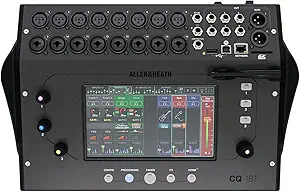 | Best for Wireless Recording Workflows | Channels: 16 mic or line inputs plus stereo line input | Input Types: 8 combo inputs among the 16 mic/line inputs | Connectivity: Bluetooth, USB, and Wi-Fi | VIEW LATEST PRICE | See Our Full Breakdown |
| Zoom LiveTrak L6max Digital Mixer and Recorder |  | Best Portable Recording Mixer | Channels: 12 | Connectivity: USB | Power Source: AA batteries, USB, or mobile power pack | VIEW LATEST PRICE | See Our Full Breakdown |
| Allen & Heath Qu-5 38-channel Digital Mixer |  | Best Premium Console | Input/Output Channels: 38-in / 24-out | USB Audio Interface: 32-in / 32-out USB-C | Sampling Rate: 96 kHz | VIEW LATEST PRICE | See Our Full Breakdown |
| Yamaha MG10XU 10-Channel Analog Mixer with Mic Preamps and Digital Effects |  | Best Hybrid Analog Pick | Channels: 10 | Connectivity: Auxiliary, XLR, USB 2.0 | Dimensions: 11.57 x 9.61 x 2.8 inches | VIEW LATEST PRICE | See Our Full Breakdown |
| Behringer X AIR XR18 18-Channel Digital Mixer with MIDAS Preamps and Wi-Fi |  | Best Rack-Style Digital Mixer | Channels: 18 | Connectivity: USB and Wi-Fi | Power Source: Corded electric | VIEW LATEST PRICE | See Our Full Breakdown |
| Behringer FLOW 8 8-Input Digital Mixer with Bluetooth Audio and App Control |  | Best Compact Digital Mixer | Channels: 8 inputs | Connectivity: Bluetooth and USB/audio interface | Power Source: Corded electric | VIEW LATEST PRICE | See Our Full Breakdown |
| Allen & Heath ZED-10FX |  | Best Analog-Style USB Mixer | Mixer Type: Compact analog mixer with onboard digital FX and USB I/O | Mic Inputs: 4 total: 2 mic/line plus 2 mic/line/DI channels | Stereo Line Inputs: 3 stereo line input channels | VIEW LATEST PRICE | See Our Full Breakdown |
More Details on Our Top Picks
Yamaha DM3 Standard 22 Channel Ultracompact Digital Mixing Console
I rank the Yamaha DM3 Standard highest here because it gives small venues, churches, streamers, and mobile engineers a real 96kHz digital console without moving into a full-size desk. Compared with the Allen & Heath CQ-18T, it feels more like a proper surface for hands-on mixing, with a larger 9-inch screen, 22-channel architecture, 18×18 USB audio, matrix routing, and Yamaha preamps. The tradeoff is that it asks more from the operator than the Yamaha MG10XU or MG12XU; this is not the simplest grab-and-go mixer. It is also heavier than the CQ-18T. Still, for buyers who want professional routing in a compact frame, this is the strongest all-around digital pick in this batch.
Pros:- 22-channel digital architecture gives more room to grow than the CQ-18T or QU-16C
- 96kHz operation and Yamaha preamps suit demanding live and recording work
- 18×18 USB audio interface supports multitrack recording and playback
- Large 9-inch touchscreen makes deeper mixer functions easier to reach
Cons:- More complex than the MG10XU and MG12XU for simple live mixes
- Heavier than some compact digital alternatives
- No built-in Wi-Fi or Bluetooth listed, unlike the CQ-18T
Best for: Mobile live sound engineers, small venues, houses of worship, and hybrid live/recording setups that need real console routing in a compact footprint.
Not ideal for: Solo creators or simple podcast rigs that only need a few inputs; the routing depth and 19.95-pound body may be more than they need.
- Channels:22 channels: 16 mono, 1 stereo, 2 stereo FX returns
- Sample Rate:96kHz
- Mic Preamps:16 Yamaha preamps
- Inputs:12 XLR plus 4 combo jack inputs
- Outputs:8 analog XLR outputs
- USB Audio:18×18 USB audio interface
- Screen:9-inch capacitive touchscreen
- Dimensions:17.9 x 12.6 x 5.5 inches
- Weight:19.95 pounds
Bottom line: Choose this if I want the most capable compact digital console in this group and do not mind a steeper setup path.
Allen & Heath QU-16C Rack Mountable Compact Digital Mixer, Chrome Edition
The Allen & Heath QU-16C earns its place for buyers who still want the speed of physical faders while moving into a digital workflow. Its motorized ALPS faders separate it from the touchscreen-led Yamaha DM3 Standard and Allen & Heath CQ-18T, because scene recalls and mix changes can feel more immediate in live sound. The 16 analogiQ preamps, USB audio streaming, and automatic mic mixing make it a strong fit for bands, panels, and fixed installs. I would rank it behind the DM3 for overall flexibility, since it has fewer channels and a smaller 5-inch screen. It is also less friendly for beginners than the Yamaha MG10XU. Pick it when hands-on control matters more than maximum portability.
Pros:- Motorized faders make scene recall and mix access more tactile than touchscreen-only designs
- 16 analogiQ preamps suit professional live inputs
- USB audio streaming adds recording and playback flexibility
- Automatic mic mixing helps with speech-heavy events and panels
Cons:- Heavier than the CQ-18T and less compact for frequent carry
- 5-inch touchscreen is smaller than the Yamaha DM3 and CQ-18T displays
- Feature depth may slow down new users
Best for: Live sound operators, venues, and rental rigs that need recallable digital mixing with real fader control.
Not ideal for: Beginners building a small home studio; the learning curve and physical size make the MG10XU or MG12XU easier starting points.
- Channels:16 channels
- Preamps:16 analogiQ preamps
- Faders:Motorized ALPS faders
- Display:5-inch color touchscreen
- Connectivity:USB and XLR
- Audio Features:USB audio streaming and automatic mic mixing
- Power Source:Corded electric
- Weight:7.3 kilograms / 16.09 pounds
Bottom line: Choose this when I want digital recall but still prefer mixing with real faders under my hands.
Yamaha Mg12Xu 12-Input 4-Bus Mixer With Effects
The Yamaha MG12XU is the pick I would place between basic analog mixers and true digital consoles. It is not as digitally expandable as the Yamaha DM3 Standard or Allen & Heath CQ-18T, but its 12-input layout, USB connection, SPX effects, one-knob compressors, and 4-bus design give small bands and rehearsal rooms more shaping control than the MG10XU. The buyer outcome is simple: fewer menus, more immediate knobs, and enough routing for modest live setups. The downside is clear in a digital mixer roundup: it lacks the scene recall, app control, and multitrack USB depth that make the DM3 and CQ-18T stronger long-term tools. Still, for musicians who want hands-on mixing with useful digital effects, it remains a practical value.
Pros:- 12 inputs and 4-bus layout offer more flexibility than the MG10XU
- D-PRE mic preamps and quality op-amp design support clean source capture
- Built-in SPX effects reduce the need for external processors
- One-knob compressors make basic dynamics control fast
Cons:- No scene recall or touchscreen workflow like the Yamaha DM3 Standard
- USB functionality is less advanced than the CQ-18T or DM3
- Analog-style layout takes more physical space than smaller compact mixers
Best for: Small bands, rehearsal rooms, schools, and portable PA users who want familiar analog controls with USB and onboard effects.
Not ideal for: Production teams that need scene recall, wireless control, or multitrack digital recording beyond a basic USB workflow.
- Inputs:12-input mixer
- Bus Design:4-bus mixer
- Connectivity:USB
- Sample Rate:192kHz listed
- Outputs:XLR balanced outputs
- Effects:Built-in Yamaha SPX digital effects
- Dynamics:One-knob compressors
- Dimensions:16 x 20 x 8 inches
- Weight:4.2 kilograms
Bottom line: Choose this if I want straightforward knob-based mixing with enough inputs for a small live rig.
Yamaha MG10XU 10-Input Stereo Mixer with Effects
The Yamaha MG10XU makes the most sense when space and simplicity outrank digital-console power. Compared with the Yamaha MG12XU, it gives up two inputs and broader routing, but its smaller 10-channel frame is easier to carry, place on a desk, or use for a solo act. Against the Yamaha DM3 Standard, it is far less advanced: no touchscreen, no scene recall, and no deep USB interface. That limitation is also its appeal. The D-PRE preamps, SPX effects, 3-band EQ, high-pass filters, and one-knob compressors cover common podcast, livestream, rehearsal, and small PA needs without burying the user in menus. I would not pick it for growth, but it is a strong compact USB mixer for lean setups.
Pros:- Compact 10-input format fits desks and small live rigs better than the MG12XU
- D-PRE preamps provide a cleaner front end than many entry-level mixers
- USB connection supports basic DAW and streaming workflows
- SPX effects and one-knob compressors simplify small-session mixing
Cons:- Limited input count can be restrictive for full bands
- No battery operation for mobile setups without reliable power
- Does not offer the digital recall or app control found on higher-ranked digital mixers
Best for: Solo performers, podcasters, livestreamers, and small PA users who need a compact mixer with USB and onboard effects.
Not ideal for: Growing bands or venues that need more than 10 inputs, digital recall, or advanced routing.
- Channels:10 inputs
- Connectivity:USB
- Frequency Response:48kHz listed
- Outputs:TRS and XLR
- Noise Level:128 dBu input noise listed
- Effects:Built-in SPX digital effects
- EQ:3-band EQ with high-pass filters
- Power Source:Corded electric
- Dimensions:9.6 x 2.8 x 11.6 inches
Bottom line: Choose this when I need a compact, familiar mixer for small sources rather than a scalable digital console.
Allen & Heath CQ-18T Digital Mixer with 7″ Touchscreen WiFi and Bluetooth Connectivity
The Allen & Heath CQ-18T is the most modern portable option in this set, especially for creators and small teams that want built-in Wi-Fi, Bluetooth, SD recording, and USB multitrack in one box. Compared with the Yamaha DM3 Standard, it has fewer total channels and less of a console feel, but its 24×22 USB interface, 24×22 SD record/playback, 7-inch touchscreen, and mobile control make capture and remote mixing easier. Compared with the QU-16C, it trades motorized faders for lighter weight and broader wireless convenience. The built-in Wi-Fi is useful, though mission-critical shows may still prefer a dedicated network. This pick is best when recording flexibility and fast setup matter more than large-surface control.
Pros:- Built-in 2.4GHz and 5GHz Wi-Fi enables remote control without extra hardware
- 24×22 USB interface and 24×22 SD recording suit multitrack capture
- Bluetooth input is handy for playback in rehearsals and small events
- Compact 10.3-pound body is easier to move than the QU-16C or DM3
Cons:- Touchscreen and remote-control workflow may not satisfy fader-first live engineers
- Fewer total channels than the Yamaha DM3 Standard
- Built-in Wi-Fi may be less dependable than a dedicated external network in crowded venues
Best for: Creators, small bands, hybrid events, and mobile engineers who want wireless control plus USB and SD multitrack recording.
Not ideal for: Operators who rely on physical faders for every move; the QU-16C is better for that style of live mixing.
- Channels:16 mic or line inputs plus stereo line input
- Input Types:8 combo inputs among the 16 mic/line inputs
- Connectivity:Bluetooth, USB, and Wi-Fi
- Wireless:Built-in 2.4GHz/5GHz Wi-Fi with auto channel
- USB Audio:24×22 USB interface
- Recording:24×22 SD record/playback
- Display:7-inch capacitive touchscreen
- Effects:4 FX engines
- Dimensions:13.6 x 9.6 x 3.5 inches; 10.3 pounds
Bottom line: Choose this if I want a portable digital mixer built around wireless control and multitrack recording.
Zoom LiveTrak L6max Digital Mixer and Recorder
I rank the Zoom LiveTrak L6max highest for mobile creators who need a mixer that also works as a serious recorder. Its 32-bit float capture and dual AD converters make level mistakes less punishing than on the Yamaha MG10XU, while the ability to record up to 14 tracks gives small sessions room to grow. Compared with the Behringer FLOW 8, it offers more input flexibility and stronger standalone recording, but it asks for more setup knowledge. The battery power is a real advantage for location work, yet the workflow is less beginner-friendly than a simple analog board. I would pick this for portable podcast, music, or livestream rigs where clean capture matters more than instant simplicity.
Pros:- 32-bit float recording gives more forgiveness when levels jump
- Battery, USB, and mobile-pack power make it useful away from a fixed studio
- 12-channel layout handles more sources than compact 8-input mixers
- AI noise reduction helps clean up speech and live capture in untreated spaces
Cons:- The digital workflow may slow down users coming from basic analog mixers
- At 1.48 lbs, it is portable but not pocket-light
- 48 kHz recording is solid, but not as high-resolution as 96 kHz consoles
Best for: I’d point mobile podcasters, small bands, and field-recording creators toward this when they need multitrack recording without a full desk.
Not ideal for: I’d skip it for total beginners who want a plug-and-mix layout, since gain staging, routing, and recording modes may take time to learn.
- Channels:12
- Connectivity:USB
- Power Source:AA batteries, USB, or mobile power pack
- Sampling Frequency:48 kHz
- Weight:1.48 lbs / 673 g
- Inputs:4 combo inputs plus 8 line/stereo inputs
- Recording:Up to 14 simultaneous tracks to SD card
- Processing:AI noise reduction and dual AD converters
Bottom line: I’d choose the Zoom LiveTrak L6max when portable multitrack recording is the main reason to buy a digital audio mixer.
Allen & Heath Qu-5 38-channel Digital Mixer
The Allen & Heath Qu-5 sits above the rest of this batch because it is built for complex live and studio work rather than compact convenience. Its 38-in/24-out architecture, 17 motorized faders, and 96 kHz XCVI Core make it a much stronger choice than the Zoom LiveTrak L6max for venues, houses of worship, and production rooms with many sources. It also outclasses the Behringer X AIR XR18 when physical control matters; faders and a touchscreen are faster under pressure than tablet-only mixing. The tradeoff is clear: this is overbuilt for simple podcast desks, and the price plus learning curve will be hard to justify for casual use. I’d rank it for buyers who need control depth more than portability.
Pros:- 38-in/24-out design supports demanding live and studio routing
- 17 motorized faders give fast hands-on control for scene-heavy mixes
- 32-in/32-out USB-C interface suits multitrack recording and playback
- 96 kHz processing gives it a higher-resolution workflow than most compact picks
Cons:- High cost makes little sense for small rigs
- Steeper learning curve than compact mixers such as the Behringer FLOW 8
- Larger console format is less travel-friendly than rack or tabletop options
Best for: I’d recommend it to live sound engineers, production rooms, and worship teams managing many microphones, outputs, and scenes.
Not ideal for: I’d avoid it for solo creators or small home studios that only need a few inputs, since the cost and control depth would be excessive.
- Input/Output Channels:38-in / 24-out
- USB Audio Interface:32-in / 32-out USB-C
- Sampling Rate:96 kHz
- Processing Core:XCVI Core
- Touchscreen:7-inch capacitive touchscreen
- Motorized Faders:17
- Mic Preamps:16
Bottom line: I’d buy the Allen & Heath Qu-5 when a digital mixer needs to feel like a professional control surface, not just an input box.
Yamaha MG10XU 10-Channel Analog Mixer with Mic Preamps and Digital Effects
The Yamaha MG10XU earns its spot as the most practical bridge between traditional analog control and computer recording. I would not call it a full digital mixer like the Behringer X AIR XR18 or Zoom LiveTrak L6max, but its USB 2.0 connection, SPX effects, and 1-knob compressors give buyers useful digital tools without menu-heavy operation. Compared with the Behringer FLOW 8, the Yamaha feels more direct for hands-on mixing, especially for users who prefer knobs over app control. The limits matter: there is no digital channel expansion, no scene-based workflow, and the small surface can feel crowded. Still, for small live sets, streaming, or simple recording, I see it as the cleanest choice for people who want reliability over advanced routing.
Pros:- D-PRE mic preamps are a strong reason to choose it for clean vocal and instrument capture
- 1-knob compressors make basic dynamics control approachable
- USB 2.0 supports simple recording and playback with a computer or tablet
- SPX effects add usable reverb and ambience without extra outboard gear
Cons:- Analog architecture lacks the recall and routing depth of true digital mixers
- Small control surface can feel tight during active live mixing
- Only 4 mic preamps limits larger microphone setups
Best for: I’d suggest it for musicians, streamers, and small-room performers who want tactile controls with basic USB recording.
Not ideal for: I’d skip it for buyers who need a true digital mixer with app control, recallable scenes, or multichannel digital routing.
- Channels:10
- Connectivity:Auxiliary, XLR, USB 2.0
- Dimensions:11.57 x 9.61 x 2.8 inches
- Weight:7.27 lbs / 3300 g
- Mic Preamps:4 D-PRE preamps
- Effects:24 SPX digital effects
- EQ:3-band EQ on mono channels
- Compressors:1-knob compressors
Bottom line: I’d choose the Yamaha MG10XU when the buyer wants familiar analog mixing with enough digital support for simple recording.
Behringer X AIR XR18 18-Channel Digital Mixer with MIDAS Preamps and Wi-Fi
The Behringer X AIR XR18 is the pick I’d make for buyers who want a stagebox-style digital mixer controlled from a tablet. Compared with the Yamaha MG10XU, it offers far more digital routing, remote control, and 18 input channels; compared with the Allen & Heath Qu-5, it delivers a smaller, more affordable rig without motorized faders or a built-in control surface. The 16 MIDAS-designed preamps are the main reason it belongs in a serious live or project-studio shortlist. Its built-in Wi-Fi keeps setup lean, though many demanding users may still prefer a dedicated router. The biggest compromise is trust: app-based control is flexible, but it can feel less immediate than physical faders when a mix needs quick correction.
Pros:- 18-channel digital format handles larger small-band and venue rigs
- 16 MIDAS-designed mic preamps give it stronger input quality than entry-level mixers
- Tablet control lets the mixer sit on stage while mixing happens around the room
- Multi-channel USB interface supports direct recording
Cons:- No built-in faders or touchscreen for hands-on backup control
- At 7.05 lbs, it is heavier than smaller tabletop digital mixers
- Dugan-style auto-mixing depends on future firmware support
Best for: I’d recommend it to bands, rehearsal rooms, and small venues that want tablet-controlled mixing with enough inputs for full setups.
Not ideal for: I’d steer away buyers who need tactile faders at all times, since this mixer depends heavily on remote app control.
- Channels:18
- Connectivity:USB and Wi-Fi
- Power Source:Corded electric
- Output Connectors:XLR and TRS
- Weight:7.05 lbs
- Mic Preamps:16 MIDAS-designed programmable preamps
- Control:iPad and Android tablet remote control
- Recording:Multi-channel USB audio interface
Bottom line: I’d pick the Behringer X AIR XR18 when remote mixing and input count matter more than having a traditional console surface.
Behringer FLOW 8 8-Input Digital Mixer with Bluetooth Audio and App Control
The Behringer FLOW 8 is the most approachable true digital mixer in this group for small desktop and mobile setups. I’d choose it over the Yamaha MG10XU when Bluetooth audio, app control, and automatic gain help are more useful than a traditional analog layout. Compared with the Zoom LiveTrak L6max, it is simpler and smaller, but it cannot match the Zoom’s multitrack recording depth or 12-channel flexibility. The EZ-Gain function is the buyer outcome here: it reduces setup stress for creators who are still learning levels. Its limits are just as clear: only two Midas mic preamps, corded power, and fewer inputs make it a poor match for larger live bands. I’d rank it for compact convenience, not expansion.
Pros:- Compact 8-input design fits small desks and mobile creator rigs
- Bluetooth and app control make remote adjustments easy from a phone or tablet
- EZ-Gain helps new users set input levels with less guesswork
- Two FX processors add polish without extra hardware
Cons:- Only two Midas mic preamps limit multi-mic sessions
- Corded power makes it less flexible than battery-powered portable mixers
- Smaller input count leaves less growth room than the Zoom LiveTrak L6max or Behringer XR18
Best for: I’d recommend it to solo streamers, small podcast desks, and acoustic performers who want compact digital control without a large console.
Not ideal for: I’d skip it for full bands or venues that need many microphone inputs, since the 8-input layout and two mic preamps will run out quickly.
- Channels:8 inputs
- Connectivity:Bluetooth and USB/audio interface
- Power Source:Corded electric
- Dimensions:6.5 x 9.7 x 1.1 inches
- Weight:1400 g
- Mic Preamps:2 Midas mic preamps with 48 V phantom power
- Faders:60 mm channel faders
- Effects:2 FX processors
- Gain Setup:EZ-Gain automatic gain setting
Bottom line: I’d buy the Behringer FLOW 8 for a compact creator setup where easy control matters more than large-scale mixing power.
Allen & Heath ZED-10FX
I’d place the Allen & Heath ZED-10FX in this roundup as the choice for buyers who want hands-on analog control with just enough digital convenience for recording or streaming. Compared with the Behringer FLOW 8, it gives up app control, scene memory, and motor-free digital workflow, but it feels more direct for small live setups where quick knob moves matter. Against the Yamaha MG10XU, the ZED-10FX stands out for its two Hi-Z inputs and flexible USB routing, which helps guitarists and small ensembles record selected channels without extra DI boxes. The tradeoff is clear: this is not a full digital console like the Allen & Heath CQ-18T. It is better for simple, durable mixing than for wireless control, multitrack capture, or saved show setups.
Pros:- Strong build quality with chassis-mounted controls and Neutrik connectors
- Four low-noise mic preamps with 60 dB gain and 48V phantom power
- Two Hi-Z inputs allow direct guitar or bass connection without a separate DI box
- Flexible class-compliant USB routing for mix, aux, FX send, or record bus capture
Cons:- Not a true fully digital mixer, so there are no scene memories or app-based controls
- USB recording is limited compared with multitrack digital mixers in the same roundup
- Compact format may feel cramped for users managing larger bands or many stereo sources
Best for: Solo performers, small bands, churches, and podcast/live-stream setups that want tactile mixing, good mic gain, direct instrument inputs, and simple stereo USB recording.
Not ideal for: Users who need full digital mixer features such as recallable scenes, tablet mixing, multitrack USB recording, or remote control from stage.
- Mixer Type:Compact analog mixer with onboard digital FX and USB I/O
- Mic Inputs:4 total: 2 mic/line plus 2 mic/line/DI channels
- Stereo Line Inputs:3 stereo line input channels
- Hi-Z Inputs:2 high-impedance instrument inputs
- Mic Preamp Gain:Up to 60 dB
- Phantom Power:48V phantom power
- Built-In Effects:16 tweakable FX types with tap tempo
- USB Audio:Class-compliant stereo USB input/output
- Rackmount Option:Optional ZED10-RK19 rack ear kit for 19 in rack or flight case mounting
Bottom line: The ZED-10FX is the right pick when I want analog immediacy, durable construction, and practical USB recording more than full digital-console control.
How We Picked
I ranked these mixers by how well they serve the promise of best digital audio mixers, not by channel count alone. True digital workflow carried the most weight: scene recall, onboard processing, routing flexibility, multitrack USB, remote control, and whether the mixer can handle live sound plus recording without a pile of outboard gear. I also checked buyer friction: setup speed, physical controls, screen design, expansion paths, rack or desktop fit, and how much a less experienced operator would need to learn before a gig. Manufacturer feature pages for the Yamaha DM3, Allen & Heath Qu, CQ-18T, Yamaha MG Series, and Zoom LiveTrak L6max helped separate full digital consoles from analog mixers with USB and effects.
The order favors mixers that give buyers the most usable digital control for the fewest compromises. The Yamaha DM3 Standard sits above the pack because it pairs a small footprint with real console operation, while the Allen & Heath Qu-5 ranks higher than simpler mixers because its 38-input platform is built for growth. The Behringer X AIR XR18 places ahead of several tactile mixers on value, but behind the top two because screen-only control is a real live-sound risk. Analog USB models like the Yamaha MG12XU, MG10XU, and ZED-10FX fall lower because they can be smart buys, yet they do not deliver recall, app control, or full internal digital routing.
Factors to Consider When Choosing Best Digital Audio Mixers
Choosing among these mixers is less about the longest feature list and more about matching the control surface to the job. I would separate buyers into three camps: live engineers who need fast physical access, creators who need reliable multitrack capture, and small teams that want clean sound with minimal setup friction. The right pick changes quickly once channel count, monitor mixes, scene recall, and Wi-Fi dependence enter the picture.
Start With The Type Of Digital Control You Trust
I would pick the control style before chasing extra inputs. A desk-style mixer such as the Yamaha DM3 Standard or Allen & Heath Qu-5 gives faders, meters, and a fixed screen location, which helps when levels need quick correction during a set. An app-first box like the Behringer X AIR XR18 saves space and money, but it asks the operator to trust a tablet, router setup, and menu discipline. The CQ-18T is the middle path because its touchscreen keeps core control on the unit while still allowing remote mixing. For churches, schools, and rotating volunteer crews, I would pay more for clear physical access over a lower price.
Count Outputs Before Inputs
Channel count gets attention, but output count often decides whether a mixer feels roomy or cramped. A four-piece band can use separate wedges, in-ear feeds, a stream mix, and a recording feed before every input is filled. The Qu-5 and DM3 Standard make more sense than the MG and ZED models when monitor mixes are part of the job. The CQ-18T is strong for small bands because it gives enough outputs for several monitor sends without stepping into a large console. The MG10XU and ZED-10FX can be sensible for stereo PA or simple recording, but they become boxed in fast once every performer asks for a custom mix. I would map mains, monitors, recording, and streaming outputs before picking by input number.
Treat USB As Workflow, Not A Checkbox
A USB port can mean anything from a simple stereo feed to a full multitrack interface. That difference matters if the goal is editing individual microphones later, running a virtual soundcheck, or sending a cleaner mix to a livestream. The DM3 Standard, Qu-5, CQ-18T, and XR18 are stronger digital choices because they fit more serious recording workflows. The Zoom LiveTrak L6max goes even further toward creator work by making onboard recording a central feature rather than an extra. By contrast, the MG and ZED options are better when the buyer only needs a basic computer feed. I would avoid paying for a bigger mixer if stereo USB is all the job needs, but I would avoid stereo-only USB when separate tracks will save a recording later.
Do Not Overbuy For A Simple Room
A premium mixer can be the wrong buy when the setup is two microphones, background music, and a pair of speakers. The Allen & Heath Qu-5 is excellent for growth, but it adds cost and learning load that a cafe, classroom, or solo creator may never use. In that case, a FLOW 8, MG10XU, or ZED-10FX may get the job done with less setup time. The risk runs both ways, though: buying too small becomes expensive once the rig needs more monitor sends, scene recall, or separate recording tracks. I would choose the smallest mixer that covers the next year of real work, not the smallest one that works today.
Plan For The Operator, Not The Spec Sheet
The best mixer on paper can fail the room if the operator cannot move quickly. A trained engineer may prefer the routing depth of the DM3 Standard or Qu-5, while a volunteer crew may get cleaner results from the CQ-18T and its guided setup style. App-based mixers reward organized users who name channels, save scenes, and manage Wi-Fi before the event starts. Physical faders help when feedback, speeches, or monitor complaints need a fast fix. I would also think about who will maintain firmware, scenes, labels, and backups, because digital mixers are small computers as much as audio tools.
Frequently Asked Questions
Is a digital audio mixer worth it over an analog mixer with USB?
A true digital audio mixer is worth it when you need recall, remote control, channel processing, multitrack recording, or several monitor mixes. That is why the Yamaha DM3 Standard, Allen & Heath Qu-5, CQ-18T, and XR18 rank above the analog USB options in this roundup. An analog mixer with USB still makes sense for simple rooms because it is direct, familiar, and usually cheaper. The catch is that models like the MG10XU and ZED-10FX do not replace scene recall, app mixing, or flexible digital routing. I would choose analog USB only when the setup is small and repeatability is not a major need.
Should I buy the Yamaha DM3 Standard or the Allen & Heath Qu-5?
The Yamaha DM3 Standard is the better fit if compact size, modern touch control, USB recording, and broad versatility matter more than maximum expansion. The Allen & Heath Qu-5 is the better premium pick if the system may grow into more inputs, more mixes, and deeper live-sound routing. The DM3 feels like the smarter all-around buy for smaller venues, streamers, and mobile engineers who want a serious console without carrying a large surface. The Qu-5 makes more sense for buyers who expect more complex band, church, or production work. I would choose DM3 for balance and Qu-5 for headroom.
Is the Behringer X AIR XR18 reliable enough for live shows?
The Behringer X AIR XR18 can be a strong live-show value, especially for bands that want many inputs without paying for a full console surface. Its weak point is not the basic feature set; it is the app-first control model. A tablet, Wi-Fi plan, saved scenes, and backup control device become part of the rig. Compared with the Yamaha DM3 Standard or Qu-16C, the XR18 gives less immediate physical control when something changes mid-song. I would buy it for budget-conscious, organized users, but I would avoid it for teams that need a fixed fader layout at all times.
Which mixer here is best for podcasts, streaming, and creator recording?
For creator work, the Zoom LiveTrak L6max is the most recording-focused pick because it puts multitrack capture, portability, and creator-friendly workflow at the center. The Allen & Heath CQ-18T is better when podcasting or streaming overlaps with small-band live sound because it has more live mixer behavior and onboard control. The Yamaha DM3 Standard is the stronger choice for creators who also handle gigs, venues, or more polished live production. The FLOW 8 can work for compact streaming setups, but its smaller format limits growth. I would pick the L6max for recording-first creators and the CQ-18T when live mixing matters too.
Are the two Yamaha MG10XU listings meaningfully different?
The two Yamaha MG10XU entries appear to point to the same core mixer idea: a compact analog mixer with mic preamps, built-in effects, and USB audio. I would treat them as duplicate buying paths unless one listing includes a bundle, different warranty terms, or a lower final price. Compared with the MG12XU, the MG10XU is easier to place on a desk but gives less room for extra sources. Compared with the true digital picks, it lacks recall, app control, and deeper routing. I would pick the clearer or cheaper MG10XU listing only for small analog setups.
Conclusion
My short list is clear: choose Yamaha DM3 Standard as the best overall digital audio mixer, Behringer X AIR XR18 as the best value, and Allen & Heath Qu-5 as the best premium pick for buyers who need growth. For beginners and small bands, the Allen & Heath CQ-18T is the friendliest true digital option because it blends touchscreen control, guided setup tools, recording, and enough outputs for real gigs. The Allen & Heath QU-16C remains the better choice for buyers who want a proven fader-based workhorse rather than a newer touchscreen-heavy surface.
For creators, the Zoom LiveTrak L6max makes the most sense when multitrack recording matters more than front-of-house expansion. For tiny rigs, choose the Behringer FLOW 8 if you want digital control in a small footprint, or the Yamaha MG12XU if you mainly need a sturdy analog mixer with USB. I would only pick the MG10XU or ZED-10FX when the job is simple stereo mixing, not when the buyer expects full digital recall, remote control, or scene-based workflow.