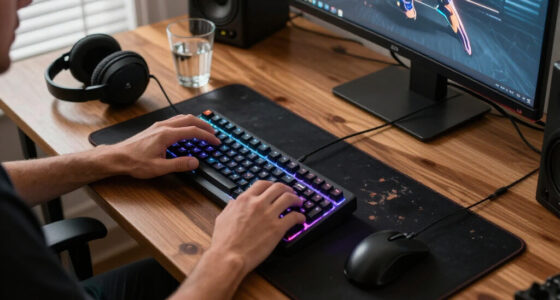
The best wireless headphone amplifiers for musicians depend on whether you need a personal guitar practice amp or a monitor system for rehearsals and live performance. I rank the Fender Mustang Micro Plus as the best overall pick for guitarists who want onboard amp modeling, while the PROAR P2-PRO and LEKATO P30 stand out for in-ear monitoring. The main tradeoff is between a self-contained practice tool and a wireless system that connects to a separate audio source; these products do not all serve the same job. Features such as effects, recording connections, and wireless range matter only when they fit your setup. Read on for the full breakdown and a guide to choosing the right type.

Get audio and creator gear delivered free with Prime
- Fast, free delivery on millions of items
- Prime Video, Amazon Music and more included
- Member-only deals all year
Complete the kit


Key Takeaways
- The lineup splits into two jobs: guitar headphone amps such as the Fender Mustang Micro Plus and BOSS Katana:GO create a personal practice setup, while the PROAR P2-PRO and LEKATO P30 are aimed at in-ear monitoring from an audio source.
- Modeling and effects separate practice picks: Fender, BOSS, and Positive Grid offer more guitar-focused sound shaping than basic headphone or monitor amplifiers.
- Wireless does not always mean the same thing: Bluetooth on a guitar amp can support audio playback or related functions, but it is not a substitute for a purpose-built wireless instrument or monitor link.
- Recording needs can narrow the choice: the LEKATO PA-2 calls attention to USB OTG recording, a feature that matters more to musicians capturing practice than to players who only need private monitoring.
- Simple designs trade flexibility for ease: models such as the LEKATO EP-01 and SONICAKE Amphonix 2 may suit straightforward practice, while more feature-rich options bring extra controls and setup decisions.
| LEKATO PA-1 Rechargeable Guitar Headphone Amplifier with Multi-Effects |  | Best for Tone Experimentation | Amplifier type: Digital modeling | Preamp models: 10 | Cabinet IRs: 10; supports importing third-party IR files | VIEW LATEST PRICE | See Our Full Breakdown |
| PROAR P2-PRO Rechargeable Portable In-Ear Monitor Amplifier |  | Best for Secure Stage Monitoring | Amplifier type: Solid state | Input: Locking XLR/TRS combo | Output: 3.5 mm jack | VIEW LATEST PRICE | See Our Full Breakdown |
| LEKATO P30 Rechargeable In-Ear Monitor Amplifier |  | Best Battery Life for Personal Monitoring | Amplifier type: Solid state | Input connectors: Locking XLR / 6.35 mm combo jack | Headphone output: 3.5 mm TRS | VIEW LATEST PRICE | See Our Full Breakdown |
| Fender Mustang Micro Plus Headphone Amplifier |  | Best for Preset Range and Practice Tools | Amp models: 25 | Effect models: 25 | Editable presets: 100 | VIEW LATEST PRICE | See Our Full Breakdown |
| LEKATO PA-2 Guitar Headphone Amp with Bluetooth and USB OTG Recording |  | Best Compact Practice Pick | Amp models: 9 | Effects: 6: reverb, delay, reverb + delay, chorus, phaser, tremolo | Bluetooth: Built-in receiver for backing-track streaming | VIEW LATEST PRICE | See Our Full Breakdown |
| LEKATO Rechargeable Guitar Headphone Amplifier with Bluetooth and 5 Effects |  | Best Simple Plug-In Practice Pick | Compatible instruments: Electric guitar, bass, electric acoustic guitar | Effects: Clean, chorus, overdrive, distortion, wah | Bluetooth: Audio receiver; does not connect to Bluetooth headphones or speakers | VIEW LATEST PRICE | See Our Full Breakdown |
| Positive Grid Spark NEO Core Wired Smart Guitar Headphone Amp |  | Best for App-Based Tone Exploration | Amplifier type: Digital modeling | Compatible instruments: Electric, acoustic, and bass guitars | Amp models: 33 | VIEW LATEST PRICE | See Our Full Breakdown |
| Positive Grid Spark NEO Wireless Guitar Headphone Amp |  | Best Wireless Headphone System | Connectivity: Wireless transmitter, Bluetooth, 1/4-inch input | Latency: 3.8 milliseconds | Driver type and size: Dynamic, 40 mm | VIEW LATEST PRICE | See Our Full Breakdown |
| LEKATO EP-01 Guitar Headphone Amp |  | Best for Backing Tracks and Home Recording | Amplifier type: Digital modeling | Compatible instruments: Bass, electric guitar | Amp models: 14 | VIEW LATEST PRICE | See Our Full Breakdown |
| BOSS Katana:GO Personal Headphone Amplifier for Guitar and Bass |  | Best for Guitar and Bass Sound Variety | Compatible instruments: Guitar, bass | Amplifier type: Digital modeling | Guitar amp types: 10 | VIEW LATEST PRICE | See Our Full Breakdown |
| SONICAKE Amphonix 2 Guitar Headphone Amplifier |  | Best for App-Based Tone Shaping | Effect modules: Up to 9 | Factory presets: 50 | Custom preset slots: 9 | VIEW LATEST PRICE | See Our Full Breakdown |
| wireless headphone amplifiers for musician | Battery life | Amplifier type | Weight |
|---|---|---|---|
| LEKATO PA-1 Rechargeable Guita | Up to 5 hours | Digital modeling | — |
| PROAR P2-PRO Rechargeable Port | Up to 14 hours | Solid state | — |
| LEKATO P30 Rechargeable In-Ear | Up to 16 hours | Solid state | 180 g (0.4 lb) |
| Fender Mustang Micro Plus Head | 4+ hours | — | — |
| LEKATO PA-2 Guitar Headphone A | — | — | 65 g |
| LEKATO Rechargeable Guitar Hea | More than 8 hours | — | 0.16 kg |
| Positive Grid Spark NEO Core W | 6–8 hours | Digital modeling | 363 g |
| Positive Grid Spark NEO Wirele | Up to 6 hours | — | 410 g |
| LEKATO EP-01 Guitar Headphone | Up to 4 hours | Digital modeling | — |
| BOSS Katana:GO Personal Headph | — | Digital modeling | 2.24 ounces |
| SONICAKE Amphonix 2 Guitar Hea | — | — | — |
More Details on Our Top Picks
LEKATO PA-1 Rechargeable Guitar Headphone Amplifier with Multi-Effects
The PA-1 is a strong fit for guitarists who want to shape a sound before plugging in a larger rig. Its 10 preamp models, 10 cabinet IRs, and adjustable effects offer more tone options than the simpler PA-2, while saving up to 10 custom presets makes it easier to return to preferred settings. Bluetooth adds backing-track playback through wired headphones, and USB connection supports recording to a computer or phone. The main distinction from the Fender Mustang Micro Plus is the PA-1’s support for imported third-party IR files; Fender counters with more amp and effect models, a tuner, and a display. Neither is a wireless headphone system: headphones connect by cable. Its five-hour battery limit also makes it less suited to long sessions away from charging.
Pros:- 10 preamp models and 10 cabinet IRs provide broad tone-shaping options.
- Stores up to 10 custom presets for quick access to saved sounds.
- Bluetooth receiver lets musicians play backing tracks through wired headphones.
- USB connection supports recording to a computer or phone.
Cons:- Bluetooth headphones are not supported; headphones must connect by wire.
- Up to five hours of battery life may require charging during extended practice.
- Its modeling and editing features may be unnecessary for musicians who only need basic monitoring.
Best for: Guitarists who want editable amp and cabinet tones, custom presets, and basic recording for quiet practice.
Not ideal for: Musicians seeking Bluetooth headphone playback, long battery sessions, or a straightforward monitor amp for a live mix.
- Amplifier type:Digital modeling
- Preamp models:10
- Cabinet IRs:10; supports importing third-party IR files
- Effects:Chorus/phaser, delay, and reverb
- Presets:10 factory presets; stores up to 10 custom presets
- Connectivity:USB and Bluetooth receiver
- Battery life:Up to 5 hours
- Dimensions and weight:4.33 × 3.54 × 1.38 in; 0.13 kg
Our verdict“Choose the PA-1 for flexible guitar tone editing and recording, but skip it if you need wireless headphones or extended battery life.”
PROAR P2-PRO Rechargeable Portable In-Ear Monitor Amplifier
The P2-PRO is aimed at musicians who need to hear a monitor feed clearly while moving, not guitarists looking for modeled amp tones. Its locking XLR/TRS input helps keep the source cable connected, and switchable mono/stereo operation suits different monitor sends. A metal enclosure, belt clip, and up to 14 hours of battery life give it a more stage-oriented role than the LEKATO PA-1 or PA-2, which focus on guitar practice, effects, and backing tracks. The tradeoff is that the P2-PRO does not add amp models or effects; it amplifies an incoming monitor signal. It also remains a wired headphone or in-ear monitor setup, with a 3.5 mm output rather than Bluetooth headphone support.
Pros:- Locking XLR/TRS combo input helps guard against accidental cable pulls.
- Switchable mono and stereo modes accommodate different monitor feeds.
- Up to 14 hours of battery life supports long rehearsals and performances.
- Metal enclosure and belt clip suit portable stage use.
Cons:- It amplifies a monitor feed but does not provide guitar amp models or effects.
- The 3.5 mm output requires wired headphones or in-ear monitors.
- The breathing light changes randomly, so its color cannot be selected.
Best for: Performers who receive a mono or stereo monitor feed over XLR or TRS and want a belt-clipped personal monitor amp.
Not ideal for: Guitarists who want onboard amp modeling, effects, backing-track streaming, or a wireless connection to headphones.
- Amplifier type:Solid state
- Input:Locking XLR/TRS combo
- Output:3.5 mm jack
- Output modes:Mono and stereo
- Battery capacity:500 mAh
- Battery life:Up to 14 hours
- Charging:USB-C
- Enclosure and carry:Metal enclosure with belt clip
Our verdict“Pick the P2-PRO for durable, long-running wired monitoring on stage, not for shaping guitar tones or listening over Bluetooth.”
LEKATO P30 Rechargeable In-Ear Monitor Amplifier
For musicians who need a personal monitor amplifier rather than a miniature guitar rig, the P30’s appeal is practical: its 1,000 mAh battery is rated for up to 16 hours, longer than the PROAR P2-PRO’s 14-hour claim. Both have locking combo inputs and mono/stereo switching, but the P30 adds a reinforced belt clip and weighs 180 g. That makes it a useful choice for rehearsal or performance when a secure source connection and fewer charging breaks matter more than onboard sound shaping. Compared with the LEKATO PA-1, it has no amp models, effects, or backing-track Bluetooth; it is built to amplify an incoming monitor signal. The 3.5 mm TRS output also means headphone listening stays wired, and there are no alternate output formats listed.
Pros:- Up to 16 hours of stated battery life reduces charging interruptions.
- Locking XLR/6.35 mm combo input helps secure the source connection.
- Switchable mono and stereo modes suit different monitor signals.
- Reinforced belt clip supports portable use.
Cons:- The 3.5 mm TRS headphone output limits connection options.
- It offers no onboard amp models, effects, or Bluetooth backing-track playback.
- At 180 g, it is heavier than the compact guitar-practice units in this roundup.
Best for: Performers who want a rechargeable belt-clipped monitor amp for mono or stereo feeds and long rehearsal days.
Not ideal for: Guitarists seeking modeled tones and effects, or musicians who need Bluetooth headphones or an output beyond 3.5 mm TRS.
- Amplifier type:Solid state
- Input connectors:Locking XLR / 6.35 mm combo jack
- Headphone output:3.5 mm TRS
- Audio modes:Stereo and mono
- Battery capacity:1,000 mAh
- Battery life:Up to 16 hours
- Dimensions:40 × 31.5 × 130 mm
- Weight:180 g (0.4 lb)
Our verdict“Choose the P30 for long-lasting wired personal monitoring, but look to the PA-1 or Fender Mustang Micro Plus for guitar tone modeling.”
Fender Mustang Micro Plus Headphone Amplifier
The Mustang Micro Plus is the most feature-packed guitar-practice pick here for players who want many tones and a few useful tools in one compact unit. It combines 25 amp models, 25 effects, and 100 editable presets with a built-in tuner, display, Bluetooth audio streaming, and USB recording. That gives it a broader preset library and more onboard guidance than the LEKATO PA-1, while the PA-1 offers third-party IR imports that will appeal to players who want to customize cabinet responses. Bluetooth streams audio into the amp, but listening still calls for wired headphones or earbuds; it does not make the headphones themselves wireless. Its four-plus-hour battery life is also modest, and its range of options may be excessive for musicians who only need simple monitor amplification.
Pros:- 25 amp models, 25 effects, and 100 editable presets cover a wide range of practice tones.
- Built-in tuner and display provide useful tools without a separate device.
- Bluetooth audio streaming supports playing along with songs and videos.
- USB recording and Fender Tone App support add practice and editing options.
Cons:- More than four hours of battery life may fall short for extended sessions away from charging.
- Bluetooth streams audio to the unit; headphones still connect by wire.
- Its modeling features are less relevant for musicians who only need to amplify a stage monitor feed.
Best for: Guitarists and bassists who want a wide range of editable tones, a built-in tuner, and USB recording for home practice.
Not ideal for: Performers who need a dedicated belt-clipped monitor amp, long battery life, or wireless headphone output.
- Amp models:25
- Effect models:25
- Editable presets:100
- Audio features:Bluetooth streaming, USB recording, built-in tuner and display
- Connector:3.5 mm jack
- Battery life:4+ hours
- Enclosure:Stainless steel
- Warranty:2-year limited
Our verdict“Choose the Mustang Micro Plus for a large editable tone library and built-in practice tools, not for long-running personal monitor duty.”
LEKATO PA-2 Guitar Headphone Amp with Bluetooth and USB OTG Recording
The PA-2 keeps the guitar-practice setup straightforward: plug it into a guitar, connect wired headphones, and choose among nine amp models and six effects. Its 65 g body and 180° rotating plug make it easier to pack and fit around different guitar jack positions than a belt-clipped monitor amp such as the PROAR P2-PRO. Bluetooth brings backing tracks into the practice mix, while USB OTG recording and playback offer a direct route to a compatible phone. The PA-1 is the better fit for players who want cabinet IRs and saved custom presets; the PA-2’s controls and effects make it a simpler, lighter alternative. Its five-hour battery rating is short, and recording requires both a cable and an OTG adapter.
Pros:- Nine amp models and six effects provide useful tone variety in a small unit.
- Bluetooth receiver supports backing-track playback through wired headphones.
- USB OTG supports recording and playback with a compatible phone.
- 65 g weight and 180° rotating plug aid packing and guitar-jack fit.
Cons:- Up to five hours of battery life may not cover long practice sessions.
- OTG recording requires a cable and a compatible OTG adapter.
- It lacks the PA-1’s cabinet IR support and custom preset storage.
Best for: Guitarists who want a lightweight, plug-in practice amp with backing-track streaming and phone-based OTG recording.
Not ideal for: Musicians who need extended battery life, a long list of saved presets, cabinet IR editing, or a dedicated stage monitor amp.
- Amp models:9
- Effects:6: reverb, delay, reverb + delay, chorus, phaser, tremolo
- Bluetooth:Built-in receiver for backing-track streaming
- Recording:USB OTG recording and playback
- Connectors:6.35 mm guitar plug; 3.5 mm headphone output; USB Type-C
- Battery:780 mAh rechargeable; up to 5 hours
- Weight:65 g
- Plug:180° rotating
Our verdict“Choose the PA-2 for portable guitar practice and phone recording, but opt for the PA-1 if deeper tone editing matters more than simplicity.”
LEKATO Rechargeable Guitar Headphone Amplifier with Bluetooth and 5 Effects
The LEKATO is a straightforward choice for musicians who want to plug into a guitar and start practicing without carrying a separate amp. Its five built-in effects cover basic tone changes, while Bluetooth brings backing music from a phone into the practice mix. That Bluetooth connection is for audio input only: you still need wired headphones or a speaker to hear anything. Compared with the LEKATO EP-01, this model is easier to grasp but offers fewer amp-shaping and rhythm options, and it lacks the EP-01’s USB OTG recording. The swivel plug helps it fit different instrument-jack positions, and its battery lasts more than eight hours. The plastic enclosure and limited sound-output options make it less suited to players seeking a broader digital practice setup.
Pros:- Five built-in effects provide basic tone variety without extra pedals.
- Bluetooth receiver streams backing music from a phone.
- 180° swivel plug accommodates different instrument jack positions.
- Rechargeable battery provides more than eight hours of use.
Cons:- Requires wired headphones or a speaker for audio output.
- Bluetooth cannot send audio to wireless headphones or speakers.
- Offers fewer modeling and practice features than the LEKATO EP-01.
Best for: Guitar, bass, and electric-acoustic players who want quick, cable-light practice with a few effects and phone-sourced backing music.
Not ideal for: Musicians who need wireless headphone output, recording features, or a wider selection of amp models and practice tools.
- Compatible instruments:Electric guitar, bass, electric acoustic guitar
- Effects:Clean, chorus, overdrive, distortion, wah
- Bluetooth:Audio receiver; does not connect to Bluetooth headphones or speakers
- Audio output:Headphones or speaker
- Connector:3.5 mm jack
- Battery life:More than 8 hours
- Weight:0.16 kg
- Warranty:1 year
Our verdict“Choose the LEKATO for uncomplicated, long-running practice with wired headphones, but skip it if you need recording or wireless headphone playback.”
Positive Grid Spark NEO Core Wired Smart Guitar Headphone Amp
The Spark NEO Core suits players who want a large menu of tones in a wired headphone setup. The Spark app opens access to 33 amp models and 43 effects, with four customizable presets for saving a few useful sounds. That makes it a more expansive tone platform than the LEKATO’s five-effect plug-in amp, though it asks for more setup and depends on the app for its main modeling features. Bluetooth supports music playback for practicing along with tracks; it does not make the instrument connection wireless. Custom drivers and noise-isolating sound suit focused practice, while a 6–8-hour battery life is shorter than the LEKATO’s stated runtime. The guitar cable is not included, so this is a better fit for players comfortable assembling a small app-led setup than for those seeking a ready-to-go, no-phone device.
Pros:- Spark app provides 33 amp models and 43 effects.
- Four customizable presets make favorite tones easier to recall.
- Supports electric, acoustic, and bass guitars.
- Bluetooth music playback and noise-isolating sound support focused practice.
Cons:- Access to the amp and effect options requires the Spark app.
- Guitar cable is not included.
- Battery life of 6–8 hours is shorter than the LEKATO plug-in model’s stated runtime.
Best for: Electric, acoustic, and bass players who want extensive app-based amp and effect choices, saved presets, and wired headphone practice.
Not ideal for: Players who prefer to practice without a smartphone, want a wireless instrument connection, or need a guitar cable included.
- Amplifier type:Digital modeling
- Compatible instruments:Electric, acoustic, and bass guitars
- Amp models:33
- Effects:43
- Customizable presets:4
- Input connector:6.35 mm jack
- Battery life:6–8 hours
- Weight:363 g
Our verdict“Pick the Spark NEO Core if app-based tone variety matters more than a wireless guitar connection or phone-free operation.”
Positive Grid Spark NEO Wireless Guitar Headphone Amp
Among these picks, the Spark NEO is the clearest choice for musicians who mean wireless in both parts of the practice chain: the included transmitter sends the instrument signal to over-ear headphones, while Bluetooth handles music from a mobile device. Its stated 3.8 ms latency is aimed at keeping the wireless playing feel responsive. Unlike the Spark NEO Core, which is a wired headphone amp with app-based modeling, this is a headphone-and-transmitter system; the listed data does not specify the Core’s 33 amps and 43 effects. The Spark app supplies tone-creation and chord-learning tools, but that reliance may frustrate players who want controls independent of a phone. Up to six hours per charge is also the shortest stated runtime here, making it less suited to long sessions than the LEKATO plug-in amp.
Pros:- Included transmitter supports low-latency wireless instrument play.
- Built-in 1/4-inch input allows a direct instrument connection.
- Bluetooth streams music from a mobile device.
- Works with electric, acoustic, and bass guitars.
Cons:- Battery life is limited to up to six hours per charge.
- Tone-creation and chord-learning tools require the Spark app.
- The supplied details do not list the extensive amp and effect counts available with the Spark NEO Core.
Best for: Guitarists and bassists who want to move around while practicing through dedicated wireless over-ear headphones and can recharge between sessions.
Not ideal for: Players who need all-day battery life, do not want to use the Spark app, or already have a preferred wired headphone setup.
- Connectivity:Wireless transmitter, Bluetooth, 1/4-inch input
- Latency:3.8 milliseconds
- Driver type and size:Dynamic, 40 mm
- Frequency response:20 KHz
- Impedance:32 ohm
- Ear placement:Over-ear
- Battery life:Up to 6 hours
- Weight:410 g
Our verdict“Choose this Spark NEO when wireless headphones and freedom to move matter more than longer battery life or a clearly specified modeling library.”
LEKATO EP-01 Guitar Headphone Amp
The EP-01 is the most practice-tool-focused of the two LEKATO plug-in options here. Its 14 amp models, 14 effects, and 28 drum patterns give players more ways to shape a practice session than the simpler five-effect LEKATO Rechargeable Guitar Headphone Amplifier. Bluetooth brings in backing tracks, and USB OTG recording and playback adds a route for capturing ideas, although an OTG adapter is required. The tradeoff is a shorter battery life of up to four hours, plus the need for wired headphones or an external speaker; Bluetooth does not send sound to a headset. Compared with the BOSS Katana:GO, the EP-01 offers built-in drum patterns and OTG recording, while the BOSS supplies dedicated guitar and bass amp modes and spatial audio. This model best fits structured practice, not long unplugged sessions.
Pros:- Combines 14 amp models and 14 effects for tone variety.
- Includes 28 drum patterns across seven music styles.
- Supports Bluetooth backing tracks and USB OTG recording and playback.
- Compact rechargeable design connects via 3.5 mm and USB.
Cons:- Battery lasts up to four hours, less than the simpler LEKATO plug-in model.
- Bluetooth is for backing-track input, not wireless headphone output.
- OTG adapter and external speaker cable are not included.
Best for: Electric guitar and bass players who want drum patterns, Bluetooth backing tracks, multiple models, and a basic USB OTG recording option.
Not ideal for: Players seeking wireless headphone output, longer battery life, or a plug-in practice amp with fewer settings to manage.
- Amplifier type:Digital modeling
- Compatible instruments:Bass, electric guitar
- Amp models:14
- Effects:14
- Drum patterns:28 across 7 music styles
- Connections:3.5 mm jack, USB
- Recording:USB OTG recording and playback; OTG adapter required
- Battery life:Up to 4 hours
Our verdict“Choose the EP-01 for a varied, track-based practice setup with recording support, provided its short runtime and wired monitoring suit your routine.”
BOSS Katana:GO Personal Headphone Amplifier for Guitar and Bass
The Katana:GO stands out for players who switch between guitar and bass and want dedicated sounds for both in one compact headphone amp. It lists 10 guitar amp types with over 85 effects, plus three bass amp types and over 65 bass effects. That gives it a broader stated effects range than either LEKATO model, while the 3D spatial audio adds a different listening presentation from the standard headphone practice approach. Bluetooth supports backing music, but private practice still requires headphones. Compared with the wireless Spark NEO, the Katana:GO is a compact personal amp rather than a dedicated wireless headphone-and-transmitter system; it also weighs just 2.24 ounces. Sound editing and learning tools use a smartphone, so players who want a fully self-contained interface may prefer a simpler option.
Pros:- Provides dedicated guitar and bass amp types and effects.
- Offers over 85 guitar effects and over 65 bass effects.
- 3D spatial audio differentiates its headphone presentation.
- Bluetooth supports playing along with backing music.
Cons:- Requires headphones for private practice.
- Sound editing and learning tools use a smartphone.
- Unlike the Spark NEO Wireless, it is not supplied as a wireless headphone-and-transmitter system.
Best for: Guitarists and bassists who want one compact headphone amp with separate instrument modes, a large effects selection, and Bluetooth backing tracks.
Not ideal for: Musicians who want included wireless headphones, speaker playback, or access to editing and learning tools without a smartphone.
- Compatible instruments:Guitar, bass
- Amplifier type:Digital modeling
- Guitar amp types:10
- Guitar effects:Over 85
- Bass amp types:3
- Bass effects:Over 65
- Output mode:3D spatial audio
- Weight:2.24 ounces
Our verdict“Pick the Katana:GO if you need extensive guitar and bass sounds in a lightweight personal amp and are comfortable practicing with headphones.”
SONICAKE Amphonix 2 Guitar Headphone Amplifier
The Amphonix 2 suits guitarists who want a pocketable practice rig with more preset variety than a simple headphone amp. Its 50 factory presets and nine editable slots make it easy to move between sounds, while app-based adjustments offer more shaping than the five effects on the LEKATO Rechargeable Guitar Headphone Amplifier. Bluetooth playback lets you play along with backing tracks, and USB-C or smartphone OTG recording gives home practice a path to a quick demo. At just 64 g, it is easy to carry between a practice space and a lesson. The tradeoff is its guitar-focused, single-channel setup: unlike the BOSS Katana:GO, it is not presented as a guitar-and-bass option, and private listening requires compatible headphones. Choose it for portable guitar practice and recording, not as a full wireless monitoring system.
Pros:- Nine effect modules, 50 factory presets, and nine customizable slots offer a broad range of practice sounds.
- Bluetooth audio playback supports playing along with backing tracks.
- USB-C and smartphone OTG recording provide direct recording options.
- Compact 64 g body and rechargeable battery suit portable practice.
Cons:- Requires separate compatible headphones for private listening.
- The listed single-channel output may not suit musicians seeking a multi-channel monitoring setup.
- App-based tone editing may be less convenient for players who prefer all controls on the device.
Best for: Guitarists who want portable private practice, a large choice of presets, app-based tone editing, and a straightforward way to record to a phone or computer.
Not ideal for: Bassists seeking a clearly supported bass-focused model, musicians needing an in-ear monitor system, or players who want a complete wireless headphone set rather than an amplifier for compatible headphones.
- Effect modules:Up to 9
- Factory presets:50
- Custom preset slots:9
- Input:6.35 mm (1/4-inch) unbalanced, 1 MΩ
- Headphone output:3.5 mm (1/8-inch) stereo, 100 Ω
- Connectivity:Bluetooth audio playback, USB-C, smartphone OTG
- Battery:Rechargeable 1000 mAh lithium; 5 V USB-C charging
- Dimensions and weight:84.3 × 43.7 × 32.2 mm; 64 g (also listed as 63 g)
Our verdict“Choose the Amphonix 2 if you want a lightweight guitar practice amp with extensive presets, Bluetooth playback, and direct recording; skip it if you need a complete wireless monitoring system.”
How We Picked
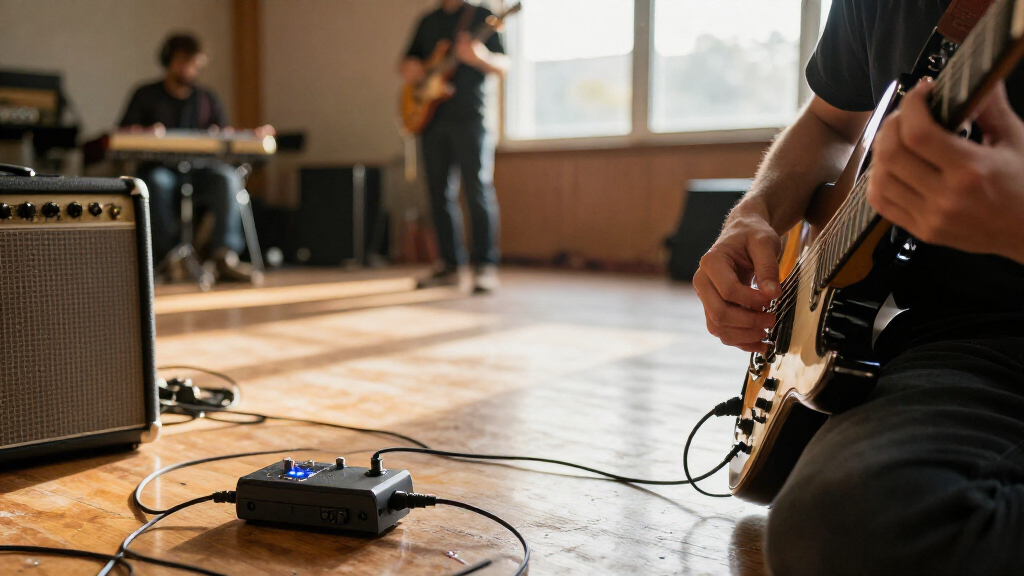
I compared these 11 products by the job a musician is trying to do: private guitar practice, headphone-based sound shaping, or in-ear monitoring. I gave more weight to clear role fit, practical controls, useful connectivity, and features that address real workflows than to long feature lists. I also considered whether a product’s design appears focused on one task or asks the buyer to manage more setup and compatibility questions.
The ranking favors versatile options that serve a clear musical purpose, then separates them by audience and tradeoff. Guitarists who want onboard tones rank differently from performers who need a monitor feed, so the list does not treat those categories as interchangeable. Product names and listed functions inform this guide, but exact wireless behavior, compatibility, latency, and included accessories should be confirmed with the manufacturer before purchase.
| wireless headphone amplifiers for musician | Amplifier type |
|---|---|
| LEKATO PA-1 Rechargeable Guita | Digital modeling |
| PROAR P2-PRO Rechargeable Port | Solid state |
| LEKATO P30 Rechargeable In-Ear | Solid state |
| Fender Mustang Micro Plus Head | — |
| LEKATO PA-2 Guitar Headphone A | — |
| LEKATO Rechargeable Guitar Hea | — |
| Positive Grid Spark NEO Core W | Digital modeling |
| Positive Grid Spark NEO Wirele | — |
| LEKATO EP-01 Guitar Headphone | Digital modeling |
| BOSS Katana:GO Personal Headph | Digital modeling |
| SONICAKE Amphonix 2 Guitar Hea | — |
Factors to Consider When Choosing Wireless Headphone Amplifiers For Musicians
Before choosing a model, identify the signal path you need. A headphone amp that supplies guitar tones is not automatically a wireless in-ear monitor system, and a Bluetooth feature does not prove it can carry a live instrument signal. These broader checks can prevent buying a capable product that does not fit your rig.
Choose Between Guitar Practice and In-Ear Monitoring
Start by tracing the sound from its source to your ears. A personal guitar headphone amp typically takes a guitar signal and provides a headphone output, often with modeled tones or effects; an in-ear monitor amplifier is meant to receive a monitor mix from another device. Those roles solve different problems, even when both products are small and rechargeable. A common mistake is buying an in-ear unit expecting it to create guitar amp sounds, or choosing a practice amp expecting it to accept a full band mix. If you play both at home and on stage, decide which task needs the better solution first. A two-device setup may be more useful than asking one device to cover incompatible workflows.
Check What “Wireless” Means in the Signal Path
Wireless features can refer to very different connections: Bluetooth audio playback, a wireless instrument link, or transmission of a monitor mix. These connections are not interchangeable, and Bluetooth playback alone does not establish that an amp can carry a live guitar signal with performance-ready timing. Map every link in your setup, including the instrument, transmitter, receiver, and headphones, before treating a product as a cable replacement. For rehearsals or stage use, check the stated range, supported connection type, and any latency details from the manufacturer. For quiet practice with backing tracks, Bluetooth may be useful even when the guitar itself remains connected by cable. This distinction often matters more than the word “wireless” on the box.
Match Tone Controls to Your Practice Habits
More amp models and effects can help when you change genres, practice songs with distinct sounds, or want to shape a tone without extra gear. They can also add menus and choices that slow down a player who mainly wants to plug in and practice. Think about whether you prefer physical controls, app-based editing, or a small set of preset sounds before paying for added flexibility. Players learning fundamentals may benefit more from a dependable clean tone and simple level control than from a large effects library. Musicians who build parts around specific tones should check whether presets can be saved and recalled in the way they work. The right amount of tone shaping is the amount you will actually use.
Plan for Your Recording and Playback Workflow
USB or OTG recording support can shorten the path from practice to a phone or computer, but the connection must match your device and software. Confirm operating-system support, cable requirements, and whether recording sends a processed tone or a different signal than the headphone output. Also check how you will hear backing tracks while playing, since playback input and recording output are separate needs. A musician who only practices privately may gain little from recording connections, while a songwriter can value them more than extra onboard effects. Avoid assuming that a charging port also carries audio data. Verify the specific audio routing described by the manufacturer.
Think Beyond Rechargeability
A rechargeable design helps keep a practice station compact, but battery life, charging time, and the ability to play while charging can shape day-to-day reliability. For rehearsals, also consider how easy it is to check battery status and whether the device can be charged between sets. Small controls may be convenient to carry yet harder to adjust quickly while wearing headphones or performing. If you use in-ear monitors, check the headphone connector and whether your preferred earphones need an adapter. Build and portability matter most when the unit travels often; a mostly stationary home setup can put more weight on controls and connectivity. Look for manufacturer details on these practical points rather than guessing from the product’s size.
Frequently Asked Questions
Can I use a guitar headphone amplifier as a wireless in-ear monitor system?
Not by default. A guitar headphone amplifier generally focuses on processing a guitar signal for private listening, while an in-ear monitor system receives audio from a mixer or other monitor source. Some products may support wireless or Bluetooth features for particular tasks, but that does not establish that they can receive a live monitor mix. Check the input, transmitter and receiver arrangement, and supported signal type before buying. If you need both practice tones and stage monitoring, treat them as separate requirements unless the manufacturer documents both functions.
Is Bluetooth suitable for playing guitar without noticeable delay?
Bluetooth is often used for sending backing music to a practice device, but that does not make it a reliable live instrument link. The actual delay depends on the hardware and connection, and a product’s Bluetooth feature may be intended for playback rather than transmitting a guitar signal. For playing, verify that the device supports the specific wireless instrument connection you need and check its published latency information. If timing is central to your playing, a wired instrument connection may be the safer choice. Do not infer live performance suitability from Bluetooth support alone.
Should I choose an amp with lots of effects or a simpler headphone amp?
Choose based on how often you change sounds and whether you want tone creation inside the headphone amp. Players who practice several styles or rely on modeled amp sounds may benefit from more effects and presets. If you mainly need a quiet way to hear your existing rig, extra processing can add cost, controls, and setup without improving the core task. Consider whether you can save and recall tones easily, especially if you practice specific songs. A simpler unit can be the better fit when speed and a straightforward signal path matter most.
What should I verify before buying an in-ear monitor amplifier?
Confirm that its input matches the source you plan to monitor, such as a mixer, monitor transmitter, or other audio output. Check whether the product is a complete wireless system or only one part of a system, since some monitor amplifiers rely on separate transmitters or receivers. Review the supported headphone connection, battery details, and any stated range or channel requirements. For group rehearsals, find out whether multiple musicians can use separate mixes and what additional equipment that requires. A quick signal-path check can prevent buying a personal headphone amp when you need a monitor receiver.
Can one device cover both quiet practice and recording?
Some guitar headphone amps offer recording connections alongside headphone monitoring, but the exact routing and device compatibility vary. Before choosing one, confirm that it connects to your phone or computer, works with your intended recording app, and sends the sound you want to capture. You may also need a separate cable or adapter. Recording features are useful for reviewing ideas and sharing demos, but they do not automatically replace an audio interface for a larger recording setup. If recording is a frequent task, prioritize documented audio support over a feature label alone.
Conclusion
For most guitarists seeking one compact practice tool, I would start with the Fender Mustang Micro Plus as the best overall choice in this lineup. For monitor-focused use, compare the PROAR P2-PRO and LEKATO P30 against your actual audio source and wireless setup; neither should be mistaken for a guitar amp modeler. The best value depends on the job: a straightforward pick such as the LEKATO EP-01 may suit basic private practice, while the LEKATO PA-2 is a better match when USB OTG recording matters. Beginners may prefer a simple, self-contained guitar headphone amp over a monitor system that requires a separate signal source. For premium sound-shaping features, look at the BOSS Katana:GO or Positive Grid Spark NEO options, then verify the connection and control details that fit your routine. Choose by signal path first, and features second.