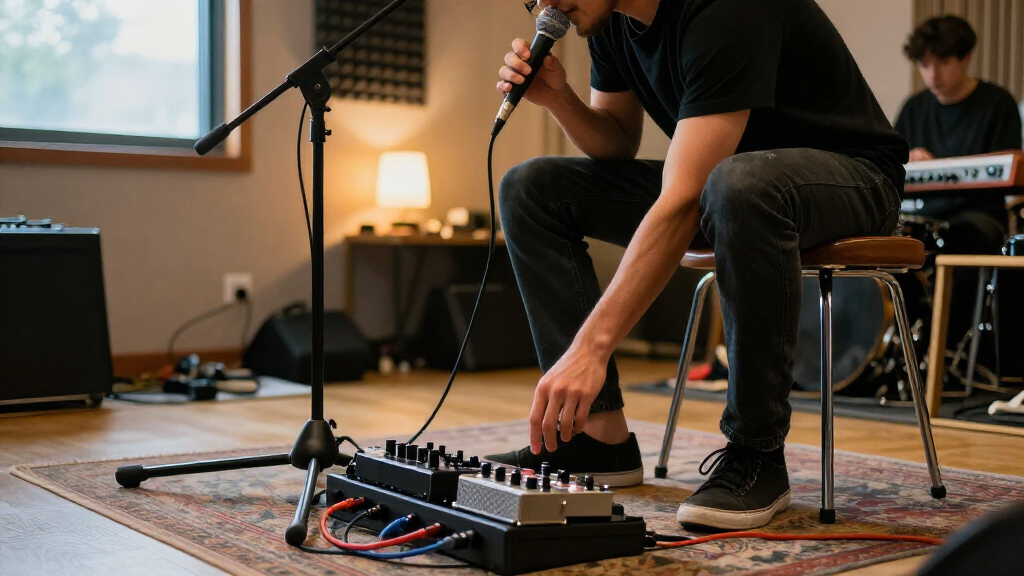

For most musicians, I’d start with the BOSS VE-22: its dedicated vocal effects and performance-focused controls make it a strong all-rounder for live use. The MOOER VE200 stands out for broader processing and touchscreen editing, while the HeadRush VX5 suits singers who want auto-tune-style pitch effects. The main choice is between hands-on simplicity, deeper sound shaping, and specialized features such as harmony or pitch correction. Bundle versions can add useful accessories, but they may duplicate gear you already own. Read on for how all 15 options compare and which one fits your setup.

Get audio and creator gear delivered free with Prime
- Fast, free delivery on millions of items
- Prime Video, Amazon Music and more included
- Member-only deals all year
Complete the kit


Key Takeaways
- The BOSS VE-22 is the most balanced starting point for musicians who want a dedicated vocal performer without making the choice hinge on a single specialty effect.
- The MOOER VE200 favors breadth and editing, while the HeadRush VX5 puts more emphasis on pitch effects; the right pick depends on whether sound-shaping range or pitch treatment matters more.
- Zoom’s V3 and V6-SP options make the lineup’s feature-versus-format tradeoff clear: compare the specific processor first, then judge bundles by the accessories you actually need.
- The BOSS VE-2 is a more focused harmony choice than the broader VE-22, so singers who mainly want vocal doubling and harmonies may not need the larger feature set.
- Several listings repeat the same Zoom V3 or Zoom V6-SP processor with different bundles; the included headphones, cables, power supplies, and extras—not a different core processor—are the main distinction to verify.
| MOOER VE200 Vocal Multi-Effects Processor with AI StemLab and Touchscreen |  | Best Feature-Rich Portable Pick | Effects: Multi-effect; includes pitch correction, harmony, vocoder, modulation, delay, reverb, character voices, and looper | Controls: Touchscreen and footswitches | Connectivity: Bluetooth audio; USB-C OTG | VIEW LATEST PRICE | See Our Full Breakdown |
| BOSS VE-22 Vocal Performer Multi-Effects Processor |  | Best for Straightforward All-Around Performance | Effects: Compressor, EQ, delay, echo, reverb, lo-fi, distortion, radio, and ring modulation | Pitch correction: Automatic | Harmony and doubling: Real-time | VIEW LATEST PRICE | See Our Full Breakdown |
| Audota AVE-100 Vocal Effects Processor with Pitch Correction and Harmony |  | Best for Harmony and Key Detection | Effects: Harmony, loop recording, pitch correction, reverb, and delay | Harmony modes: Unison, +3rd, and +6th | Inputs: XLR microphone input; 6.35 mm instrument/line input | VIEW LATEST PRICE | See Our Full Breakdown |
| FLAMMA FV01 Vocal Effects Processor Pitch Correction Voice Pedal Vocal Stompbox Microphone Amplifier for Singer Live Singing Streaming Recording with Delay Reverb Acoustic Guitar Playing |  | Best Compact Pitch-Correction Pedal | Primary function: Vocal pitch-correction pedal and microphone amplifier | Tone modes: Warm, Bright, and Normal | Effects: Delay and reverb listed | VIEW LATEST PRICE | See Our Full Breakdown |
| HeadRush VX5 Vocal Effects and Auto-Tune Pedal |  | Best for Dedicated Auto-Tune Control | Pitch correction: Antares Auto-Tune with Retune Speed and Humanize controls | Effects: Compression, reverb, delay, chorus, and lo-fi | Presets: 99 factory presets; stores up to 250 | VIEW LATEST PRICE | See Our Full Breakdown |
| Zoom V6-SP Multi-Effects Vocal Processor Pedal Bundle with AKG K240 Studio Pro Stereo Headphones |  | Best Vocal Processor Bundle for Live Harmony | Voice effects: 12 voice effects, including pitch correction | Harmony: Up to three-part vocals | Looper: Up to 3:30 recording time | VIEW LATEST PRICE | See Our Full Breakdown |
| Zoom V6-SP Vocal Effects Pedal with Harmony, Formant, Looper |  | Best for Expressive Live Vocal Control | Model: Zoom V6-SP | Voice effects: 12 listed voice effects | Harmony: Three-part harmony | VIEW LATEST PRICE | See Our Full Breakdown |
| Zoom V3 Vocal Effects Processor Bundle with Recorder Mount, AC Adapter, and Cleaning Cloth |  | Best for Straightforward Vocal Shaping | Brand and model: Zoom V3 | Effects: Reverb, delay, and compression | Microphone input: XLR with switchable 48 V phantom power | VIEW LATEST PRICE | See Our Full Breakdown |
| Audota AVE-100 Multi-Effect Vocal Processor |  | Best Compact Option with Broad Mic Compatibility | Microphone input: 6.35 mm / XLR combo | Phantom power: 48 V | Effects: Echo, reverb, harmony, auto-tune, and pitch correction | VIEW LATEST PRICE | See Our Full Breakdown |
| Zoom V3 Vocal Effects Processor 16 Studio-Grade Effects Bundle |  | Best V3 Bundle for Recording Connections | Model: Zoom V3 | Voice effects: 16 listed effects, including pitch correction, vocoder, talk box, octave, distortion, and chorus | Harmony: Up to three-part harmonies | VIEW LATEST PRICE | See Our Full Breakdown |
| BOSS VE-2 Vocal Harmonist Effects Processor |  | Best for Guitar-Supported Harmonies | Harmony options: 24 | Effects: Reverb and delay | Harmony guidance: Can generate harmonies independently or use guitar chords | VIEW LATEST PRICE | See Our Full Breakdown |
| Zoom V3 Vocal Processor for Streaming and Live Performance |  | Best for Streaming and Versatile Vocal Processing | Vocal effects: 16 | Harmony: Up to 3 parts | Audio recording: Up to 32-bit/44.1 kHz | VIEW LATEST PRICE | See Our Full Breakdown |
| Zoom V3 Vocal Effects Processor With Studio Reference Headphones, Adapter, and Cables |  | Best Starter Bundle for Home Recording | Processor: Zoom V3 | Vocal effects: 16 | Harmony: Up to 3-part harmonies | VIEW LATEST PRICE | See Our Full Breakdown |
| Zoom V3 Vocal Processor Bundle with XLR Cable, Instrument Cable, Power Supply, and Cloth |  | Best for Gig-Ready Cabling | Processor: Zoom V3 | Vocal effects: 16 | Harmony: Adds up to 2 voices for 3-part harmonies | VIEW LATEST PRICE | See Our Full Breakdown |
| Roland VT-4 Vocal Transformer |  | Best for Real-Time Voice Transformation | Effects: Delay, reverb, formant, vocoding, harmonizing, pitch shifting, and hard tuning | Controls: Push buttons and knobs | Power source: Battery powered | VIEW LATEST PRICE | See Our Full Breakdown |
| vocal effects processors for musician | Effects | Power |
|---|---|---|
| MOOER VE200 Vocal Multi-Effect | Multi-effect; includes pitch correction, harmony, vocoder, modulation, delay, reverb, character voices, and looper | Battery powered; 9 V, 1.5 A |
| BOSS VE-22 Vocal Performer Mul | Compressor, EQ, delay, echo, reverb, lo-fi, distortion, radio, and ring modulation | Battery powered; 9 V, 260 mA; 4 AA alkaline batteries included |
| Audota AVE-100 Vocal Effects P | Harmony, loop recording, pitch correction, reverb, and delay | 9 V, 500 mA; battery powered |
| FLAMMA FV01 Vocal Effects Proc | Delay and reverb listed | Corded electric; 9 V, 500 mA |
| HeadRush VX5 Vocal Effects and | Compression, reverb, delay, chorus, and lo-fi | Corded electric; 9 V, 1 A |
| Zoom V6-SP Multi-Effects Vocal | — | 9 V adapter or four AA batteries; up to 3.5 hours on batteries |
| Zoom V6-SP Vocal Effects Pedal | — | 9 V, 300 mA; corded electric |
| Zoom V3 Vocal Effects Processo | Reverb, delay, and compression | 9 V; battery or corded power |
| Audota AVE-100 Multi-Effect Vo | Echo, reverb, harmony, auto-tune, and pitch correction | 9 V; listed current is 500 A |
| Zoom V3 Vocal Effects Processo | — | — |
| BOSS VE-2 Vocal Harmonist Effe | Reverb and delay | — |
| Zoom V3 Vocal Processor for St | — | — |
| Zoom V3 Vocal Effects Processo | — | — |
| Zoom V3 Vocal Processor Bundle | — | — |
| Roland VT-4 Vocal Transformer | Delay, reverb, formant, vocoding, harmonizing, pitch shifting, and hard tuning | — |
More Details on Our Top Picks
MOOER VE200 Vocal Multi-Effects Processor with AI StemLab and Touchscreen
The VE200 suits singers who want a broad performance toolkit in one compact unit. Its touchscreen and footswitches put effects, harmonies, pitch correction, a vocoder, character voices, and looping within reach, while Bluetooth audio can simplify playing along with backing tracks. Compared with the BOSS VE-22, it adds a built-in looper and lists XLR balanced outputs, giving it a stronger fit for performers who want playback and vocal processing in one setup. Its USB-C OTG connection and app-based AI stem separation also point toward flexible practice and content workflows, though stem separation depends on the MOOER CLOUD app. The tradeoff is power: approximately five hours of battery life may not cover longer sets, and its many effects offer more choices than a singer seeking simple pitch correction needs.
Pros:- Combines pitch correction, harmony, vocoder, modulation, delay, reverb, character voices, and looping
- Touchscreen and footswitches support live operation
- Bluetooth audio and USB-C OTG add playback and device connectivity options
- XLR balanced outputs and three-level feedback suppression suit stage use
Cons:- Approximately five hours of battery life may be limiting for long sessions
- AI stem separation requires the MOOER CLOUD app
- The wide effect selection may be unnecessary for singers who want straightforward processing
Best for: Performers who want harmonies, looping, playback connectivity, and varied vocal effects in a portable live setup.
Not ideal for: Singers who need a simple, app-independent pedal or expect a battery to cover long rehearsals and performances.
- Effects:Multi-effect; includes pitch correction, harmony, vocoder, modulation, delay, reverb, character voices, and looper
- Controls:Touchscreen and footswitches
- Connectivity:Bluetooth audio; USB-C OTG
- Outputs:XLR balanced outputs
- Power:Battery powered; 9 V, 1.5 A
- Battery life:Approximately 5 hours
- Delay range:40 ms to 2500 ms
- Dimensions and weight:5.87 x 4.56 x 2.21 inches; 0.41 kg
Our verdict“Choose the VE200 if you want a portable vocal workstation with looping and varied effects, and can work within its battery life and app-dependent stem features.”
BOSS VE-22 Vocal Performer Multi-Effects Processor
The VE-22 balances practical vocal treatment with creative effects, making it a strong choice for singers moving between practice, recording, livestreaming, and stage work. Compression, EQ, delay, echo, and reverb cover common needs, while automatic pitch correction and real-time harmony or doubling add performance options without requiring a separate processor. Compared with the more feature-dense MOOER VE200, the VE-22 has a more focused effects set and familiar knob, button, and footswitch controls; it does not list the MOOER’s looper, touchscreen, or Bluetooth audio. Its specialty effects, from lo-fi to ring modulation, still give it room for more stylized sounds. The main uncertainty is power planning: the product data lists included AA batteries but no battery-life estimate, and its detailed connectivity beyond USB-C is not specified.
Pros:- Covers core vocal processing with compression, EQ, delay, echo, and reverb
- Automatic pitch correction offers subtle and more pronounced settings
- Real-time harmony and doubling support fuller vocal arrangements
- Knob, button, and footswitch controls suit hands-on performance use
Cons:- Battery runtime is not specified in the product data
- Connectivity details beyond USB-C are not described
- Does not list the VE200’s built-in looper or Bluetooth audio
Best for: Singers who want practical vocal cleanup, pitch correction, and real-time harmony in a processor suited to both live and home use.
Not ideal for: Performers who need a built-in looper, Bluetooth backing-track playback, or clearly documented XLR output options.
- Effects:Compressor, EQ, delay, echo, reverb, lo-fi, distortion, radio, and ring modulation
- Pitch correction:Automatic
- Harmony and doubling:Real-time
- Controls:Knob, button, and footswitch
- Connectivity:USB Type-C
- Power:Battery powered; 9 V, 260 mA; 4 AA alkaline batteries included
- Dimensions:8.72 x 5.72 x 2.56 inches
- Weight:16 ounces
Our verdict“Pick the VE-22 for a versatile, performance-ready mix of everyday vocal processing and harmony without needing a looper or elaborate app features.”
Audota AVE-100 Vocal Effects Processor with Pitch Correction and Harmony
The AVE-100 is aimed at singers who want pitch correction and basic vocal layering without giving up useful live connections. Its KeyLearn function detects the key of a backing track, which can help keep harmony choices aligned with the music, and its listed modes—unison, +3rd, and +6th—make the harmony options easy to understand. A loop recorder supports layering, while 48V phantom power lets it work with condenser microphones. Compared with the FLAMMA FV01, which concentrates on pitch correction and three EQ-style tone modes, the Audota offers more explicit harmony, key-detection, and looping tools. It is less appealing for buyers who want extensive sound design: the listed effects are limited to harmony, pitch correction, reverb, and delay. The product data also leaves loop duration and recording storage unspecified.
Pros:- KeyLearn detects the key of a backing track
- Harmony offers unison, +3rd, and +6th modes
- 48V phantom power supports condenser microphones
- Loop recorder can layer vocal parts
Cons:- Loop duration and recording storage are not specified
- The listed effect range is narrower than the MOOER VE200 or BOSS VE-22
- Requires a 9-volt power source, with battery runtime not provided
Best for: Solo singers and streamers who want key-aware harmony, basic effects, and condenser-microphone support in one unit.
Not ideal for: Vocalists seeking extensive character effects, detailed loop specifications, or a clearly stated long-term power solution.
- Effects:Harmony, loop recording, pitch correction, reverb, and delay
- Harmony modes:Unison, +3rd, and +6th
- Inputs:XLR microphone input; 6.35 mm instrument/line input
- Phantom power:48 V
- Audio interfaces:1/4-inch audio, 3.5 mm audio, and USB Type-C
- Power:9 V, 500 mA; battery powered
- Controls:Knob
- Weight and warranty:320 g; 1-year warranty
Our verdict“Choose the AVE-100 if key-aware harmony and condenser-mic support matter more to you than a large library of vocal effects.”
FLAMMA FV01 Vocal Effects Processor Pitch Correction Voice Pedal Vocal Stompbox Microphone Amplifier for Singer Live Singing Streaming Recording with Delay Reverb Acoustic Guitar Playing
The FV01 is the focused stompbox choice in this group: it centers on pitch correction, with three selectable tone modes—Warm, Bright, and Normal—rather than trying to provide a deep menu of vocal effects. That narrower approach can suit singers who want a straightforward pedal for a microphone and acoustic-guitar setup. It can also act as a microphone amplifier, offers optional 48V phantom power for condenser mics, and provides mixed or separate guitar-and-microphone signal output modes. Compared with the Audota AVE-100, it does not list harmony, automatic key detection, or looping; compared with the BOSS VE-22, its processing choices are more limited. That simplicity is also its main tradeoff: the product data mentions delay and reverb but gives little detail about their controls or range, and the listed specs provide no dimensions beyond the product description’s compact positioning.
Pros:- Pitch-correction-focused design keeps the core function clear
- Warm, Bright, and Normal modes offer three vocal EQ character options
- Optional 48V phantom power supports condenser microphones
- Separate or mixed guitar and microphone output modes support different setups
Cons:- Does not list harmony generation, automatic key detection, or looping
- Delay and reverb controls and capabilities are not detailed
- Product data provides limited specification detail for planning a full signal chain
Best for: Singers with an acoustic-guitar setup who want a compact pitch-correction pedal, basic tone shaping, and microphone amplification.
Not ideal for: Vocalists who need harmony generation, looping, a broad collection of effects, or detailed documentation of audio connections.
- Primary function:Vocal pitch-correction pedal and microphone amplifier
- Tone modes:Warm, Bright, and Normal
- Effects:Delay and reverb listed
- Phantom power:Optional 48 V
- Output modes:Mixed signal or separate guitar and microphone signals
- Controls:Knob and footswitch
- Power:Corded electric; 9 V, 500 mA
- Weight:0.37 kg
Our verdict“The FV01 is a sensible fit for guitar-playing singers who want compact pitch correction and basic vocal tone shaping rather than a full effects workstation.”
HeadRush VX5 Vocal Effects and Auto-Tune Pedal
The VX5 makes the most sense for vocalists who want deliberate control over Auto-Tune character, not just an on-or-off correction effect. Its Antares processing pairs dedicated Retune Speed and Humanize controls, letting singers shape how tightly pitch follows the performance. Compression, reverb, delay, chorus, lo-fi, and harmony add useful options, while USB audio supports stereo recording at 24-bit/48 kHz. Compared with the BOSS VE-22, the VX5 foregrounds hands-on retune shaping and lists a more specific recording format; the BOSS offers a broader set of specialty effects. Up to 250 stored presets also suits performers who need distinct setups for songs or contexts. The tradeoffs are a corded power requirement and a learning curve for programming its controls. Its 1.2 kg weight is also greater than the portable MOOER VE200’s listed weight.
Pros:- Antares Auto-Tune includes dedicated Retune Speed and Humanize controls
- Stores up to 250 presets, including 99 factory presets
- USB audio supports stereo 24-bit/48 kHz recording
- Balanced XLR microphone input includes switchable 48V phantom power
Cons:- Requires corded power rather than battery operation
- Programming and settings may take time to learn
- At 1.2 kg, it is heavier than the MOOER VE200
Best for: Performers and home-recording singers who want adjustable Antares Auto-Tune, preset storage, and USB audio recording.
Not ideal for: Battery-dependent buskers or singers who want a very simple processor with minimal setup and programming.
- Pitch correction:Antares Auto-Tune with Retune Speed and Humanize controls
- Effects:Compression, reverb, delay, chorus, and lo-fi
- Presets:99 factory presets; stores up to 250
- Microphone input:Balanced XLR with switchable +48 V phantom power
- Outputs:Balanced XLR main output; 1/8-inch stereo headphone output
- USB audio:Stereo 24-bit/48 kHz
- Power:Corded electric; 9 V, 1 A
- Dimensions and weight:6.3 x 5.6 x 1.9 inches; 1.2 kg
Our verdict“Choose the VX5 if hands-on Auto-Tune shaping and preset-based live or recording workflows matter more than battery portability.”
Zoom V6-SP Multi-Effects Vocal Processor Pedal Bundle with AKG K240 Studio Pro Stereo Headphones
The V6-SP is the strongest fit here for a singer who wants foot-controlled live effects and layered vocals in one setup. Its separate Voice, Harmony, and Effect sections let you switch processing elements during a song, while the three-part harmony generator and looper add performance options that the more streamlined Zoom V3 does not match in the same pedal-oriented format. The included AKG K240 headphones also give the bundle a practical monitoring option for rehearsal or recording. The tradeoff is that this is a larger, more performance-focused rig than a simple tabletop processor, and the listing does not specify every connection or recording detail. Choose it for live control and arrangement flexibility; skip it if you mainly need a compact device for basic vocal polish.
Pros:- Separate Voice, Harmony, and Effect sections support quick changes while performing
- Harmony generator adds up to two backing voices for three-part arrangements
- Built-in looper records phrases up to 3:30
- Bundle includes AKG K240 semi-open studio headphones and an AC adapter
Cons:- Its pedal-oriented controls and multiple processing sections may be more involved than a basic tabletop unit such as the Zoom V3
- The product information does not clearly detail the USB recording specifications or full connection layout
- Battery operation is limited to about 3.5 hours on four AA batteries
Best for: Singers performing live who want footswitch control, backing harmonies, looping, and included studio headphones in one bundle
Not ideal for: Streamers seeking a small tabletop processor with clearly specified USB and routing details, or singers who only need basic reverb and delay
- Voice effects:12 voice effects, including pitch correction
- Harmony:Up to three-part vocals
- Looper:Up to 3:30 recording time
- Processing sections:Voice, Harmony, and Effect
- Formant control:Expression pedal for real-time formant shifting
- Power:9 V adapter or four AA batteries; up to 3.5 hours on batteries
- Included headphones:AKG K240 Studio semi-open stereo headphones
- Connector:1/4-inch
Our verdict“Choose the V6-SP bundle if live foot control, harmony, looping, and included monitoring matter more than a simpler tabletop workflow.”
Zoom V6-SP Vocal Effects Pedal with Harmony, Formant, Looper
For performers who want to reshape a vocal while singing, the V6-SP pairs real-time formant control with harmony, effects, and a looper. Its expression pedal changes vocal character without changing pitch, a more hands-on creative tool than the Zoom V3’s button-and-knob approach. The V6-SP also offers 100 custom patch slots alongside 40 preset patches, making it easier to prepare different sounds for a set and recall them onstage. Built-in compression and an enhancer with de-essing can help tame vocal peaks and sibilance before the signal reaches a mixer or recording setup. The compromise is a larger, more specialized pedal with more to manage than a straightforward streaming unit; its appeal depends on using the performance controls rather than just adding light ambience.
Pros:- Expression pedal shifts vocal formants in real time without changing pitch
- Stores up to 100 user patches and includes 40 preset patches
- Provides three-part harmony, looper, and 12 voice effects
- USB recording and streaming support up to 32-bit/44.1 kHz
Cons:- More complex and performance-oriented than the Zoom V3’s more direct tabletop controls
- The product listing gives inconsistent effect counts, so buyers should not rely on a single total for the effects section
- A 44.1 kHz USB sample rate may not suit workflows built around higher sample rates
Best for: Gigging vocalists who want expression-pedal formant changes, programmable patches, harmony, and hands-on effects during a set
Not ideal for: Singers who want a minimal device for basic vocal cleanup, or creators who prioritize a compact tabletop setup over foot control
- Model:Zoom V6-SP
- Voice effects:12 listed voice effects
- Harmony:Three-part harmony
- Patch memory:40 preset patches and up to 100 user patches
- Looper:Built-in looper
- USB recording:Up to 32-bit/44.1 kHz
- Power:9 V, 300 mA; corded electric
- Dimensions and weight:12.6 x 7 x 3 inches; 4.7 lb
Our verdict“Pick this V6-SP if you will use its expression pedal and patch recall onstage; choose a Zoom V3 for a simpler tabletop workflow.”
Zoom V3 Vocal Effects Processor Bundle with Recorder Mount, AC Adapter, and Cleaning Cloth
The Zoom V3 makes sense for singers who want hands-on control without a pedalboard-style workflow. Dedicated controls for reverb, delay, and compression keep common adjustments accessible, while Enhance is intended to improve microphone clarity. Compared with the more performance-focused Zoom V6-SP, the V3 is a simpler tabletop option: it has an XLR input with switchable phantom power, a headphone output, and a USB interface for recording or streaming. Its 2-in/2-out USB connection can fit a home setup without requiring a separate interface. The tradeoff is a 44.1 kHz ceiling and less emphasis on expression-pedal control and extended looping than the V6-SP. This bundle adds a recorder mount, AC adapter, batteries, and cloth, but its core appeal is accessible vocal processing rather than elaborate live arrangements.
Pros:- Dedicated reverb, delay, and compression controls make common adjustments direct
- XLR microphone input includes switchable 48 V phantom power
- 2-in/2-out USB interface supports recording at up to 32-bit/44.1 kHz
- Bundle includes an AC adapter, recorder mount, and four AA batteries
Cons:- USB sample rate is limited to 44.1 kHz
- Less suited than the Zoom V6-SP to foot-controlled live changes and formant-pedal performance
- The supplied product information lists a one-year warranty
Best for: Home vocalists and streamers who want direct reverb, delay, and compression controls plus USB recording and an included mount
Not ideal for: Live performers who need expression-pedal formant control, extensive patch management, or a listed built-in looper
- Brand and model:Zoom V3
- Effects:Reverb, delay, and compression
- Microphone input:XLR with switchable 48 V phantom power
- Headphone output:3.5 mm stereo
- USB interface:USB 2.0, 2 inputs / 2 outputs
- Supported audio:44.1 kHz at 16-, 24-, or 32-bit
- Power:9 V; battery or corded power
- Included items:Recorder mount, AD-16 AC adapter, cleaning cloth, and four AA batteries
Our verdict“Choose this V3 bundle for accessible vocal controls and a ready-to-connect home or streaming setup, not advanced foot-controlled performance.”
Audota AVE-100 Multi-Effect Vocal Processor
The AVE-100 stands out for bringing multiple microphone types and core vocal effects into a compact processor. Its combo XLR/6.35 mm input and 48 V phantom power support dynamic, condenser, and ribbon microphones, a useful distinction from the Zoom V3, whose listed input is XLR. Auto-tune, pitch correction, harmony, echo, and reverb cover common live and karaoke needs, while feedback reduction targets a practical problem in amplified settings. The unit also lists looping and OTG recording, giving it uses beyond basic effects. Compared with the Zoom V6-SP, however, it provides less detail about patch storage, recording formats, and connections. The current specification is also stated as 500 A, an apparent data issue that makes the power information unreliable. It is a compact feature mix, but buyers should verify setup details before relying on it for a demanding rig.
Pros:- Combo input and 48 V phantom power are listed for dynamic, condenser, and ribbon microphones
- Includes auto-tune, pitch correction, harmony, echo, and reverb
- Feedback reduction is useful for amplified live vocals
- Compact design includes looping and OTG recording
Cons:- The listed 500 A current specification appears unreliable and should be checked with the seller or manufacturer
- Recording formats and detailed connectivity are not specified
- Fewer documented patch and performance-control details than the Zoom V6-SP
Best for: Singers using different microphone types who want a compact processor with pitch effects, harmony, feedback reduction, and OTG recording
Not ideal for: Musicians who need clearly documented recording formats, detailed routing specifications, or dependable published power requirements
- Microphone input:6.35 mm / XLR combo
- Phantom power:48 V
- Effects:Echo, reverb, harmony, auto-tune, and pitch correction
- Auto-tune modes:2
- Harmony modes:3
- Additional functions:Intelligent feedback reduction, looping, and OTG internal recording
- Power:9 V; listed current is 500 A
- Dimensions and weight:5.59 x 4.45 x 2.01 inches; 0.51 kg
Our verdict“Consider the AVE-100 for its compact effects and broad stated mic support, but verify power and recording details before building a setup around it.”
Zoom V3 Vocal Effects Processor 16 Studio-Grade Effects Bundle
This V3 bundle is a good match for singers who want many vocal effects with direct controls and need cables to connect a basic recording or performance setup. The processor offers 16 listed voice effects, including pitch correction, vocoder, talk box, octave, distortion, and chorus; dedicated buttons and knobs avoid menu-based editing for common changes. It also adds up to two harmony voices, independent compression, reverb, and delay controls, plus USB recording at up to 32-bit/44.1 kHz. Compared with the V3 bundle that includes a recorder mount and cleaning cloth, this package emphasizes cable accessories instead. Both share the V3’s tabletop approach, so neither offers the V6-SP’s expression pedal and footswitch-oriented live control. The bundle description also varies on which cables and accessories are included, so confirm the exact contents before purchase.
Pros:- Includes 16 listed voice effects such as pitch correction, vocoder, talk box, and distortion
- Dedicated buttons and knobs provide direct access to effects and vocal shaping
- Adds up to two harmony voices for three-part arrangements
- USB interface supports 2-in/2-out recording up to 32-bit/44.1 kHz
Cons:- The listed USB sample rate is limited to 44.1 kHz
- Bundle descriptions give inconsistent details about included cables and accessories
- Unlike the Zoom V6-SP, it lacks an expression pedal for real-time formant control
Best for: Home-recording singers, streamers, and small-venue performers who want a Zoom V3 with hands-on effects and supplied connection cables
Not ideal for: Performers who need footswitch-controlled formant effects, a clearly specified accessory package, or recording above 44.1 kHz
- Model:Zoom V3
- Voice effects:16 listed effects, including pitch correction, vocoder, talk box, octave, distortion, and chorus
- Harmony:Up to three-part harmonies
- Microphone input:XLR with switchable 48 V phantom power
- USB interface:2-in/2-out; up to 32-bit/44.1 kHz
- Power options:Four AA batteries, USB, or AC adapter
- Dimensions and weight:6.5 x 8 x 2.25 inches; 3.2 lb
- Bundle items:V3 processor and listed cable/accessory items; exact package contents vary across the description
Our verdict“Choose this bundle if you want the V3’s direct effects and supplied cables for recording or streaming, after confirming the package contents.”
BOSS VE-2 Vocal Harmonist Effects Processor
The BOSS VE-2 is the focused choice here for singers who want harmony without building a full vocal-effects setup. Its 24 harmony options can follow guitar chords or work without an instrument, which makes it more flexible for a solo singer than a processor that depends on an external harmony guide. Reverb and delay cover the basic space and depth many live voices need, while battery power keeps the unit practical for portable sets. Compared with the Zoom V3, the VE-2 offers fewer types of vocal processing and no stated USB recording feature, but its harmony-centered controls may suit performers who want a simpler path to layered vocals. The tradeoff is less breadth for pitch effects, streaming, and sound design, so it is not the strongest pick for a producer seeking an all-purpose processor.
Pros:- Creates harmonies with or without guitar chords as a guide
- Offers 24 harmony options for varied vocal arrangements
- Includes reverb and delay for basic ambience and depth
- Runs on four AA batteries and supports USB connectivity
Cons:- Offers a narrower range of vocal processing than the Zoom V3 or Roland VT-4
- The listed 2-volt specification may need confirmation before planning a power setup
Best for: Solo singer-guitarists who want chord-guided harmonies and a small set of core vocal effects for live performance.
Not ideal for: Streamers and recording-focused musicians who want USB audio, a wider range of voice effects, or detailed pitch processing.
- Harmony options:24
- Effects:Reverb and delay
- Harmony guidance:Can generate harmonies independently or use guitar chords
- Power source:Four AA batteries
- USB connectivity:Yes
- Weight:16 ounces
- Dimensions:8.9 x 6.6 x 4.55 inches
- Warranty:2 years
Our verdict“Choose the VE-2 if guitar-guided harmony is your priority and you prefer a compact processor over the broader effects set of the Zoom V3.”
Zoom V3 Vocal Processor for Streaming and Live Performance
The Zoom V3 earns this spot by combining performance effects with a practical recording connection: its USB audio support lets a singer use one processor for live vocals and computer-based work. Sixteen effects, pitch correction, compression, reverb, delay, and up to three-part harmonies give it a broader toolkit than the harmony-focused BOSS VE-2. Its 48V phantom power also accommodates condenser microphones, a useful advantage for home recording setups. The large, direct controls suit performers who want to change sounds without menu-heavy setup. That flexibility comes with limits: it is a single-channel processor, and battery operation lasts up to 3.5 hours, so long sessions call for external power. Choose it for range and USB utility, not for multi-mic processing or extended untethered sets.
Pros:- Provides 16 effects, pitch correction, and up to three-part harmonies
- Includes compression, reverb, delay, and microphone enhancement
- 48V phantom power supports condenser microphones
- USB audio recording and AA battery operation support portable and computer-based use
Cons:- One channel limits use with multiple microphones
- Battery life is listed at up to 3.5 hours, which may be short for extended sessions
- Offers fewer hands-on vocal transformation options than the Roland VT-4
Best for: Solo vocalists, streamers, and home recordists who want multiple effects, harmony, phantom power, and USB audio in one unit.
Not ideal for: Duos or multi-mic setups that need more than one channel, or performers who rely on long battery-powered sessions.
- Vocal effects:16
- Harmony:Up to 3 parts
- Audio recording:Up to 32-bit/44.1 kHz
- Connectivity:USB
- Phantom power:48V
- Battery life:Up to 3.5 hours on four AA batteries
- Channels:1
- Weight:590 g
Our verdict“Pick the Zoom V3 if you want a versatile solo-vocal processor that can also connect to a computer for recording or streaming.”
Zoom V3 Vocal Effects Processor With Studio Reference Headphones, Adapter, and Cables
This bundle makes the Zoom V3 easier to put to work as a small home vocal station: it combines the processor with studio reference headphones, a power adapter, and cables. The V3 itself brings 16 effects, harmony, compression, reverb, delay, microphone enhancement, and switchable 48V phantom power, giving a first-time setup more useful vocal tools than the harmony-led BOSS VE-2. Its direct knobs and buttons also reduce the need to manage settings through menus. The included accessories are the main distinction from the standalone V3, not a different processor, so buyers who already own headphones and cables may find much of the bundle redundant. The listing also describes recording support at 44.1 kHz in several bit depths, while the standalone listing specifies up to 32-bit/44.1 kHz; check the included configuration against your recording needs.
Pros:- Bundles the V3 processor with studio reference headphones and a 9V adapter
- Includes microphone and instrument cables for a more ready-to-connect setup
- Retains 16 effects, up to three-part harmonies, and vocal dynamics tools
- Switchable 48V phantom power supports condenser microphones
Cons:- The added accessories do not expand the V3’s processing capabilities
- The V3 is a single-channel unit, limiting multi-microphone setups
- Recording specifications differ between the bundle listing and standalone V3 details
Best for: New home vocalists who need a processor, headphones, power supply, and basic connection cables in one purchase.
Not ideal for: Musicians who already own suitable headphones, cables, and an adapter, or who need multiple vocal channels rather than the V3’s single-channel workflow.
- Processor:Zoom V3
- Vocal effects:16
- Harmony:Up to 3-part harmonies
- Included headphones:Samson SR970 professional studio reference headphones
- Included power supply:Zoom AD-16 9V AC adapter
- Included cables:Instrument cable, stereo mini cable, and XLR microphone cable
- Phantom power:Switchable 48V
- USB audio interface:2-input/2-output USB 2.0; 44.1 kHz at 16-, 24-, or 32-bit
Our verdict“Choose this bundle if you are building a home vocal setup from scratch; otherwise, the standalone Zoom V3 avoids duplicating accessories.”
Zoom V3 Vocal Processor Bundle with XLR Cable, Instrument Cable, Power Supply, and Cloth
This Zoom V3 bundle is aimed at performers who need the processor and basic stage connections together, rather than a studio-focused accessory package. It includes a 20-foot XLR microphone cable, 18.6-foot instrument cable, and 9V power supply, while the V3 supplies 16 effects, up to three-part harmonies, compression, reverb, delay, and 48V phantom power. Compared with the headphone-inclusive V3 bundle, this version prioritizes cables and power for connecting a mic and instrument onstage; the other package makes more sense for a home recording beginner who needs monitoring headphones. The underlying processor remains single-channel, and the bundled cables do not add any sound-shaping functions. It is a practical fit when those specific connections are missing, but less compelling if your rig already has them.
Pros:- Includes a 20-foot XLR cable and an 18.6-foot instrument cable
- Adds a 9V power supply for use beyond the included AA batteries
- V3 offers 16 effects, compression, reverb, delay, and Enhance
- Supports up to three-part harmonies and switchable 48V phantom power
Cons:- Included cables and accessories do not add processing features beyond the standard V3
- The processor has one channel, limiting multi-microphone use
- Does not include studio headphones, unlike the other V3 bundle in this roundup
Best for: Solo performers who need a V3, a long XLR mic cable, an instrument cable, and external power for a live setup.
Not ideal for: Musicians who already have stage cables and a compatible power supply, or who want bundled headphones for home recording.
- Processor:Zoom V3
- Vocal effects:16
- Harmony:Adds up to 2 voices for 3-part harmonies
- Phantom power:48V
- Included XLR cable:20 feet
- Included instrument cable:18.6 feet
- Included power supply:9V
- Other included item:Cleaning cloth
Our verdict“Choose this package if you need the V3 plus stage-length cables and power; opt for the headphone bundle if home monitoring is the bigger gap.”
Roland VT-4 Vocal Transformer
The Roland VT-4 is the most transformation-oriented pick in this group. Its hands-on controls cover formant shaping, vocoding, pitch shifting, and hard tuning, making it better suited to character vocals and electronic performance than the more harmony-and-recording-focused Zoom V3. Delay, reverb, and harmonizing round out the toolset, while direct knobs and buttons let performers make changes without menu navigation. That immediacy is useful onstage, though it also means the VT-4 is less focused on the V3’s stated USB recording and condenser-mic features. Battery life is listed at up to five hours, longer than the V3’s stated battery runtime, but the product details do not identify the required batteries. Choose the VT-4 for expressive sound design, not as a straightforward recording interface or a dedicated harmony unit.
Pros:- Offers vocoding, formant control, pitch shifting, and hard tuning
- Hands-on knobs and buttons support quick adjustments during performance
- Combines transformation effects with harmonizing, delay, and reverb
- Compact design with up to five hours of battery operation
Cons:- The listed information does not specify which batteries are required
- No menu-based programming may limit detailed customization
- Lacks the stated USB recording and 48V phantom-power features of the Zoom V3
Best for: Electronic musicians, live performers, and vocalists who want tactile control over vocoder, pitch, and formant effects.
Not ideal for: Singers seeking USB audio recording, detailed multitrack routing, or a processor centered on chord-guided harmonies.
- Effects:Delay, reverb, formant, vocoding, harmonizing, pitch shifting, and hard tuning
- Controls:Push buttons and knobs
- Power source:Battery powered
- Battery life:Up to 5 hours
- USB:Yes
- Weight:16 ounces
- Dimensions:5.24 x 6.85 x 2.28 inches
- Color:Black
Our verdict“Pick the VT-4 if immediate control of vocoder and voice-shaping effects matters more than the Zoom V3’s recording-oriented features.”

How We Picked
I ranked these vocal effects processors by how well they serve musicians who need dependable vocal processing for performance, streaming, or recording. My main criteria were the usefulness and range of vocal effects, how directly a singer can control them, the relevance of features such as harmony, pitch correction, looping, and formant shifting, and the practical fit for a live or home setup. I also weighed stated connections and power needs where the product information identifies them, along with whether a bundle adds equipment that could save a buyer a separate purchase.
The order reflects flexibility for the widest range of singers first, followed by stronger choices for a defined use, such as pitch effects, harmony, or voice transformation. I treat repeated Zoom V3 and V6-SP listings as bundle variations rather than separate performance upgrades: included accessories can improve convenience, but they do not by themselves make the processor more capable. Because the supplied product list does not provide comparable information for every model, I avoid assuming missing specifications and give each option credit for its stated strengths while accounting for narrower use or unclear fit.
Factors to Consider When Choosing Vocal Effects Processors For Musicians
Choosing a vocal processor is less about collecting effects than matching the unit to how you sing and perform. I’d start with your signal path and control needs, then decide whether you need a broad effects palette or one defining tool, such as harmony or pitch correction.
Match the processor to your performance setup
Before choosing a unit, map where the microphone signal goes: directly to a PA, through an audio interface, or into a mixer and monitor setup. Check that the processor’s inputs and outputs suit that path, including any need for a guitar connection or separate monitoring. A pedal built for live control may feel less convenient at a desk, while a unit aimed at studio or streaming use may not offer the foot controls you want onstage. Don’t assume a product name that mentions streaming or recording proves it fits your exact computer workflow; check the connection details. The mistake to avoid is buying based on effects alone and discovering that the routing complicates your normal setup.
Choose effects you can control while singing
Onstage, a powerful effect is useful only if you can change it without losing focus on the song. Think about whether you need footswitches for hands-free changes, knobs you can adjust between songs, or a screen for deeper editing. Touchscreen or preset-heavy designs can support more detailed sound choices, but may take longer to operate during a set. Simple controls can be a better fit when you mainly need to turn a small number of effects on and off. Before buying, write down the changes you expect to make live; that list reveals whether you need editing depth or fast access.
Decide whether pitch correction or harmony is the priority
Pitch correction and generated harmony solve different problems, even when both appear on vocal processors. Pitch treatment changes the perceived tuning of your lead voice, while harmony processing creates additional vocal parts; neither replaces practicing parts or arranging a song. If you want a recognizable pitch effect, prioritize how that feature is presented and controlled rather than choosing a general-purpose unit on effect count alone. If you want fuller backing vocals, look for harmony control that suits the keys and musical changes you perform. A common mistake is treating these features as interchangeable and ending up with a processor that lacks the effect central to your set.
Think through presets, songs, and set changes
Musicians who play different material may need several distinct vocal sounds, while a solo act with a consistent setup may need only a small group of reliable presets. Consider how many sound changes happen within a song, not just across a full set. If you switch effects mid-song, hands-free access and preset organization matter more than a large menu of options. If you set a sound once and leave it alone, a simpler control layout may be easier to live with. Plan a basic set list before purchase and identify the moments when you would actually change the processor.
Treat bundles as accessory choices, not processor upgrades
Several listings in this roundup pair Zoom processors with headphones, cables, a power supply, or other extras. Those additions can be useful when you’re building a setup from scratch, but they do not change the effects or core performance of the included processor. Check the accessory list against gear you already own, and confirm that the included power supply and cables match your setup. Headphones can help with monitoring, but they may not be the pair you want for every recording or stage task. Compare listings by the actual processor model first, then choose a bundle only if its extras fill a real gap.
Balance flexibility against a focused control set
A multi-effects unit can cover more musical situations, but extra options can add setup time and make quick adjustments harder. A dedicated harmony or voice-transformation processor may be easier to operate when its specialty matches your needs. Pay more for broader processing only if you can name the different sounds or performance tasks you expect it to handle. For a first processor, straightforward operation can be more useful than a long effects list. For a multi-format performer, a wider palette may earn its place if you’ll use it across songs and settings.
Frequently Asked Questions
Should I choose a vocal processor with pitch correction or one with harmony?
Choose based on the sound you need, because these features do different jobs. Pitch correction alters the tuning character of your lead vocal, while harmony processing generates additional vocal parts. If your songs rely on layered backing lines, harmony is the more direct fit; if you want a pitch-treated lead sound, focus on pitch effects. Some processors offer both, but a longer feature list is only useful if you can control those effects easily. I’d identify the effect you expect to use most before comparing secondary features.
Are Zoom V3 bundles different from the standalone Zoom V3 processor?
The listed Zoom V3 bundle variations center on the same named processor, with differences in included accessories such as headphones, cables, a power supply, or a mount. Those additions can make a bundle convenient if you’re assembling a setup, but they do not indicate a different effects engine. Read each listing’s included-items details carefully, since bundle contents vary. If you already own suitable cables and power gear, the extras may not add much practical value. Compare the processor model and included equipment separately.
Is a dedicated harmony processor a better choice than a multi-effects vocal pedal?
A dedicated harmony unit can make sense when generated backing vocals are the main reason you want a processor. A multi-effects pedal is usually the more flexible direction if you also need several vocal treatments for different songs or performance situations. The tradeoff is simplicity versus range: a focused unit may be easier to operate, while a broader processor may take more time to set up. Think about how often your set changes and whether you need other effects beyond harmony. Don’t pay for a larger feature set if you expect to use only one function.
Can I use these vocal processors for home recording as well as live performance?
Some options in this roundup are presented for both live singing and recording, but the right fit depends on their connections and how your recording system is set up. Check the product’s input and output details against your microphone, interface, mixer, or computer workflow rather than relying on a broad use-case label. Live controls such as footswitches may be less useful at a desk, while a processor that suits a recording chain may not be the easiest choice onstage. Also consider whether you want to record the processed sound or keep a clean vocal signal available. Confirm your routing needs before buying.
What should a first-time buyer prioritize in a vocal effects processor?
I’d prioritize controls you can understand quickly, a feature set that matches your songs, and connections that fit your existing microphone setup. A beginner does not need the processor with the most effects if accessing them takes attention away from singing. Start by deciding whether your main goal is harmony, pitch treatment, general vocal effects, or voice transformation. Then check whether changing sounds during a performance is straightforward for you. If you’re unsure, favor clear operation and a focused use case over features you may never use.
Conclusion
For the best overall fit, I recommend the BOSS VE-22 to singers who want a capable, performance-oriented vocal processor without centering the choice on a single effect. For best value, I’d look at the Zoom V3 as a practical effects option, choosing among its listings based on which accessories you need rather than assuming one bundle changes the processor. For a premium, broader editing approach, the MOOER VE200 is the standout, while the HeadRush VX5 is the more specific pick for musicians focused on auto-tune-style pitch effects. Beginners who want a focused route to harmony can start with the BOSS VE-2; singers seeking more specialized voice transformation should compare the Roland VT-4. Match the model to your main use, then check the exact connections and bundle contents before deciding.
Halloween Picks
halloween
As an affiliate, we earn on qualifying purchases.