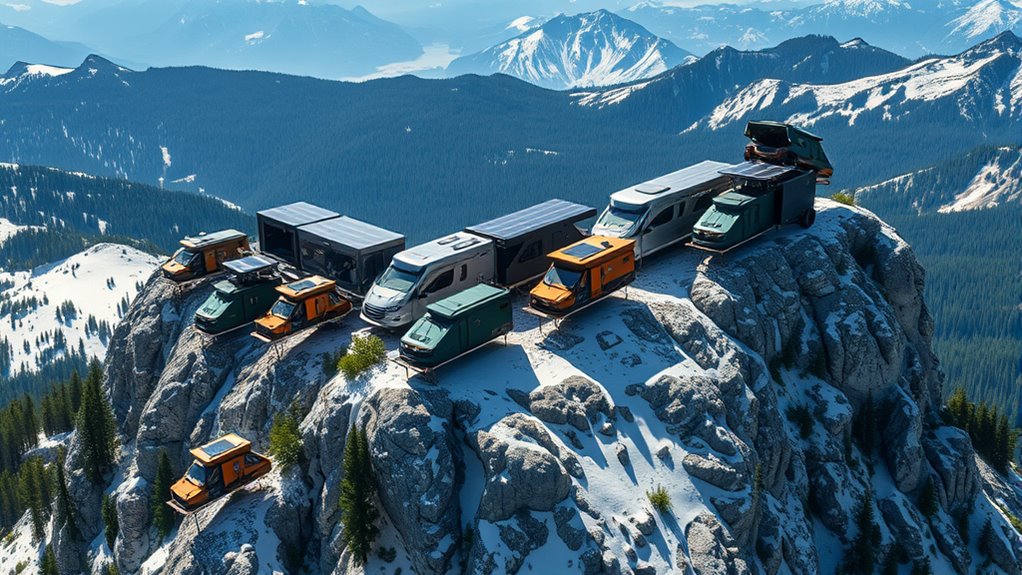

For a premium rooftop tent, my best overall pick is the Thule Approach 2, which balances a familiar soft-shell format with a roomy two-person focus. The Thule Widesky stands out for shoppers who prefer a hard shell, while the TOPOAK Vision XL is aimed at families needing more sleeping space. The main tradeoffs are setup speed, packed size, vehicle load limits, and whether extra room is worth a larger tent. I compare these 15 options by design, capacity, and practical fit so you can see which compromises suit your trips. Read on for the full breakdown and buying advice.

Get audio and creator gear delivered free with Prime
- Fast, free delivery on millions of items
- Prime Video, Amazon Music and more included
- Member-only deals all year
Complete the kit


Key Takeaways
- Premium does not mean one design: this lineup includes soft shells, hard shells, and an inflatable option, each with different setup and storage tradeoffs.
- Thule covers distinct priorities: the Foothill emphasizes a two-person format, the Approach 2 offers a broader all-round profile, and the Widesky serves hard-shell shoppers.
- Family capacity changes the shortlist: the TOPOAK Vision XL is specified for three adults and one child, while several other models target two or three people.
- Hard-shell construction appears across many picks: options from OVS, TOPOAK, Naturnest, WildFinder, and HEYFUN give buyers multiple shell layouts to compare rather than a single premium template.
- Vehicle fit remains a deciding factor: tent capacity and features matter only if the roof, rack, and mounting setup can support the tent and occupants within vehicle limits.
| BOOMLATU Pop-Up Soft Shell Rooftop Tent for 2–3 People |  | Best for Four-Season Soft-Shell Camping | Occupancy: 2–3 people | Season: Four-season | Tent dimensions: 240 × 140 × 130 cm (94.5 × 55.1 × 51.2 in) | VIEW ON AMAZON | See Our Full Breakdown |
| Thule Foothill 2-Person Rooftop Tent |  | Best for Preserving Roof Cargo Space | Occupancy: 2 people | Season: 3-season | Folded width: 25 in (64 cm) | VIEW ON AMAZON | See Our Full Breakdown |
| PlayDo Inflatable Rooftop Tent Easy Set Up Pop Up Roof Tent Air Extra Wide Large for 3 Person Family Camping Waterproof Cotton Tents for Truck Car SUV with Light, Skylight |  | Best for Spacious Inflatable Sleeping | Occupancy: 3 people | Season: Four-season | Dimensions: 220 × 160 × 146 cm (86.61 × 63 × 57.48 in) | VIEW ON AMAZON | See Our Full Breakdown |
| Overland Vehicle Systems HD Bundu 2-Person Cantilever Hard Shell Roof Top Tent |  | Best Hard-Shell Pick for Quick Deployment | Occupancy: 2 people | Season: Four-season | Shell material: UV-stable ABS | VIEW ON AMAZON | See Our Full Breakdown |
| Thule Approach 2 Rooftop Tent |  | Best for Fast, Convenient Two-Person Trips | Occupancy: 2 people | Season: All seasons | Material: 100% recycled polyester | VIEW ON AMAZON | See Our Full Breakdown |
| TOPOAK Nebula XL X-Frame Hard Shell Rooftop Tent for SUV, Truck, Jeep |  | Best for Family Sleeping Space | Occupancy: 2 adults and 1 child | Weight: 238 lbs | Dimensions: 85 × 57 × 61 in | VIEW ON AMAZON | See Our Full Breakdown |
| WildFinder Hard Shell Rooftop Tent for Jeep, SUV, Truck, and Van |  | Best for Included Camping Accessories | Capacity: 3 people | Season: Four-season | Weight: 89.81 kg | VIEW ON AMAZON | See Our Full Breakdown |
| Roofnest Meadowlark Soft Shell Rooftop Tent, 2 Person |  | Best Lightweight Pick | Occupancy: 2 people | Weight: 90 lbs | Floor dimensions: 80 × 43 in | VIEW ON AMAZON | See Our Full Breakdown |
| Naturnest Sirius 1 Plus Hard-Shell Rooftop Tent |  | Best for Fast Campsite Setup | Occupancy: Up to 3 people | Season: Four-season | Interior dimensions: 82.7 × 63 in | VIEW ON AMAZON | See Our Full Breakdown |
| Thule Widesky 2-Person Hardshell Rooftop Tent |  | Best Premium Two-Person Comfort | Occupancy: 2 people | Season: Four-season | Weight: 86.4 kg | VIEW ON AMAZON | See Our Full Breakdown |
| Overland Vehicle Systems XD Everest Cantilever Aluminum Hard Shell Rooftop Tent with Blackout Kit |  | Best for Blackout Comfort | Occupancy: 2 people | Dimensions: 68 × 52.5 × 13 in | Weight: 250 lb | VIEW ON AMAZON | See Our Full Breakdown |
| Overland Vehicle Systems HD Sidewinder Side Load Aluminum Hard Shell Roof Top Tent, Grey Body & Green Trim |  | Best for Fast Side-Opening Setup | Listed occupancy: 2 people | Opening design: Side opening, hard side | Tent body fabric: 280G poly-cotton ripstop | VIEW ON AMAZON | See Our Full Breakdown |
| Overland Vehicle Systems HD Mamba Clam Shell Aluminum Hard Shell Roof Top Tent, Grey Body & Green Trim |  | Best for a Thicker Mattress | Occupancy: 3 people | Weight: 150 lb | Overall dimensions: 91 × 64 × 64 in | VIEW ON AMAZON | See Our Full Breakdown |
| HEYFUN Adventurer Pro Hard Shell Rooftop Tent, 2–3 Person |  | Best All-In-One Accessory Package | Occupancy: Up to 3 people | Closed dimensions: 83.86 × 51.57 × 7.00 in | Open dimensions: 83.86 × 51.57 × 62.99 in | VIEW ON AMAZON | See Our Full Breakdown |
| TOPOAK Vision XL 75-Inch Hard Shell Rooftop Tent for 3 Adults and 1 Child |  | Best for Family Sleeping Space | Occupancy: 3 adults and 1 child | Sleeping area: 70 × 78 in | Open dimensions: 75 × 83 × 47 in | VIEW ON AMAZON | See Our Full Breakdown |
| rooftent premium | Occupancy | Weight | Season | Warranty |
|---|---|---|---|---|
| BOOMLATU Pop-Up Soft Shell Roo | 2–3 people | — | Four-season | — |
| Thule Foothill 2-Person Roofto | 2 people | — | 3-season | Limited lifetime |
| PlayDo Inflatable Rooftop Tent | 3 people | — | Four-season | — |
| Overland Vehicle Systems HD Bu | 2 people | 120 lb | Four-season | 4 years |
| Thule Approach 2 Rooftop Tent | 2 people | 110 lb | All seasons | Limited lifetime |
| TOPOAK Nebula XL X-Frame Hard | 2 adults and 1 child | 238 lbs | — | — |
| WildFinder Hard Shell Rooftop | — | 89.81 kg | Four-season | — |
| Roofnest Meadowlark Soft Shell | 2 people | 90 lbs | — | 2 years |
| Naturnest Sirius 1 Plus Hard-S | Up to 3 people | — | Four-season | — |
| Thule Widesky 2-Person Hardshe | 2 people | 86.4 kg | Four-season | Limited lifetime |
| Overland Vehicle Systems XD Ev | 2 people | 250 lb | — | 4 years |
| Overland Vehicle Systems HD Si | — | — | — | 4-year limited |
| Overland Vehicle Systems HD Ma | 3 people | 150 lb | — | 4-year limited |
| HEYFUN Adventurer Pro Hard She | Up to 3 people | — | — | — |
| TOPOAK Vision XL 75-Inch Hard | 3 adults and 1 child | 176 lb | — | — |
More Details on Our Top Picks
BOOMLATU Pop-Up Soft Shell Rooftop Tent for 2–3 People
The BOOMLATU is the soft-shell pick for buyers who prioritize a stated four-season design and a ready-to-sleep setup. Its pop-up format, 65 mm foam mattress, and retractable aluminum ladder bundle the main overnight essentials, while screened openings and four interior pockets help keep airflow and small gear manageable. Compared with the Thule Foothill, it offers a larger stated capacity and four-season positioning, but it gives up the Foothill’s particularly narrow 25-inch folded width, which can matter when roof space is shared with other cargo. The poly-cotton fabric is described as breathable, UV-resistant, and waterproof, though no waterproof rating is supplied here. Its 2–3-person capacity is best treated as a close fit rather than roomy family accommodation, and its packed footprint is substantial. I’d choose it for seasonal versatility, not roof-space efficiency.
Pros:- Four-season positioning suits buyers camping beyond fair-weather conditions.
- Pop-up setup and retractable aluminum ladder simplify access and deployment.
- 65 mm foam mattress with removable cover is included.
- Screened doors and windows plus four storage pockets support ventilation and tidier sleeping space.
Cons:- Packed dimensions of 145 × 125 × 30 cm take up a broad area on the vehicle roof.
- The stated 2–3-person capacity may feel tight when used by three people.
- No numeric waterproof rating is provided in the product details.
Best for: Couples or small households seeking a pop-up rooftop tent with a supplied mattress and stated four-season use.
Not ideal for: Drivers who need roof space for bikes or other cargo, or groups expecting generous sleeping room for three adults.
- Occupancy:2–3 people
- Season:Four-season
- Tent dimensions:240 × 140 × 130 cm (94.5 × 55.1 × 51.2 in)
- Packed dimensions:145 × 125 × 30 cm
- Fabric:Poly-cotton
- Mattress:65 mm high-density foam with removable cover
- Ladder:Retractable aluminum
- Setup:Pop-up
Our verdict“Choose the BOOMLATU if four-season positioning and included sleeping essentials matter more than a compact roof footprint.”
Thule Foothill 2-Person Rooftop Tent
The Foothill’s defining advantage is its 25-inch folded width, which leaves more roof space available for other equipment than the broader BOOMLATU or the Thule Approach 2. That makes it a strong match for campers who want a two-person sleeping setup without dedicating the whole rack to the tent. Inside, a 2.4-inch foam mattress, panoramic windows, skylights, and ventilation panels put comfort and daylight ahead of bare-bones utility. Its symmetrical frame is designed to let one person set up from either side of the vehicle, a useful distinction for solo campers. The tradeoff is a 56 kg weight despite the compact folded profile, and the mounting brackets are sold separately. It is a three-season option with water-resistant treatment, not the better choice for buyers seeking the BOOMLATU’s stated four-season use.
Pros:- 25-inch folded width helps preserve roof space for other gear.
- One-person setup is supported from either side of the vehicle.
- 2.4-inch foam mattress, panoramic windows, and skylights are included.
- Recycled polyester fabric and a limited lifetime warranty are specified.
Cons:- At 56 kg, it can be difficult to mount or remove without help.
- Mounting brackets are sold separately.
- Three-season construction is less suited to buyers seeking a four-season model like the BOOMLATU.
Best for: Two-person campers who carry roof cargo and want a tent that leaves usable rack space when folded.
Not ideal for: Buyers prioritizing four-season use, a lighter tent to handle, or a package that includes mounting brackets.
- Occupancy:2 people
- Season:3-season
- Folded width:25 in (64 cm)
- Mattress thickness:2.4 in (6 cm)
- Item weight:56 kg
- Floor dimensions:64 cm wide × 87.01 in long
- Material:Recycled polyester
- Warranty:Limited lifetime
Our verdict“Pick the Foothill if keeping rack space available is your main priority and you can manage its weight and separate bracket requirement.”
PlayDo Inflatable Rooftop Tent Easy Set Up Pop Up Roof Tent Air Extra Wide Large for 3 Person Family Camping Waterproof Cotton Tents for Truck Car SUV with Light, Skylight
PlayDo takes a different route from the hard-shell OVS HD Bundu: its inflatable structure avoids metal rails and an outer casing, while the 220 × 160 cm sleeping area is notably broad for a three-person rooftop tent. The listing also describes room for three people and a dog, a 15 cm air mattress, an adjustable LED light, USB outlet, transparent skylight, and shoe storage—an unusually feature-rich setup for family-oriented trips. Its stated 42 kg weight is lower than the Thule Approach 2’s 110 lb, though buyers should still check their vehicle and rack limits. The tradeoffs are the inflatable system’s dependence on keeping the air structure in working order and a dense bundle of accessories that may not suit minimalist campers. Waterproof treatment is listed at 3000+ water pressure, but the exact test standard is not specified.
Pros:- Wide 220 × 160 cm dimensions provide more sleeping room than the two-person Thule options.
- 15 cm air mattress, LED light, USB outlet, and transparent skylight are included.
- Stated 42 kg weight is below the Thule Approach 2’s 110 lb.
- Includes a telescopic aluminum ladder, shoe storage bag, and wheeled storage case.
Cons:- Inflatable structure differs from conventional framed tents and may not suit buyers seeking a traditional support system.
- Three-person capacity does not guarantee comfortable space for three adults plus a dog.
- Water-pressure figure is given without a named test standard.
Best for: Small families or couples with a dog who want a wide sleeping area, built-in lighting, and an inflatable tent structure.
Not ideal for: Campers who prefer a conventional frame, want clearly standardized weather ratings, or do not need the extra accessories and interior space.
- Occupancy:3 people
- Season:Four-season
- Dimensions:220 × 160 × 146 cm (86.61 × 63 × 57.48 in)
- Item weight:42 kg
- Fabric:Premium cotton-polyester fabric
- Water resistance:Waterproof treatment; rainproof cover listed at 3000+ water pressure
- Mattress:15 cm PVC air mattress with fiber-filament inner layer
- Included features:USB outlet, adjustable LED light, skylight, mesh windows, telescopic ladder, and wheeled storage case
Our verdict“Choose PlayDo for a wide, accessory-rich inflatable setup, but skip it if you prefer a conventional frame or a simpler tent.”
Overland Vehicle Systems HD Bundu 2-Person Cantilever Hard Shell Roof Top Tent
The HD Bundu earns its place through a cantilever hard-shell design aimed at quick deployment and protection when packed. Its UV-stable ABS shell, aluminum honeycomb base, waterproof construction, and four-season positioning make it a more ruggedly specified choice than the soft-shell Thule Foothill. An included anti-condensation mat and interior storage pouches also address practical overnight concerns rather than adding only cosmetic extras. At 120 lb, though, the Bundu is considerably more demanding to mount than the 42 kg PlayDo inflatable tent, and its two-person capacity is less flexible for families. The listed 63 × 47 × 12-inch dimensions describe the packed form, while the 83-inch floor width suggests a wider sleeping area when open. Buyers should weigh fast setup and shell protection against the effort of handling a heavy unit.
Pros:- Cantilever design is built for quick setup.
- UV-stable ABS shell and aluminum honeycomb base provide a protective hard-shell structure.
- Waterproof construction and four-season positioning suit broader weather use.
- Anti-condensation mat and interior storage pouches are included.
Cons:- 120 lb weight makes mounting and removal more demanding than the PlayDo.
- Sleeps two, giving less capacity than the BOOMLATU or PlayDo.
- Hand-wash care instructions call for more maintenance than buyers may want.
Best for: Two-person overland campers who want a hard-shell tent with quick cantilever deployment and four-season positioning.
Not ideal for: Drivers who need a light tent to lift onto the vehicle, or families looking for a three-person sleeping capacity.
- Occupancy:2 people
- Season:Four-season
- Shell material:UV-stable ABS
- Tent body:280G ripstop
- Base:Aluminum honeycomb
- Dimensions:63 × 47 × 12 in
- Floor width:83 in
- Weight:120 lb
- Warranty:4 years
Our verdict“The Bundu fits two-person campers who value hard-shell protection and quick setup more than low weight or extra capacity.”
Thule Approach 2 Rooftop Tent
The Thule Approach 2 is built around an easy routine: it sets up in under three minutes and pairs that quick deployment with a 6 cm dual-layer foam mattress, panoramic windows, skylights, and mesh ventilation panels. Lockable mounting brackets and an angled ladder give it a more ready-to-go package than the Foothill, whose mounting brackets are sold separately. The recycled polyester body and removable rain cover suit campers who want weather protection without moving to a hard-shell tent like the OVS HD Bundu. However, the Approach 2 weighs 110 lb, so the quick campsite setup does not make installation or removal light work. Its water resistance is described as water-resistant rather than backed by a numeric rating, and the compatible awning is sold separately. It is a convenience-first two-person pick, not the lightest or most expandable option.
Pros:- Sets up in under three minutes for a quicker arrival-to-bed routine.
- 6 cm dual-layer foam mattress and removable rain cover are included.
- Panoramic windows, skylights, and mesh panels support light and airflow.
- Lockable mounting brackets and angled ladder are included.
Cons:- At 110 lb, it is heavy to mount or remove.
- Compatible awning is sold separately.
- Water resistance is stated without a numeric rating, unlike PlayDo’s listed water-pressure figure.
Best for: Two-person campers who value rapid campsite setup, a comfortable included mattress, and integrated lockable mounting hardware.
Not ideal for: Buyers who need to minimize roof load, want a hard-shell structure, or expect an awning to come in the package.
- Occupancy:2 people
- Season:All seasons
- Material:100% recycled polyester
- Mattress:6 cm (2.4 in) dual-layer foam
- Dimensions:48 × 43 × 11 in
- Floor width:48.4 in
- Weight:110 lb
- Installation:Vehicle-mounted rooftop tent
- Warranty:Limited lifetime
Our verdict“Choose the Approach 2 if fast setup and included mounting hardware matter more than low weight or an included awning.”
TOPOAK Nebula XL X-Frame Hard Shell Rooftop Tent for SUV, Truck, Jeep
The Nebula XL stands out for buyers who want a hard-shell tent with room for two adults and a child. Its X-frame design is described as expanding the interior by 50%, giving it a more family-friendly layout than the two-person Roofnest Meadowlark. A 10,000 mm waterproof rating, UV-protected fabric, and 360-degree ventilation make weather protection a central part of its appeal, while the 2-inch memory foam mattress adds comfort for overnight trips.
The tradeoff is substantial: at 238 pounds, it is much heavier than the Meadowlark and calls for careful attention to roof-rack capacity and installation help. Its stated occupancy also leaves less flexibility than the three-person WildFinder. I’d choose it for a family that values interior room and weather protection over easy handling, but skip it if frequent solo mounting is part of the plan.
Pros:- X-frame design expands the interior space for a two-adult-and-child setup.
- 10,000 mm waterproof rating and UV-protected fabric support use in exposed conditions.
- Hydraulic lift allows quick, tool-free setup.
- 2-inch memory foam mattress and 360-degree ventilation add comfort.
Cons:- At 238 pounds, installation may require help and limits compatible vehicles.
- Best suited to two adults and one child, with little capacity flexibility beyond that.
Best for: Two adults with one child who have a vehicle and roof rack rated for a heavy tent and want a weather-focused hard shell.
Not ideal for: Solo campers or owners of vehicles with limited roof capacity; its 238-pound weight makes mounting and compatibility a serious concern.
- Occupancy:2 adults and 1 child
- Weight:238 lbs
- Dimensions:85 × 57 × 61 in
- Shell:Aluminum alloy hard shell
- Rainfly:420D waterproof oxford
- Mattress:2-inch memory foam with velvet cover
- Ventilation:360-degree mesh windows and rear opening
Our verdict“Choose the Nebula XL if family room and strong stated weather protection matter more than keeping roof weight and installation effort low.”
WildFinder Hard Shell Rooftop Tent for Jeep, SUV, Truck, and Van
The WildFinder makes a strong case for campers who want a ready-equipped setup rather than a bare tent shell. Its package lists a telescoping ladder, LED strip, organizer bags, shoe organizers, mesh windows, and multiple mattresses, giving it a broader accessory bundle than the Naturnest Sirius 1 Plus, which emphasizes quick setup and included crossbars. The WildFinder also claims four-season use and accommodates up to three people, so it can suit groups who want one tent for varied trips.
That breadth comes with a major practical drawback: its listed 89.81 kg weight makes handling and roof compatibility a key hurdle. The stated 5,000 mm rain protection is also below the Nebula XL’s 10,000 mm rating, so buyers prioritizing that figure should compare carefully. I’d shortlist it for accessory-focused campers with a capable vehicle, not for anyone who needs a lightweight or simple installation.
Pros:- Accessory package includes a telescoping ladder, LED strip, organizers, and mattresses.
- Designed for four-season use and stated protection from rain, wind, sun, and heavy snow.
- Capacity for up to three people.
- Aluminum alloy hard shell paired with three mesh windows.
Cons:- Listed weight of 89.81 kg makes installation and vehicle compatibility challenging.
- Luggage crossbar is not included.
- Its stated 5,000 mm rain protection is lower than the Nebula XL’s 10,000 mm rating.
Best for: Three-person camping groups who want a hard-shell tent with lighting, storage organizers, ladder, and mattresses included.
Not ideal for: Campers with limited roof-load capacity or those who need to mount the tent without help; the listed weight is 89.81 kg.
- Capacity:3 people
- Season:Four-season
- Weight:89.81 kg
- Dimensions:83 × 52 × 9 in
- Shell and fabric:Aircraft-grade aluminum alloy shell; polyester fabric
- Rain protection:5,000 mm
- Mattress thickness:5 cm
- Included accessories:7.5 ft ladder, LED strip, organizers, and mattresses
Our verdict“Pick the WildFinder if its included accessories suit your camp setup and your vehicle can safely carry and mount its substantial weight.”
Roofnest Meadowlark Soft Shell Rooftop Tent, 2 Person
Among these five options, the Meadowlark is the clear choice for buyers trying to keep roof weight down. At 90 pounds, it is far lighter than the hard-shell WildFinder and Thule Widesky, both of which are listed above 86 kg. Its about-one-minute setup also suits short stops and frequent campsite changes, while the included ladder, universal mounting kit, mattress, and storage pockets make the package practical without a long accessory list.
The soft-shell format and two-person capacity are the key limits: it cannot match the family room of the TOPOAK Nebula XL or the three-person capacity listed for the Naturnest Sirius 1 Plus. Its 2.5-inch foam mattress is thicker than the Sirius 1 Plus’s 1.97-inch mattress, but this remains a compact, two-sleeper option. I’d favor it for couples prioritizing manageable weight over hard-shell construction and extra occupancy.
Pros:- 90-pound weight is much lower than the hard-shell WildFinder and Thule Widesky.
- Setup takes about one minute.
- Includes a 2.5-inch foam mattress, ladder, universal mounting kit, and detachable pockets.
- Waterproof, seam-taped tent body and rain cover.
Cons:- Limited to two occupants, unlike the three-person WildFinder and Naturnest Sirius 1 Plus.
- Still adds 90 pounds to the vehicle and requires suitable roof-rack capacity.
- Soft-shell construction may not suit buyers specifically seeking a hard-shell tent.
Best for: Couples who want a comparatively light rooftop tent with quick setup and the main mounting and sleeping accessories included.
Not ideal for: Families or groups needing space for three, or buyers set on an aluminum hard shell rather than a soft-shell design.
- Occupancy:2 people
- Weight:90 lbs
- Floor dimensions:80 × 43 in
- Packed dimensions:47 × 44 × 12 in
- Setup time:About 1 minute
- Material:Polycotton body; aluminum poles
- Mattress:2.5-inch foam
- Warranty:2 years
Our verdict“Choose the Meadowlark for a two-person setup where lower tent weight and fast pitching matter more than family capacity or a hard shell.”
Naturnest Sirius 1 Plus Hard-Shell Rooftop Tent
The Sirius 1 Plus is the speed-focused hard-shell choice: its stated 30-second setup is quicker than the Roofnest Meadowlark’s approximate one-minute pitch. It also lists capacity for up to three people, a four-season design, blackout fabric, and protection features aimed at snow, wind, and sun. Included roof crossbars give buyers a way to carry lightweight gear above the tent, a useful distinction from the WildFinder, whose luggage crossbar is not included.
The main comfort compromise is the 1.97-inch mattress, which is thinner than the Meadowlark’s 2.5-inch foam and the Thule Widesky’s 6 cm mattress. The listing also requires a compatible rack with suitable capacity and spacing, so the quick setup does not remove the need to check vehicle fit. I’d pick it for campers who value a fast hard-shell routine and flexible vehicle compatibility, but look elsewhere if a thicker mattress is a priority.
Pros:- Advertised setup time is about 30 seconds.
- Four-season design includes stated waterproof, UV, wind, and snow protection.
- Designed for up to three people.
- Includes crossbars for carrying lightweight gear.
Cons:- 1.97-inch mattress is thinner than the mattresses listed for the Meadowlark and Thule Widesky.
- Requires a compatible roof rack with sufficient capacity and spacing.
- Only one door is listed.
Best for: Campers who make frequent stops, want a quick-opening hard shell, and need stated capacity for two adults and one child.
Not ideal for: Sleepers who prioritize a thicker mattress, or vehicle owners who cannot confirm roof-rack capacity and spacing.
- Occupancy:Up to 3 people
- Season:Four-season
- Interior dimensions:82.7 × 63 in
- Setup time:About 30 seconds
- Mattress thickness:1.97 in
- Shell and frame:ABS shell; aluminum alloy frame
- Doors and windows:1 door and 3 windows
- Included gear:Roof crossbars for lightweight gear
Our verdict“Choose the Sirius 1 Plus if quick hard-shell setup and three-person capacity outweigh mattress thickness and rack-fit constraints.”
Thule Widesky 2-Person Hardshell Rooftop Tent
The Widesky is the comfort-led option for two campers who want more than a quick place to sleep. Its 6 cm mattress is thicker than the mattresses listed for the Naturnest Sirius 1 Plus and TOPOAK Nebula XL, while gas-assisted struts simplify opening and pack-down. A foldable mattress that doubles as a backrest, panoramic views, mesh ventilation, and dimmable USB-connected lights add useful comfort details that the more utility-focused WildFinder package does not emphasize.
Those features come in a heavy package: at 86.4 kg, it requires a capable vehicle and roof rack, much like the WildFinder. The two-person limit also makes the Nebula XL or Sirius 1 Plus a better fit for a family with a child. The lights need a separate power bank, adding one more item to pack. I’d choose the Widesky for couples prioritizing sleep and camp comfort, not for light-load setups or groups needing three sleeping places.
Pros:- 6 cm mattress is thicker than the Sirius 1 Plus and Nebula XL mattresses.
- Gas-assisted struts support quick setup and pack-down.
- Foldable mattress doubles as a backrest, with dimmable USB-powered lights.
- Aluminum shell, mesh ventilation, and large doors with panoramic views.
Cons:- At 86.4 kg, it may exceed the capacity of some vehicle and roof-rack setups.
- USB-connected lights require a power bank that is sold separately.
- Two-person capacity is less flexible than the three-person WildFinder and Sirius 1 Plus.
Best for: Couples seeking a premium hard-shell setup with a thicker mattress, gas-assisted operation, ventilation, and built-in lighting.
Not ideal for: Families needing three sleeping places, or drivers whose vehicle and roof rack cannot accommodate an 86.4 kg tent.
- Occupancy:2 people
- Season:Four-season
- Weight:86.4 kg
- Dimensions:88 × 60 × 10 in
- Shell and base:Weather-resistant aluminum shell; aluminum honeycomb base
- Fabric:100% recycled solution-dyed polyester
- Mattress thickness:6 cm (2.4 in)
- Warranty:Limited lifetime
Our verdict“Choose the Widesky if two-person sleeping comfort and convenient hard-shell operation justify its substantial weight and separate power-bank requirement.”
Overland Vehicle Systems XD Everest Cantilever Aluminum Hard Shell Rooftop Tent with Blackout Kit
The XD Everest is the strongest fit here for campers who prioritize a dark sleeping space and a sturdy, gear-ready shell. Its blackout-coated interior addresses early light better than the listed features of the Sidewinder, while the aircraft-grade aluminum shell and honeycomb base suit repeated use across changing conditions. A cantilever opening and included foam mattress add practical comfort, and its crossbars leave room to carry extra equipment outside the sleeping area. The tradeoff is substantial: at 250 lb, it places a heavier demand on the vehicle and rack than the listed Mamba III weight of 150 lb. Capacity details also conflict: the specs say two people, while the product description references a four-person size. I would verify fit and occupancy before choosing it.
Pros:- Aircraft-grade aluminum shell and aluminum honeycomb base
- Blackout coating helps reduce light inside the sleeping area
- High-density foam mattress is included
- Crossbars provide a place for additional gear
Cons:- At 250 lb, it is substantially heavier than the listed 150 lb Mamba III
- Occupancy information conflicts between the two-person specification and four-person description
- Vehicle and rack must be able to handle its high weight
Best for: Two-person overland campers with a suitably rated roof rack who value blackout sleeping conditions and integrated crossbars.
Not ideal for: Drivers with limited roof-load capacity, or buyers who need dependable four-person capacity without clarifying the conflicting occupancy information.
- Occupancy:2 people
- Dimensions:68 × 52.5 × 13 in
- Weight:250 lb
- Shell material:Aircraft-grade aluminum
- Fabric:320G ripstop
- Water resistance:Waterproof
- Opening design:Cantilever
- Warranty:4 years
Our verdict“Choose the XD Everest for blackout comfort and a robust aluminum build if your vehicle can carry its 250 lb weight and two-person capacity suits your needs.”
Overland Vehicle Systems HD Sidewinder Side Load Aluminum Hard Shell Roof Top Tent, Grey Body & Green Trim
The Sidewinder is a good match for campers who want a hard-shell tent that opens from the side and packs away quickly. Its side-opening design and two gas struts support a setup routine described as taking less than a minute, while the removable crossbars and T-slot channels provide flexible ways to carry light gear. An anti-condensation mat beneath the 2-inch mattress is a useful comfort detail for overnight use. Compared with the Mamba III, the Sidewinder’s clearest distinction is its side-load layout; the Mamba instead lists a thicker 2.4-inch mattress and three-person occupancy. The Sidewinder’s listed occupancy is two people, despite the title advertising two to three, so I would not buy it on the assumption that three adults will fit. Weight and dimensions are also not provided in the supplied specs.
Pros:- Side-opening hard-shell layout with a setup process described as taking less than a minute
- Anti-condensation mat sits beneath the 2-inch mattress
- Removable crossbars and T-slot channels support light exterior accessories
- Insulated aluminum honeycomb base and waterproof 280G ripstop body
Cons:- Listed occupancy is two people, despite the title suggesting two to three
- No weight or overall dimensions are provided in the supplied product data
- Crossbars are not expandable, which limits adjustments to their carrying layout
Best for: Two-person campers who want a quick-opening side-load hard shell with removable gear bars and an anti-condensation mat.
Not ideal for: Three-person groups or buyers who need confirmed tent weight and dimensions before checking vehicle compatibility.
- Listed occupancy:2 people
- Opening design:Side opening, hard side
- Tent body fabric:280G poly-cotton ripstop
- Water resistance:Waterproof
- Mattress thickness:2 in
- Base:1-inch insulated aluminum honeycomb
- Crossbars:2 standard, removable, compatible with Thule and Yakima accessories
- Warranty:4-year limited
Our verdict“Pick the Sidewinder for fast side-opening access and flexible accessory mounting, but confirm its capacity and vehicle fit before buying.”
Overland Vehicle Systems HD Mamba Clam Shell Aluminum Hard Shell Roof Top Tent, Grey Body & Green Trim
The Mamba III earns its place for campers who want a hard-shell tent with a relatively thick included mattress and a stated three-person capacity. Its 2.4-inch mattress, anti-condensation mat and insulated honeycomb base focus on overnight comfort, while removable crossbars and T-slot channels let owners carry some gear outside the tent. The setup is described as taking less than a minute, putting it in the same quick-camp category as the Sidewinder. The Mamba’s advantage over that model is its listed three-person occupancy and thicker mattress; the Sidewinder instead offers a clearly specified side-opening layout and 2-inch mattress. The Mamba is not a lightweight choice: its listed weight is 150 lb, and the supplied dimensions contain an apparent floor-length inconsistency. I would verify the measurements and rack fit before ordering.
Pros:- Listed for three people, compared with the Sidewinder’s two-person spec
- 2.4-inch mattress and anti-condensation mat are included
- Aluminum honeycomb insulated base and waterproof ripstop body
- Removable crossbars and T-slot channels support exterior accessories
Cons:- Listed weight of 150 lb can challenge vehicle roof-load limits
- Provided floor-length measurement is inconsistent with the listed overall dimensions
- The stated three-person capacity may feel tight for three adults and their gear
Best for: Small families or couples who want a three-person-rated aluminum hard shell with a thicker mattress and included anti-condensation mat.
Not ideal for: Buyers with low roof-load limits, or anyone who needs clearly verified floor dimensions before selecting a tent.
- Occupancy:3 people
- Weight:150 lb
- Overall dimensions:91 × 64 × 64 in
- Mattress thickness:2.4 in
- Tent body fabric:280G poly-cotton ripstop
- Base:1-inch insulated aluminum honeycomb
- Water resistance:Waterproof
- Warranty:4-year limited
Our verdict“Choose the Mamba III if its three-person rating and thicker mattress matter more than keeping roof weight low or having unambiguous dimensions.”
HEYFUN Adventurer Pro Hard Shell Rooftop Tent, 2–3 Person
The Adventurer Pro stands out for buyers who want useful campsite extras bundled into a hard-shell setup. Its hydraulic pop-up opening is listed at about five seconds, and the included side awning, LED strip, sleeping and condensation mats, and shoe bags reduce the need to source several accessories separately. With three doors, three windows and 13 storage pockets, it also offers more built-in organization than the Mamba III’s supplied feature list. The Mamba is the clearer pick if a stated 2.4-inch mattress and 150 lb tent weight are priorities; the HEYFUN listing gives neither weight nor mattress thickness. Its 660 lb maximum load and required crossbars rated for at least 165 lb need careful checking against the vehicle’s roof limits. The broad compatibility list is helpful, but does not replace a vehicle-specific fit check.
Pros:- Hydraulic opening and closing is listed at approximately five seconds
- Includes side awning, LED light strip, mats and waterproof shoe bags
- Three doors, three windows and 13 storage pockets support access and organization
- All-season design lists waterproof, windproof and UV-protection features
Cons:- Requires crossbars rated to support at least 165 lb
- 660 lb maximum load can constrain the combined weight of occupants and gear
- Tent weight and mattress thickness are not supplied
Best for: Two- or three-person campers who want a fast hydraulic opening, built-in storage and an awning-and-light package in one tent.
Not ideal for: Owners whose roof rack cannot meet the stated 165 lb crossbar requirement, or buyers who need a listed tent weight and mattress thickness.
- Occupancy:Up to 3 people
- Closed dimensions:83.86 × 51.57 × 7.00 in
- Open dimensions:83.86 × 51.57 × 62.99 in
- Maximum load:660 lb
- Shell material:Aircraft-grade aluminum
- Tent fabric:320 g polyester
- Water resistance:0–5,000 mm
- Opening time:Approximately 5 seconds
Our verdict“Choose the Adventurer Pro for quick pop-up setup and bundled campsite conveniences, provided your roof rack meets its stated support requirement.”
TOPOAK Vision XL 75-Inch Hard Shell Rooftop Tent for 3 Adults and 1 Child
The Vision XL is the most family-oriented option in this group: its 70 × 78-inch sleeping area is specified for three adults and one child, giving it a clear capacity advantage over the two-person XD Everest and Sidewinder. The fold-out layout opens to 75 × 83 × 47 inches, while blackout canvas, mesh openings and an adjustable rainfly balance light control with airflow. Families also get practical touches such as three-color LED lighting, storage pockets, an Anderson power connection and a heater vent. Compared with the HEYFUN Adventurer Pro, the Vision XL emphasizes a larger shared sleeping area and power connection, while the HEYFUN lists more doors, windows and pockets. The tradeoff is its 176 lb tent weight and a roof-rack requirement of at least that dynamic capacity; its wide open footprint also calls for careful vehicle and campsite planning.
Pros:- 70 × 78-inch sleeping area is specified for three adults and one child
- Blackout canvas and mesh openings balance reduced light with airflow
- Includes LED lighting, storage pockets, an Anderson power connection and heater vent
- Fold-out hard shell opens in about 30 seconds
Cons:- Tent weighs 176 lb and requires at least 176 lb of dynamic roof-rack capacity
- Crossbars must be spaced 30–56 inches apart
- Large open footprint needs space around the vehicle
Best for: Families with three adults and one child who need a broad shared sleeping area and can support a 176 lb tent on their roof rack.
Not ideal for: Solo travelers, couples seeking a compact roof setup, or owners whose rack cannot meet the stated dynamic-load requirement and crossbar spacing.
- Occupancy:3 adults and 1 child
- Sleeping area:70 × 78 in
- Open dimensions:75 × 83 × 47 in
- Weight:176 lb
- Dynamic roof-rack capacity required:At least 176 lb
- Crossbar spacing:30–56 in
- Water resistance:Waterproof; 5,000 mm technology listed
- Storage pockets:5
- Opening time:About 30 seconds
Our verdict“Pick the Vision XL for family sleeping room and built-in power and lighting features if your vehicle can handle its weight and wide footprint.”

How We Picked
I compared the 15 tents by the details that shape ownership: sleeping capacity, shell and opening style, likely setup demands, and stated construction features. I also considered how each design might fit different trip patterns, from compact two-person travel to family camping, and whether the product description gives buyers enough information to judge its intended use. A tent’s premium label alone did not earn it a higher position.
The ranking favors options with a clear role and a useful balance of capacity, usability, and design. The Thule Approach 2 leads as the broadest all-round recommendation in this lineup; specialized choices rank highly for the buyers they serve, such as hard-shell shoppers or larger groups. I give less weight to claims that cannot be compared consistently from the available product details, so buyers should confirm dimensions, packed weight, vehicle compatibility, and included hardware before choosing.
Factors to Consider When Choosing Rooftent Premium
My shortlist is only the starting point: a premium tent has to work with your vehicle, your travel routine, and the people sleeping in it. These checks can prevent a costly mismatch that attractive materials or a long feature list cannot fix.
Match Tent Weight to the Whole Roof System
Start with the vehicle maker’s roof-load limits and distinguish dynamic load while driving from the roof system’s permitted static load when parked. Then add the tent, rack, mounting hardware, bedding, and any gear you plan to leave inside. A tent that fits the roof physically can still exceed a vehicle or rack limit. Do not rely on a general claim that a model fits SUVs or trucks; roof ratings vary by model year and configuration. Ask the vehicle or rack manufacturer when the published figures are unclear. This check can rule out a heavier hard shell before you spend time comparing its other features.
Choose the Opening Style Around Your Trip Routine
Hard shells, soft shells, and the PlayDo inflatable design trade different kinds of convenience. A hard shell may appeal to frequent movers who want a streamlined closed form, while soft shells can suit buyers who value a more traditional tent layout. An inflatable tent adds a different setup method, so check what inflation equipment it needs and how it packs down. Think about how often you will move camp, where you will park, and whether you need to open or close the tent in limited space. Do not assume a quick-looking mechanism will suit every vehicle or campsite. The best format is the one you can manage comfortably on the trips you actually take.
Size for Sleepers, Not Just the Advertised Headcount
Capacity labels are a starting point, not a guarantee of comfortable sleeping room. Compare the tent’s internal floor dimensions with the height and sleeping habits of everyone who will use it, then account for pillows and bedding. A family may benefit from a larger model such as the Vision XL, but its broader sleeping area may bring a larger roof footprint or more demanding vehicle fit. Couples who camp with little gear inside may find a two-person layout easier to live with. Check whether the listed capacity describes close sleeping or practical room to move. If possible, compare dimension diagrams rather than relying on a person count alone.
Check Packed Dimensions and Everyday Storage
A rooftop tent can affect more than campsite setup: its closed height and footprint may change garage access, parking clearance, and wind exposure while driving. Measure the vehicle with the tent mounted, including any roof accessories that remain in place. Also consider where the tent will be stored when it is off the vehicle and whether your rack allows you to mount it without help. Buyers often compare only sleeping area and overlook the effort involved in lifting and handling the packed unit. Ask for the complete packed dimensions and weight, not just an open-tent photo. These details can make a compact two-person option a better fit than a larger model with more sleeping capacity.
Compare Weather Protection and Maintenance Details
For regular use, look beyond broad waterproof or rip-stop claims and check the specific fabric, seams, rainfly coverage, and ventilation arrangement. Good airflow matters because condensation can build up when several people sleep in a small enclosed space. Ask how the tent should be dried after rain and whether its mattress or interior fabric can be removed for cleaning. A blackout feature may help with light control, but it does not replace ventilation or weatherproof construction. Maintenance needs can also differ by opening mechanism and shell design. Choose a model whose care routine fits your willingness to dry, clean, and inspect it between trips.
Pay for Features You Will Use Often
A premium tent earns its place when its design solves a recurring problem, not merely because it has a longer feature list. Frequent travelers may value easier setup and a durable, practical layout; occasional campers may get more from a simpler model that fits their vehicle and sleeping needs. Before paying extra for lights, skylights, blackout materials, or specialized hardware, decide which features change how you camp. Check what comes in the box, since mounting accessories and other useful items may be sold separately. Compare warranty terms and replacement-part availability as well as headline construction claims. This approach helps separate useful upgrades from features that add complexity without changing your trips.
Frequently Asked Questions
Can I choose a rooftop tent based only on my vehicle’s roof rating?
No. Check both the vehicle’s roof limit and the rack or crossbar limit, since the lower approved figure governs the setup. Separate the dynamic rating for travel from any static rating for a parked vehicle, and include the tent and mounting hardware in your calculations. Occupants and stored gear also affect the parked load. Confirm compatibility with the vehicle and rack makers before mounting, especially if the tent is a larger hard-shell model.
Is a hard-shell tent automatically a better premium choice than a soft-shell tent?
No; the shell style describes a different set of tradeoffs, not a universal quality ranking. Hard shells may suit buyers who prioritize a particular closed profile or opening style, while soft shells can offer a different balance of layout and packed form. Compare the exact model’s weight, closed dimensions, setup process, and sleeping area. The Thule Foothill and Approach 2 are soft-shell choices in this lineup, while the Widesky is a hard-shell alternative. Your vehicle limits and travel routine matter more than the shell label alone.
How much extra sleeping capacity should I plan for?
Choose capacity around the people who will sleep in the tent most often, then check the interior dimensions for their actual sleeping space. A family may prefer the Vision XL’s stated three-adult-and-one-child capacity, but the larger format still needs to suit the vehicle roof and rack. Couples should not assume a two-person label leaves room for bulky gear inside. If children may join only occasionally, consider whether carrying a larger tent on every trip is worthwhile. Dimensions and a floor plan offer a clearer guide than headcount alone.
What should I verify before ordering a rooftop tent online?
Confirm the closed dimensions, total weight, mounting system, and compatibility with your specific vehicle and rack. Check whether rails, brackets, or other installation parts are included, and ask whether installation needs more than one person. Review the return and warranty terms for a large item that may be difficult to ship back. For models with added features, verify the exact package contents rather than assuming accessories are included. Get the vehicle maker’s roof-load guidance before placing an order.
Is an inflatable rooftop tent a practical alternative to a hard shell?
It can be, if its inflation method and packed dimensions suit the way you camp. The PlayDo model offers an alternative to the hard-shell designs in this roundup, but buyers should confirm what inflation equipment is required and how the tent is secured to the rack. Compare its setup steps with the opening mechanism of the hard-shell models rather than assuming either is faster. Also ask how repairs are handled if an air chamber is damaged. The right choice depends on your tolerance for that setup method and the manufacturer’s support details.
Conclusion
For the best overall, I would start with the Thule Approach 2 for its balanced two-person profile. The best hard-shell direction is the Thule Widesky for shoppers who have settled on that format, while the best family-capacity pick is the TOPOAK Vision XL. For beginners, I would compare the Thule Foothill and Approach 2 closely and choose the one that better fits the vehicle, sleeping needs, and setup routine; neither should be bought without checking roof limits. Buyers seeking a different setup style can investigate the PlayDo inflatable tent, while OVS, Naturnest, WildFinder, HEYFUN, and TOPOAK offer several other hard-shell layouts. I would treat best value as the model that meets your requirements without unused extras, since no price or package comparison is provided here. Before choosing, confirm weight, dimensions, mounting hardware, and capacity for your exact vehicle and crew.