
Choosing the best sewing machine for beginners often comes down to balancing ease of use with room to grow. My top recommendation is the Brother CS5055 because it offers computerized features like an automatic needle threader and LCD display without a steep learning curve, making it ideal for someone who wants to improve quickly. For those prioritizing durability and raw power over digital bells and whistles, the Singer Heavy Duty 4411 stands out with its metal frame and high stitch speed, though it requires more manual adjustments. The main tradeoff here is between convenience and control; computerized machines handle tension and stitch selection for you, while mechanical models demand you learn the mechanics, which builds stronger foundational skills. Continue reading to see how these options stack up against budget-friendly portables and specialized quilting models.

Get audio and creator gear delivered free with Prime
- Fast, free delivery on millions of items
- Prime Video, Amazon Music and more included
- Member-only deals all year
Complete the kit


Key Takeaways
- Computerized models like the Brother CS5055 significantly reduce frustration for new sewists by automating tension and buttonholes.
- Mechanical machines such as the Brother FB1757X offer superior longevity and repairability but require more manual skill to master.
- Ultra-portable mini machines are suitable only for basic mending and crafts, not for garment construction or heavy fabrics.
- The Brother XR3774 provides the best balance of quilting capabilities and beginner-friendly automation among mid-range options.
- Accessories included in the box, such as presser feet and extension tables, vary widely and can impact the total cost of ownership.
| Brother GX37 Sewing Machine – 37 Built-in Stitches |  | Best Overall for Beginner Growth | Brand: Brother | Model: GX37 | Built-in stitches: 37 | VIEW ON AMAZON | See Our Full Breakdown |
| Brother CS5055 Computerized Sewing Machine with LCD Display |  | Best for Beginners Who Want Computerized Guidance | Brand: Brother | Model: CS5055 | Built-in stitches: 60 | VIEW ON AMAZON | See Our Full Breakdown |
| Brother FB1757X Mechanical Sewing Machine |  | Best Simple Mechanical Starter | Brand: Brother | Model: FB1757X | Operation: Mechanical | VIEW ON AMAZON | See Our Full Breakdown |
| Portable Sewing Machine for Beginners, Small, Easy to Use, Extension Table, 12 Built-In Stitches, Reverse Sewing, LED Light and 32 Color Thread Set for Home Repairs, Crafts, Adults and Kids, BlushPink |  | Best Compact Pick for Small Spaces | Color: Blush pink | Material: Plastic | Built-in stitch patterns: 12 | VIEW ON AMAZON | See Our Full Breakdown |
| Sewing Machine for Beginners with Fabrics & Finger Guard, Mini Size |  | Best Starter Kit for Guided Practice | Brand: KPCB Tech | Model: FHSM-201 | Dimensions: 10 × 9 × 6.9 inches | VIEW ON AMAZON | See Our Full Breakdown |
| Brother XR3774 Sewing and Quilting Machine |  | Best for Beginner Quilters | Built-in stitches: 37 | Buttonhole: 1-step | Presser feet: 8 included | VIEW ON AMAZON | See Our Full Breakdown |
| Brother XM3700 Sewing Machine |  | Best for Learning Everyday Sewing | Brand: Brother | Model: XM3700 | Built-in stitches: 37 | VIEW ON AMAZON | See Our Full Breakdown |
| Buvnatep SM-505A Mini Sewing Machine |  | Best Compact Starter Kit | Brand and model: Buvnatep SM-505A | Built-in stitch patterns: 12 | Speed settings: 2: low and high | VIEW ON AMAZON | See Our Full Breakdown |
| Stoigeld Sewing Machine for Beginners |  | Best for Practice and Mending | Dimensions: 10.3 × 9.5 × 4.4 in | Weight: 4.2 lb | Built-in stitches: 12 | VIEW ON AMAZON | See Our Full Breakdown |
| Portable Electric Sewing Machine for Beginners, 12 Stitch Patterns |  | Best for Small-Space Crafting | Dimensions: 10.3 × 9.5 × 4.4 in | Weight: 4.2 lb | Built-in stitch patterns: 12 | VIEW ON AMAZON | See Our Full Breakdown |
| SINGER Heavy Duty 4411 High Speed Sewing Machine |  | Best for Heavy Fabrics | Built-in stitches: 11 | Stitch applications: 69 | Maximum sewing speed: Up to 1,100 stitches per minute | VIEW ON AMAZON | See Our Full Breakdown |
| Brother XM2701 Portable Sewing Machine | 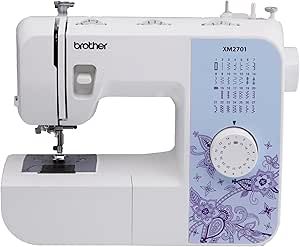 | Best Beginner All-Rounder | Brand: Brother | Model number: XM2701S | Built-in stitches: 27 | VIEW ON AMAZON | See Our Full Breakdown |
| Sewing Machine for Beginners, 16 Stitches, Portable, Green |  | Best Compact Starter Kit | Built-in stitches: 16 | Control modes: Speed-control button and foot pedal | Dimensions: 10.3 × 9.5 × 4.4 inches | VIEW ON AMAZON | See Our Full Breakdown |
| sewing machine for beginner | Built-in stitches | Dimensions | Weight |
|---|---|---|---|
| Brother GX37 Sewing Machine | 37 | 7 × 15 × 17 inches | 10.1 pounds |
| Brother CS5055 Computerized Se | 60 | 7 × 17 × 12 inches | 10.5 pounds |
| Brother FB1757X Mechanical Sew | 17 | — | — |
| Portable Sewing Machine for Be | — | 10.6 × 4.5 × 9.3 inches | 5.7 pounds |
| Sewing Machine for Beginners w | — | 10 × 9 × 6.9 inches | 3 pounds |
| Brother XR3774 Sewing and Quil | 37 | — | — |
| Brother XM3700 Sewing Machine | 37 | 15 in D × 31 in W × 29 in H | 12.5 lb |
| Buvnatep SM-505A Mini Sewing M | — | — | — |
| Stoigeld Sewing Machine for Be | 12 | 10.3 × 9.5 × 4.4 in | 4.2 lb |
| Portable Electric Sewing Machi | — | 10.3 × 9.5 × 4.4 in | 4.2 lb |
| SINGER Heavy Duty 4411 High Sp | 11 | — | — |
| Brother XM2701 Portable Sewing | 27 | — | — |
| Sewing Machine for Beginners | 16 | 10.3 × 9.5 × 4.4 inches | — |
More Details on Our Top Picks
Brother GX37 Sewing Machine – 37 Built-in Stitches
The Brother GX37 is my strongest all-around beginner pick because it pairs approachable setup features with enough stitch variety to stay useful as projects expand. Its automatic needle threader and top drop-in bobbin simplify two common early frustrations, while the six included feet give beginners practical options for zippers, hems, and buttonholes. Compared with the more feature-rich Brother CS5055, the GX37 skips the LCD and computerized controls, which can make its operation feel more direct; the CS5055 offers more stitches and a larger workspace for buyers ready to take on more varied work. The GX37 still has a meaningful learning curve, and it is limited to 120-volt use. I’d choose it for everyday sewing practice and small projects, but not for someone seeking digital guidance or advanced controls.
Pros:- Automatic needle threading and drop-in bobbin make setup less fiddly.
- 37 utility and decorative stitches cover more than basic straight seams.
- Six included sewing feet support tasks such as zippers, buttonholes, and narrow hems.
- Free arm helps with cuffs, sleeves, and other small tubular pieces.
Cons:- No LCD screen or computerized features for guided stitch selection.
- Designed for 120-volt US markets, limiting international use.
Best for: First-time sewists who want an easy-to-set-up machine with useful feet and room to try different basic projects.
Not ideal for: Buyers who want an LCD interface, computerized controls, or a machine that can be used outside 120-volt markets.
- Brand:Brother
- Model:GX37
- Built-in stitches:37
- Included sewing feet:6
- Power source:Corded electric
- Input voltage:120 volts
- Dimensions:7 × 15 × 17 inches
- Weight:10.1 pounds
Our verdict“Choose the GX37 if you want a capable mechanical-style starter machine with helpful setup features and space to grow beyond basic repairs.”
Brother CS5055 Computerized Sewing Machine with LCD Display
The Brother CS5055 suits beginners who would rather have stitch information on a screen than rely on simpler mechanical controls. Its LCD display and 60 built-in stitches give it more range than the GX37, and seven included feet provide practical support for different sewing tasks. The larger needle-to-arm workspace is another advantage when handling wider pieces of fabric. That added capability brings more choices to learn, though, and the product information specifically notes that its options may feel complex to someone with no sewing experience. Compared with the GX37’s more straightforward feature set, the CS5055 makes more sense for a learner who expects to explore decorative stitches or larger projects. It remains a 120-volt model, so international buyers should check compatibility before choosing it.
Pros:- LCD display makes stitch selection more explicit than on the GX37.
- 60 built-in stitches provide a broad range for utility and decorative sewing.
- Large needle-to-arm workspace accommodates wider projects.
- Metal frame and seven included sewing feet support a varied setup.
Cons:- The larger stitch selection and computerized controls may overwhelm a first-time user.
- Limited to 120-volt use, which restricts compatibility in other markets.
Best for: New sewists who are comfortable learning from an LCD interface and want many stitch options and extra workspace for growing projects.
Not ideal for: Absolute beginners who want the fewest controls to learn, or buyers outside 120-volt markets.
- Brand:Brother
- Model:CS5055
- Built-in stitches:60
- Included sewing feet:7
- Included accessories:4 bobbins, needle set, user manual
- Power source:Corded electric
- Input voltage:120 volts
- Dimensions:7 × 17 × 12 inches
- Weight:10.5 pounds
Our verdict“Pick the CS5055 if you want a screen-led learning experience and more stitch options than the simpler GX37 provides.”
Brother FB1757X Mechanical Sewing Machine
The Brother FB1757X is the straightforward choice for a beginner who wants basic mechanical operation rather than a screen or a large stitch menu. Its 17 built-in stitches cover a more modest range than the GX37’s 37, but that smaller selection can keep early practice focused on core sewing tasks. The four-step buttonhole takes more manual steps than the GX37’s one-step buttonhole, so it is less convenient when making several buttonholes. A reverse button supports securing seams, while the free arm helps with cuffs and sleeves; LED lighting also makes the work area easier to see. Product details don’t list its dimensions, weight, or power requirements, which makes portability and electrical compatibility harder to judge. I’d favor it over the computerized CS5055 for buyers who want fewer digital features, but skip it if you need a wide stitch selection.
Pros:- Mechanical operation avoids an LCD interface and computerized menus.
- 17 built-in stitches offer more variety than a strictly basic machine.
- Free arm helps with sleeves and cuffs.
- LED work light improves visibility while sewing.
Cons:- Four-step buttonhole requires more manual work than the GX37’s one-step function.
- Fewer built-in stitches than the GX37 and CS5055.
- Product data does not specify dimensions, weight, or power requirements.
Best for: Beginners who prefer a mechanical machine with core stitch choices, a free arm, and simple hands-on controls.
Not ideal for: Sewists who want one-step buttonholes, a broad stitch library, computerized controls, or clearly listed size and power details.
- Brand:Brother
- Model:FB1757X
- Operation:Mechanical
- Built-in stitches:17
- Buttonhole style:4-step
- Lighting:LED
- Other features:Reverse button, free arm
Our verdict“Choose the FB1757X if you want a mechanically operated starter with useful basics and don’t need the GX37’s broader stitch selection or one-step buttonhole.”
Portable Sewing Machine for Beginners, Small, Easy to Use, Extension Table, 12 Built-In Stitches, Reverse Sewing, LED Light and 32 Color Thread Set for Home Repairs, Crafts, Adults and Kids, BlushPink
At about 5.7 pounds and roughly 10.6 × 4.5 × 9.3 inches, this blush-pink machine is aimed at beginners who need to store their sewing setup between sessions. The pre-threaded setup, speed adjustment, foot pedal, and simple controls are designed to reduce the work of getting started. Its 12 stitch patterns are enough for basic repairs and craft projects, but offer less range than the Brother FB1757X’s 17 stitches or the GX37’s 37. Battery operation is an unusual portability option, alongside the included AC adapter, though the four AA batteries are not included. The small format and limited stitch range make this a focused occasional-use choice rather than a substitute for the larger Brother machines. I’d choose it for light household tasks, not for frequent sewing or bigger fabric projects.
Pros:- Compact size and 5.7-pound weight make it easier to store and move than the Brother GX37.
- Pre-threaded setup can shorten preparation for a first sewing session.
- Foot pedal and low/high speed settings offer two ways to control sewing pace.
- Includes an extension table, LED light, thread cutter, and storage drawer.
Cons:- 12 stitch patterns provide less variety than the FB1757X and GX37.
- Four AA batteries are not included.
- Small footprint is a poor fit for larger or frequent sewing projects.
Best for: Apartment, dorm, or bedroom users who need a lightweight machine for occasional repairs and small craft projects.
Not ideal for: Beginners planning regular sewing sessions, larger projects, or work that benefits from a broader stitch selection and more substantial machine.
- Color:Blush pink
- Material:Plastic
- Built-in stitch patterns:12
- Power options:AC adapter or 4 AA batteries (not included)
- Dimensions:10.6 × 4.5 × 9.3 inches
- Weight:5.7 pounds
- Features:Reverse sewing, LED light, speed adjustment, automatic bobbin winding
- Included thread set:32 colors
Our verdict“Choose this compact machine for occasional basic sewing when storage and portability matter more than stitch range or workspace.”
Sewing Machine for Beginners with Fabrics & Finger Guard, Mini Size
The KPCB Tech FHSM-201 is geared toward someone who wants practice materials and basic safety features bundled with a compact machine. The finger guard, dual stitching speeds, fabric bundles, and 42-piece kit make it more immediately practice-ready than the Brother FB1757X, whose supplied details focus on the machine itself. Its three-pound weight and small footprint also suit a crowded desk or a learner who needs to pack the machine away. That convenience comes with limits: the product data does not state a stitch count or list computerized features, so buyers have less information about its sewing range than they do with the Brother GX37. The small size is also poorly suited to large fabric pieces or more involved projects. I’d see it as a guided entry point, not a long-term upgrade machine.
Pros:- Includes fabric bundles and a 42-piece sewing kit for practice.
- Finger guard adds a safety feature for new users.
- Dual speed settings offer a slower option for learning control.
- Three-pound weight makes it especially easy to move or store.
Cons:- Product information does not specify the number of built-in stitches.
- Compact size limits its suitability for larger or more complex work.
- Listed as a beginner-focused machine, with no advanced features detailed.
Best for: New learners who want a compact practice setup with included fabric, basic tools, tutorial videos, and a finger guard.
Not ideal for: Beginners expecting to sew large projects, build a wide range of stitch skills, or rely on detailed specifications before buying.
- Brand:KPCB Tech
- Model:FHSM-201
- Dimensions:10 × 9 × 6.9 inches
- Weight:3 pounds
- Power source:AC adapter
- Included components:Extension table, fabric bundles, 42-piece kit
- Speed settings:Dual stitching speeds
Our verdict“Choose the FHSM-201 if you want a small, kit-equipped machine for supervised practice and basic projects rather than a broad-capability starter like the GX37.”
Brother XR3774 Sewing and Quilting Machine
The Brother XR3774 suits beginners who want to learn quilting as well as basic garment repairs. Its 37 built-in stitches, one-step buttonhole, and eight presser feet give learners more room to try different techniques than the compact 12-stitch machines in this group. A wide table helps support larger pieces of fabric, while the automatic needle threader and top drop-in bobbin simplify setup. Compared with the Brother XM3700, it is the more quilting-oriented choice thanks to the wide table and included quilting stitches, but that extra project flexibility may be unnecessary for someone who only wants to hem or mend clothes. The tradeoff is a broader feature set to learn, and its US-only 120-volt specification limits where it can be used.
Pros:- Wide table supports larger fabric pieces for quilting projects.
- 37 built-in stitches include quilting and decorative options.
- Automatic needle threader and top drop-in bobbin make setup easier.
- Eight presser feet give beginners tools for varied sewing tasks.
Cons:- Its quilting-oriented accessories and stitch choices may be more than a repair-focused beginner needs.
- The product is specified for 120-volt use in the US.
- The listed information does not provide dimensions or weight for judging storage needs.
Best for: New sewers who want to try quilting and everyday projects on one machine, with space to handle larger fabric pieces.
Not ideal for: Beginners focused only on occasional repairs who want a compact, simple machine rather than quilting accessories and a wider feature set.
- Built-in stitches:37
- Buttonhole:1-step
- Presser feet:8 included
- Needle threading:Automatic needle threader
- Bobbin:Quick-set top drop-in
- Included accessories:Machine cover, wide table, instructional DVD, and more
- Power specification:120 volts; intended for US use
Our verdict“Choose the XR3774 if quilting is part of your learning plan; for simpler everyday sewing, the Brother XM3700 is a more focused alternative.”
Brother XM3700 Sewing Machine
The Brother XM3700 is a practical step-up choice for beginners who want to learn garment sewing without making quilting the main priority. Its 37 stitches cover everyday and decorative work, while the automatic needle threader and drop-in bobbin reduce two common setup frustrations. Five presser feet and a free arm add useful range for tasks such as inserting a zipper or sewing cuffs. Compared with the Brother XR3774, it has fewer included feet and no listed wide table, so it is less tailored to quilting; compared with the compact Stoigeld, it offers a much broader stitch selection and a more conventional full-size setup. Its 12.5-pound weight and listed 31-inch width may be awkward for frequent storage, and the 120-volt supply is specified for US use.
Pros:- 37 stitches give learners options beyond basic straight and zigzag sewing.
- Automatic needle threader and drop-in bobbin simplify setup.
- Five included presser feet support common tasks such as zipper and buttonhole sewing.
- Free arm makes cuffs, sleeves, and other narrow pieces easier to sew.
Cons:- At 12.5 pounds, it is less convenient to carry than the 4.2-pound compact machines.
- The listed 31-inch width may make storage difficult in small spaces.
- Specified for 120-volt power, limiting use outside compatible regions.
Best for: Beginners learning clothing construction, mending, and varied home sewing who want a broad stitch selection and useful presser feet.
Not ideal for: Sewers who need a lightweight machine to pack away often, or quilters who want the XR3774’s wide table and quilting-focused accessories.
- Brand:Brother
- Model:XM3700
- Built-in stitches:37
- Included presser feet:5
- Included accessories:Needle set, twin needle, bobbins, and manual
- Power:Corded electric; 120 volts
- Dimensions:15 in D × 31 in W × 29 in H
- Weight:12.5 lb
Our verdict“Pick the XM3700 for broad everyday sewing practice and garment tasks, but choose a lighter compact model if easy storage matters more.”
Buvnatep SM-505A Mini Sewing Machine
The Buvnatep SM-505A is aimed at beginners who value portability and a ready-to-start bundle over a wide range of sewing techniques. Its 12 stitch patterns, two speed settings, printed guides, and pre-threaded test setup can make first practice sessions feel more approachable than starting with a larger machine like the Brother XM3700. The included 32-spool thread kit also gives a learner supplies for small projects without assembling a kit separately. It offers both pedal and push-button control, plus AC or battery power, though batteries are not included. In exchange for its compact format, it has far fewer stitch options than the Brother models and is better suited to simple crafts and light home sewing than a growing wardrobe or quilting projects.
Pros:- Compact format suits small workspaces and occasional portable use.
- Two speed settings and pedal or push-button operation offer simple control choices.
- Printed guides and pre-threaded test fabric help beginners start practicing.
- Includes a 32-spool thread kit, LED light, and automatic bobbin winder.
Cons:- 12 stitch patterns offer less room to expand than the Brother XM3700’s 37 stitches.
- Batteries for portable operation must be purchased separately.
- The compact starter format is less suited to larger or more demanding sewing projects.
Best for: A beginner in a small home or craft space who wants a portable machine, simple practice controls, and thread supplies included.
Not ideal for: Learners planning quilting, frequent garment construction, or projects that need the broader stitch choices and accessories of the Brother XR3774.
- Brand and model:Buvnatep SM-505A
- Built-in stitch patterns:12
- Speed settings:2: low and high
- Power options:AC adapter or 4 AA batteries; batteries not included
- Thread kit:32 spools
- Controls:Foot pedal or push-button
- Other features:LED light, automatic bobbin winder, one-step reverse stitch, dual-thread system
- Hook:Metal hook for thick fabrics
Our verdict“Choose the SM-505A for portable practice and simple projects with supplies included, not for a machine to grow into for quilting or extensive garment sewing.”
Stoigeld Sewing Machine for Beginners
The Stoigeld beginner machine is a compact choice for learning basic stitching, mending, and small DIY projects. Its 4.2-pound weight and small footprint make it easier to carry and store than the full-size Brother XM3700, and the included fabric pieces give a new sewer material for practice. A 12-stitch selection, two speeds, reverse function, and four-step buttonhole provide a modest set of basics without the broader learning menu of the Brother XR3774. That simplicity comes with a firm limit: the product description says it is not suitable for thick fabrics or commercial sewing, so it is not a machine for heavier projects or sustained use. The accessories bundle is generous for getting started, but buyers should treat it as a light-duty practice machine rather than a long-term all-purpose upgrade.
Pros:- At 4.2 pounds, it is easy to move and store.
- Includes 20 fabric pieces and 32 threads for initial practice.
- Two speed settings and reverse function support basic learning and sewing control.
- Four-step buttonhole adds a useful garment-sewing skill.
Cons:- Not suitable for thick or heavy fabrics.
- Its 12 stitches provide less room to expand than the Brother XM3700 or XR3774.
- Not designed for commercial or industrial sewing.
Best for: New sewers, students, or households wanting a lightweight machine for practice, basic repairs, and light-fabric DIY.
Not ideal for: Beginners who want to sew denim, thick layers, quilts, or frequent larger projects; the product is expressly limited to light fabrics.
- Dimensions:10.3 × 9.5 × 4.4 in
- Weight:4.2 lb
- Built-in stitches:12
- Buttonhole:4-step
- Speed settings:2: high and low
- Included supplies:32 sewing threads and 20 fabric pieces
- Other included accessories:Pedal, power cord, bobbins, needles, and threader
- Fabric suitability:Light fabrics; not suitable for thick or heavy fabrics
Our verdict“Choose the Stoigeld for light-fabric practice and simple mending in a portable package, but skip it if your projects involve thick material or quilting.”
Portable Electric Sewing Machine for Beginners, 12 Stitch Patterns
This portable beginner machine is a fit for people who want a small, easy-to-store option for simple DIY projects and repairs. At 4.2 pounds and 10.3 × 9.5 × 4.4 inches, it shares the Stoigeld’s compact dimensions, but this listing emphasizes flexible operation: a foot pedal or push-button switch lets beginners choose how to control stitching. The 12 patterns, reverse sewing, threading guide, and practice fabrics make it approachable for basic learning. Compared with the Buvnatep SM-505A, it has a similar stitch count and practice-kit focus, but the supplied information specifies an adapter rather than battery operation. This is a starter for light home sewing, not a substitute for the broader stitch range and quilting support of the Brother XR3774.
Pros:- Lightweight 4.2-pound build and compact dimensions simplify storage.
- Foot pedal and push-button control let beginners choose an operating style.
- Includes 20 practice fabric pieces and a thread kit.
- Reverse sewing helps secure stitches at the start and end of a seam.
Cons:- 12 stitch patterns are limited compared with the 37-stitch Brother XM3700.
- Supplied details do not specify battery operation, unlike the Buvnatep SM-505A.
- The compact starter format is less suitable for larger or more demanding projects.
Best for: Beginners in apartments, dorm rooms, or craft spaces who need a lightweight machine for simple repairs and practice projects.
Not ideal for: Sewers expecting to tackle quilting, advanced garment work, or heavier fabrics and who need more stitches and project capacity.
- Dimensions:10.3 × 9.5 × 4.4 in
- Weight:4.2 lb
- Built-in stitch patterns:12
- Power:DC 6V/1200mA power supply
- Operating controls:Foot pedal or push-button switch
- Included practice fabric:20 pieces, 7 × 7 in
- Other features:Reverse sewing and threading guide
- Included kit:Power adapter, foot pedal, sewing accessories, and practice fabrics
Our verdict“Pick this machine for compact, light-duty learning with two control options, but choose a full-size Brother if you expect your projects to grow.”
SINGER Heavy Duty 4411 High Speed Sewing Machine
The SINGER Heavy Duty 4411 is the pick here for beginners whose first projects include denim, canvas, or other sturdy fabrics. Its metal frame and stronger motor are aimed at feeding thicker material with more stability than the lightweight Brother XM2701. The tradeoff is a more demanding pace: sewing at up to 1,100 stitches per minute can feel fast when you are still learning to guide fabric and control seams. Its 11 built-in stitches cover core utility needs, while the stated 69 stitch applications describe combinations of those stitches rather than 69 separate built-in patterns. The top drop-in bobbin makes thread supply easy to check, but the four-step buttonhole takes more manual steps than a one-step system. Choose it for material-handling muscle, not the broadest beginner stitch selection.
Pros:- Metal frame adds stability when sewing thicker fabrics.
- Motor is designed to handle denim, canvas, and similar materials.
- Top drop-in bobbin with a transparent cover makes thread supply easy to monitor.
- Up to 1,100 stitches per minute supports faster sewing once the user is comfortable.
Cons:- High maximum speed may be harder for beginners to control than a slower-paced machine.
- 11 built-in stitches offer fewer distinct patterns than the Brother XM2701’s 27.
- Four-step buttonhole requires more user involvement than a one-step buttonhole.
Best for: Beginners planning denim repairs, canvas projects, or sturdy home-sewing work who want a stable metal-frame machine.
Not ideal for: New sewers who prioritize a slow, forgiving learning pace or want many built-in stitch patterns for decorative work.
- Built-in stitches:11
- Stitch applications:69
- Maximum sewing speed:Up to 1,100 stitches per minute
- Frame:Heavy-duty metal frame
- Buttonhole:4-step
- Bobbin:Top drop-in with transparent cover
- Fabric capability:Designed for tough fabrics including denim, canvas, and leather
Our verdict“Choose the 4411 if sturdy fabrics matter more to your beginner projects than a broad stitch menu or a gentler learning pace.”
Brother XM2701 Portable Sewing Machine
The Brother XM2701 balances a manageable beginner setup with enough variety to keep early projects from feeling limited. Its automatic needle threader removes one fiddly step, and the drop-in bobbin and six quick-change feet support common tasks such as zippers, hems, and button sewing. With 27 built-in stitches spanning utility, stretch, decorative, and quilting options, it offers more pattern choice than the SINGER 4411, though the SINGER is the stronger match for repeated work on heavy fabric. The XM2701’s free arm is handy for sleeves and pant legs, and its portable design suits a shared or small sewing space. It is not the specialist choice for thick materials, and buyers seeking a very compact machine should check its size and weight before choosing.
Pros:- Automatic needle threader simplifies a common early sewing task.
- 27 built-in stitches cover utility, decorative, stretch, and quilting projects.
- Free arm helps with cuffs, sleeves, and pant legs.
- Six included sewing feet support several everyday techniques.
Cons:- Less suited to tough fabrics than the SINGER Heavy Duty 4411.
- Product information does not specify the machine’s weight.
- The range of stitch options may feel like more choice than a beginner needs for basic repairs.
Best for: First-time sewers who want help with threading and a versatile machine for clothing repairs, hems, and occasional quilting.
Not ideal for: Beginners focused on frequent heavy-fabric sewing or those who need a verified ultra-lightweight machine for frequent transport.
- Brand:Brother
- Model number:XM2701S
- Built-in stitches:27
- Stitch types:Decorative, blind hem, zigzag, stretch, and quilting
- Needle threading:Automatic needle threader
- Bobbin:Drop-in top bobbin
- Included sewing feet:6
- Warranty:25-year limited warranty
- Free arm:Yes
Our verdict“Pick the XM2701 if you want beginner-friendly threading help and broad everyday versatility without prioritizing heavy-fabric power.”
Sewing Machine for Beginners, 16 Stitches, Portable, Green
This compact green machine is aimed at beginners who want a small home setup and starter supplies in one package. Its 16 stitches and dual controls let a new sewer choose between a speed-control button and foot pedal, while the included guidance and video tutorials can help with the first setup steps. At 10.3 × 9.5 × 4.4 inches, it is the most explicitly space-conscious choice in this group; the Brother XM2701 offers more stitch variety and named accessories such as six sewing feet, while this machine’s kit includes basics such as needles, bobbins, thread, and scissors. The compact format comes with limits: product details position it for basic fabrics and home use, not demanding or heavy-material work. Careful threading may also be needed to reduce jamming.
Pros:- Compact listed dimensions suit limited storage and work surfaces.
- Two control modes give beginners a choice of foot pedal or speed-control button.
- Step-by-step guidance and video tutorials support initial setup.
- Starter kit includes needles, bobbins, threads, and scissors.
Cons:- Designed for basic fabrics rather than heavy-duty projects.
- Careful threading may be needed to prevent jamming.
- Provides fewer built-in stitches than the Brother XM2701.
Best for: New sewers in small homes or shared spaces who want a compact machine, basic repair functions, and starter materials together.
Not ideal for: Beginners who plan to sew denim or other heavy fabrics, or who want a model with a clearly documented range of specialist feet.
- Built-in stitches:16
- Control modes:Speed-control button and foot pedal
- Dimensions:10.3 × 9.5 × 4.4 inches
- Color:Green
- Needle mode:Twin needle mode
- Design:Portable compact design
- Included accessories:Needles, bobbins, threads, scissors, and more
- Learning support:Step-by-step guidance and video tutorials
Our verdict“Choose this model for a compact, guided start to basic home sewing, but look to the Brother XM2701 or SINGER 4411 for broader or heavier-duty work.”

How We Picked
To rank these machines, I evaluated each model based on three primary criteria: ease of setup, stitch versatility, and build durability. I looked specifically at how intuitive the threading process is, as this is the most common barrier for new users. Machines with automatic needle threaders and drop-in bobbins ranked higher for accessibility. I also assessed the range of built-in stitches, noting that while beginners rarely use all 37+ stitches, having variety prevents the need for an early upgrade. Finally, I considered the physical construction, distinguishing between all-metal frames that withstand heavy use and plastic-bodied units that are lighter but less stable on thick materials.
The ranking logic prioritizes long-term value over initial price. A machine that is slightly more expensive but includes essential feet and a wide table often saves money compared to buying a bare-bones unit and adding accessories later. I excluded models that lacked basic safety features or had inconsistent stitch quality reports. The final order reflects a balance between immediate usability for a complete novice and the potential for growth into intermediate projects like quilting or garment sewing.
Factors to Consider When Choosing Sewing Machine For Beginners
Selecting a sewing machine involves more than just picking the one with the most stitches on the box. You need to match the machine’s capabilities to your actual project goals and available space. This guide breaks down the critical factors that separate a good starter machine from a frustrating investment.
Mechanical vs. Computerized Control
The biggest decision you face is whether to start with mechanical dials or a computerized interface. Mechanical machines, like the Brother FB1757X, rely on physical knobs for stitch length and width. This gives you direct tactile feedback, which many teachers argue helps you understand how the machine works. However, they require you to manually adjust tension discs, which can be tricky for delicate fabrics. Computerized machines, such as the Brother CS5055, automate these settings. You select a stitch on an LCD screen, and the machine adjusts the internal mechanisms for you. This reduces human error and makes switching between tasks faster, but it can feel less intuitive if you want to customize stitch dimensions precisely. For a beginner who wants to sew clothes immediately, computerized is easier; for someone who wants to learn the craft deeply, mechanical is rewarding.
The Importance of the Threading System
Nothing kills enthusiasm faster than struggling to thread a machine. Look for models with a automatic needle threader and a drop-in bobbin system. Traditional front-loading bobbins require you to remove a cover plate and place the bobbin vertically, which often leads to tangling if not seated perfectly. Drop-in bobbins sit horizontally under a clear cover, allowing you to see the thread flow and jam less frequently. The Brother GX37 and XR3774 both feature drop-in bobbins, which is a major advantage for beginners. If you choose a machine without an automatic threader, be prepared to use a needle threader tool or steady hands, as threading the tiny eye of a 70/10 needle can be frustrating for those with poor eyesight or shaky hands.
Stitch Selection and Real-World Usage
Marketing materials often highlight machines with 50, 100, or more stitches, but a beginner realistically uses five to ten stitch types regularly. You need a straight stitch, a zigzag stitch, a blind hem stitch, and a buttonhole function. Beyond that, decorative stitches are nice but rarely essential for basic garments or home decor. The Singer Heavy Duty 4411 has only 11 stitches, yet it covers all fundamental needs with robust construction. In contrast, a machine with 37 stitches like the Brother XM3700 offers more variety for quilting borders or creative projects. Don’t pay for stitch count you won’t use; instead, check if the machine includes a one-step buttonhole feature, which is far more useful than having 20 different zigzag variations.
Portability vs. Stability Trade-offs
Mini and portable sewing machines, like the Stoigeld or generic portable models, are tempting for their low cost and small footprint. However, they often lack the stability needed for consistent stitching. These lightweight units can skip stitches when encountering seams or thick layers because they lack the mass to keep the fabric flat. They are excellent for hemming curtains or doing quick crafts, but they struggle with denim or multiple layers of cotton. If you plan to sew garments, a full-size machine with a wider throat space (the distance between the needle and the right side of the machine) is necessary. A wider throat allows you to maneuver bulky items like sleeves or quilts without fighting the machine’s body. Consider where you will store the machine; if space is tight, look for a model with a handle and a lightweight frame, but avoid the ultra-cheap plastic portables for serious projects.
Included Accessories and Hidden Costs
The price tag on the box rarely reflects the total cost of entry. Many budget machines come with only a single universal presser foot. To sew zippers, buttons, or hems effectively, you will need specialized feet. High-quality machines like the Brother XR3774 include eight different presser feet in the box, saving you $20 to $40 in accessory costs. Cheaper models often require you to buy these feet separately, and compatibility can be an issue if the shank type is proprietary. Always check the included accessories list. Also, look for an extension table if you plan to sew larger items; the Brother CS5055 includes one, while others do not. These small additions significantly impact your workflow and comfort.
Frequently Asked Questions
Do I really need a computerized sewing machine as a beginner?
You do not strictly need one, but it removes many of the initial hurdles. Computerized machines handle stitch tension and selection automatically, which prevents the common beginner mistakes of skipped stitches or puckered fabric caused by incorrect manual settings. If your budget allows, a computerized model like the Brother CS5055 offers a smoother learning curve. However, if you are on a tight budget or want to understand the mechanics of sewing, a mechanical machine is perfectly capable of producing professional results once you learn to adjust tension manually.
Can a portable mini sewing machine handle denim or multiple layers?
Generally, no. Most portable mini machines lack the motor power and internal gear strength to push a needle through four layers of denim or heavy canvas. They are designed for light fabrics like cotton, linen, or synthetic blends. Attempting to sew heavy materials on these units often results in broken needles, jammed motors, or inconsistent stitch quality. If you plan to work with denim, upholstery fabric, or leather, you need a machine with a stronger motor and metal internal components, such as the Singer Heavy Duty series.
What is the difference between a 4-step and a 1-step buttonhole?
A 1-step buttonhole creates the entire hole in one continuous motion; you just push a lever and the machine sews the sides, top, and bottom automatically. A 4-step buttonhole requires you to sew four separate segments, stopping and starting the machine for each side. For beginners, a 1-step buttonhole is vastly superior because it ensures symmetry and consistency without requiring precise manual control. The Brother GX37 and XR3774 feature 1-step buttonholes, while some older or budget models may only offer 4-step options, which can lead to uneven buttonholes until you master the technique.
Are included fabric and thread kits worth it on beginner machines?
Included kits, like those found with the Stoigeld or other bundle models, are convenient but often contain lower-quality materials. The thread provided is usually thin and may break easily, and the fabric scraps are often synthetic blends that don’t behave like typical cottons. While they are great for initial practice without buying separate supplies, you will likely outgrow them quickly. Plan to purchase a basic set of all-purpose polyester thread and medium-weight cotton fabric separately for your first real projects to ensure better results.
How much maintenance does a beginner sewing machine require?
Maintenance needs vary by model. Mechanical machines with metal frames often require regular oiling of the hook area to prevent friction and wear, which can be messy and confusing for new users. Many modern computerized machines, like the Brother CS5055, are designed to be self-oiling or require no oiling at all, significantly reducing upkeep. Regardless of the model, all machines need frequent cleaning of lint from the bobbin case area. Skipping this step is the primary cause of jamming and thread bunching, so learn to remove the needle plate and brush out lint after every few hours of use.
Conclusion
Choosing the right sewing machine for beginners depends on your specific goals and budget. For the best overall balance of ease of use, features, and growth potential, the Brother CS5055 is my top pick. It automates the difficult parts of sewing while offering enough variety for intermediate projects. If you want a durable workhorse that focuses on power and straight stitching rather than digital features, the Singer Heavy Duty 4411 is the best value for heavy fabrics and long-term reliability. For those with limited space or a tight budget who only need to do basic mending and crafts, the Stoigeld Portable Sewing Machine offers decent functionality without the bulk, provided you avoid heavy materials. Finally, if you are interested in quilting from day one, the Brother XR3774 stands out for its wide table and specialized feet. Match the machine to your primary project type, and you will have a tool that supports your skills as they develop.
Halloween Picks
halloween
As an affiliate, we earn on qualifying purchases.