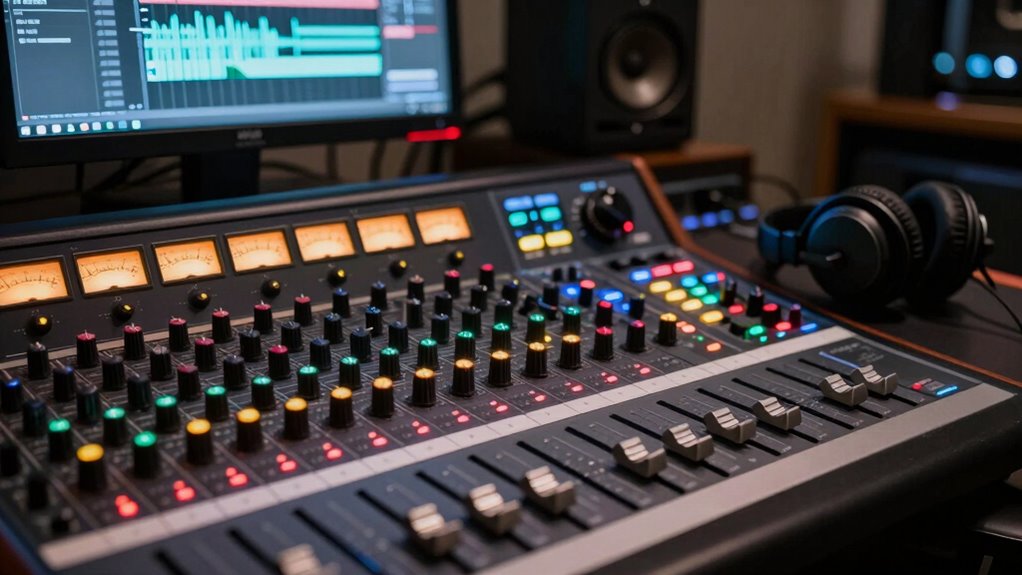

Editing, mixing, and mastering each play a crucial role in music production. Editing cleans up your recordings by fixing timing, tuning, and removing noise. Mixing then shapes your sound by balancing tracks, adding effects, and creating space. Finally, mastering polishes your overall track, ensuring it sounds consistent and professional across various systems. Understanding these differences helps you produce high-quality music. Keep exploring to learn how each step can elevate your projects even further.

Get audio and creator gear delivered free with Prime
- Fast, free delivery on millions of items
- Prime Video, Amazon Music and more included
- Member-only deals all year
Key Takeaways
- Editing involves cleaning and correcting raw recordings for clarity and precision.
- Mixing balances, effects, and adds spatial effects to shape the song’s emotional and sonic character.
- Mastering optimizes the final track’s loudness, consistency, and prepares it for distribution.
- Each stage serves a distinct purpose: editing refines, mixing creates the sound, mastering polishes for release.
- Understanding these differences ensures a professional, high-quality music production workflow.
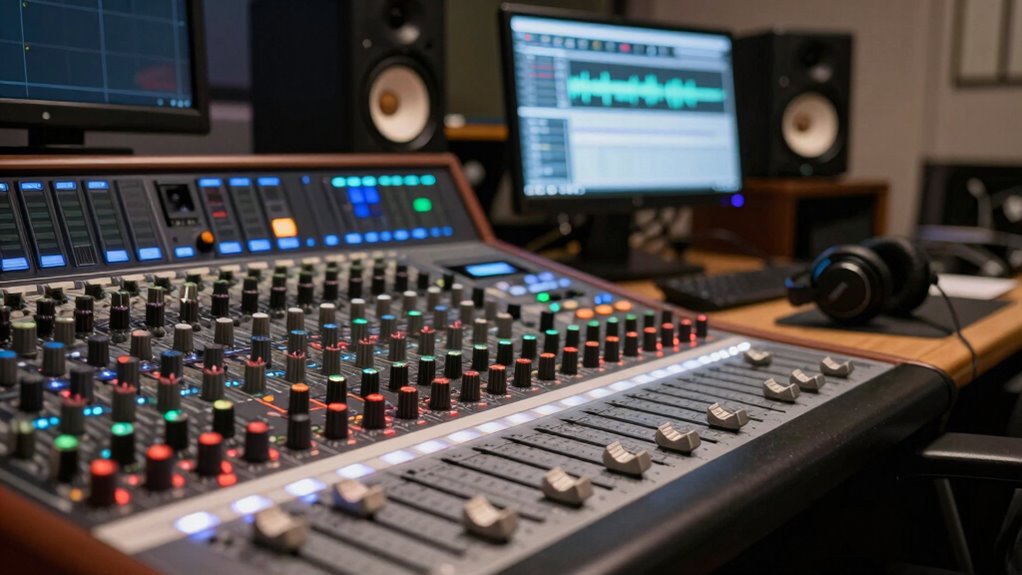
Understanding the differences between editing, mixing, and mastering is essential if you’re involved in music production, but these terms often get used interchangeably, leading to confusion. Each step plays a critical role in shaping the final sound, yet they serve distinct purposes within the overall production workflow. As an aspiring audio engineer, knowing how to differentiate these stages helps you focus your efforts and guarantee a high-quality end product.
Editing is the foundation of your production workflow. It involves cleaning up recordings, correcting timing issues, tuning vocals, and removing unwanted noises. Think of editing as the process of refining raw tracks into a polished version, where you fix mistakes and make sure every element aligns perfectly. This stage requires precision and attention to detail, as it directly impacts the clarity and integrity of your recordings. Good editing sets the stage for a smoother mixing process because it guarantees that each element is well-prepared and free of distractions or inconsistencies.
Editing refines raw recordings, ensuring clarity and precision for a polished, professional-sounding track.
Mixing comes next and is where your creative vision truly takes shape. During this phase, you balance individual tracks, apply effects, adjust equalization, and create space within the mix. Your goal is to achieve clarity, depth, and emotional impact by blending all elements cohesively. This is where your skills in audio engineering shine; you manipulate levels, panning, and effects to craft a compelling sonic landscape. Mixing is highly subjective and flexible, allowing you to experiment until you arrive at a sound that captures the song’s essence. A well-mixed track sounds balanced and engaging across different listening environments, making it a key step in the production workflow.
Mastering is the final step, and it’s about polishing the mixed version for distribution. Here, you focus on enhancing the overall sound, ensuring consistency across different playback systems, and preparing the track for release. Mastering involves subtle equalization, compression, limiting, and sequencing to optimize loudness and dynamics. Think of mastering as giving your song a professional shine, making sure it’s competitive with commercial releases. It’s a delicate process that requires a trained ear to avoid over-processing, preserving the integrity of the mix while making it radio-ready. Ultimately, mastering ties everything together, providing the finishing touch that elevates your project from good to great.
Products Worth Considering

Logitech MX Master 4 for Mac, Ergonomic Bluetooth Mouse with Haptic Feedback, Ultra-Fast Scrolling, USB-C Charging, for MacOS, iPadOS, Windo

DJI Osmo Mobile 8 Gimbal with Mic Mini Transmitter, Infinity Black

Bose QuietComfort Wireless Noise-Cancelling Over-Ear Headphones, Black
As an affiliate, we earn on qualifying purchases.
Frequently Asked Questions
How Long Does Each Process Typically Take?
Editing usually takes a few hours to a few days, depending on the song’s complexity and your creative techniques. Mixing can span from several hours to a couple of weeks, as you fine-tune elements with technical skills. Mastering often requires a few hours, focusing on final polish. The time varies based on the project’s detail, your experience, and the level of perfection you seek in each process.
Can One Engineer Do All Three?
Yes, one engineer can handle all three stages—editing, mixing, and mastering—especially if they possess both creative collaboration skills and technical expertise. While it’s common to specialize, a versatile engineer can streamline the process, ensuring consistency and a personal touch throughout. Just keep in mind that managing all three requires a broad skill set, dedication, and good communication to deliver a polished final product that meets your vision.
What Equipment Is Essential for Each Stage?
For editing, you need a powerful computer with high-quality audio interfaces and headphones to catch nuances. Mixing requires equipment customization like versatile monitors, EQs, and compressors to shape sound. Mastering benefits from acoustic treatment in your studio, ensuring accurate listening, along with high-end monitors and specialized tools like limiters. Prioritize quality gear at each stage, tailored to your needs, to achieve professional results.
How Do Costs Vary Between Editing, Mixing, and Mastering?
Think of editing, mixing, and mastering as climbing a mountain—costs and skills vary with each step. Editing is like packing your gear, usually the most budget-friendly but requiring keen skill. Mixing demands more investment, like crossing treacherous terrain, needing both time and skill. Mastering is the summit, often the priciest, demanding top-tier expertise. Your budget considerations and skill requirements grow with each stage, shaping your final sound journey.
When Should an Artist Hire a Professional?
You should hire a professional when you want to guarantee your artistic vision shines through with polished sound. Creative collaboration with experts helps refine your music, especially if you’re unsure about technical details. If you lack experience or want a high-quality result that matches industry standards, investing in a professional ensures your project benefits from their expertise. Trusting a pro can elevate your music and bring your artistic vision to life.
Conclusion
Understanding the difference between editing, mixing, and mastering helps you see how each step shapes your music. Think of editing as refining your raw material, mixing as balancing those elements, and mastering as giving your track that polished, professional finish. Imagine building a house: editing’s like framing, mixing’s like interior design, and mastering’s like adding the final coat of paint. When you master these steps, your music reaches its full potential, ready to wow your audience.