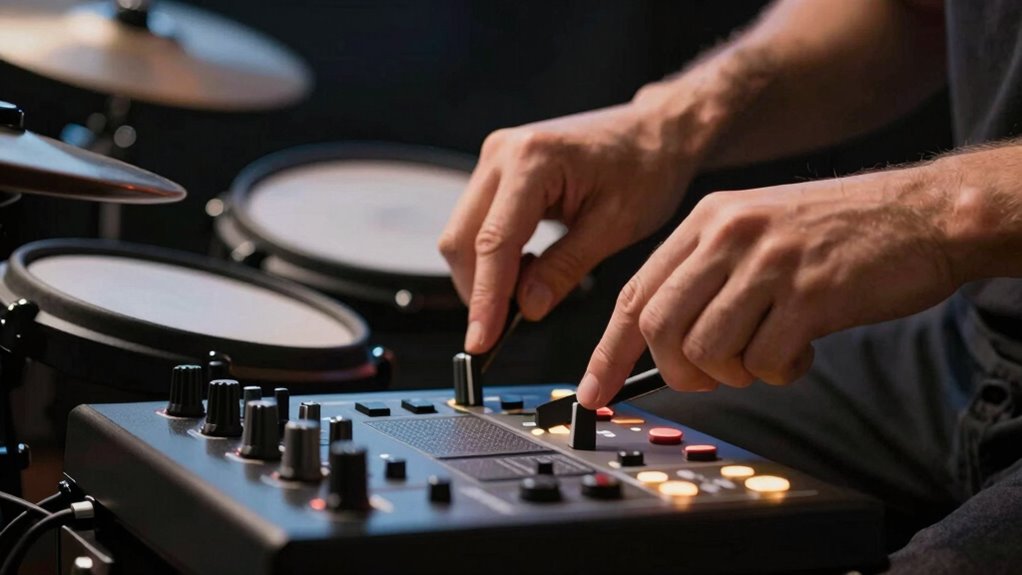

To build punchy drums without crushing dynamics, focus on subtle analog saturation to add warmth and harmonic complexity, enhancing presence without squashing peaks. Use transient shaping to emphasize or control attack and decay, giving your drums more punch while preserving natural flow. Incorporate gentle processing, balancing saturation and transient adjustments, and listen critically to maintain energy and clarity. If you keep exploring, you’ll discover more techniques to craft lively, dynamic drums that sit perfectly in your mix.
Key Takeaways
- Use gentle analog saturation to add harmonic content and warmth without reducing natural dynamics.
- Employ transient shaping to enhance attack and control sustain, maintaining punch without over-compression.
- Process drums in appropriate formats that preserve transients and allow for dynamic flexibility.
- Incorporate subtle analog gear saturation for richness, avoiding heavy compression that squashes dynamics.
- Regularly listen critically to ensure processing enhances punch while maintaining clarity and natural movement.

Achieving punchy drums without sacrificing their dynamic range can be tricky, but with the right techniques, you can make your drums hit hard while maintaining clarity and movement. One of the most effective methods involves using analog saturation. Unlike digital compression, analog saturation adds harmonic content and warmth to your drums, giving them a lively, lively presence without squashing their natural peaks. When you apply subtle saturation, it enhances the attack and body of your drums, making them stand out in the mix while preserving their dynamic integrity. Be cautious not to overdo it; a touch of saturation can glue your drums together and add richness without losing their transient punch. Additionally, understanding content formats can help you explore different ways to present and process your drum sounds for maximum impact. Exploring processing techniques can further expand your creative options and refine your sound. Incorporating analog gear can further amplify these effects, providing a richer tonal palette to shape your drums. Furthermore, listening critically to your mix during these processes ensures you maintain the natural feel and energy of your drums. Alongside saturation, transient shaping plays a crucial role in sculpting drums with impactful punch. Transient shapers allow you to emphasize or tame the attack and sustain of each hit, giving you control over how punchy your drums sound. To enhance punch, you might want to boost the attack portion of your transients, making each hit more immediate and aggressive. Conversely, if your drums feel too harsh or overbearing, you can soften the sustain by reducing the tail, which prevents the mix from becoming cluttered or overly aggressive. The key is to find a balance that accentuates the initial impact without compromising the natural decay or overall dynamics.
Use subtle analog saturation to add warmth and punch without sacrificing your drums’ natural dynamics.
When combining analog saturation with transient shaping, you create a powerful synergy. Saturation adds harmonic richness that broadens your drum sound, while transient shaping precisely controls the attack, ensuring your drums hit hard but still breathe naturally. This approach allows you to craft drums that are both lively and dynamic, avoiding the common pitfall of crushing the mix with over-compression. Remember, subtlety is essential—small adjustments can make a big difference. Use your ears and tweak gradually, paying attention to how each process affects the overall punch and clarity.
In the end, building better drum punch involves understanding how these tools interact. Analog saturation provides warmth and fullness, while transient shaping refines the attack and decay. When used thoughtfully, they help you achieve drums that are powerful, punchy, and dynamic, ensuring your mix remains lively and engaging without losing its natural movement.
analog saturation plugin for drums
As an affiliate, we earn on qualifying purchases.
As an affiliate, we earn on qualifying purchases.
Frequently Asked Questions
Can I Achieve Punch Without Using Compressors?
Yes, you can achieve punch without compressors by focusing on transient enhancement and dynamic balancing. Use transient shapers or layered samples to emphasize attack, making your drums punchier. Balance the dynamics carefully, ensuring the attack stands out without overpowering the mix. This approach preserves your drum’s natural feel, giving you punch and clarity without crushing the overall dynamics. It’s a more transparent method to make drums hit harder.
What’s the Best Way to Boost Attack Without Losing Clarity?
To boost attack without losing clarity, focus on transient emphasis and harmonic enhancement. You can subtly enhance transients with selective EQ or transient shapers, making your drums pop without overpowering the mix. Pair this with harmonic enhancement—adding subtle harmonic content—to give your snare or kick more presence and warmth. This combo sharpens attack while maintaining clarity, ensuring your drums punch through without crushing the overall dynamics.
How Does EQ Affect Drum Punch and Dynamics?
EQ shapes drum punch by emphasizing certain frequencies and reducing masking issues. When you boost the attack, you might mask other elements, so use narrow cuts on competing frequencies to prevent loss of clarity. Harmonic enhancement adds richness and brightness, making drums sound punchier without crushing dynamics. Be mindful of frequency masking—boosting or cutting in specific ranges can accentuate punch without sacrificing the overall balance or dynamic range of your drums.
Are Transient Shapers Effective for Punch Enhancement?
Transient shapers are highly effective for punch enhancement because they allow you to precisely control attack and sustain. By using transient shaping, you can emphasize the initial hit without sacrificing the overall dynamics of your drums. This technique helps you achieve a punchy, energetic sound that cuts through the mix while maintaining clarity. Focus on attack enhancement to add impact, ensuring your drums punch through without overwhelming the rest of your mix.
How Can I Improve Drum Punch in a Mix Without Over-Processing?
You can improve drum punch by paying attention to room resonance and microphone placement. Adjust mic positions to capture the attack clearly and minimize room muddiness. Use acoustic treatment to control resonance, preventing it from overpowering the punch. Also, experiment with placement to emphasize the attack and reduce sustain, ensuring your drums sound punchy without over-processing. This approach keeps dynamics natural while enhancing impact.
Conclusion
Remember, achieving that punchy drum sound without sacrificing dynamics isn’t about crushing your mix—it’s about understanding how each element interacts. When you carefully balance compression and EQ, you preserve the natural energy and emotion of your drums. Trust your ears and experiment; sometimes, the most surprising tweaks reveal the punch you’re after. Don’t settle for loudness at the expense of feeling—true impact comes when your drums hit hard and breathe just right.