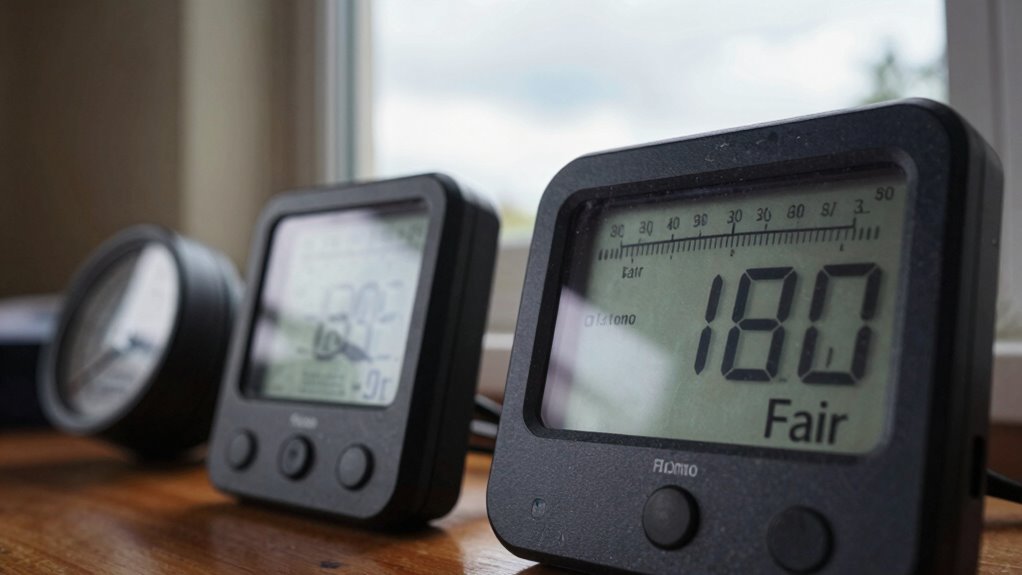
Many people misinterpret their home weather station data because indoor humidity and wind speed measurements are often inaccurate. You might notice fluctuating humidity levels or wind speeds that don’t match outdoor conditions, mainly due to poor sensor placement, environmental interference, or calibration issues. Small mistakes can lead to big misunderstandings, affecting your weather decisions. Keep in mind, understanding these common errors can help you trust your station more—if you keep exploring, you’ll discover how to improve your data accuracy.
Key Takeaways
- Indoor humidity levels are often misinterpreted due to sensor placement and calibration issues.
- Wind speed measurements can be inaccurate when sensors are sheltered or improperly installed.
- Small measurement errors in temperature or humidity can lead to incorrect weather trend assumptions.
- Environmental factors like nearby moisture sources or obstructions skew data readings.
- Users may overlook sensor maintenance, leading to persistent inaccuracies in station data.
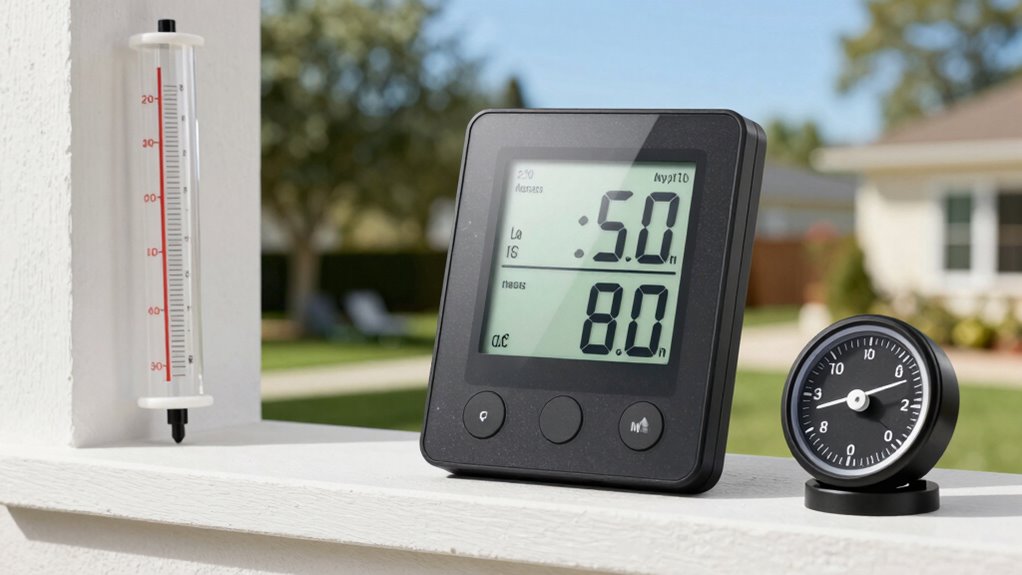
Many homeowners rely on personal weather stations for accurate local data, but these devices often misread certain measurements more frequently than others. Two common areas where errors tend to occur are indoor humidity and wind speed accuracy. You might think your station provides a precise snapshot of the weather, but small inaccuracies can lead to misinterpretations that affect your daily decisions. Understanding where these misreads happen helps you troubleshoot and improve your station’s reliability.
Indoor humidity is notoriously tricky for many personal weather stations. You might notice readings that fluctuate wildly or seem inconsistent with how you feel indoors. These inaccuracies often stem from sensor placement or calibration issues. If your station’s sensors are near windows, vents, or sources of moisture, the readings can be skewed. Additionally, some sensors are simply less sensitive or durable, leading to errors over time. You may find that your indoor humidity readings don’t match a trusted hygrometer or the actual comfort level in your home. These discrepancies can cause you to misjudge whether to run a humidifier or dehumidifier, impacting your comfort and health. Proper sensor maintenance and sensor calibration can help mitigate these issues. Moreover, environmental factors like sensor placement can significantly influence accuracy.
Indoor humidity sensors may give inconsistent readings if placed near vents or moisture sources.
Wind speed accuracy is another measurement prone to error, especially if your station isn’t installed correctly or if environmental factors interfere. Many home weather stations have anemometers that rely on small rotating cups or ultrasonic sensors. If your station is placed in a sheltered spot, behind a structure, or near trees, it might underestimate wind speeds. Conversely, if it’s on a rooftop or exposed area, it could overestimate due to gusts or turbulence. The accuracy of wind speed readings depends heavily on proper placement—ideally in an open, elevated space—yet many users overlook these details. Misreading wind speed can affect your understanding of weather patterns, especially if you’re using your station to monitor storm activity or plan outdoor activities. Recognizing sensor limitations and installing your station correctly can significantly improve data accuracy. Additionally, understanding environmental influences on sensors can help you interpret the data more critically.
indoor humidity sensor calibration
As an affiliate, we earn on qualifying purchases.
As an affiliate, we earn on qualifying purchases.
Frequently Asked Questions
How Often Should I Calibrate My Home Weather Station?
You should calibrate your home weather station at least once every six months to guarantee sensor accuracy. Regular calibration helps maintain precise readings for temperature, humidity, and pressure. If you notice inconsistent data or significant deviations from local weather reports, consider calibrating more frequently. Proper calibration keeps your station reliable, so you can trust the data when planning outdoor activities or monitoring weather conditions around your home.
What Is the Most Accurate Placement for Outdoor Sensors?
Did you know that improper sensor placement can skew outdoor weather readings by up to 30%? For accurate data, position your outdoor sensors in a shaded, well-ventilated spot away from direct sunlight, buildings, or heat sources. Proper outdoor positioning guarantees your sensors aren’t affected by artificial heat or reflections, providing you with the most reliable temperature, humidity, and wind data. Remember, the right placement makes all the difference in weather accuracy.
Can Weather Station Data Predict Long-Term Climate Changes?
Weather station data alone can’t reliably predict long-term climate changes because climate change involves complex, large-scale patterns beyond local measurements. While your weather station helps track short-term weather and local conditions, it lacks the data accuracy and scope needed for evaluating broader climate trends. To understand climate change, scientists combine data from multiple sources, including satellites and climate models, rather than relying solely on individual weather station readings.
How Do I Troubleshoot Inconsistent Temperature Readings?
To troubleshoot inconsistent temperature readings, first check your sensor placement; make sure it’s in a shaded, well-ventilated spot away from direct sunlight, heat sources, or reflective surfaces. Confirm the sensor is securely connected and free of dirt or debris. Regularly calibrate your device if possible. These steps improve data accuracy, helping your weather station provide consistent and reliable temperature measurements.
Are There Apps That Can Automatically Interpret Weather Station Data?
Imagine your weather station data as a tangled web of signals waiting to be untied. Yes, there are apps that can automatically interpret this data, simplifying weather data analysis for you. They often include sensor calibration techniques, ensuring your readings stay accurate. These tools act like a personal weather assistant, translating raw data into clear, actionable insights, so you can confidently track weather patterns without getting lost in the technical weeds.
Conclusion
You might trust your home weather station, but don’t let the numbers deceive you. While the data seems precise, misreading it can lead to false expectations or unnecessary worry. Accuracy matters, yet it’s often overlooked. The comfort of real-time insights contrasts with the confusion of misunderstood readings. So, stay vigilant, double-check your data, and remember: technology’s helpful, but it’s not infallible. In weather, as in life, a little doubt can keep you better prepared.