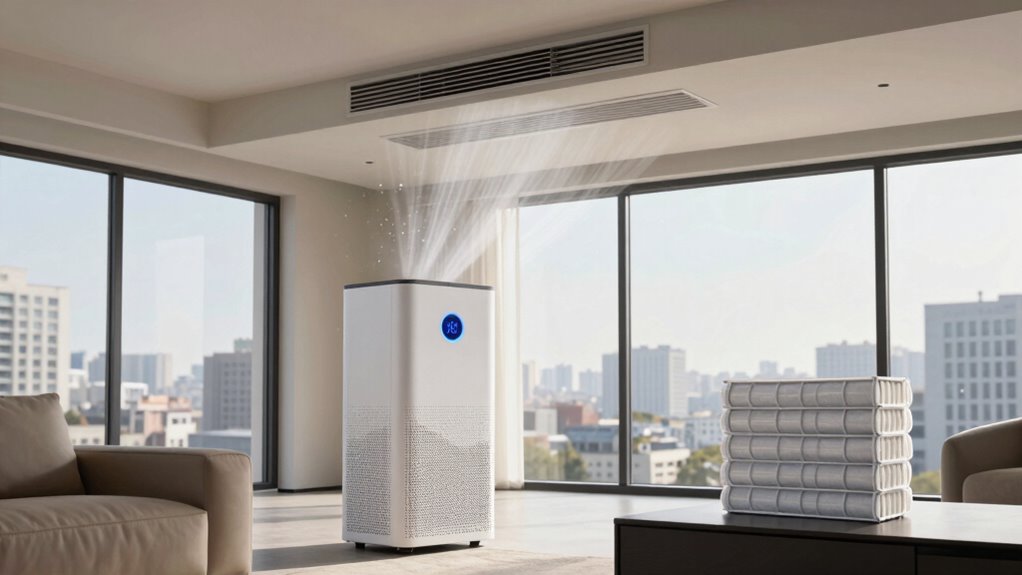

Air purifiers actively remove airborne pollutants using filters and advanced tech like HEPA and UV light, improving air safety and allergen control. Filters, found in HVAC systems or standalone units, trap particles passively as air flows through them, with HEPA being highly effective. Ventilation, on the other hand, exchanges indoor air with outdoor air to dilute indoor pollutants and humidity. Understanding how each works and combining them can considerably boost your indoor air quality—keep exploring to learn more.

Get audio and creator gear delivered free with Prime
- Fast, free delivery on millions of items
- Prime Video, Amazon Music and more included
- Member-only deals all year
Key Takeaways
- Air purifiers actively remove airborne pollutants using internal technologies like HEPA filters and UV light.
- Filters trap particles passing through HVAC or standalone units, serving as a passive cleaning method.
- Ventilation exchanges indoor air with outdoor air, diluting pollutants and reducing odors and humidity.
- Purifiers and filters focus on removal, while ventilation emphasizes air exchange and fresh air intake.
- Combining all three ensures comprehensive indoor air quality management and healthier environments.
Have you ever wondered how clean the air around you truly is? It’s a question many of us overlook, but it’s essential for maintaining good health and comfort. When you think about improving indoor air quality, you might consider air purifiers, filters, or ventilation—each plays a distinct role, yet they work together to create a healthier environment. Understanding their differences helps you make smarter choices for your space.
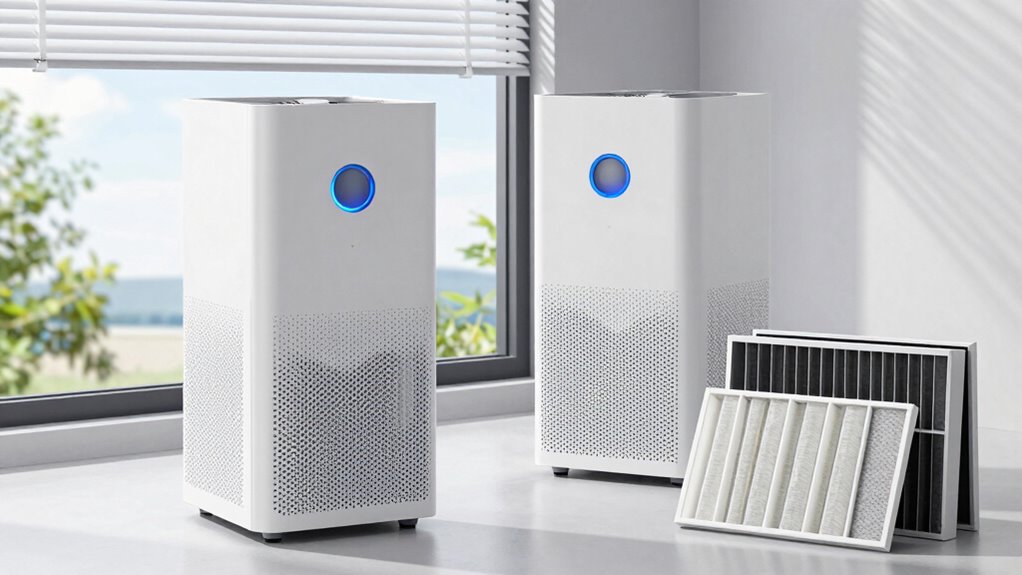
Air purifiers are devices designed to actively remove airborne pollutants. They typically use a combination of filters and technologies like HEPA filters, activated carbon, or UV light to trap or destroy contaminants. The key to their effectiveness lies in filtration efficiency, which measures how well they capture particles such as dust, pollen, pet dander, or even bacteria and viruses. High filtration efficiency means fewer particles stay in the air, directly improving indoor air quality. When you use an air purifier, you’re actively reducing airborne pollutants, making the air safer to breathe, especially in spaces with high allergen levels or pollution. Additionally, some air purifiers incorporate advanced filtration technologies that can target smaller or more complex pollutants for even better air quality.
Filters, on the other hand, are components within HVAC systems or standalone units that trap particles as air passes through them. They come in various grades—from basic fiberglass filters to advanced HEPA filters that can trap 99.97% of particles as small as 0.3 microns. The main goal of filters is to remove contaminants from the air before it circulates through your home or office. The quality and type of filter you choose directly influence filtration efficiency. A high-quality filter with better filtration efficiency captures more particles, leading to cleaner indoor air and reducing the load on your HVAC system. Regularly replacing or maintaining filters is key, because a clogged or dirty filter won’t work efficiently and can even worsen indoor air quality. Proper filter maintenance is crucial for ensuring optimal performance and air quality. Proper maintenance extends the lifespan of filters and ensures they function as intended, which is essential for air quality management.
Ventilation is quite different from purifiers and filters. It involves exchanging indoor air with fresh outdoor air, either naturally through windows and vents or mechanically with exhaust fans and HVAC systems. Ventilation doesn’t necessarily remove pollutants already inside; instead, it dilutes and replaces contaminated indoor air with cleaner outdoor air. Proper ventilation reduces concentrations of indoor pollutants, humidity, and odors, contributing profoundly to overall indoor air quality. Additionally, microplastics in dust can be a concern in enclosed spaces, making ventilation an important factor in reducing these tiny particles from indoor environments. It’s especially important in tightly sealed buildings where pollutants can build up quickly. Good ventilation also helps control humidity levels, which can prevent mold growth and improve overall air comfort. Adequate ventilation, combined with filtration and purification, provides a comprehensive approach to maintaining healthy indoor air.
As an affiliate, we earn on qualifying purchases.
Frequently Asked Questions
How Often Should I Replace Air Purifier Filters?
You should replace your air purifier filters according to the filter lifespan and recommended replacement schedules, typically every 3 to 6 months. Check your device’s manual for specific guidance, as factors like usage, air quality, and filter type can influence how often you need to change filters. Regular replacements guarantee peak performance, helping your air stay clean and healthy, so don’t delay replacing them when the time comes.
Do All Ventilation Systems Improve Indoor Air Quality Equally?
Not all ventilation systems improve indoor air quality equally. For example, a system with high airflow efficiency and well-maintained filters enhances air quality more effectively. Poor airflow or low filter longevity diminishes benefits, allowing pollutants to linger. You should choose systems designed for *best* airflow and regularly replace filters to *guarantee* air quality improvements. This way, you *secure* your indoor environment stays healthier and fresher over time.
Can Air Purifiers Remove Gases and Odors Effectively?
Yes, air purifiers can effectively remove gases and odors, especially if they use activated carbon filters designed for gas filtration and odor removal. These filters absorb volatile organic compounds (VOCs), smoke, and unpleasant smells. To maximize performance, choose a purifier with a dedicated gas and odor filter. Keep in mind, though, that not all air purifiers are equipped for gas filtration, so check the specifications before purchasing.
What’s the Energy Consumption Difference Between Filters and Ventilation?
Ventilation systems generally consume more energy than filters because they actively exchange indoor air with outdoor air, often requiring fans and motors. Filters, especially in HVAC units, tend to be more energy-efficient, leading to lower operational costs. If you’re focused on energy efficiency, opting for high-quality filters can reduce your overall energy consumption and operational expenses, whereas ventilation may be costlier but improves air exchange.
Are There Health Risks Associated With Using Air Purifiers?
While air purifiers are generally safe, some risks exist if you don’t choose the right model. Poorly maintained devices can emit ozone or other pollutants, which might worsen allergy symptoms or cause respiratory irritation. However, when selected carefully for pollutant removal and allergy relief, air purifiers can considerably improve indoor air quality. Regular cleaning and replacing filters ensure you get the benefits without health risks.
Conclusion
Now that you know the difference between air purifiers, filters, and ventilation, you can breathe easier knowing you’re making smarter choices for your home. Think of it as assembling a superhero team—each component plays a crucial role in battling airborne pollutants. Don’t settle for just one; combine them for the ultimate defense. With these tools working together, your indoor air quality will be so pristine, it’ll feel like you’re inhaling a refreshing gust of mountain air—without ever leaving your house!
Halloween Picks
halloween
As an affiliate, we earn on qualifying purchases.