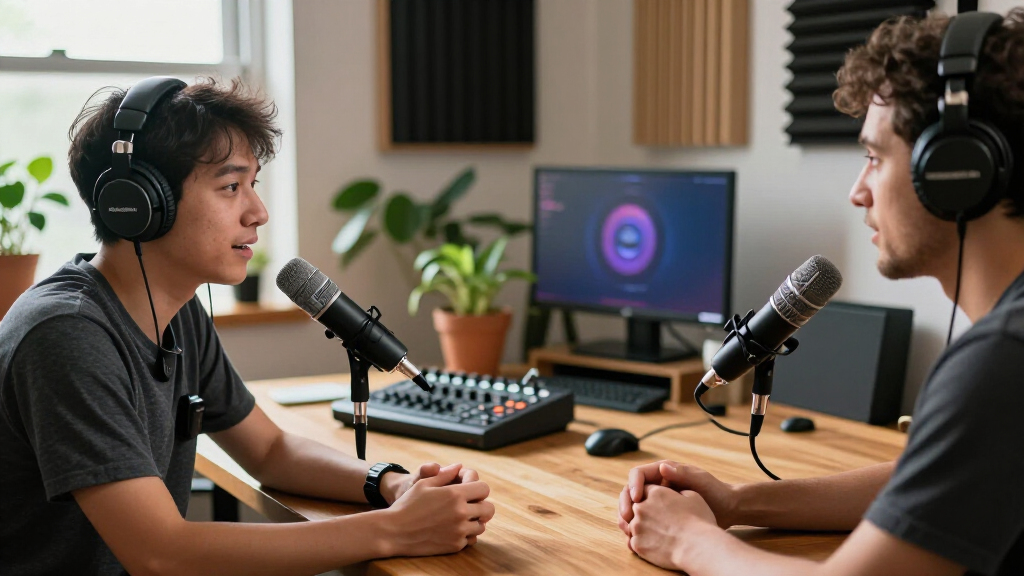
The best wireless podcast microphones pair dependable voice capture with a setup that fits how and where you record. I rank the MAONO PD200W Hybrid Wireless Podcast Microphone as the best overall for its flexible wireless-and-wired approach; the Hollyland Lark M2 stands out for compact mobile recording, while the MAONO PD200W Bundle for Two suits co-hosts who want a matched setup. The main tradeoff is between a desk-friendly microphone with a fuller podcast workflow and a tiny lavalier that is easier to wear and carry. I also weigh connection compatibility, recording roles, and how much setup each option asks of you. Read on for the full breakdown and buying advice.

Get audio and creator gear delivered free — and shop member deals
- Fast, free delivery on millions of items
- Access to Prime Big Deal Days deals on October 6–7
- Prime Video, Amazon Music and more included
Complete the kit

Key Takeaways
- The MAONO PD200W is the most flexible starting point: its hybrid format gives solo podcasters more ways to connect than a wireless-only choice.
- Two-person recording calls for a matched pair: the MAONO PD200W Bundle for Two is the clearest fit for co-hosts, while a single microphone may require a separate plan for the second voice.
- Lavalier kits solve a different problem than desk microphones: the Hollyland Lark M2, Mini Mic Pro, and wedaniya WM189 prioritize wearable, mobile recording over a stationary podcast setup.
- The two ZealSound K66 options are not interchangeable: the Dual model is aimed at capturing two speakers, while the K66 with Noise Reduction is framed around a solo USB microphone workflow.
- Wireless convenience does not remove compatibility checks: receiver connections and the intended recording device should shape the choice, particularly for phone-first creators.
| ZealSound K66 Dual Wireless Podcast Microphones |  | Best for Two-Person Desktop Podcasts | Microphones included: 2 | Wireless connection: 2.4 GHz receiver | Audio resolution: 48 kHz/24-bit | VIEW LATEST PRICE | See Our Full Breakdown |
| ZealSound K66 Wireless USB Microphone with Noise Reduction |  | Best for Flexible Solo Recording | Microphone type: Condenser | Pickup pattern: Cardioid | Audio capture: 48 kHz | VIEW LATEST PRICE | See Our Full Breakdown |
| wedaniya WM189 Wireless Mini Lavalier Microphone, 2 Pack with USB-C and Lightning Receivers |  | Best for Lightweight Two-Person Interviews | Model: WM189 | Microphone type: Mini lavalier | Channels: 2 | VIEW LATEST PRICE | See Our Full Breakdown |
| MAONO PD200W Hybrid Wireless Podcast Microphone |  | Best for a Studio That May Expand to XLR | Microphone type: Dynamic | Connectivity: Wireless, USB, and XLR | Polar pattern: Cardioid | VIEW LATEST PRICE | See Our Full Breakdown |
| Mini Mic Pro Wireless Lavalier Microphone for iPhone and Android | 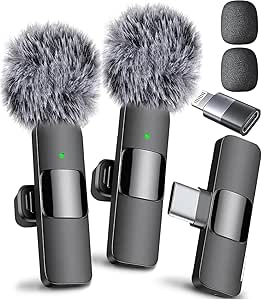 | Best Compact Phone Mic | Connectivity: Wireless | Connectors: Lightning and USB Type-C | Compatible devices: Android, laptop, smartphone, tablet, iPad, and iPhone | VIEW LATEST PRICE | See Our Full Breakdown |
| MAONO PD100W Wireless Dynamic Microphone for PC |  | Best for Flexible Solo Podcasting | Microphone type: Dynamic | Connectivity: USB and 2.4 GHz wireless | Pickup pattern: Cardioid | VIEW LATEST PRICE | See Our Full Breakdown |
| MAONO PD200W Hybrid Wireless Podcast Microphone Bundle for Two |  | Best Two-Person Wireless Podcast Kit | Microphone type: Dynamic | Included microphones: 2 | Included stands: 2 desktop stands | VIEW LATEST PRICE | See Our Full Breakdown |
| Hollyland Lark M2 Wireless Lavalier Microphone | 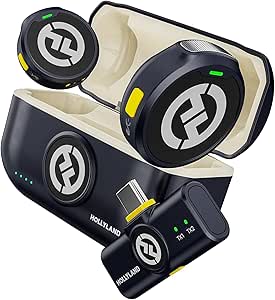 | Best Compact Mic for Mobile Interviews | Microphone type: Lavalier | Weight: 9 g | Audio format: 48 kHz/24-bit | VIEW LATEST PRICE | See Our Full Breakdown |
| TONOR TD510W Air S Wireless Dynamic Microphone |  | Best for XLR-Ready Desktop Setups | Microphone type: Dynamic | Connectivity: 2.4 GHz wireless, USB, and XLR | Polar pattern: Unidirectional | VIEW LATEST PRICE | See Our Full Breakdown |
| wireless podcast microphone | Microphone type | Connectivity | Battery life | Wireless range |
|---|---|---|---|---|
| ZealSound K66 Dual Wireless Po | — | — | — | — |
| ZealSound K66 Wireless USB Mic | Condenser | — | — | — |
| wedaniya WM189 Wireless Mini L | Mini lavalier | — | — | — |
| MAONO PD200W Hybrid Wireless P | Dynamic | Wireless, USB, and XLR | Up to 60 hours with RGB lighting off | Up to 60 m |
| Mini Mic Pro Wireless Lavalier | — | Wireless | Up to 6 hours per charge | — |
| MAONO PD100W Wireless Dynamic | Dynamic | USB and 2.4 GHz wireless | Up to 40 hours | Up to 50 m (160 ft) |
| MAONO PD200W Hybrid Wireless P | Dynamic | Wireless, USB, and XLR | Up to 60 hours with RGB off | Up to 60 m |
| Hollyland Lark M2 Wireless Lav | Lavalier | USB-C, USB, and wireless | Up to 10 hours per charge; up to 30 hours with charging case | Up to 1,000 ft line of sight |
| TONOR TD510W Air S Wireless Dy | Dynamic | 2.4 GHz wireless, USB, and XLR | Up to 50 hours | Up to 30 m |
More Details on Our Top Picks
ZealSound K66 Dual Wireless Podcast Microphones
For a co-host setup that should connect straight to one computer or phone, the dual-mic K66 avoids the separate mixer a pair of conventional XLR microphones may need. Its two cardioid microphones use a shared 2.4 GHz receiver, with individual gain, echo, and mute controls so each speaker can adjust their own sound. Zero-latency headphone monitoring also helps catch problems while recording rather than after the session. Compared with the wedaniya WM189, this is a more desk-oriented choice: it has metal stands and up to 16 hours of wireless operation, while the wedaniya clips to clothing and is easier to carry. The tradeoff is that both K66 microphones must run wirelessly when used on one device, and Bluetooth handles music input—not microphone audio. I’d choose it for seated conversations, not mobile interviews.
Pros:- Two microphones can record to one device through the included receiver
- Independent gain, echo, and mute controls for each speaker
- Zero-latency headphone monitoring
- Up to 16 hours of wireless operation per charge
Cons:- Both microphones must use wireless mode when recording together on one device
- Bluetooth is for music input and does not carry microphone audio
Best for: Two co-hosts recording seated conversations to a compatible computer or phone without adding a mixer.
Not ideal for: Mobile interviewers who need clip-on microphones, or anyone who wants to connect both microphones by wire to one device.
- Microphones included:2
- Wireless connection:2.4 GHz receiver
- Audio resolution:48 kHz/24-bit
- Pickup pattern:Cardioid
- Wireless battery life:Up to 16 hours
- Monitoring:3.5 mm headphone jack with zero-latency monitoring
- Controls:Independent gain, echo, mute, and headphone volume
- Compatibility:PC, Mac, PS4/PS5, iPhone, iPad, USB-C Android phones, and tablets
Our verdict“Choose the K66 Dual for desk-based co-hosts who want two independently controlled microphones without a separate mixer.”
ZealSound K66 Wireless USB Microphone with Noise Reduction
The single-microphone K66 suits a solo host who wants a desk mic that can move between a computer and a compatible phone. Its 2.4 GHz receiver provides a wireless route, while USB wired mode offers a backup for long sessions or when charging becomes inconvenient. Gain, echo, mute, and zero-latency headphone monitoring are available at the mic, so basic adjustments do not require reaching for recording software. Compared with the K66 Dual, this version is simpler for one speaker but lacks a second microphone for co-hosts; the Mini Mic Pro is easier to clip on for walking interviews. Noise reduction may change vocal character, so I’d treat it as a useful aid rather than a substitute for a quiet room. Device compatibility also depends on the port and adapter working with the specific device.
Pros:- Wireless 2.4 GHz receiver with USB wired backup
- On-mic gain, echo, and mute controls
- Zero-latency monitoring through a 3.5 mm headphone jack
- Adapters support compatible computers, phones, and tablets
Cons:- Noise reduction may alter the natural tone of a voice
- Adapter and device compatibility can vary
- A single microphone is less suited to co-host recording than the K66 Dual
Best for: Solo podcasters who record at a desk and want one microphone that can switch between wireless and USB-wired use.
Not ideal for: Two-person shows needing separate microphones, or mobile reporters who need a discreet clip-on setup.
- Microphone type:Condenser
- Pickup pattern:Cardioid
- Audio capture:48 kHz
- Wireless connection:2.4 GHz
- Monitoring:3.5 mm headphone jack with zero-latency monitoring
- Controls:Gain, headphone volume, echo, and mute
- Wired mode:USB cable for audio and power
- Compatibility:Windows PC, Mac, PS4, PS5, iPhone, iPad, Android devices, and compatible tablets
Our verdict“Pick this K66 for flexible solo desk recording, but choose the K66 Dual for a two-host show or a lavalier for on-the-move interviews.”
wedaniya WM189 Wireless Mini Lavalier Microphone, 2 Pack with USB-C and Lightning Receivers
The WM189 is the mobile counterpart to desk-focused options like the ZealSound K66 Dual: two clip-on transmitters let a host and guest move naturally instead of staying beside desktop stands. Its USB-C and Lightning receivers cover compatible Android and Apple devices, and the included windshields, DSP noise reduction, and headphone monitoring add practical control for location recording. At under one ounce per microphone and with charging listed at about one hour, it is easier to pack and replenish than a tabletop kit. That portability brings compromises: recording lasts up to six hours, well below the K66 Dual’s stated 16-hour wireless runtime, and the listed battery information also calls for an included AA battery. I’d verify the power arrangement before relying on it for a long field session. Its small form is better for interviews than a fixed, studio-style podcast desk.
Pros:- Two clip-on transmitters for host-and-guest recording
- USB-C and Lightning receivers are included
- Windshields and DSP noise reduction suit location recording
- Headphone monitoring and three audio modes
Cons:- Up to six hours of recording is shorter than the K66 Dual’s stated runtime
- Product data lists an AA battery as required despite also giving a charging time
- Lavalier placement may be less suitable than a desktop mic for a fixed studio setup
Best for: Two-person interviewers recording on compatible phones or tablets who need clip-on microphones and both USB-C and Lightning receiver options.
Not ideal for: Hosts recording long sessions at a fixed desk, or buyers who want a simple, clearly specified rechargeable power setup.
- Model:WM189
- Microphone type:Mini lavalier
- Channels:2
- Connectors:Lightning and USB Type-C
- Signal-to-noise ratio:70 dB
- Recording time:Up to 6 hours
- Charging time:About 1 hour
- Microphone weight:Under 1 oz
- Included accessories:Portable bag, receiver, two deadcat covers, two sponge covers, and two microphone transmitters
Our verdict“Choose the WM189 for portable two-person phone interviews, but favor the K66 Dual for longer, seated desktop sessions.”
MAONO PD200W Hybrid Wireless Podcast Microphone
The PD200W makes the most sense when a wireless podcast setup may later grow into a more conventional audio chain. Its wireless, USB, and XLR connections cover portable recording, direct computer use, and mixer-based setups without committing to one path. The dynamic cardioid design and three-stage noise cancellation are aimed at keeping attention on the speaker, while its stated wireless range and long battery life suit sessions where a cable would get in the way. Compared with the ZealSound K66 Wireless, this is the more upgrade-friendly choice, but it is substantially more specialized and its listed weight of 1.32 kg makes it less convenient to move around. The PD200W Bundle for Two is the more relevant comparison for co-hosts; this listing describes one microphone. Camera and Lightning accessories are sold separately, and the supplied frequency-response figure is listed as 16 kHz, so buyers should check whether that specification meets their recording needs.
Pros:- Wireless, USB, and XLR connectivity support different recording setups
- Up to 60 hours of battery life with RGB lighting off
- Cardioid pickup and three-stage noise cancellation
- Wireless range listed up to 60 m
Cons:- At 1.32 kg, it is less portable than the K66 or clip-on lavaliers
- Camera and Lightning accessories are sold separately
- The listing gives a 16 kHz frequency-response specification
Best for: Solo podcasters building a setup that may move from wireless or USB recording to an XLR mixer.
Not ideal for: Traveling interviewers who prioritize a light kit, or two-host buyers who need a complete pair in one purchase.
- Microphone type:Dynamic
- Connectivity:Wireless, USB, and XLR
- Polar pattern:Cardioid
- Signal-to-noise ratio:82 dB
- Maximum SPL:128 dB
- Wireless range:Up to 60 m
- Battery life:Up to 60 hours with RGB lighting off
- Weight:1.32 kg
- Included accessories:Desktop stand, USB-C to USB-A&C cable, Type-C receiver, and Type-C adapter cable
Our verdict“Choose the PD200W if you want one dynamic mic that can serve wireless, USB, and future XLR recording, rather than a lightweight mobile kit.”
Mini Mic Pro Wireless Lavalier Microphone for iPhone and Android
For a host who records short podcast segments on a phone, the Mini Mic Pro puts portability ahead of desk controls. It includes Lightning and USB-C adapters, plus foam and deadcat wind protection, so compatible phone users can choose the receiver that matches their device and record outside or in less controlled spaces. Its omnidirectional pickup and clip-on form favor natural movement rather than the close, fixed position of the ZealSound K66 Wireless. That makes it a better fit for quick interviews and walk-and-talk segments, but less suited to a quiet, stationary host who wants gain and headphone controls at the microphone. The listed battery life reaches up to six hours, and the product data is inconsistent: it describes rechargeable operation while also listing two C batteries as required. I’d resolve that power detail before planning a full recording day.
Pros:- Lightning and USB-C adapters support compatible Apple and Android devices
- Compact clip-on design suits mobile recording better than the K66 desk mic
- Foam and deadcat tips provide options for wind protection
- Up to six hours of stated battery life
Cons:- Product data conflicts on whether it is rechargeable or requires two C batteries
- Up to six hours may not cover a full day of recording
- Omnidirectional pickup can capture surrounding sound more readily than the cardioid K66
Best for: Phone-first creators recording short interviews, walk-and-talk segments, or podcast clips with compatible USB-C or Lightning devices.
Not ideal for: Studio hosts who want a desktop microphone with detailed physical controls, or buyers who need dependable all-day operation without clarifying the battery setup.
- Connectivity:Wireless
- Connectors:Lightning and USB Type-C
- Compatible devices:Android, laptop, smartphone, tablet, iPad, and iPhone
- Polar pattern:Omnidirectional
- Wireless frequency:2.4 GHz
- Battery life:Up to 6 hours per charge
- Weight:80 g
- Dimensions:3 x 0.5 x 0.25 inches
- Included components:Two lavalier microphones, one receiver, USB charging cable, two clips, two foam tips, and two deadcat tips
Our verdict“Choose the Mini Mic Pro for compact phone-based interviews, but pick a desk mic like the K66 if you mainly record seated podcast sessions.”
MAONO PD100W Wireless Dynamic Microphone for PC
The PD100W is a strong fit for solo hosts who want a familiar desktop-mic setup without being tied to a cable. Its 2.4 GHz wireless and USB modes let you switch between a cleaner desk and a wired connection, while the cardioid dynamic capsule focuses pickup toward the speaker. Compared with the TONOR TD510W Air S, it offers a longer stated wireless range and a larger battery, but the TONOR adds XLR connectivity for a more expandable recording chain. Three noise-reduction levels, headphone monitoring, and touch mute give you practical control during calls or recording. The tradeoffs are platform limits: it does not work with Xbox, and iPhone use requires a separate Lightning receiver. Its RGB and software options suit streamers, though they are less relevant to audio-only podcasting.
Pros:- Wireless 2.4 GHz and USB wired modes provide flexible desk setups
- Up to 40 hours of battery life and a stated range of up to 50 m
- Three adjustable noise-reduction levels and real-time headphone monitoring
- Touch mute, gain and volume controls, plus customizable RGB and software settings
Cons:- Not compatible with Xbox
- iPhone use requires a separate Lightning receiver
- No XLR connection for integration with traditional audio equipment
Best for: Solo podcasters and PC streamers who want wireless convenience, USB fallback, long battery life, and on-mic monitoring.
Not ideal for: Xbox users and iPhone podcasters who need Lightning connectivity included; also skip it if you need XLR integration.
- Microphone type:Dynamic
- Connectivity:USB and 2.4 GHz wireless
- Pickup pattern:Cardioid
- Capsule size:30 mm
- Battery life:Up to 40 hours
- Wireless range:Up to 50 m (160 ft)
- Monitoring:3.5 mm headphone jack
- Noise reduction:Three adjustable levels
Our verdict“Choose the PD100W for a feature-rich solo PC setup with wireless and USB flexibility, but choose the TONOR TD510W Air S if XLR matters more.”
MAONO PD200W Hybrid Wireless Podcast Microphone Bundle for Two
For co-hosts who record at one desk, the PD200W bundle has a clear advantage over single-microphone options: it includes two dynamic microphones and two desktop stands, with a receiver that can link both mics for shared recordings. Wireless operation keeps the setup tidy, while USB and XLR connections give it more connection choices than the MAONO PD100W. Its stated 60 m range and up to 60 hours of battery life with RGB off suit longer sessions, and noise cancellation plus app-based controls offer ways to shape the sound. The added flexibility comes with a larger, two-person setup rather than a compact travel kit. Camera and Lightning accessories are sold separately, and the longest battery claim depends on leaving RGB lighting off. This is a better match for seated interviews than on-the-go reporting.
Pros:- Includes two dynamic microphones and two desktop stands
- Receiver supports two microphones for co-hosted recordings
- Wireless, USB, and XLR connection options
- Noise cancellation and app-based sound controls
Cons:- Camera and Lightning accessories are sold separately
- Up to 60 hours of battery life applies with RGB lighting off
- Two-mic desktop bundle is less convenient for compact mobile recording than the Hollyland Lark M2
Best for: Co-hosts, interviewers, and small podcast teams recording together at a desk who want two microphones and both wireless and wired connection options.
Not ideal for: Solo creators seeking a compact travel mic, or camera and iPhone users who need those connection accessories included.
- Microphone type:Dynamic
- Included microphones:2
- Included stands:2 desktop stands
- Connectivity:Wireless, USB, and XLR
- Pickup pattern:Unidirectional cardioid
- Wireless range:Up to 60 m
- Battery life:Up to 60 hours with RGB off
- Enclosure material:Metal
- Maximum SPL:128 dB
Our verdict“Pick the PD200W bundle for a two-person desk podcast with room to use XLR, but choose the Lark M2 for lightweight mobile recording.”
Hollyland Lark M2 Wireless Lavalier Microphone
The Lark M2 takes a different approach from desktop podcast microphones: its 9 g lavalier design clips close to the speaker, making it more practical for walking interviews, video podcasts, and recording away from a desk. Its omnidirectional pickup captures sound around the mic rather than focusing forward like the cardioid MAONO PD100W, so placement is less directional but room and surrounding noise can be more apparent. The stated 48 kHz/24-bit format and adjustable noise cancellation suit spoken-word capture, while USB-C connectivity supports a plug-and-play workflow. The long range applies only to line-of-sight conditions, not every indoor recording space. Battery life reaches up to 10 hours per charge, or 30 hours with the case; continuous operation is shorter when noise cancellation is on. It is not a substitute for a substantial desktop mic in a fixed studio.
Pros:- Lightweight 9 g lavalier design is easy to wear during interviews
- Captures 48 kHz/24-bit audio
- USB-C plug-and-play connectivity and adjustable noise cancellation
- Up to 30 hours of total battery life with the charging case
Cons:- The stated 1,000 ft range is for line-of-sight conditions
- Continuous use is up to 10 hours with noise cancellation off
- Omnidirectional pickup can capture more surrounding sound than the cardioid MAONO PD100W
Best for: Mobile podcasters, field interviewers, and video creators who need a lightweight mic that clips to clothing and connects over USB-C.
Not ideal for: Desk-based hosts seeking a dynamic desktop microphone with a forward-facing pickup pattern, physical gain controls, or headphone monitoring.
- Microphone type:Lavalier
- Weight:9 g
- Audio format:48 kHz/24-bit
- Polar pattern:Omnidirectional
- Connectivity:USB-C, USB, and wireless
- Wireless range:Up to 1,000 ft line of sight
- Battery life:Up to 10 hours per charge; up to 30 hours with charging case
- Signal-to-noise ratio:70 dB
Our verdict“Choose the Lark M2 for lightweight, mobile podcast interviews, but choose a desktop dynamic mic for a stationary studio setup.”
TONOR TD510W Air S Wireless Dynamic Microphone
The TONOR TD510W Air S is the most connection-flexible solo desktop pick here: it supports 2.4 GHz wireless, USB, and XLR, so you can start with a computer and later connect compatible audio equipment. That XLR option gives it an edge over the MAONO PD100W for buyers planning a more expandable studio chain, though the MAONO lists a longer wireless range and a larger battery. The TONOR’s up-to-50-hour battery claim, noise reduction, and headphone monitoring make it suited to long desk sessions without constant cable changes. It also includes a desktop base and receiver, but wireless operation depends on that compatible receiver. Monitoring requires headphones with a 3.5 mm connection, and its stated 30 m range is shorter than the MAONO PD200W bundle’s. It is a practical solo mic, not a two-person kit.
Pros:- Supports 2.4 GHz wireless, USB, and XLR connections
- Up to 50 hours of battery life
- Includes a desktop base and wireless receiver
- RGB lighting, noise reduction, and real-time headphone monitoring
Cons:- Wireless mode requires the compatible receiver
- Headphone monitoring requires a 3.5 mm connection
- Its stated 30 m range is shorter than the MAONO PD100W and PD200W bundle ranges
Best for: Solo podcasters who want a desktop dynamic mic that can begin over USB or wireless and later connect through XLR.
Not ideal for: Co-hosts needing two microphones in one bundle, or creators who want a longer stated wireless range than 30 m.
- Microphone type:Dynamic
- Connectivity:2.4 GHz wireless, USB, and XLR
- Polar pattern:Unidirectional
- Wireless range:Up to 30 m
- Battery capacity:1100 mAh
- Battery life:Up to 50 hours
- Headphone jack:3.5 mm
- Dimensions:11.14 × 5.39 × 3.94 inches
- Included items:Wireless microphone, receiver, desktop base, USB cable, USB-C to USB-A adapter cable, and manual
Our verdict“Choose the TD510W Air S for a solo desktop setup that may grow into XLR, but opt for the PD200W bundle if you need two microphones.”
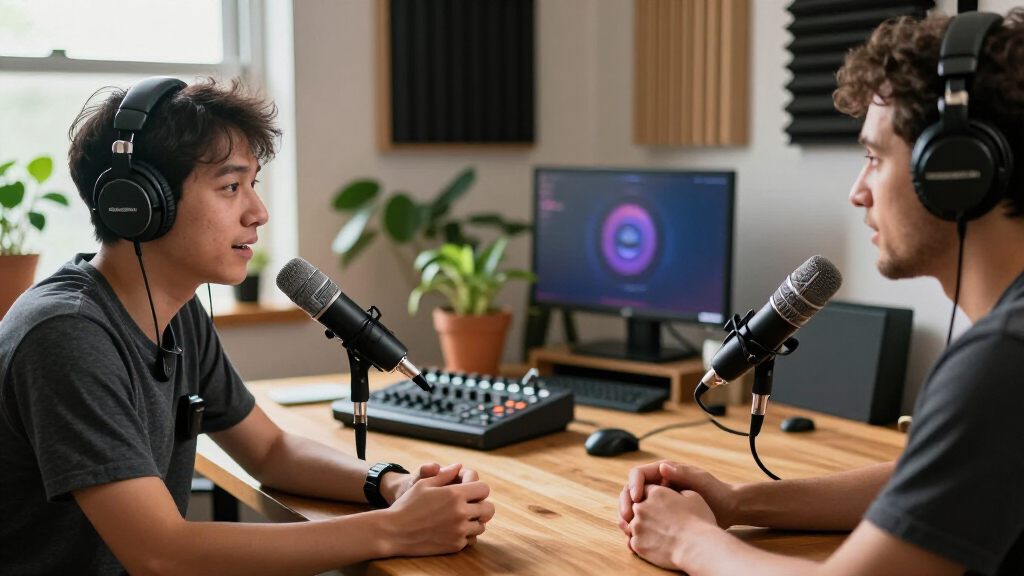
How We Picked
I compared these nine options as tools for wireless podcast recording, not as interchangeable microphones. My criteria were how well each product’s format matches a real recording role, whether it supports solo or two-person capture, how its connection approach fits a computer or phone workflow, and how much flexibility it offers if recording needs change. I also weighed practical usability: a wearable lavalier favors movement and portability, while a desk-style microphone is better suited to a fixed speaking position.
The ranking gives priority to podcast usefulness and workflow flexibility, then separates products by the job they are best suited to do. The MAONO PD200W Hybrid leads because its hybrid format offers a broader path for a solo host than a narrowly mobile or single-purpose pick. The paired MAONO option ranks higher for two speakers, and the Hollyland Lark M2 earns a distinct role for compact recording. The remaining models are positioned around their stated use cases; I do not treat overlapping names as proof of identical features, and I give buyers clear reasons to check receiver compatibility and intended setup before choosing.
| wireless podcast microphone | Microphone type | Wireless range | Battery life |
|---|---|---|---|
| ZealSound K66 Dual Wireless Po | — | — | — |
| ZealSound K66 Wireless USB Mic | Condenser | — | — |
| wedaniya WM189 Wireless Mini L | Mini lavalier | — | — |
| MAONO PD200W Hybrid Wireless P | Dynamic | Up to 60 m | Up to 60 hours with RGB lighting off |
| Mini Mic Pro Wireless Lavalier | — | — | Up to 6 hours per charge |
| MAONO PD100W Wireless Dynamic | Dynamic | Up to 50 m (160 ft) | Up to 40 hours |
| MAONO PD200W Hybrid Wireless P | Dynamic | Up to 60 m | Up to 60 hours with RGB off |
| Hollyland Lark M2 Wireless Lav | Lavalier | Up to 1,000 ft line of sight | Up to 10 hours per charge; up to 30 hours with charging case |
| TONOR TD510W Air S Wireless Dy | Dynamic | Up to 30 m | Up to 50 hours |
Factors to Consider When Choosing Wireless Podcast Microphones
Before choosing a wireless microphone, I would start with the recording setup rather than a feature list. The right fit depends on who is speaking, how far they move, what device records the audio, and how much room there is for equipment. These checks can prevent a convenient-looking kit from becoming awkward in your actual workflow.
Match the microphone format to your recording position
A desk-style microphone and a lavalier solve different problems, even when both are wireless. A desk model suits a host who stays near a computer and wants a familiar podcast position, while a lavalier can keep a moving speaker mic’d without tying them to a stand. Do not choose a tiny mic only because it is easy to carry if your recordings are mostly seated conversations. Likewise, a desk microphone can be inconvenient for interviews filmed away from a table. Think about clothing noise, mic placement, and how much visible gear you want in the frame. The best format is the one that remains practical across your usual recording sessions.
Plan for the number of voices you need to capture
A two-person show needs more than a wireless connection; it needs a workable way to capture each speaker independently or clearly in the same recording. A dual microphone set or a bundle for two can simplify matching the setup, but check what is included and how each voice reaches the recording device. Buying one microphone for a co-hosted show may leave you relying on a second, mismatched mic or an awkward shared position. For guest episodes, decide whether guests will sit at your desk or join from another location. A solo creator who occasionally interviews someone may value expandability more than a permanently paired kit. Match the system to your regular format, not just the most demanding episode you might make.
Check receiver and device compatibility before choosing
Wireless microphones still need a path into the device that records or monitors the show. Phone-first creators should confirm that the receiver connection matches their phone and that any required adapter or operating-system support is clear. Computer users should check whether the kit connects in the way their recording software and ports allow. A receiver that fits one device may not suit another, so a name that mentions USB-C or Lightning deserves careful attention to the exact included components. Avoid assuming that a wireless link means direct connection to every phone, camera, or computer. Write down your recording device and connection needs before comparing models.
Decide how much recording flexibility you actually need
A hybrid microphone can be useful when you want wireless freedom now but may prefer a wired connection for a fixed setup later. That flexibility can matter more than extra accessories if your podcast moves between a home desk and a different recording space. On the other hand, a simpler wireless kit may be easier to set up when you have one device and a consistent routine. More connection options can add setup steps, so avoid paying attention to versatility without asking whether you will use it. Consider how you record, monitor, and store audio, then prioritize features that remove friction from that process. A dependable, repeatable workflow is more useful than unused options.
Treat portability and audio workflow as separate needs
Compact size helps when recording on the move, but portability alone does not make a microphone the right podcast tool. A wearable kit may suit video interviews and quick mobile sessions, while a larger mic can feel more natural for a planned, seated show. Think about where the receiver will sit, how you will keep the microphone positioned, and whether you can manage the kit without interrupting conversation. For outdoor or busy-location recording, ask what protections or recording safeguards the product actually offers rather than assuming wireless means trouble-free audio. For a quiet home setup, easy positioning and simple controls may matter more than the smallest possible kit. Rank portability alongside the rest of your workflow, not above it.
Pay for fit and reliability, not a longer feature list
Spending more makes sense when it solves a specific problem, such as capturing two hosts, supporting more than one connection style, or recording while moving. A lower-complexity microphone can be the better choice if it matches your device and recording position without extra setup. Before choosing, check what is included in the box, whether you need separate accessories, and how the product is intended to connect. Also think about maintenance: small wearable components can be easier to misplace, while desk setups take more space and may need more deliberate placement. Do not treat a product’s name or category label as a guarantee of features that are not clearly stated. The strongest choice is the one whose actual workflow fits your routine.
Frequently Asked Questions
Should I choose a desk microphone or a lavalier for a podcast filmed on video?
Choose based on how the speakers move and how visible you want the equipment to be. A desk microphone suits a seated host who stays close to a table, while a lavalier is easier to wear when speakers move or the shot needs a cleaner desk. Lavalier placement can be affected by clothing and movement, so it takes some care to position consistently. A desk mic can appear in frame and needs a stable place near the speaker. For a fixed, seated show, prioritize comfortable placement over compactness; for mobile interviews, portability may matter more.
Can I use one wireless microphone for a two-host podcast?
You can, but one microphone may not capture both voices evenly if the hosts sit apart or speak at different levels. A dual set or a bundle designed for two speakers is usually a more practical starting point for regular co-hosted episodes. Before buying, confirm how many microphones and receivers are included and how the system delivers each speaker’s audio to your recording device. If one host records remotely, a shared local microphone does not solve that separate connection. Choose for your normal seating arrangement, not just whether two people can fit near one mic.
What should I check before buying a wireless mic for my phone?
Start by matching the receiver connection to your phone and checking that the specific kit supports your device. Do not assume that a product name mentioning USB-C or Lightning means every required receiver or adapter is included. Consider whether you will record directly into a phone app or send audio into a separate camera or computer, since those workflows may need different connections. Also check how the microphone is worn or positioned during a phone video. A quick compatibility check can prevent a portable kit from being unusable with your actual recording setup.
Is a hybrid wireless-and-wired microphone worth choosing for podcasting?
A hybrid model can be a sensible choice if your setup may shift between mobile recording and a fixed computer-based show. It gives you more connection options than a wireless-only format, which can help when you want to adapt without replacing the microphone. The added flexibility only matters if the wired and wireless modes fit your devices and recording software. If you always record in one place with one connection method, a simpler model may be easier to manage. Compare the modes you will use regularly, not just the number of options listed.
Which type of wireless microphone is better for recording away from home?
A compact lavalier kit is often easier to pack and wear for interviews or video recorded outside a studio. A desk-style microphone may still suit travel when you can set up at a table, but it is less convenient when speakers need to move. For either type, confirm receiver compatibility with the device you will take, and plan how you will position and protect the microphone during recording. Portability does not by itself address background noise, clothing movement, or a stable recording workflow. Choose the format that suits the location and the way your speakers will behave there.
Conclusion
For most solo hosts, I would start with the MAONO PD200W Hybrid as the best overall pick because its hybrid approach offers a flexible podcast workflow. The MAONO PD200W Bundle for Two is my recommendation for co-hosts who want a two-person setup, while the Hollyland Lark M2 is the best fit for compact, mobile recording. For beginners, I would favor a microphone whose connection and speaker count match the devices and format they already use; the ZealSound K66 Wireless USB Microphone with Noise Reduction is the more focused solo USB option in this lineup. Buyers seeking value should compare included components and compatibility against their actual needs rather than choosing by extra features alone. For phone-first creators, the wedaniya WM189 or Mini Mic Pro may suit a wearable setup, while the ZealSound K66 Dual is the more relevant K66 option for two speakers.
Halloween Picks
halloween
As an affiliate, we earn on qualifying purchases.