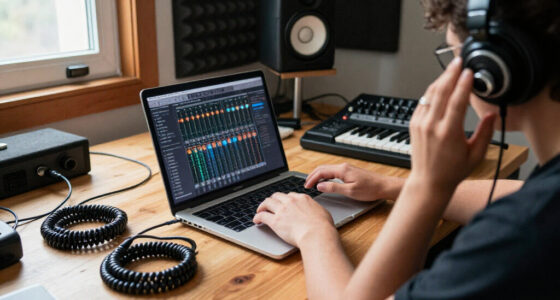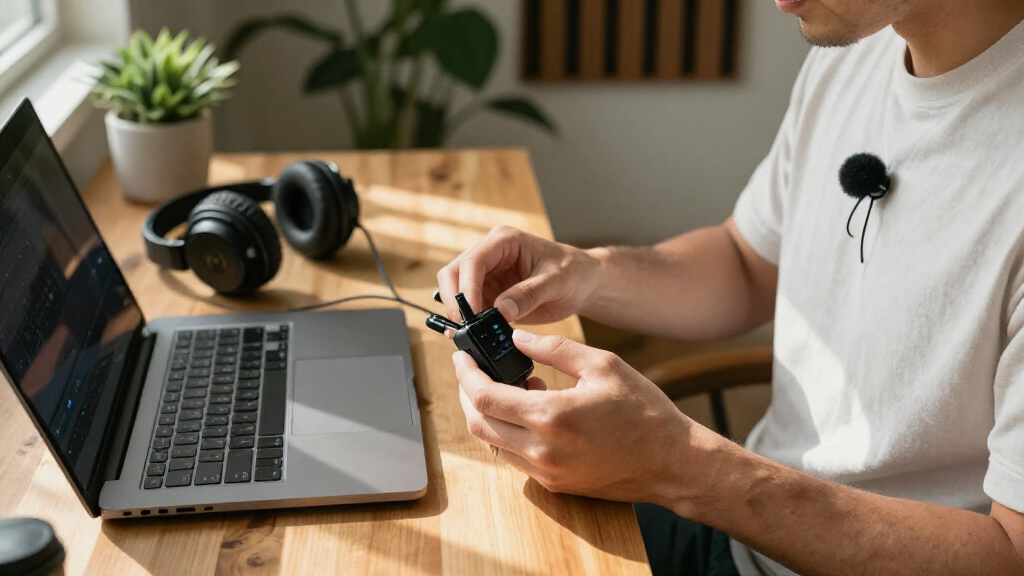

For most creators, I’d start with the DJI Mic Mini Wireless Microphone Kit with charging case: its two transmitters and included case make it a flexible choice for solo videos and interviews. The Hollyland Lark M2 stands out for creators who want a more compact branded system, while the Mini Mic Pro is a simpler phone-focused option. The main tradeoffs are phone compatibility, recording flexibility, battery management, and how much control you need over a two-person setup. Small plug-in kits can be convenient, but they may offer fewer controls and less versatility than a receiver-based system. Continue reading for the full comparison and a pick matched to your recording style.

Get audio and creator gear delivered free with Prime
- Fast, free delivery on millions of items
- Prime Video, Amazon Music and more included
- Member-only deals all year
Complete the kit


Key Takeaways
- The DJI Mic Mini kits fill different needs: the version with a charging case suits creators who value storage and charge management, while the mobile-receiver kit may better suit a leaner phone setup.
- Receiver design matters as much as microphone count: the lineup includes both receiver-based systems and compact phone-oriented kits, which affect how easily you can adapt to different recording setups.
- Phone connectors are a make-or-break detail: several options list USB-C and Lightning support, but creators should confirm what is included and what works with their exact device before buying.
- Two-transmitter kits are interview-ready, not automatically better: they are useful for conversations and collaborations, but solo creators may prefer a smaller, simpler setup.
- Charging cases and noise-reduction claims need context: a case can simplify packing and power management, while noise reduction cannot replace good mic placement or a quiet recording spot.
| DJI Mic Mini Wireless Microphone (2 Transmitters, Mobile Receiver) |  | Best for Lightweight Creator Kits | Transmitters included: 2 | Receiver: Mobile receiver | Transmitter weight: 10 g | VIEW LATEST PRICE | See Our Full Breakdown |
| DJI Mic Mini Wireless Microphone Kit (2 Transmitters, 1 Receiver, Charging Case) | 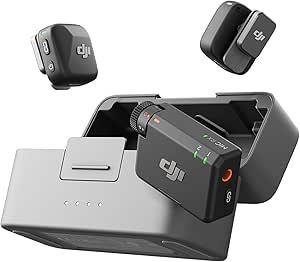 | Best for Long Shoots | Transmitters: 2 | Receiver: 1 | Charging case: Included | VIEW LATEST PRICE | See Our Full Breakdown |
| 2-Pack Wireless Mini Lavalier Microphones for iPhone and Android |  | Best for Phone-First Beginners | Microphones included: 2 | Receiver connectors: USB-C and Lightning | Compatibility: Compatible iPhone and Android devices | VIEW LATEST PRICE | See Our Full Breakdown |
| NPTCL Wireless Lavalier Microphone Set for USB-C and Lightning Devices |  | Best for Two-Person Phone Interviews | Microphones: 2 | Connectors: USB-C and Lightning | Microphone pattern: Omnidirectional | VIEW LATEST PRICE | See Our Full Breakdown |
| Wireless Lavalier Microphone Set with Charging Case |  | Best for Extended Phone-and-Computer Sessions | Wireless connection: 2.4 GHz | Connector: USB Type-C | Microphones included: 2 | VIEW LATEST PRICE | See Our Full Breakdown |
| Amazpro Dual Wireless Lavalier Microphone for iPhone and Android |  | Best for Long Recording Sessions | Transmission: 2.4 GHz private protocol | Connectors: Lightning and USB Type-C | Microphones: 2 lavalier microphones | VIEW LATEST PRICE | See Our Full Breakdown |
| MAYBESTA Wireless Mini Lavalier Microphone Kit for USB-C and Lightning Devices |  | Best for Simple, App-Free Setup | Model: WM351A | Connectivity: Wireless | Connectors: USB Type-C; Lightning adapter included | VIEW LATEST PRICE | See Our Full Breakdown |
| Mini Mic Pro Wireless Lavalier Microphone for iPhone and Android | 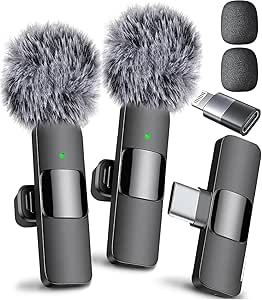 | Best for Windy Outdoor Clips | Connectors: Lightning and USB Type-C | Microphone pattern: Omnidirectional | Battery life: Up to 6 hours per charge | VIEW LATEST PRICE | See Our Full Breakdown |
| Wireless Mini Lavalier Microphone Set with Charging Case for iPhone and Android |  | Best for Two-Person Recording Modes | Microphones: 2 | Included connections: USB-C receiver and Lightning adapters | Battery life: Up to 6 hours per microphone | VIEW LATEST PRICE | See Our Full Breakdown |
| Occiam Mini Wireless Lavalier Microphone for iPhone and Android |  | Best for Long-Range Mobile Recording | Connectors: Lightning and USB-C | Wireless range: Up to 328 ft (100 m), unobstructed | Audio resolution: 48 kHz / 24-bit | VIEW LATEST PRICE | See Our Full Breakdown |
| Hollyland Lark M2 Wireless Lavalier Microphone | 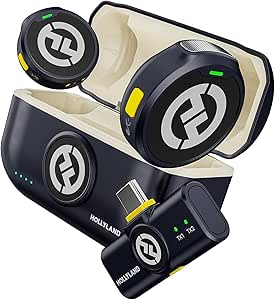 | Best Overall for Flexible Creator Setups | Weight: 9 g | Wireless range: Up to 1,000 ft, line of sight | Audio format: 48 kHz/24-bit | VIEW LATEST PRICE | See Our Full Breakdown |
| NEEWER KM19 Mini Wireless Lavalier Microphone, USB-C, Black |  | Best for Two-Person Recording | Wireless connection: 2.4 GHz | Connector: USB Type-C | Microphone setup: 2 transmitters and 1 receiver | VIEW LATEST PRICE | See Our Full Breakdown |
| MAYBESTA Wireless Mini Lavalier Microphone for iPhone and Android |  | Best for Simple Phone Setup | Connectivity: Wireless | Connectors: Lightning and USB Type-C | Pickup pattern: Omnidirectional | VIEW LATEST PRICE | See Our Full Breakdown |
| Labstandard Dual Wireless Lavalier Microphone for iPhone, iPad, and USB-C Devices |  | Best for Short Dual-Mic Clips | Connectivity: Listed as Bluetooth; description also refers to 2.4G transmission | Connectors: Lightning and USB Type-C | Microphone type: Mini lavalier | VIEW LATEST PRICE | See Our Full Breakdown |
| GoorDik Wireless USB-C Lavalier Microphone with Noise Reduction |  | Best for Multi-Device Accessory Coverage | Connectors: USB Type-C and USB Type-A; USB-C and Lightning adapters included | Microphone setup: 2 transmitters | Channels: 2 | VIEW LATEST PRICE | See Our Full Breakdown |
| wireless lavalier microphones for creator | Wireless range | Connectors |
|---|---|---|
| DJI Mic Mini Wireless Micropho | — | — |
| DJI Mic Mini Wireless Micropho | — | — |
| 2-Pack Wireless Mini Lavalier | Up to 65 ft (20 m) | — |
| NPTCL Wireless Lavalier Microp | Up to 70 ft | USB-C and Lightning |
| Wireless Lavalier Microphone S | Up to 164 ft in open areas | — |
| Amazpro Dual Wireless Lavalier | — | Lightning and USB Type-C |
| MAYBESTA Wireless Mini Lavalie | — | USB Type-C; Lightning adapter included |
| Mini Mic Pro Wireless Lavalier | — | Lightning and USB Type-C |
| Wireless Mini Lavalier Microph | Up to 65 ft (20 m) | — |
| Occiam Mini Wireless Lavalier | Up to 328 ft (100 m), unobstructed | Lightning and USB-C |
| Hollyland Lark M2 Wireless Lav | Up to 1,000 ft, line of sight | — |
| NEEWER KM19 Mini Wireless Lava | Up to 100 m (328 ft) | — |
| MAYBESTA Wireless Mini Lavalie | — | Lightning and USB Type-C |
| Labstandard Dual Wireless Lava | — | Lightning and USB Type-C |
| GoorDik Wireless USB-C Lavalie | 30 meters | USB Type-C and USB Type-A; USB-C and Lightning adapters included |
More Details on Our Top Picks
DJI Mic Mini Wireless Microphone (2 Transmitters, Mobile Receiver)
The DJI Mic Mini with Mobile Receiver is a strong fit for creators who want a two-person setup without adding much weight to a phone rig. Each transmitter weighs just 10 g, while the stated range reaches 300 m, giving it more room for movement than the 65-foot 2-Pack Wireless Mini Lavalier Microphones. Two noise-cancellation levels let creators adjust for different surroundings, and automatic audio limiting can help keep sudden loud sounds from clipping. The receiver connects with compatible phones, computers, tablets, and supported DJI Osmo devices, so it suits more than phone-only recording. The tradeoff is that this package has no charging case, unlike the other DJI Mic Mini kit, and its listed operating time is up to 11.5 hours. It is also not waterproof; Osmo Mobile compatibility requires a first-generation DJI OM Multifunctional Module.
Pros:- Two discreet 10 g transmitters suit lightweight phone and camera rigs.
- Up to 300 m stated transmission range offers more room than the 65-foot 2-Pack Wireless Mini Lavalier Microphones.
- Two noise-cancellation levels and automatic limiting give creators useful control over changing sound conditions.
- Works with compatible phones, computers, tablets, and supported DJI Osmo devices.
Cons:- No charging case is included, unlike the DJI Mic Mini kit with a charging case.
- Not waterproof, limiting use in rain or wet conditions.
- Osmo Mobile connection requires a first-generation DJI OM Multifunctional Module.
Best for: Mobile creators and interviewers who want two lightweight transmitters, long stated range, and compatibility with supported DJI devices.
Not ideal for: Creators who need a charging case for extended shoots, waterproof gear, or straightforward connection to Osmo Mobile devices without an extra module.
- Transmitters included:2
- Receiver:Mobile receiver
- Transmitter weight:10 g
- Maximum transmission range:Up to 300 m
- Maximum operating time:Up to 11.5 hours
- Noise cancellation:Two levels: Basic and Strong
- Microphone pattern:Omnidirectional
- Audio format with supported OsmoAudio devices:48 kHz, 24-bit
Our verdict“Choose this package for light, flexible two-person recording across compatible devices, but pick the other DJI Mic Mini kit if a charging case matters more.”
DJI Mic Mini Wireless Microphone Kit (2 Transmitters, 1 Receiver, Charging Case)
For creators who record often and would rather recharge between sessions than manage small batteries, the DJI Mic Mini kit with charging case stands out for its stated up to 48 hours of battery life across the kit. Its two 10 g transmitters are as light as those in the DJI Mic Mini Mobile Receiver package, but this version adds a receiver and case, making it better suited to repeated interviews or livestream sessions away from a wall outlet. The range is listed at up to 400 m, farther than the other DJI kit’s 300 m, though actual usable distance depends on the recording environment. Two noise-cancellation levels and automatic limiting support changing sound and volume. The tradeoffs are familiar: it is not waterproof, and Osmo Mobile use needs a first-generation DJI OM Multifunctional Module. Its camera-and-smartphone compatibility is useful, but the listing does not promise universal device support.
Pros:- Charging case provides up to 48 hours of stated battery life.
- Two 10 g transmitters stay unobtrusive on clothing.
- Up to 400 m stated range exceeds the 300 m listed for the DJI Mic Mini Mobile Receiver package.
- Two noise-cancellation levels and automatic limiting help manage varied environments and sudden volume peaks.
Cons:- Not waterproof, so it is a poor fit for recording in wet weather.
- Connecting to Osmo Mobile devices requires a first-generation DJI OM Multifunctional Module.
- The listed compatibility is limited to cameras and smartphones rather than specifying every computer or tablet.
Best for: Creators who record interviews, livestreams, or field content across multiple sessions and want a charging case plus a long stated transmission range.
Not ideal for: Buyers who need waterproof microphones or want an especially simple Osmo Mobile connection without an additional module.
- Transmitters:2
- Receiver:1
- Charging case:Included
- Transmitter weight:10 g
- Maximum transmission range:Up to 400 m
- Battery life with charging case:Up to 48 hours
- Sampling rate:48 kHz
- Maximum SPL:120 dB
Our verdict“Pick this DJI kit for frequent creators who value case-based recharging and longer stated range over the simpler mobile-receiver package.”
2-Pack Wireless Mini Lavalier Microphones for iPhone and Android
This two-mic set keeps the setup focused on direct phone recording: its receiver offers both USB-C and Lightning connectors for compatible iPhone and Android devices. That makes it a practical alternative to the NPTCL Wireless Lavalier Microphone Set, which also targets those connector types but lists a charging case and up to 24 hours of total use. Here, each microphone runs for up to 6 hours, and the stated wireless range is 65 feet—enough for many seated interviews, but far shorter than either DJI Mic Mini kit. Noise reduction, mute and echo modes, and real-time audio monitoring give new creators hands-on ways to manage a recording. The compact 10 g microphones are easy to carry, and the listing says simultaneous recording and charging are supported. Still, the short per-mic runtime and modest range make it less suitable for long or wide-ranging shoots.
Pros:- USB-C and Lightning receiver connectors support compatible iPhone and Android devices.
- Two microphones allow two speakers to record at once.
- Real-time audio monitoring helps creators catch sound problems during recording.
- Mute, noise-cancellation, and echo modes offer basic recording adjustments.
Cons:- Up to 6 hours of use per microphone falls short of the DJI Mic Mini kit’s stated case-supported 48 hours.
- The 65-foot range is much shorter than the range listed for either DJI Mic Mini kit.
- The supplied receiver is described for compatible phones rather than a broader camera and computer workflow.
Best for: New phone-based creators who record interviews or social video on compatible USB-C or Lightning devices and want monitoring and simple sound modes.
Not ideal for: Creators filming long sessions or moving far from the phone, who may benefit more from the NPTCL set’s charging case or a DJI kit’s longer stated range.
- Microphones included:2
- Receiver connectors:USB-C and Lightning
- Compatibility:Compatible iPhone and Android devices
- Wireless range:Up to 65 ft (20 m)
- Battery life:Up to 6 hours per microphone
- Microphone weight:10 g each
- Recording modes:Mute, noise cancellation, and echo
- Audio monitoring:Real-time
Our verdict“Choose this set for accessible two-person phone recording with monitoring, but look to the NPTCL or DJI kits for longer sessions or greater range.”
NPTCL Wireless Lavalier Microphone Set for USB-C and Lightning Devices
The NPTCL Wireless Lavalier Set makes a clear case for creators who regularly record two speakers on phones or tablets: it includes two omnidirectional microphones, works with compatible USB-C and Lightning devices, and uses plug-and-play setup without an app or Bluetooth. Its charging case supports up to 24 hours of total use, giving it a practical endurance advantage over the 2-Pack Wireless Mini Lavalier Microphones, whose listing specifies up to 6 hours per mic. The stated 70-foot range is also slightly beyond that model’s 65 feet, though both are better suited to close interview setups than the DJI Mic Mini kits with much longer listed ranges. Noise reduction and windscreen covers add useful help for everyday recording. The main limitation is six hours per microphone per charge; Lightning use with older iPhones may also require the included adapter.
Pros:- Two microphones support recording two speakers.
- Plug-and-play operation avoids app or Bluetooth setup.
- Charging case provides up to 24 hours of stated total use.
- USB-C and Lightning connections suit compatible phones and tablets.
Cons:- Each microphone runs for up to 6 hours per charge.
- The 70-foot stated range is far shorter than the ranges listed for the DJI Mic Mini kits.
- Lightning compatibility may require the included adapter for older iPhones.
Best for: Phone and tablet creators who record two-person interviews and want a simple receiver setup with a case for repeated sessions.
Not ideal for: Creators needing long uninterrupted recording, substantially greater wireless range, or a system with listed computer and camera compatibility.
- Microphones:2
- Connectors:USB-C and Lightning
- Microphone pattern:Omnidirectional
- Battery life per microphone:Up to 6 hours
- Total use with charging case:Up to 24 hours
- Wireless range:Up to 70 ft
- Signal-to-noise ratio:80 dB
- Compatible devices:Smartphones and tablets
Our verdict“Choose NPTCL for straightforward two-person phone interviews with case-supported use, but pick a DJI Mic Mini kit when range is the priority.”
Wireless Lavalier Microphone Set with Charging Case
This USB-C set is the endurance-focused choice among the phone-friendly options here, with up to 80 hours stated with its charging case and up to 10 hours per charge. That outlasts the NPTCL set’s stated 24 hours with its case, though the NPTCL includes both USB-C and Lightning connectors while this receiver is USB-C only. Two omnidirectional microphones let creators record a pair of speakers, and plug-and-play operation avoids the app or Bluetooth pairing required by some workflows. Its listed device support spans iPhone, iPad, Android phones, and Windows and Mac computers, making it more flexible on paper than the phone-focused 2-Pack Wireless Mini Lavalier Microphones. The 164-foot range applies to open areas, not every recording location, and the listing does not break out each mic’s battery life separately. Treat the case total as a stated maximum, not a guarantee for every shoot.
Pros:- Charging case supports up to 80 hours of stated total battery life.
- Up to 10 hours per charge is longer than the 6-hour per-mic figure listed for the NPTCL set.
- Two omnidirectional microphones support two-person recording.
- Listed compatibility includes phones, tablets, and Windows and Mac computers.
Cons:- USB-C connector does not directly serve Lightning-only devices.
- The stated 164-foot range applies to open areas.
- Per-microphone battery life is not specified separately.
Best for: USB-C creators who record two people across phones, tablets, or computers and want long stated case-supported runtime.
Not ideal for: Lightning-only users and creators who need a clearly specified per-microphone battery duration or dependable long range through obstacles.
- Wireless connection:2.4 GHz
- Connector:USB Type-C
- Microphones included:2
- Polar pattern:Omnidirectional
- Wireless range:Up to 164 ft in open areas
- Battery life per charge:Up to 10 hours
- Battery life with charging case:Up to 80 hours
- Charging case capacity:1200 mAh
- Compatible devices:iPhone, iPad, Android phones, Windows and Mac computers
Our verdict“Choose this set for USB-C recording across phones and computers with extended stated case runtime, but select NPTCL if Lightning connectivity is needed.”
Amazpro Dual Wireless Lavalier Microphone for iPhone and Android
The Amazpro Dual Wireless Lavalier Microphone suits creators who need two speakers mic’d up and want fewer charging breaks. Its case provides up to 30 hours of total power, and the LED display helps track the remaining charge; unlike the Mini Mic Pro, which lists up to six hours per charge, Amazpro emphasizes extended use across sessions. The 5 g clip-on mics are light, and one-click noise cancellation offers a quick way to reduce background sound without an app. A 30 m transmission range is useful for moving shots, while receiver pass-through charging can help keep a phone powered during recording. The tradeoff is limited detail about each mic’s battery life, and connection depends on a Lightning or USB-C port. I’d choose it for two-person mobile shoots, not creators who need clearly documented per-mic runtime.
Pros:- Two microphones support interviews and paired creator recordings.
- Charging case provides up to 30 hours of total power and has an LED battery display.
- Light 5 g clip-on microphones include one-click noise cancellation.
- Receiver supports pass-through charging while recording.
Cons:- Individual microphone battery life is not specified.
- Requires a compatible Lightning or USB-C connection.
- The stated 30 m range may not suit shoots that need greater separation.
Best for: Phone-based interviewers and two-person creators who record regularly and value a long total charge reserve.
Not ideal for: Creators who need a confirmed runtime for each microphone or use a device without Lightning or USB-C.
- Transmission:2.4 GHz private protocol
- Connectors:Lightning and USB Type-C
- Microphones:2 lavalier microphones
- Microphone weight:5 g each
- Transmission range:Up to 30 m
- Total battery life:Up to 30 hours
- Special features:One-click noise cancellation, LED battery display, receiver pass-through charging
- Included items:Charging case, charging cable, 2 microphones, user manual, windproof covers
Our verdict“Choose Amazpro for dual-speaker phone recordings where long total case power matters more than a clearly stated per-mic runtime.”
MAYBESTA Wireless Mini Lavalier Microphone Kit for USB-C and Lightning Devices
The MAYBESTA WM351A is the straightforward choice for creators who want to plug in a receiver and start recording without Bluetooth pairing or an app. Its USB-C receiver and included Lightning adapter cover many current phones and tablets, while noise reduction and windscreens address common outdoor and room-recording annoyances. Compared with the dual-mic Amazpro, this is a simpler, single-channel option: better suited to solo narration than interviews with two speakers. MAYBESTA also packs easily in its storage pouch, but its product details omit both battery life and wireless range, making it harder to plan longer shoots or confirm how far the creator can move from a phone. I’d pick it for casual, mobile solo content where low setup friction matters more than documented endurance or range.
Pros:- USB-C receiver and Lightning adapter support a range of compatible devices.
- Connects without Bluetooth or an app.
- Includes noise reduction and windscreens for everyday recording conditions.
- Lightweight kit includes a storage pouch for travel.
Cons:- Battery life is not specified.
- Wireless range is not specified.
- Listed channel count is one, limiting suitability for two-person interviews.
Best for: Solo creators who record short phone videos and want a basic kit with USB-C and Lightning coverage.
Not ideal for: Interviewers needing two microphone channels or creators who must plan around known battery life and transmission distance.
- Model:WM351A
- Connectivity:Wireless
- Connectors:USB Type-C; Lightning adapter included
- Microphone type:Lavalier
- Polar pattern:Omnidirectional
- Channels:1
- Item weight:20 g
- Included accessories:Windscreens and storage pouch
Our verdict“Choose MAYBESTA for uncomplicated solo recording across compatible USB-C and Lightning devices, but skip it if runtime or range must be known in advance.”
Mini Mic Pro Wireless Lavalier Microphone for iPhone and Android
The Mini Mic Pro stands out for creators who record outdoors and want more than a basic foam cover. Its included foam wind tips and deadcat wind covers give it a practical advantage over the MAYBESTA kit, whose listed accessories include windscreens but do not specify furry covers. USB-C and Lightning adapters, plug-and-play operation, and device charging during recording make it convenient for phone-based shoots. The main limit is endurance: the listed runtime is up to six hours per charge, well below the longer total case power offered by Amazpro and Occiam. Product information also conflicts on power, describing rechargeable recording while listing two C batteries as required, so I would verify the package details before relying on it for a shoot. This is a focused pick for short outdoor takes, not an all-day recording kit.
Pros:- Includes foam wind tips and deadcat covers for varied wind conditions.
- USB-C and Lightning adapters support compatible phones, tablets, and laptops.
- Plug-and-play setup avoids app and Bluetooth pairing.
- Receiver supports charging a connected device during recording.
Cons:- Battery life is listed as up to six hours per charge.
- Product details conflict between rechargeable operation and a requirement for two C batteries.
- A six-month warranty and 90-day refund guarantee offer a shorter stated coverage period than some alternatives.
Best for: Mobile creators filming short outdoor clips who want both foam and furry wind protection in the kit.
Not ideal for: Creators recording long sessions or anyone who needs unambiguous battery and power-source details before buying.
- Connectors:Lightning and USB Type-C
- Microphone pattern:Omnidirectional
- Battery life:Up to 6 hours per charge
- Recording features:One-touch recording, battery indicator, clip, noise reduction
- Microphones:2 lavalier microphones
- Included wind protection:2 foam wind tips and 2 deadcat wind covers
- Device charging:Connected device can charge while recording
- Warranty:90-day refund guarantee and 6-month warranty
Our verdict“Pick Mini Mic Pro for short outdoor phone shoots where its furry wind covers matter more than long runtime or fully clear power specifications.”
Wireless Mini Lavalier Microphone Set with Charging Case for iPhone and Android
This two-microphone set gives creators more recording controls than the simpler MAYBESTA kit: mute, noise cancellation, and echo modes let users adapt the sound to different formats without changing hardware. Each mic is listed for up to six hours of use, and the case can recharge a microphone up to eight times, making the set more suitable for repeated short shoots than a kit with no stated battery figures. Its claimed 65 ft range is shorter than Occiam’s unobstructed 328 ft claim, but ample for many phone-based interviews and creator setups. The description does not identify supported phone models, so adapter fit should be checked against the actual device. I’d favor it for two-person content with mode flexibility, while creators prioritizing longer stated range should compare Occiam.
Pros:- Two microphones support interviews and co-hosted videos.
- Three modes provide mute, noise cancellation, and echo options.
- Each microphone is listed for up to six hours, with a case that can recharge one up to eight times.
- USB-C receiver and Lightning adapters cover compatible device ports.
Cons:- The stated wireless range is up to 65 ft, shorter than Occiam’s unobstructed claim.
- Specific phone-model compatibility is not listed.
- Charging-case capacity is 700 mAh, but total system runtime is not stated.
Best for: Interviewers and co-hosts who need two microphones, a charging case, and selectable mute, noise-cancellation, and echo modes.
Not ideal for: Creators who need verified compatibility with a specific phone model or want a longer stated wireless range.
- Microphones:2
- Included connections:USB-C receiver and Lightning adapters
- Battery life:Up to 6 hours per microphone
- Microphone charging time:Less than 1 hour
- Charging case capacity:700 mAh
- Wireless range:Up to 65 ft (20 m)
- Recording modes:Mute, noise cancellation, and echo
- Microphone weight:10 g each
Our verdict“Choose this set for two-person recordings that benefit from onboard sound modes and case recharging, provided its adapters fit your devices.”
Occiam Mini Wireless Lavalier Microphone for iPhone and Android
For creators who need room to move, the Occiam Mini has the strongest stated range in this group: up to 328 ft in unobstructed conditions, compared with 65 ft for the two-mic set. It also lists 48 kHz/24-bit audio, a 10-hour per-charge runtime, and up to 54 hours with its case, giving mobile creators more defined recording and power figures than MAYBESTA. A 7 g microphone, magnetic attachments, furry windscreens, and receiver pass-through charging round out a flexible phone kit. The long-range claim is explicitly conditional on a clear path, so walls and other obstacles may reduce it. Compatibility exclusions also include certain action-camera brands and OnePlus devices. I’d choose Occiam for supported phones and open-location shoots, but not for creators whose gear falls into those exclusions.
Pros:- Up to 10 hours per charge and up to 54 hours with the charging case.
- Up to 328 ft of transmission is specified for unobstructed conditions.
- 48 kHz/24-bit audio resolution and 80 dB signal-to-noise ratio are listed.
- Light 7 g microphone includes magnetic attachments, furry windscreens, and receiver phone charging.
Cons:- The maximum range applies only when unobstructed and may fall in real shooting environments.
- Does not support certain action-camera brands or OnePlus devices.
- The listed compatibility exclusions make it less universal than a simple Lightning/USB-C description may suggest.
Best for: Creators filming on compatible iOS or Android devices who need long movement range, extended case power, and detailed audio specifications.
Not ideal for: OnePlus owners, users of unsupported action-camera brands, or creators who need the stated range to hold through obstacles.
- Connectors:Lightning and USB-C
- Wireless range:Up to 328 ft (100 m), unobstructed
- Audio resolution:48 kHz / 24-bit
- Signal-to-noise ratio:80 dB
- Microphone weight:7 g
- Battery life:Up to 10 hours per charge; up to 54 hours with charging case
- Maximum SPL:120 dB
- Features:AI noise cancellation, mute control, reverb mode, phone charging while recording
Our verdict“Choose Occiam for supported-phone shoots where long range and extended case runtime matter, but avoid it if you use an excluded device or record through obstacles.”
Hollyland Lark M2 Wireless Lavalier Microphone
The Hollyland Lark M2 is the strongest all-rounder here for creators who need a compact mic system that can cover more than a phone-only workflow. Its USB-C connectivity, two-channel setup, and stated support for phones, computers, and cameras give it broader reach than the phone-focused MAYBESTA model. The tiny 9 g design is easy to wear on camera, while adjustable noise cancellation can help tame background sound without forcing every recording into the same processing mode. A claimed 1,000-foot line-of-sight range suits open locations, though walls and other obstructions can reduce that advantage. Battery life is also a tradeoff: expect up to 10 hours per continuous session, with the case extending total use to 30 hours. I’d choose it for flexibility, not for a guaranteed full-day uninterrupted recording.
Pros:- Lightweight 9 g microphone design
- Supports USB-C and a range of phone, computer, and camera workflows
- Adjustable noise cancellation offers more control over background sound
- Charging case brings stated total runtime to up to 30 hours
Cons:- The 1,000-foot range applies to line-of-sight conditions
- Continuous use is limited to up to 10 hours before recharging
Best for: Creators who record on USB-C phones, computers, or cameras and want a lightweight two-channel setup with adjustable noise cancellation.
Not ideal for: People recording uninterrupted sessions longer than 10 hours, or creators who need dependable long-distance transmission through walls or crowded interiors.
- Weight:9 g
- Wireless range:Up to 1,000 ft, line of sight
- Audio format:48 kHz/24-bit
- Signal-to-noise ratio:70 dB
- Maximum sound pressure level:115 dB
- Battery life:Up to 10 hours continuous; up to 30 hours with charging case
- Connectivity:USB, USB-C, wireless; USB Type-C connector
- Pickup pattern and channels:Omnidirectional; 2 channels
Our verdict“Choose the Lark M2 if you want a compact, versatile creator system; pick the NEEWER KM19 instead if you need its specified two-transmitter kit and stereo or mono output options.”
NEEWER KM19 Mini Wireless Lavalier Microphone, USB-C, Black
For interviews, co-hosted clips, and two-person videos, the NEEWER KM19 makes the most sense because its kit includes two transmitters and offers stereo or mono output. That gives it a clearer multi-speaker use case than the single-mic-style convenience of the MAYBESTA WM356-1 listing, while its 100 m stated range is more modest than the Hollyland Lark M2’s line-of-sight claim. Its USB-C receiver, OTG adapters, charging case, and windscreens give mobile creators a useful starter bundle. You also get adjustable noise cancellation and mute control, plus a specified 48 kHz/24-bit format. The drawbacks are compatibility caveats: it is not compatible with GoPro, some Android phones need OTG enabled, and app interaction is limited to Android. Each transmitter is listed for up to six hours per charge, so long shoots may need breaks.
Pros:- Two transmitters support recording two speakers
- Stereo and mono output choices suit different editing workflows
- Charging case provides up to 30 hours of total runtime
- Includes OTG adapters, windscreens, and a carrying pouch
Cons:- Not compatible with GoPro
- Some Android devices require OTG activation
- App interaction is available on Android only, and each transmitter is listed for up to six hours per charge
Best for: USB-C phone and tablet creators who regularly record interviews or two-person conversations and want separate transmitters with stereo or mono options.
Not ideal for: GoPro users, creators who need app controls on iOS, or Android users who cannot enable OTG when required.
- Wireless connection:2.4 GHz
- Connector:USB Type-C
- Microphone setup:2 transmitters and 1 receiver
- Audio format:48 kHz/24-bit
- Frequency response:20 Hz–20 kHz
- Wireless range:Up to 100 m (328 ft)
- Runtime:Up to 6 hours per transmitter; up to 30 hours with charging case
- Signal-to-noise ratio and maximum SPL:81 dB; 120 dB
- Included accessories:Charging case, 2 OTG adapters, charging cable, 2 windscreens, pouch
Our verdict“Pick the KM19 for two-person USB-C recordings and flexible channel output; the Hollyland Lark M2 is a better fit if broad device support matters more than this kit’s specific interview features.”
MAYBESTA Wireless Mini Lavalier Microphone for iPhone and Android
The MAYBESTA WM356-1 is aimed at creators who want to connect a mic and start recording without managing a more elaborate kit. Its automatic pairing and plug-and-play design keep setup simple, while the included Lightning and USB-C connectivity can serve compatible iPhones and Android devices. That makes it more adaptable across phone types than the USB-C-only NEEWER KM19, although the KM19 gives buyers much more detail about range, per-charge runtime, and recording modes. MAYBESTA lists two lavalier microphones, a receiver, clips, and sponge tips, giving it useful basics for mobile recording. The big limitation is missing performance data: the listing does not specify wireless range or battery runtime, and its battery requirement is unclear. I’d treat it as a convenience-first phone option, not a dependable choice for planned long shoots.
Pros:- Lightning and USB-C connectivity supports compatible iPhone and Android devices
- Automatic pairing and plug-and-play setup reduce setup steps
- Includes two lavalier microphones, clips, and sponge tips
- Noise reduction and a windscreen help address some background and wind noise
Cons:- Wireless range and battery runtime are not specified
- The battery requirement is unclear
- The listing provides fewer recording and performance details than the NEEWER KM19
Best for: Phone-first creators who switch between compatible Lightning and USB-C devices and value straightforward pairing over detailed recording controls.
Not ideal for: Creators planning long or remote shoots who need a stated battery runtime and wireless range, or buyers who want clearly documented operating requirements.
- Connectivity:Wireless
- Connectors:Lightning and USB Type-C
- Pickup pattern:Omnidirectional
- Compatible devices:Android, laptop, smartphone, tablet, iPad
- Signal-to-noise ratio:80 dB
- Frequency:2.4 GHz
- Included microphones:2 lavalier microphones
- Included accessories:1 receiver, USB charging cable, 2 sponge tips, 3 clips
Our verdict“Choose MAYBESTA for a simple, cross-connector phone setup, but favor the NEEWER KM19 if you need clearly stated runtime, range, and two-speaker recording options.”
Labstandard Dual Wireless Lavalier Microphone for iPhone, iPad, and USB-C Devices
The Labstandard dual set targets creators making short interviews or paired on-camera clips across Lightning and USB-C devices. Its two microphones and real-time audio synchronization are useful for capturing two speakers, while the listed 0.008-second latency points to a focus on keeping audio aligned with video. That is a more specific short-form pitch than the Hollyland Lark M2, which offers clearer documented audio-format and range details for broader recording use. Labstandard lists about six hours of battery life, enough for many brief shoots but less flexible than the Lark M2’s case-supported total of up to 30 hours. There is also a specification mismatch: connectivity is listed as Bluetooth, while the description refers to 2.4G transmission, and the power details mention both C batteries and rechargeable microphones. I’d only choose it if the connection and charging method are confirmed for your device.
Pros:- Two microphones suit paired speakers and short interviews
- Lightning and USB-C connectors broaden phone and tablet compatibility
- Real-time audio synchronization is listed as a feature
- About six hours of battery life is specified
Cons:- Connectivity details conflict between Bluetooth and 2.4G transmission
- Power information is unclear, listing C batteries alongside rechargeable microphones
- The listing provides less audio-format and range detail than the Hollyland Lark M2
Best for: Creators filming short two-person clips on compatible Lightning or USB-C phones and tablets who can verify the connection and power details before recording.
Not ideal for: Buyers who need unambiguous wireless specifications, clear charging instructions, or a well-documented camera and computer workflow.
- Connectivity:Listed as Bluetooth; description also refers to 2.4G transmission
- Connectors:Lightning and USB Type-C
- Microphone type:Mini lavalier
- Pickup pattern and channels:Omnidirectional; 2 channels
- Battery life:About 6 hours
- Latency:0.008 seconds
- Weight:0.05 kg
- Dimensions:4.5 × 3.3 × 0.7 inches
Our verdict“Consider Labstandard for short dual-mic mobile clips only after confirming its connection and power setup; the Hollyland Lark M2 is the clearer choice for a better-documented creator workflow.”
GoorDik Wireless USB-C Lavalier Microphone with Noise Reduction
The GoorDik wireless lavalier set is a practical pick for creators who want two transmitters and adapters for more than one kind of device. The included USB-C and Lightning adapters, along with foam covers and furry windscreens, make it more accessory-ready than the USB-C-only NEEWER KM19. Its two transmitters support separate speakers, and the selectable noise-reduction and original-sound modes give creators a choice between processing and a less altered recording. The listed 30-meter range is suited to ordinary mobile shooting, but it falls short of the Hollyland Lark M2’s stated line-of-sight distance. Battery life is given as six to 12 hours per transmitter, though that broad span leaves less certainty for shoot planning. Some Android phones may also need OTG activation, and computers may require manual input selection.
Pros:- Two transmitters support recording two speakers
- Includes USB-C and Lightning adapters
- Noise-reduction and original-sound modes provide different processing choices
- Includes foam covers and furry windscreens for varied recording conditions
Cons:- Listed wireless range is 30 meters, shorter than the Hollyland Lark M2’s stated line-of-sight range
- Battery estimate spans six to 12 hours per transmitter
- Some Android phones may require OTG activation, and computers may need manual input selection
Best for: Mobile creators who record two speakers and want both Lightning and USB-C adapters plus wind protection for outdoor or casual shoots.
Not ideal for: Creators needing a precisely stated runtime, long-distance transmission, or a setup that works on Android and computers without input or OTG adjustments.
- Connectors:USB Type-C and USB Type-A; USB-C and Lightning adapters included
- Microphone setup:2 transmitters
- Channels:2
- Pickup pattern:Omnidirectional
- Wireless range:30 meters
- Battery life:6–12 hours per transmitter
- Frequency response:20–20,000 Hz
- Signal-to-noise ratio:65 dB
- Included accessories:USB charging cable, USB adapter, Lightning adapter, 4 foam covers, 2 furry windscreens
Our verdict“Choose GoorDik if adapter coverage, two microphones, and included wind protection matter most; choose the NEEWER KM19 for more clearly specified stereo or mono output and total runtime.”

How We Picked
I compared these 15 wireless lavalier microphones for creators around the decisions that affect everyday production: device compatibility, one- or two-person recording, setup complexity, charging and storage, and how readily a system can fit into more than one kind of shoot. I gave greater weight to clear use cases and practical versatility than to broad claims such as noise reduction, since those claims do not tell a buyer how a microphone will perform in every room or recording environment.
The order reflects how well each option appears suited to a typical creator’s workflow, with receiver-based kits and useful included accessories favored when they add flexibility without making setup needlessly complicated. I separated products by their likely role rather than treating similar-looking phone microphones as interchangeable. Because the product names alone do not establish recording range, battery runtime, audio format, or exact accessory contents, I avoid treating those details as confirmed advantages; buyers should verify them against the current product listing and their own device.
| wireless lavalier microphones for creator | Connectors |
|---|---|
| DJI Mic Mini Wireless Micropho | — |
| DJI Mic Mini Wireless Micropho | — |
| 2-Pack Wireless Mini Lavalier | — |
| NPTCL Wireless Lavalier Microp | USB-C and Lightning |
| Wireless Lavalier Microphone S | — |
| Amazpro Dual Wireless Lavalier | Lightning and USB Type-C |
| MAYBESTA Wireless Mini Lavalie | USB Type-C; Lightning adapter included |
| Mini Mic Pro Wireless Lavalier | Lightning and USB Type-C |
| Wireless Mini Lavalier Microph | — |
| Occiam Mini Wireless Lavalier | Lightning and USB-C |
| Hollyland Lark M2 Wireless Lav | — |
| NEEWER KM19 Mini Wireless Lava | — |
| MAYBESTA Wireless Mini Lavalie | Lightning and USB Type-C |
| Labstandard Dual Wireless Lava | Lightning and USB Type-C |
| GoorDik Wireless USB-C Lavalie | USB Type-C and USB Type-A; USB-C and Lightning adapters included |
Factors to Consider When Choosing Wireless Lavalier Microphones For Creators
Before choosing a kit, decide what your recording setup needs to do on an ordinary shoot. A microphone that is easy to clip on and connect to a phone may be a better creator tool than a more elaborate system you rarely use. These factors help separate convenience from capability.
Match the connector to your actual recording device
Start with the device you record on most, not the device you might buy later. A USB-C or Lightning label does not always mean every connector, adapter, or recording mode is included in the box. Check whether the receiver plugs directly into the phone, whether a cable is needed, and whether your case blocks the port. Phone model changes can also make an older kit less convenient, so a creator who switches between devices should favor a clearly documented multi-device setup. Before a shoot, record a short test in the camera or app you plan to use; connection in one app does not guarantee the same behavior in another. A connector mismatch can make an otherwise suitable microphone unusable without extra gear.
Choose one transmitter or two based on the way you film
A second transmitter is useful when you regularly record interviews, co-hosted videos, or two-person demonstrations. It also adds another battery to charge and another microphone to place, so it is not a free upgrade for a solo creator. Think through whether your second speaker will be close enough for a clip-on mic and whether you can monitor both voices during recording. If most videos feature one person, a single-mic workflow may be quicker and easier to pack. If collaborations are occasional, a two-transmitter kit can still make sense when it avoids borrowing or buying a separate setup. The right choice depends on your recurring format, not the maximum number of people you might record once.
Treat noise reduction as one tool, not a substitute for placement
Noise-reduction features can help with some steady background sounds, but they cannot make every noisy location sound clean. Aggressive processing may also change the tone of speech, so listen to a sample before relying on it for a finished video. Mic placement often has a larger effect: clipping the transmitter close to the speaker’s mouth can improve voice clarity before any processing is applied. Wind, fabric rubbing, and a loud source close to the speaker may still create problems. For outdoor work, check whether the kit includes a suitable windscreen and plan a backup recording when the audio matters. A quiet corner and a quick sound check are often more dependable than a feature name alone.
Compare the full workflow, not just the microphone
A wireless system includes the transmitter, receiver, charging method, clips, cables, and any case—not only the part attached to a shirt. A charging case can simplify storage and power management, especially when you move between shoots, but it also takes up space and does not replace checking charge before recording. A small plug-in receiver can reduce setup steps on a phone, while a separate receiver may suit creators who want a more adaptable kit. Look for clear instructions about pairing, charging, and reconnecting after a device restart. If the setup takes longer than your usual filming window, convenience may matter more than an extra feature. Check the included accessories rather than assuming a case or adapter comes with every version.
Pay for flexibility only when your projects will use it
A more established system can be a better fit when you need repeatable two-person recording or expect to use the microphone across different shoots. But extra capability brings more parts to manage, and a creator who records short phone clips may gain little from a complex kit. A basic phone-oriented microphone can make sense for quick social videos if it connects cleanly and meets your recording needs. Do not choose on a feature list alone: check whether the feature solves a problem you face, such as recording two speakers or managing a receiver and charging case. Also verify that a claimed accessory is included with the exact kit version you plan to buy. Spend for a workflow you will use often, not for flexibility that stays in the box.
Frequently Asked Questions
Should I choose a two-transmitter kit if I usually record alone?
Not automatically. A second transmitter earns its place when interviews, guest videos, or two-person demonstrations are a regular part of your schedule. For solo recording, it adds another item to charge and keep track of, while offering little day-to-day benefit. If you expect to collaborate later, compare whether the kit’s receiver and pairing setup make adding the second speaker straightforward. Otherwise, prioritize easy connection and handling for your usual single-speaker shoots.
Can I use one of these microphones with both an iPhone and an Android phone?
Only if the particular kit supports the connectors and recording behavior of both devices. Some product names mention USB-C and Lightning, but you should confirm whether both receiver types are included or whether an adapter is needed. Check compatibility with your exact phone model, especially if it has a case that may obstruct a receiver plugged directly into the port. Then test the microphone in the app you use to record. A successful connection to one phone does not guarantee that every app or device will handle the audio the same way.
Will noise reduction make a phone video sound good outdoors?
It may reduce some background noise, but it cannot remove every source of outdoor interference. Wind and clothing rub can remain distracting, and heavy processing may affect how speech sounds. Use a suitable windscreen if the kit includes one, clip the mic close to the speaker, and record a short test before filming. If the location is especially loud, moving closer to the speaker or finding a quieter spot can help more than relying on a processing feature. For important shoots, keep a backup audio plan.
Is a charging case worth choosing over a smaller, simpler kit?
A case can be useful when you film often away from home and want the microphones and accessories stored together. It can also make charge management easier, but you should confirm what it charges and how the kit indicates remaining battery. If you record short clips and already have a reliable charging routine, a smaller setup may be quicker to carry and connect. Compare the case’s practical value with the extra size and any setup steps it adds. The best choice is the one that fits your actual shooting and packing habits.
What should I check before recording a paid or important video?
Confirm that the receiver connects to the intended device and that the recording app is receiving the microphone signal, not only the phone’s built-in audio. Record and replay a brief sample to catch low volume, clipping, interference, or fabric noise. Check transmitter charge, mic placement, and any wind protection before the speaker starts. If two people are recording, listen to both voices separately when the system allows it. For high-stakes work, arrange a backup recording method rather than relying on a new wireless setup without a test.
Conclusion
For the widest fit across solo videos and interviews, my best overall choice is the DJI Mic Mini Wireless Microphone Kit with charging case; its two transmitters and case support a flexible creator workflow. For a more compact branded system, choose the Hollyland Lark M2 as the best premium-style pick, after confirming that its included receiver suits your devices. The 2-Pack Wireless Mini Lavalier Microphones is a practical best value direction for creators who need two phone-ready microphones and have verified connector compatibility. Beginners who want a straightforward phone setup can start with the Mini Mic Pro, while creators who need a specific USB-C or Lightning connection should compare the MAYBESTA, NPTCL, and Labstandard kits against their exact device and included accessories. Choose the simpler single-person setup if you mostly film alone; opt for a two-transmitter system when guests are part of your regular format.