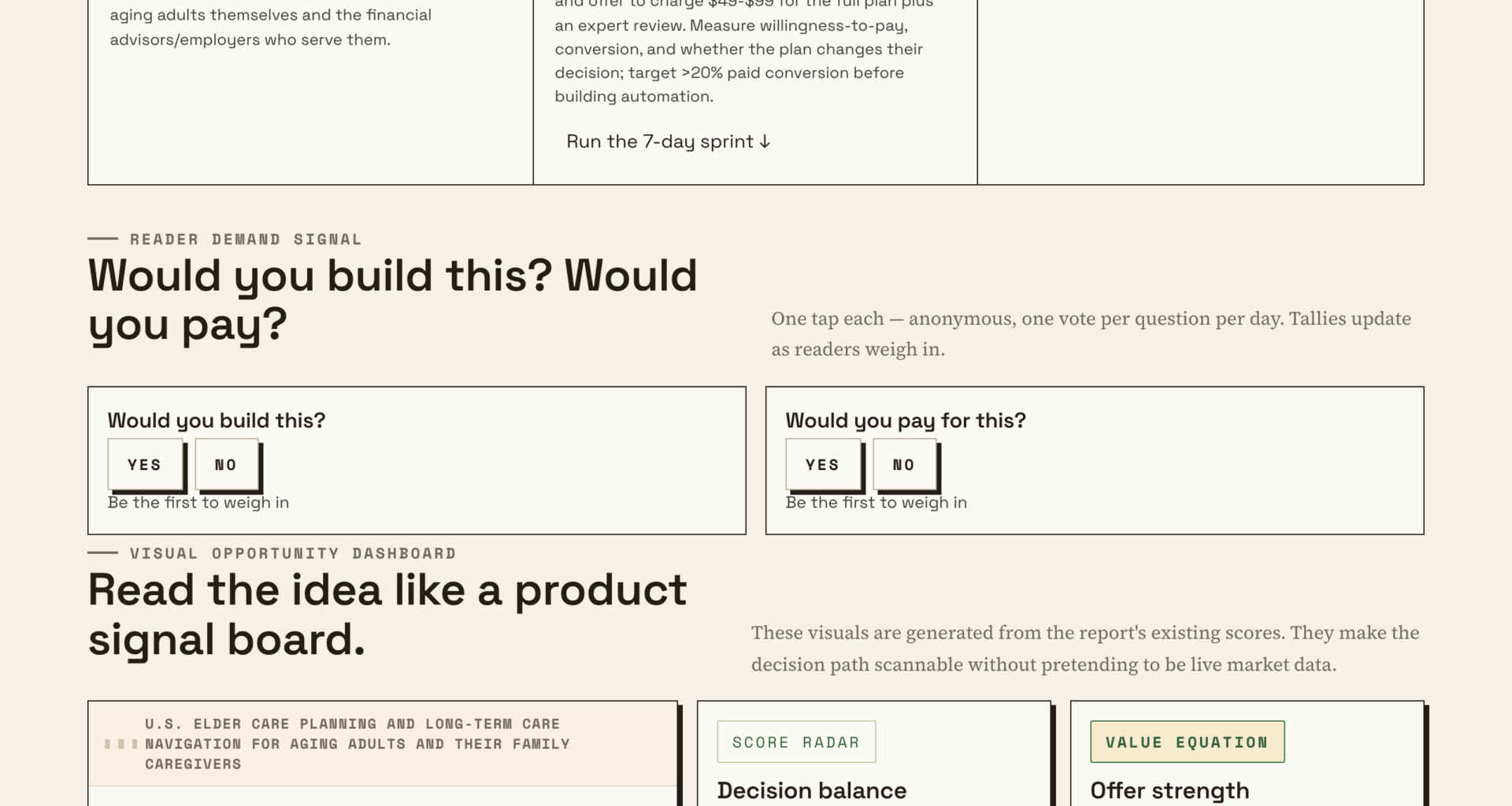

📊 Full opportunity report: Retirement Care Planner on IdeaNavigator AI — validation score, market gap, and execution plan.

Get audio and creator gear delivered free with Prime
- Fast, free delivery on millions of items
- Prime Video, Amazon Music and more included
- Member-only deals all year
TL;DR
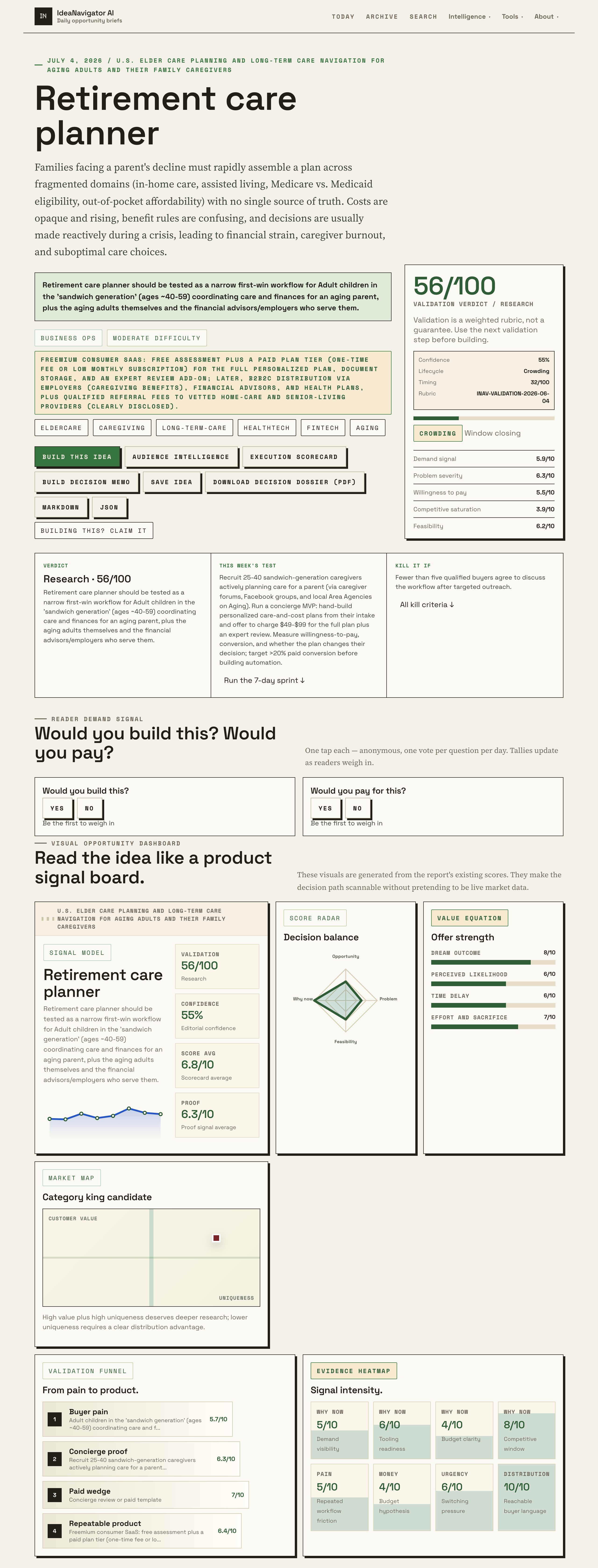
A prototype retirement care planner is being tested to assist adult children in their 40s and 50s in managing care and costs for aging parents. The tool aims to provide personalized plans, cost comparisons, and guidance, addressing a growing market need.
A new retirement care planning web app is being tested to help middle-aged adult children coordinate care and finances for aging parents, addressing a critical gap in fragmented, reactive decision-making. The tool aims to deliver personalized care and cost plans, offering a structured approach to a complex, costly process.
The proposed platform targets families in the ‘sandwich generation’ (ages approximately 40-59) who are managing both their own careers and caregiving responsibilities. It offers a guided assessment of a parent’s health, location, and financial situation, then generates localized cost comparisons between in-home care, assisted living, and nursing homes, using publicly available data. The app also explains Medicare and Medicaid eligibility, projects affordability timelines, and provides a prioritized action checklist with vetted local providers.
According to sources involved in the development, the initial testing involves recruiting 25-40 caregivers through online forums, Facebook groups, and local agencies. The pilot offers a free, personalized care plan with an option for a paid upgrade, aiming to measure user willingness to pay, plan impact on decision-making, and potential for automation. The project is focusing on a high-cost state initially to manage data complexity, with plans to expand based on early results.
Why a Structured Care Planning Tool Is Needed Now
The development of this retirement care planner responds to a rising demographic and economic challenge. With roughly 73 million Americans projected to be 65+ by 2030, and nearly 70% of those turning 65 likely to need long-term care, the market for guidance is expanding rapidly. Costs for assisted living and nursing home care have surged, with median monthly assisted living costs reaching $6,200 and nursing home semi-private rooms averaging $115,000 annually. Many families face reactive, crisis-driven decisions that lead to financial strain and caregiver burnout. A structured, personalized planning tool could improve decision quality, reduce costs, and ease emotional burdens, making it highly relevant for a broad segment of the population.
As an affiliate, we earn on qualifying purchases.
Growing Demand for Long-Term Care Planning Solutions
The U.S. elder care landscape has seen significant changes, with costs rising sharply in recent years and benefit rules becoming increasingly complex. Currently, families often lack a single source of truth for decision-making, relying instead on fragmented information from providers, government programs, and informal networks. The ‘sandwich generation’ faces mounting pressure to balance their own financial stability with the needs of aging parents. Existing solutions are limited, often reactive, and not personalized, creating a clear opportunity for a guided, data-driven platform to fill this gap. The pilot project aims to test whether such a tool can effectively streamline decision-making and reduce associated stress.
“Families are making urgent, reactive decisions without comprehensive guidance, leading to financial and emotional strain.”
— an anonymous researcher
Uncertainties About Adoption and Effectiveness
It is not yet clear how many caregivers will adopt the pilot platform or how significantly it will influence their decision-making. Early user feedback and willingness-to-pay metrics are still being collected, and the scalability of the solution remains to be demonstrated. Additionally, the impact on actual care choices and cost savings will require further validation in larger, diverse populations.
Next Steps in Pilot Testing and Validation
The project team plans to complete initial recruitment and user testing within the next few months, analyzing user feedback and payment willingness. Based on these results, they will refine the platform’s features and consider broader deployment. Success in early phases could lead to expanded trials, integration with employer caregiving benefits, and partnerships with financial advisors and senior care providers. The ultimate goal is to develop a scalable, automated solution that can serve a wide range of families across different states and care scenarios.
Key Questions
How does the retirement care planner determine costs and care options?
The platform uses publicly available benchmark data to compare local costs of in-home care, assisted living, and nursing homes, tailored to the parent’s location and health status.
Will this tool be accessible to families outside the initial testing state?
Initially, the pilot focuses on a single high-cost state to manage data complexity, but future plans include expanding to other states based on pilot success.
How much will the full service cost?
The pilot offers a paid plan tier at $49-$99, which includes a comprehensive personalized plan and expert review. Future pricing will depend on user feedback and scalability considerations.
Can financial advisors or employers use this tool for their clients or employees?
Yes, the platform is designed to be integrated into B2B2C channels, including employer caregiving benefits and financial advisory services, once validated.
What are the main benefits of using this retirement care planner?
The tool aims to provide clarity on costs, eligibility, and care options, helping families make informed decisions, reduce costs, and avoid crisis-driven choices.
Source: IdeaNavigator AI
Halloween Picks
halloween
As an affiliate, we earn on qualifying purchases.