
Zero-copy networking speeds up data transfer by allowing your system to move data directly between application and hardware, cutting down on unnecessary copying. This reduces CPU load, making everything run more efficiently and with less delay. It’s vital for high-performance tasks like streaming, real-time communication, or managing large files. By simplifying data movement and boosting throughput, it helps your systems stay fast and responsive—stick with us to discover more about how it works and why it’s indispensable now.

Get audio and creator gear delivered free with Prime
- Fast, free delivery on millions of items
- Prime Video, Amazon Music and more included
- Member-only deals all year
Key Takeaways
- Zero-copy networking speeds up data transfer by avoiding unnecessary copying, reducing delays and CPU load.
- It allows data to move directly between applications and hardware, improving system efficiency.
- Hardware support and acceleration enhance zero-copy performance, especially for high-data, real-time tasks.
- Reducing CPU usage frees resources for other important processing, boosting overall system responsiveness.
- Critical for applications like streaming, large file transfer, and high-frequency trading that demand fast, low-latency data handling.
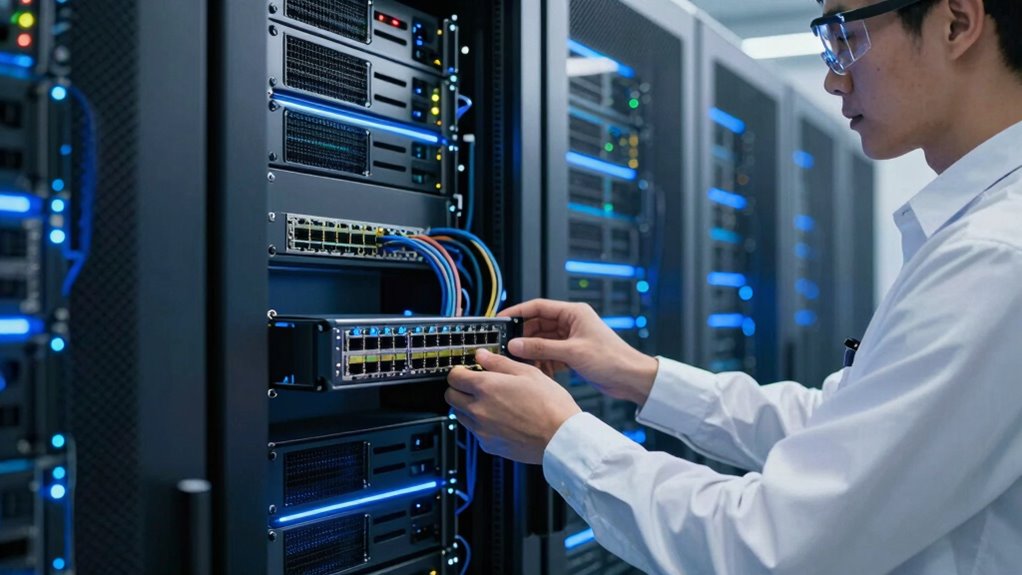
Networking can often seem complex, but understanding zero-copy networking makes it much easier. When you’re dealing with data transfer between applications and hardware, traditional methods involve copying data back and forth between buffers multiple times. This process might sound straightforward, but it creates bottlenecks that slow everything down. Zero-copy networking changes that by minimizing or eliminating these unnecessary copies, allowing data to move directly from one point to another. This not only speeds up data transfer but also reduces CPU load, making your network operations more efficient.
Buffer management plays a critical role here. Instead of juggling multiple buffers and copying data between them, zero-copy techniques allow you to work with a single buffer-managed memory space. You tell the operating system or network hardware where the data resides, and it handles the rest. This approach reduces overhead because your system doesn’t spend time copying data multiple times; it just points to the same memory location. As a result, your applications respond faster, and system resources are freed up for other tasks, which considerably boosts overall data throughput. Additionally, buffer management techniques are essential to ensuring data integrity and avoiding issues like data corruption, especially during high-speed transfers. Efficient memory management is fundamental to implementing zero-copy techniques successfully.
Understanding the underlying hardware capabilities and how they support zero-copy techniques can further optimize performance and efficiency. Imagine you’re streaming high-definition videos, running a real-time trading platform, or managing large data sets. In these scenarios, the speed of data transfer can make or break performance. Zero-copy networking ensures that data flows smoothly and swiftly, minimizing latency and maximizing throughput. More data gets processed in less time, which is essential for applications where milliseconds matter. This is especially true in data centers, cloud services, and high-frequency trading environments, where every millisecond counts.
By reducing the number of memory copies, you also cut down on CPU cycles spent managing data. This reduction means your processors can focus on more important tasks, like processing user requests or running complex algorithms, rather than being bogged down by repetitive data transfers. This efficiency becomes even more critical as networks grow faster and applications demand higher performance. Furthermore, hardware acceleration can significantly enhance zero-copy implementations by offloading tasks from the CPU, leading to even greater efficiency.
Additionally, understanding the role of color accuracy and contrast ratios in projectors can help optimize visual performance for multimedia applications, including high-quality video streaming.
In essence, zero-copy networking simplifies a complex process, making high-speed data transfer more achievable. It leverages smarter buffer management to maximize data throughput and minimize latency, delivering faster, more efficient network performance. Whether you’re handling large files, streaming media, or supporting real-time communications, understanding and implementing zero-copy techniques can give you a substantial advantage in today’s fast-paced digital world.
zero-copy networking hardware support
As an affiliate, we earn on qualifying purchases.
As an affiliate, we earn on qualifying purchases.
Frequently Asked Questions
How Does Zero-Copy Networking Affect System Security?
Zero-copy networking improves system security by reducing data handling steps, which lowers the attack surface. Since data isn’t copied multiple times, there’s less risk of data leaks or corruption, enhancing data privacy. However, it requires careful implementation because vulnerabilities in shared memory or direct access can be exploited. Overall, zero-copy networking can strengthen security, but it demands strict controls to prevent potential threats from bypassing traditional security measures.
Can Zero-Copy Networking Improve Latency in Real-Time Applications?
Yes, zero-copy networking can substantially improve latency in real-time applications. By optimizing buffer management, it reduces the need to copy data between buffers, which cuts down on delays. This streamlining enhances data throughput and decreases latency, allowing your applications to respond faster. As a result, zero-copy networking provides smoother, more responsive performance essential for real-time systems like gaming, video streaming, or financial trading platforms.
What Are the Hardware Requirements for Implementing Zero-Copy Networking?
To implement zero-copy networking, you need hardware that supports advanced memory management and driver optimization. Your network interface card (NIC) should have features like direct memory access (DMA), allowing data to transfer directly between memory and the network without CPU intervention. Additionally, your system’s drivers must be optimized for zero-copy techniques, ensuring efficient data handling and minimizing CPU overhead, which collectively improve network performance and reduce latency.
Is Zero-Copy Networking Suitable for All Types of Network Traffic?
Like a skilled conductor, you realize zero-copy networking isn’t suited for all traffic types. It excels with high-volume, steady data flows, where traffic prioritization is essential, but struggles with packet fragmentation or unpredictable bursts. For time-sensitive or fragmented data, traditional methods may outperform zero-copy. You should evaluate your traffic patterns, considering whether zero-copy’s efficiency outweighs its limitations for your specific network needs.
How Does Zero-Copy Impact Power Consumption in Data Centers?
Zero-copy substantially improves power consumption in data centers by boosting energy efficiency and reducing CPU load. When you implement zero-copy, it minimizes data transfers between memory and network devices, leading to less hardware strain. This hardware optimization means servers use less power, cut down on cooling needs, and run more efficiently. Overall, zero-copy helps data centers operate greener, saving energy and lowering operational costs while maintaining high-speed network performance.
Conclusion
Imagine a world where data moves seamlessly between your applications and networks without unnecessary copying, saving time and resources. Zero-copy networking makes this possible, and some experts believe it could revolutionize how we handle data. While not a silver bullet, its efficiency gains are real and significant. So, the next time you think about network performance, consider whether zero-copy could be the game-changer that takes your system to the next level—because it just might be.
Halloween Picks
halloween
As an affiliate, we earn on qualifying purchases.