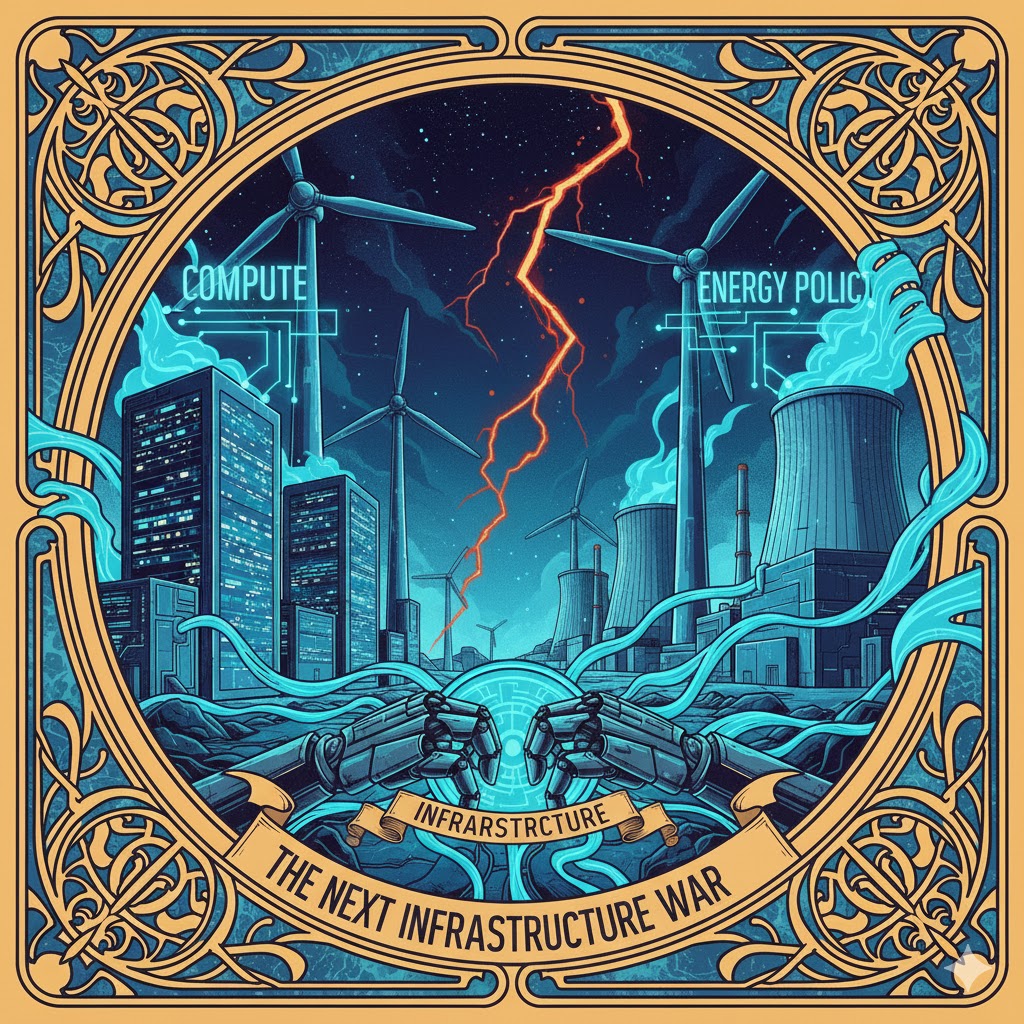

AI is triggering a new industrial collision point: energy economics.
Every exaFLOP of compute demands megawatts of power, pushing nations to rethink grid strategy and data-center zoning.
Listen free for 30 days with Audible
Thousands of audiobooks and originals — cancel anytime.
Start your free trialAs an affiliate, we earn on qualifying purchases.
Recent filings show AI facilities are now consuming 2–3× more energy per rack than traditional cloud deployments. Projects like the 1 GW “AI Campus” concepts in the U.S. and Middle East signal the dawn of energy-grade compute planning.
Policy implication:
Energy regulators — not just technologists — will define AI’s growth ceiling. Tax credits, transmission access, and renewable guarantees will determine which economies can host the next trillion-parameter clusters.
StrongMocha Insight:
In the 2020s, silicon was strategy. In the 2030s, kilowatts will be currency.
high efficiency data center power supplies
As an affiliate, we earn on qualifying purchases.
As an affiliate, we earn on qualifying purchases.
Fall yard work Picks
leaf blowers
As an affiliate, we earn on qualifying purchases.