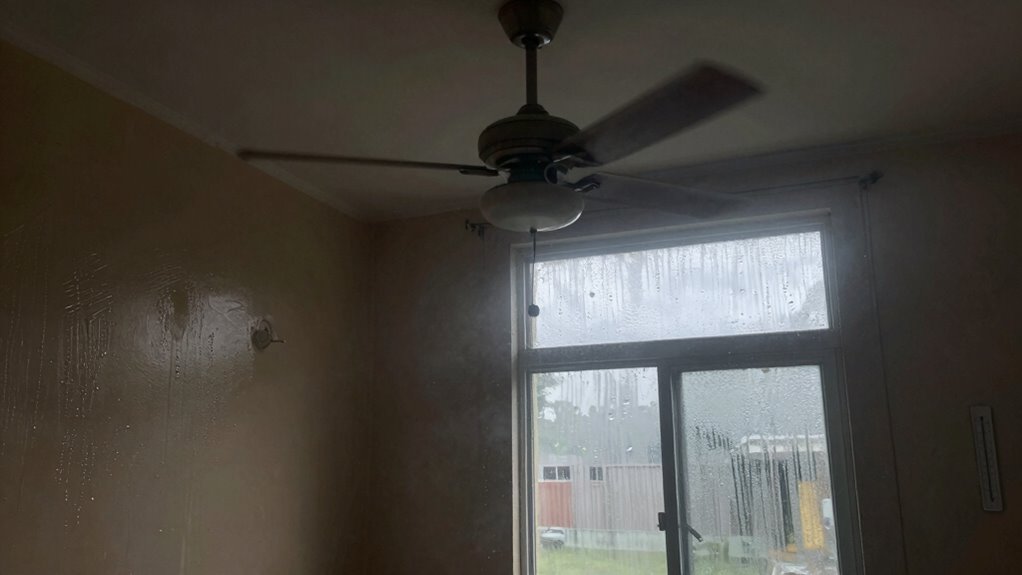

If your home feels uncomfortable despite the actual temperature, humidity is likely the culprit. Too much moisture makes the air heavy and damp, causing spaces to feel warmer and moldy, while too little dries out your skin and makes rooms feel colder. Fluctuations can trick your senses into feeling different temps. Understanding ideal humidity levels and how to manage them can help restore comfort. Keep going to discover how to fix these issues effectively.

Get audio and creator gear delivered free with Prime
- Fast, free delivery on millions of items
- Prime Video, Amazon Music and more included
- Member-only deals all year
Key Takeaways
- High humidity levels can make indoor spaces feel warmer and more uncomfortable than the actual temperature indicates.
- Excess moisture promotes mold, mustiness, and poor air quality, intensifying discomfort despite moderate temperatures.
- Low humidity causes dryness and a cold, clammy feeling, making spaces seem colder than they are.
- Fluctuations in humidity trap heat or create dryness, influencing perceived temperature more than actual measurements.
- Maintaining optimal humidity (40-60%) helps homes feel comfortable and prevents humidity-related discomfort.
As an affiliate, we earn on qualifying purchases.
Why Humidity Levels Make Your Home Feel Uncomfortable
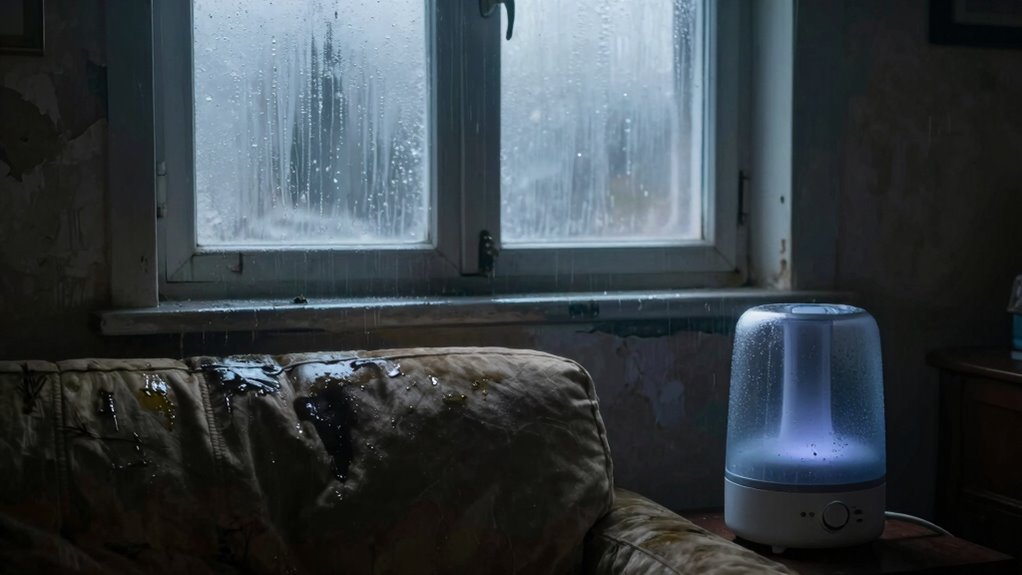
Have you ever wondered why your home feels sticky or stuffy even when the temperature seems comfortable? Many people believe humidity myths, thinking that only hot weather causes discomfort. However, seasonal variations play a big role in how humidity affects your home. During winter, low humidity can make the air feel dry and uncomfortable, while summer often brings high humidity, making the air feel heavy and damp. These fluctuations can trick you into thinking the temperature is the problem, but it’s really the moisture levels. Too much humidity traps heat and makes rooms feel warmer, while too little leaves the air feeling dry and stagnant. Understanding these seasonal changes helps you see that controlling humidity is key to feeling comfortable year-round.
How to Tell If Your Home Has Humidity Problems

Detecting humidity issues in your home is essential for maintaining comfort and indoor air quality. One way to spot problems is by observing your indoor plants—if they’re drooping or developing mold, humidity might be too high or low. Feel your walls and windows; condensation or peeling paint signals excess moisture, while cracks may indicate dryness. Don’t fall for humidity myths, like believing that indoor plants always increase humidity; some plants actually help regulate moisture levels. Use a hygrometer to get accurate readings—ideally between 30-50%. Pay attention to your home’s overall feel: persistent mustiness, mold spots, or a clammy atmosphere often point to humidity issues. Recognizing these signs early helps you address problems before they worsen. Incorporating humidity control and air quality improvements can also help manage indoor moisture effectively. Ensuring proper ventilation and reducing sources of excess moisture can prevent issues related to microplastics in dust and other indoor pollutants. Additionally, selecting reputable Gold IRA providers ensures secure and transparent investments should you consider safeguarding your financial future while maintaining a healthy home environment.
What’s the Ideal Indoor Humidity for Comfort and Health?

Maintaining the right indoor humidity level is essential for both your comfort and health. The ideal range is between 40% and 60%, which helps optimize air quality and prevents issues like mold or dust mites. When humidity is within this range, your home feels more comfortable, and respiratory problems are less likely to worsen. To achieve this, focus on proper ventilation tips such as using exhaust fans in bathrooms and kitchens, and regularly airing out rooms. Humidity that’s too low can dry out your skin and throat, while too high can foster mold growth. Monitoring with a hygrometer helps keep your levels in check. Additionally, understanding the relationship between humidity and health can help you make more informed decisions about maintaining a comfortable indoor environment. Being aware of indoor air quality is crucial in managing humidity levels effectively. Using a free online tool to convert your text into various styles can also help you craft clear and engaging content about these topics. Proper ventilation strategies play a vital role in maintaining the optimal humidity range. For example, poor ventilation can lead to excess moisture buildup, making it harder to sustain the ideal humidity levels. Staying within this range ensures your home remains a healthy, comfortable environment that supports good air quality.
How High Humidity Can Make Your Home Feel Warm and Damp
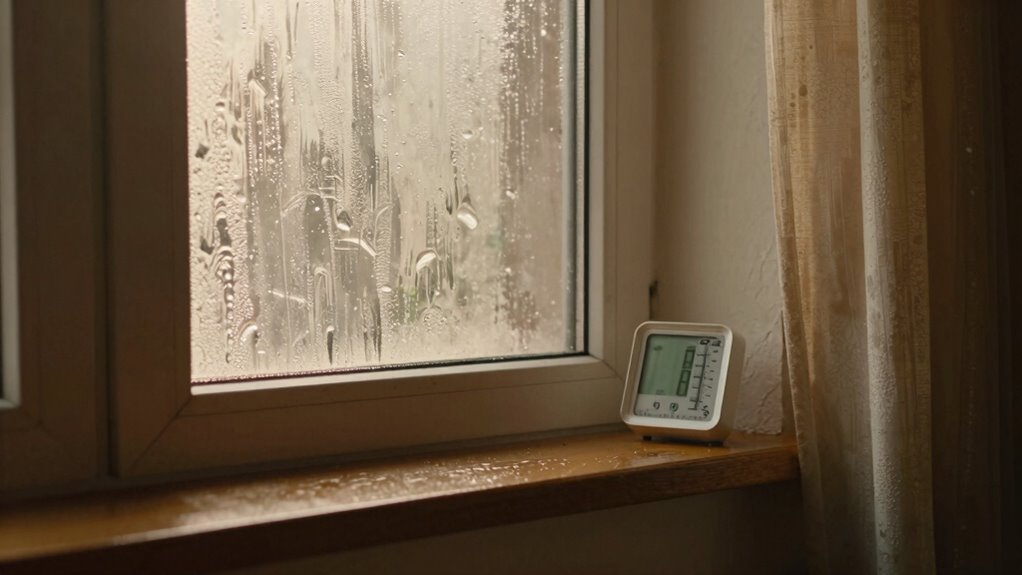
When indoor humidity levels rise above the recommended range, your home can start to feel noticeably warmer and more oppressive. High humidity hampers indoor air quality, making it harder to breathe comfortably. It also creates the perfect environment for mold growth, which can spread quickly and damage your home. As moisture builds up, surfaces may feel damp, and you might notice a musty smell. This sensation of warmth and dampness doesn’t just affect comfort; it can worsen allergies and respiratory issues. To prevent mold and improve indoor air quality, it’s essential to control humidity levels with dehumidifiers or proper ventilation. Proper humidity control helps your home feel cooler, fresher, and healthier overall. Understanding how indoor air quality impacts comfort and health can guide you in choosing the right methods to maintain optimal humidity levels. Additionally, maintaining proper ventilation is crucial for reducing excess moisture and improving overall home environment.
How Low Humidity Can Make Your Space Feel Cold and Dry

Low humidity levels can make your home feel uncomfortably cold and dry, especially during winter months. When the air lacks moisture, your skin and respiratory system feel irritated, and spaces seem colder than they really are. Indoor plants struggle in these conditions, often wilting or yellowing because they can’t access enough humidity. The lack of moisture disrupts natural humidity cycles, leaving you feeling chilled even if the thermostat is set higher. Without proper humidity, heat escapes faster, making your space seem colder. To combat this, adding moisture-rich elements like indoor plants helps stabilize humidity levels, creating a more comfortable environment. Additionally, exploring sustainable textile care methods—such as using fabric treatments that retain moisture—can help improve indoor humidity levels naturally. Maintaining balanced humidity ensures your home feels warmer and less dry, reducing the discomfort caused by low moisture in the air. Recognizing how indoor humidity impacts your comfort can help you take targeted steps to improve your living space.
What Causes Humidity Imbalances in Your Home?
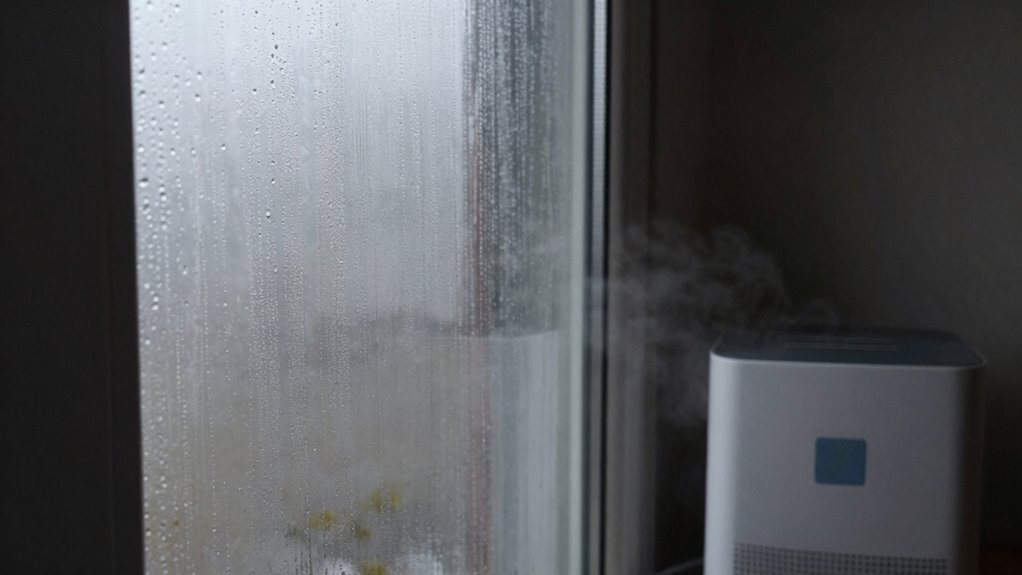
Several factors can disrupt the humidity balance in your home, leading to either overly dry or excessively humid conditions. Poor ventilation is a common culprit, trapping moisture inside and creating a humid environment that promotes indoor mold growth. Conversely, inadequate airflow can cause dry air, making your space feel uncomfortable. Activities like cooking, showering, and laundry increase indoor humidity if not properly ventilated. On the other hand, sealing your home tightly to save energy can also limit air exchange, trapping moisture and fostering mold growth. Temperature fluctuations and leaks also contribute to humidity imbalances. When humidity levels are off, it’s easier for indoor mold to develop, which can worsen air quality and cause health issues. Proper ventilation and moisture control are key to maintaining a comfortable, healthy environment. Additionally, understanding humidity imbalances can help you better address these issues and create a more comfortable living space. Recognizing the importance of air exchange is essential to preventing excess moisture buildup indoors. Maintaining proper ventilation is crucial for balancing indoor humidity levels and ensuring good air quality.
How to Measure and Monitor Indoor Humidity Easily
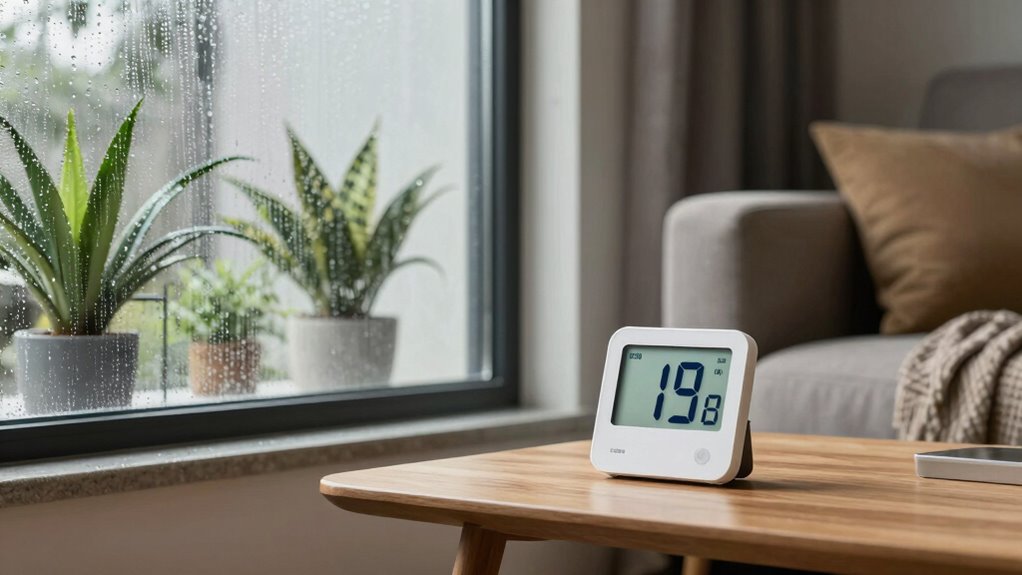
Keeping track of your indoor humidity levels is essential for maintaining a comfortable and healthy home environment, and luckily, it’s easier than you might think. Using smart sensors simplifies monitoring by providing real-time data right on your phone. Position your hygrometer in key spots—near windows, vents, or living areas—to get accurate readings. This practice also encourages awareness of child development and how environmental factors can influence mood and well-being. It helps you identify problem areas before discomfort or damage occurs, especially when considering eco-friendly natural pools and other backyard features that can impact indoor conditions. Being aware of digital safety and trustworthy data sources ensures you’re making informed decisions about your home’s environment. Regularly inspecting your survival gear can help you prepare for unexpected situations where indoor conditions might suddenly change.
Simple Tips to Maintain the Right Humidity Level
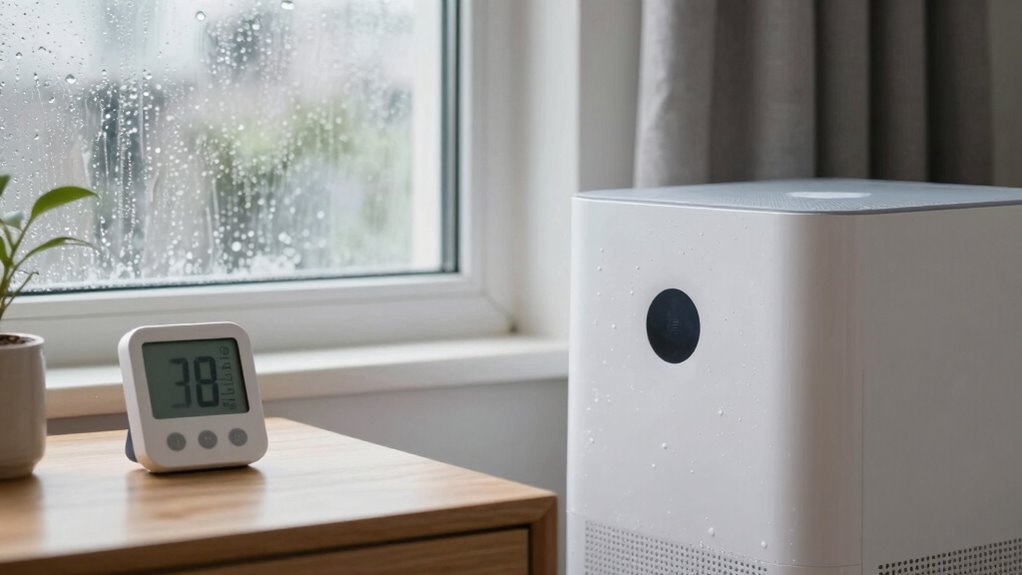
Maintaining the right humidity level in your home doesn’t have to be complicated; simple adjustments can make a big difference. Good air quality depends on proper humidity, so keep levels between 30-50%. Use ventilation strategies like opening windows or exhaust fans to improve airflow and reduce excess moisture. Running exhaust fans in bathrooms and kitchens helps remove humidity from cooking and bathing. Consider using a dehumidifier or humidifier to fine-tune indoor moisture levels. Regularly check your indoor humidity with a hygrometer to stay on track. Proper ventilation also supports the effectiveness of biosensors that can monitor environmental conditions in real time. Ensuring proper ventilation not only stabilizes humidity but also enhances air quality, reducing allergens and mold risk. Incorporating luxury air quality products can also help maintain optimal humidity levels effortlessly. Small, consistent efforts can make your home more comfortable and healthier, especially when managing water damage or preventing mold growth.
When to Call a Professional for Humidity Troubles
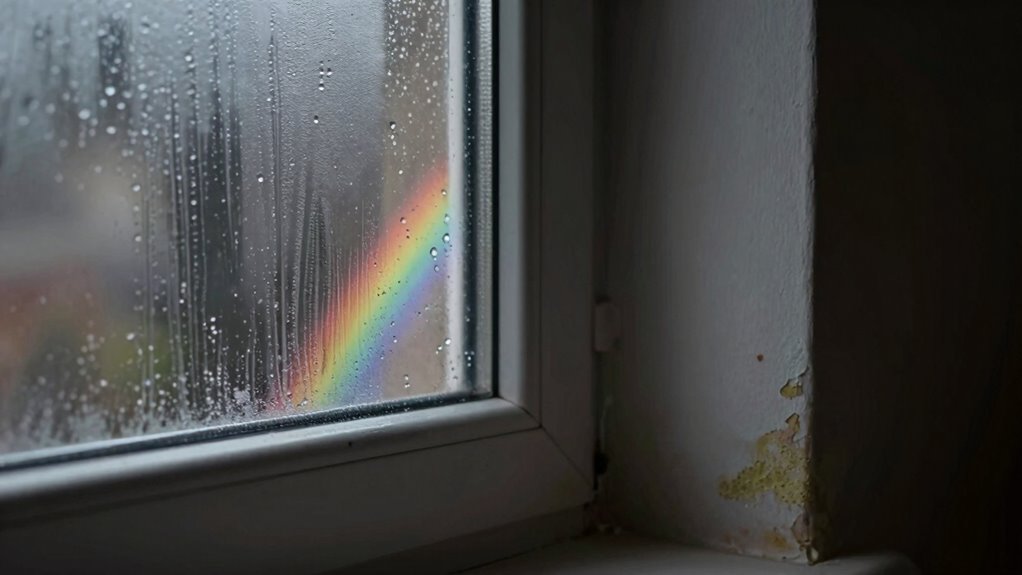
Sometimes, despite your best efforts to control indoor humidity, issues persist or worsen, signaling that it’s time to call in a professional. If your humidity sensors keep giving inconsistent readings or your efforts don’t improve comfort, a professional assessment is necessary. You should seek help when you notice:
- Persistent mold or musty odors that won’t go away
- Excessive condensation on windows or walls
- Unexplained health issues like allergies or respiratory problems
- Humidity levels that refuse to stabilize despite adjustments
A professional can identify underlying problems and recommend effective solutions. They’ll use specialized tools and expertise to diagnose humidity troubles accurately, ensuring your home becomes a healthier, more comfortable environment. Don’t ignore signs—professional intervention could be the key.
Frequently Asked Questions
Can High Humidity Cause Mold Growth in My Home?
Yes, high humidity can cause mold growth in your home. When moisture levels stay elevated, mold spores thrive. To prevent this, you should improve dehumidifier efficiency and use humidity sensor technology to monitor moisture levels accurately. Keeping humidity below 60% discourages mold. Regularly running a dehumidifier with these features helps maintain a healthier environment, reducing mold risk and improving your home’s overall air quality.
How Does Humidity Affect Indoor Air Quality?
Like a silent puppeteer, humidity influences your home’s air quality more than you realize. High humidity can foster mold and dust mites, worsening allergies, while low levels leave the air feeling dry and uncomfortable. Proper ventilation effectiveness helps regulate humidity, ensuring fresh, healthier air. By controlling moisture, you improve indoor air quality, reduce health risks, and create a more comfortable living environment. Don’t let humidity pull the strings—manage it wisely.
Are There Seasonal Changes That Impact Indoor Humidity Levels?
Yes, seasonal fluctuations impact indoor humidity levels. During summer, outdoor humidity rises, making it harder to keep indoor air dry, which can cause discomfort and mold growth. In winter, outdoor humidity drops, often leading to dry indoor air that can irritate your skin and respiratory system. You should adjust your humidifier or dehumidifier accordingly, depending on seasonal changes, to maintain comfortable and healthy indoor humidity levels.
Can Pets Influence Indoor Humidity and Comfort?
Like a modern-day Pandora’s box, pets can influence indoor humidity and comfort. Pet dander adds moisture to the air, subtly shifting the humidity balance, which can make your home feel more uncomfortable. Regular cleaning and proper ventilation help maintain the ideal humidity level, preventing it from becoming too damp or dry. By managing pet-related moisture, you create a more comfortable environment that feels just right.
What Are the Health Risks of Improper Humidity Levels?
Improper humidity levels can pose health risks like respiratory issues, allergies, and mold growth. When air moisture is too high, it creates a humid environment that promotes mold and dust mites, which can worsen asthma and allergies. On the other hand, low humidity causes dry skin, irritation, and respiratory discomfort. Maintaining a proper humidity balance helps protect your health by reducing these risks and ensuring comfortable indoor air.
Conclusion
Maintaining the right humidity level isn’t just about comfort—it’s essential for your health. Did you know that indoor humidity should ideally be between 30-50%? Too high, and you risk mold; too low, and you could experience dry skin and respiratory issues. Regular monitoring and simple adjustments can make a big difference. Stay vigilant, and don’t hesitate to call in a pro if humidity problems persist—your home’s comfort depends on it.
Halloween Picks
halloween
As an affiliate, we earn on qualifying purchases.