High indoor humidity can make your home feel uncomfortable and oppressive, even when the temperature is mild. Excess moisture causes stuffiness, musty odors, and can make the air feel heavier. It also promotes mold, dust mites, and dryness issues if too low. These humidity problems often make you feel worse than the actual temperature outside. Managing humidity levels effectively can improve comfort and health—if you want to learn how to keep your home perfectly balanced, keep exploring.

Get audio and creator gear delivered free with Prime
- Fast, free delivery on millions of items
- Prime Video, Amazon Music and more included
- Member-only deals all year
Key Takeaways
- High indoor humidity can cause discomfort and a feeling of stuffiness, making homes feel warmer or more oppressive than the actual temperature.
- Excess moisture promotes mold, mildew, and musty odors, contributing to a damp, unpleasant atmosphere that worsens perceived temperature.
- Poor ventilation traps humidity indoors, intensifying feelings of stuffiness and making the environment seem hotter than it is.
- Humidity fluctuations can lead to condensation and dampness, which can make spaces feel cooler or clammy, affecting overall comfort.
- Managing indoor humidity levels is essential to improve perceived temperature and overall indoor comfort.
Products Worth Considering

Samsung 27-inch Odyssey OLED G6 QD-OLED QHD Gaming Monitor

LG 34GX90SA-W 34-inch Ultragear WQHD OLED Curved Gaming Monitor

Apple iPad Air (4th Generation, 10.9-inch, Wi-Fi, 256GB) – Space Gray
As an affiliate, we earn on qualifying purchases.
What Is Indoor Humidity and Why Does It Matter?
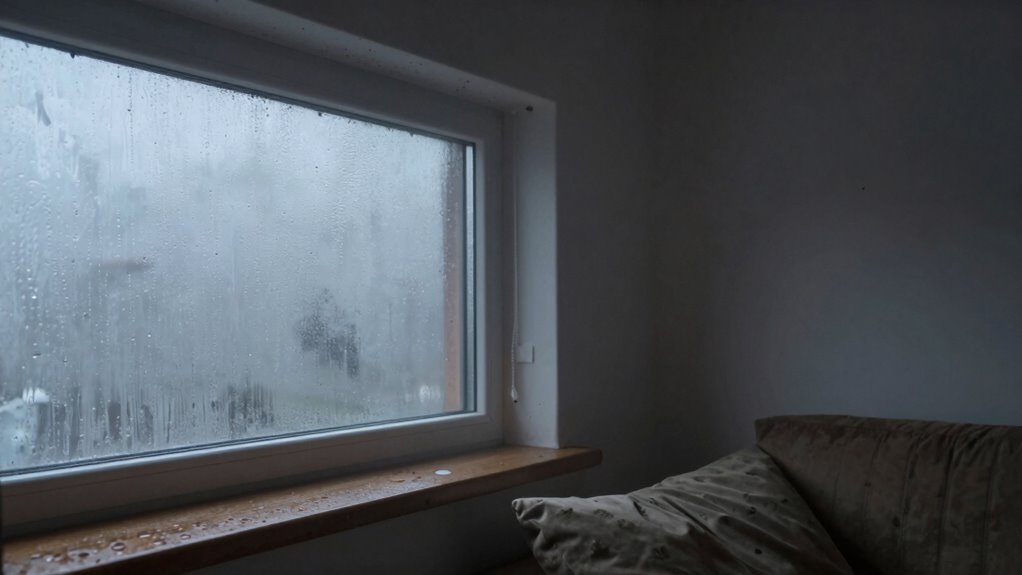
Indoor humidity refers to the amount of moisture in the air inside your home. It directly influences indoor air quality and comfort. When humidity levels are too high or too low, it can cause discomfort, health issues, and damage to your home. Proper humidity control helps maintain a balanced environment, making your indoor air healthier and more comfortable. Too much moisture can lead to mold growth, musty odors, and increased dust mites, while too little moisture can cause dry skin, irritated eyes, and respiratory problems. Understanding what indoor humidity is allows you to take steps to keep it in an ideal range. Maintaining proper humidity levels is essential for preventing issues like mold and dust mites. By managing humidity levels, you create a healthier, more comfortable living space that feels better year-round. Additionally, being aware of indoor air quality can help you identify when humidity levels are out of balance and take appropriate action. Proper humidity management can also improve overall energy efficiency and reduce utility bills. Maintaining optimal humidity may also involve understanding the relationship between air quality and humidity, which influences overall comfort and health.
How to Measure Indoor Humidity Levels at Home
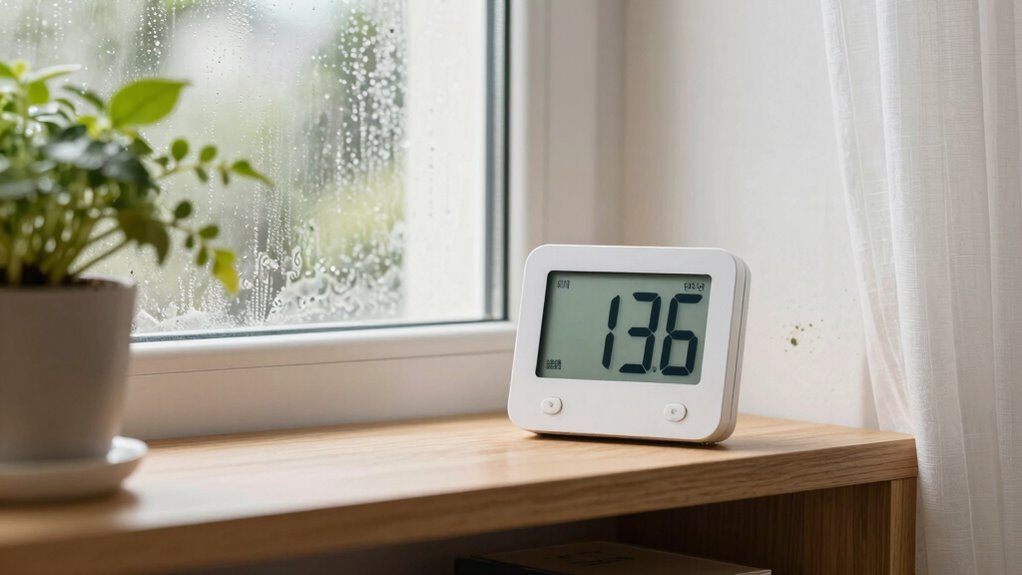
To keep track of your home’s humidity, you’ll need a reliable hygrometer. Choose one that fits your needs, whether digital or analog, for accurate readings. Make a habit of monitoring your humidity levels regularly to maintain a healthy indoor environment. Pet antics can sometimes influence indoor humidity levels, so observing your pets’ behavior can also provide useful insights. Being aware of indoor environmental factors can help you better manage your home’s comfort levels, especially considering how contrast ratio affects the perception of your indoor space. Additionally, incorporating landscaping elements such as indoor plants can naturally help regulate humidity levels inside your home. Understanding the history of indoor climate control can also give you useful tips for maintaining optimal humidity.
Choosing Proper Hygrometers
Choosing the right hygrometer is essential for accurately monitoring your home’s humidity levels. Look for models with smart sensors, which provide precise and quick readings. These sensors detect even slight changes in moisture, giving you reliable data. Consider hygrometers that feature data analysis capabilities, allowing you to track humidity patterns over time. This helps you identify trends and adjust your environment accordingly. Digital hygrometers often include these features, making them more accurate and user-friendly than analog options. Guarantee the device is easy to read and fits your space. Investing in a quality hygrometer with advanced sensors and data analysis functions ensures you get accurate, actionable insights into your indoor humidity. Additionally, choosing a hygrometer with advanced sensor technology can improve the responsiveness and reliability of your readings. Being aware of indoor air quality is also important, as humidity levels directly impact overall comfort and health. Proper humidity control can also help prevent issues like mold growth and infection risks, making your home safer and more comfortable.
Monitoring Regularly
Once you’ve selected a suitable hygrometer, regular monitoring becomes the key to maintaining proper humidity levels. Check your readings daily to catch fluctuations early. This helps prevent common humidity myths, like the idea that indoor plants always thrive in high humidity, which isn’t always true. To visualize the environment, imagine this table:
| Too Dry | Just Right | Too Humid |
|---|---|---|
| Cracked wooden furniture | Comfortable, balanced air | Musty odors, mold |
| Wilting indoor plants | Healthy, lush growth | Condensation on windows |
| Static electricity sparks | No condensation buildup | Excess moisture in air |
Signs of Indoor Humidity Problems You Should Know

Indoor humidity problems often reveal themselves through noticeable signs that you shouldn’t ignore. One common sign is mold or mildew growth, especially on walls, ceilings, or around windows. You might also notice musty odors lingering in your home. Warped or swollen wood furniture and flooring can indicate high humidity, while peeling paint or wallpaper suggests moisture issues. Be cautious of condensation on windows and mirrors, which points to excess moisture in the air. Many people believe humidity myths that low or high levels aren’t problematic, but seasonal variations can cause fluctuations that worsen conditions. If you notice these signs, it’s a clear indicator that your indoor humidity isn’t balanced, and addressing it can improve both comfort and home integrity. Monitoring indoor air quality can help you better understand and manage humidity levels effectively. Additionally, high humidity can contribute to water damage and promote the growth of mold, further harming your home’s structure. Regularly checking humidity levels with a hygrometer can help you maintain optimal indoor conditions. Being aware of humidity fluctuations can help prevent long-term damage and health issues associated with improper moisture levels.
How High Humidity Affects Your Health and Home
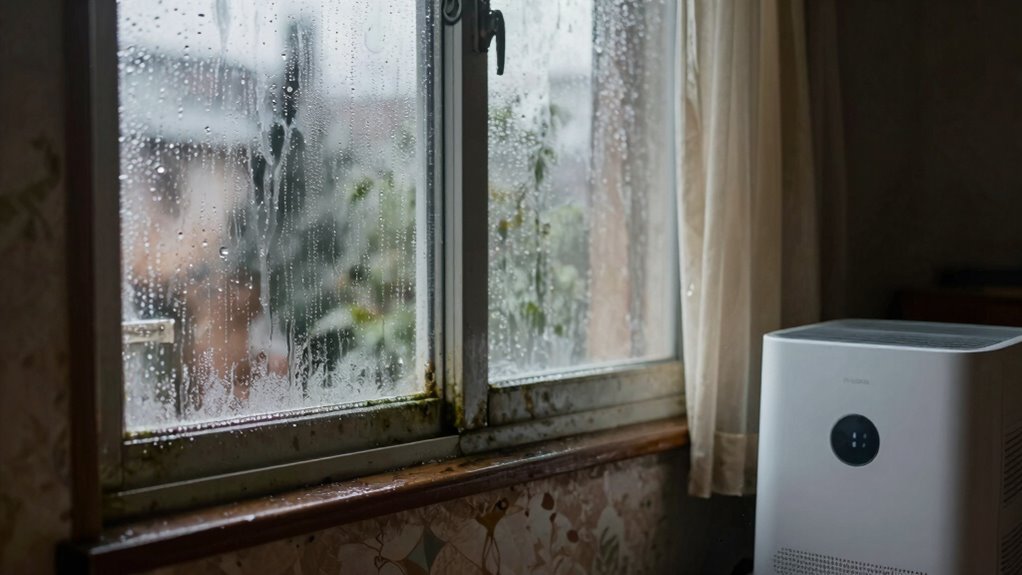
High humidity levels can substantially impact both your health and your home’s condition. Excess moisture creates an ideal environment for mold growth, which makes mold prevention challenging. When humidity is high, your risk of humidity and allergies increases, as mold spores and dust mites thrive in damp spaces. Additionally, high humidity can weaken your home’s structure over time, causing wood to warp and paint to peel. It also promotes musty odors and dampness, making indoor spaces uncomfortable. Proper ventilation and air quality control are essential to managing indoor moisture levels effectively. Maintaining proper ventilation systems can significantly help in reducing indoor moisture and preventing mold growth. To protect yourself and your home, controlling humidity levels is essential. Keeping humidity in check helps prevent mold growth, reduces allergy triggers, and preserves your home’s integrity. Monitoring indoor air quality and using dehumidifiers can be effective strategies to maintain optimal humidity levels. Understanding how humidity levels influence indoor environments can help you make better decisions about ventilation and moisture control. Regularly assessing humidity fluctuations can further assist in maintaining a healthy indoor climate.
Practical Tips to Control Indoor Humidity Effectively
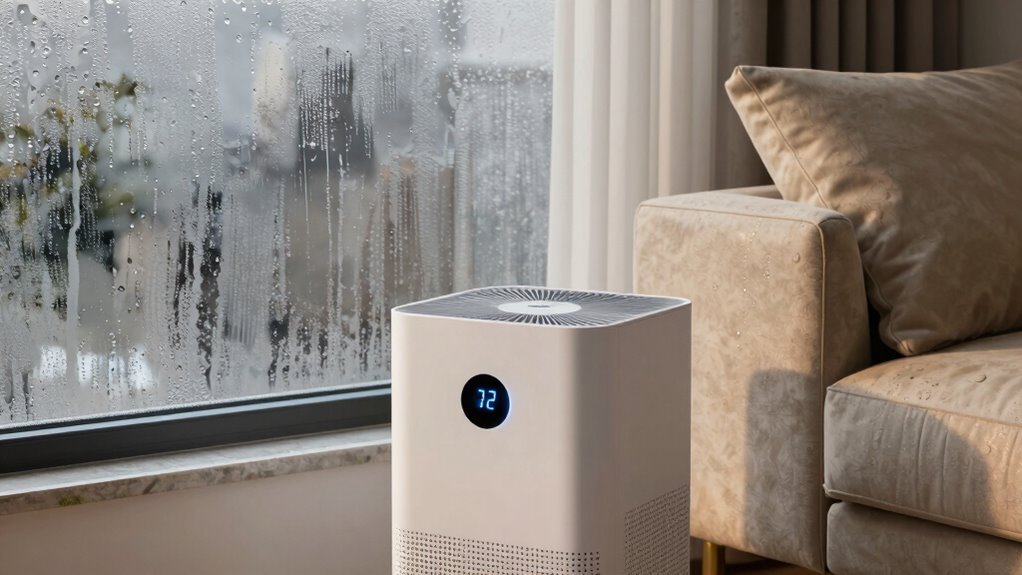
To keep indoor humidity in check, you should use dehumidifiers correctly and keep them maintained. Improving ventilation by opening windows or using exhaust fans helps remove excess moisture. Regularly monitoring your humidity levels guarantees you stay within a healthy range and modify your efforts as needed. Incorporating AI-powered sensors can also provide real-time data to optimize humidity control strategies effectively. Additionally, understanding support breakfast options can promote overall well-being, which is beneficial when managing indoor climate conditions. Being aware of the style of dehumidifiers suitable for your space can further enhance your humidity management efforts. Investing in proper placement of dehumidifiers ensures optimal performance and energy efficiency.
Use Dehumidifiers Properly
Using a dehumidifier effectively is key to maintaining healthy indoor humidity levels. To achieve ideal humidity control, set your dehumidifier to around 50% humidity. Keep doors and windows closed while it runs to prevent outside moisture from entering. Regular dehumidifier maintenance is essential; clean the filters monthly and check for any leaks or malfunctions. Empty the water tank frequently or connect it to a drain if possible. Avoid overusing the device, as too low humidity can cause dryness and discomfort. Monitor the humidity levels with a hygrometer to ensure you’re within the perfect range. Proper use and maintenance of your dehumidifier help reduce excess moisture, prevent mold growth, and create a more comfortable living environment.
Enhance Ventilation Strategies
Properly ventilating your home can markedly reduce indoor humidity levels. To maximize ventilation efficiency, focus on optimizing airflow throughout your space. Use exhaust fans in bathrooms and kitchens to vent moist air outside. Open windows when weather permits to promote cross-ventilation, reducing moisture buildup. Consider installing vents or airflow systems that encourage consistent, balanced air exchange. Here’s a quick comparison:
| Strategy | Benefit |
|---|---|
| Exhaust fans | Remove moist air at source |
| Cross-ventilation | Enhance airflow and humidity removal |
| Ventilation systems | Maintain steady indoor air quality |
Monitor Humidity Levels Regularly
Regularly monitoring your indoor humidity levels is essential for maintaining a comfortable and healthy home environment. Many humidity myths suggest that opening windows always reduces moisture, but the truth depends on outdoor conditions. By checking humidity levels with a hygrometer, you can identify moisture sources like leaks, damp basements, or excessive cooking. This helps you take targeted action, whether running a dehumidifier or improving insulation. Maintaining track prevents humidity from fluctuating too high or low, which can cause mold or dryness. Consistent monitoring makes it easier to adjust ventilation and heating practices accordingly. Don’t rely on guesswork—accurate measurements ensure you control indoor humidity effectively and improve overall comfort and air quality.
Choosing the Best Humidifier or Dehumidifier for Your Home
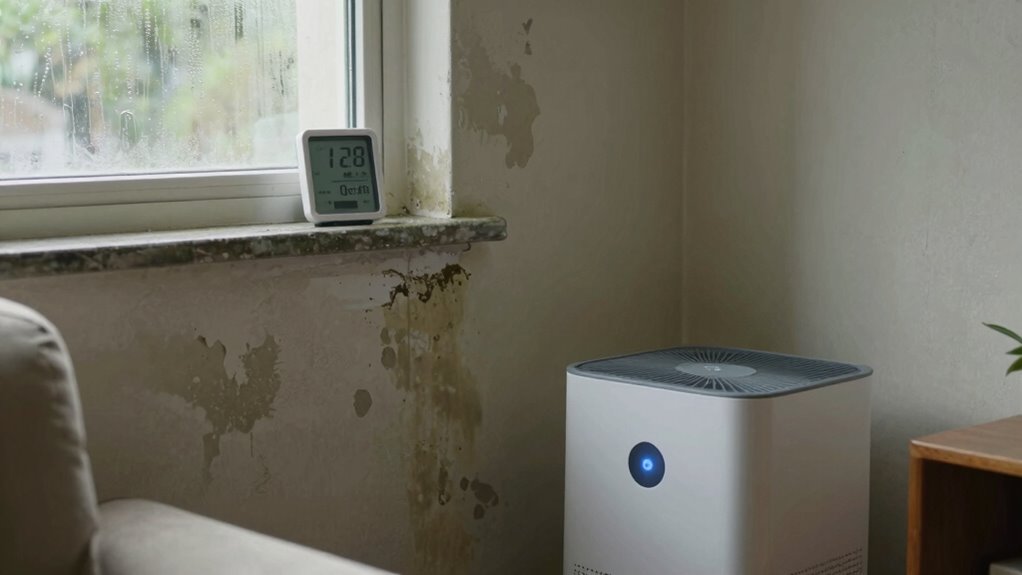
Choosing the right humidifier or dehumidifier for your home depends on understanding your specific needs and the current humidity levels. If your air is too dry, a humidifier offers benefits like easing respiratory issues and preventing dry skin. Look for models with adjustable settings and easy-to-clean components for better humidifier benefits. Conversely, if your space feels damp or mold-prone, a dehumidifier can help control moisture. Keep in mind that dehumidifier maintenance is essential for peak performance; regularly emptying the water tank and cleaning filters prevents mold and bacteria buildup. Selecting the right device means matching it to your environment and maintaining it properly, ensuring consistent comfort and healthier indoor air quality.
Common Mistakes That Worsen Humidity Issues
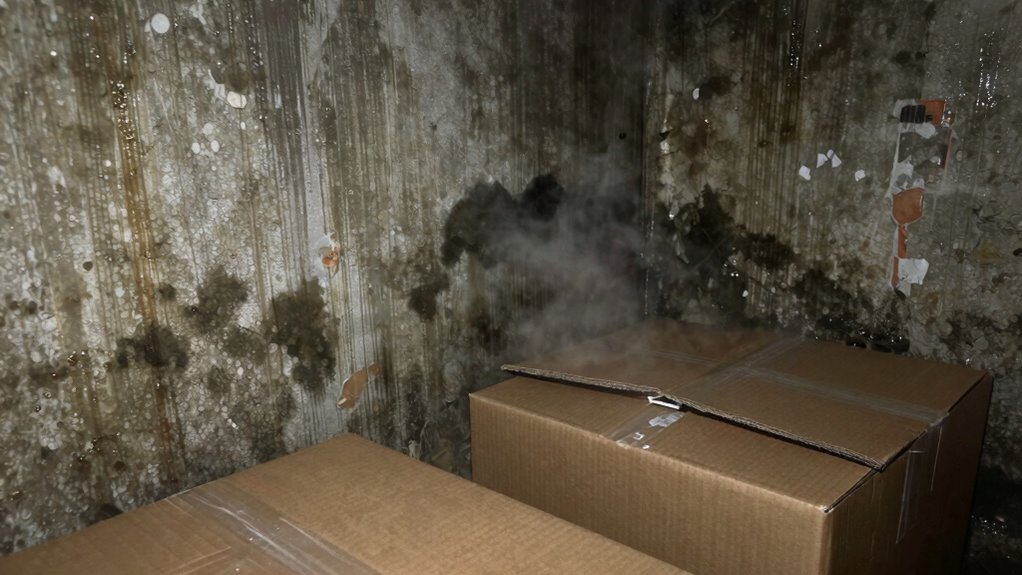
Many common mistakes can considerably worsen humidity problems in your home, making it harder to achieve a comfortable and healthy environment. One mistake is believing humidity myths, like thinking that higher humidity always causes mold. In reality, seasonal variations can change your ideal humidity levels; what’s right in summer might be too high in winter. Another mistake is neglecting ventilation, which traps moisture and promotes mold growth. Additionally, using the wrong settings on humidifiers or dehumidifiers can exacerbate issues rather than solve them. To clarify, here’s a quick comparison:
| Mistake | Consequence | Solution |
|---|---|---|
| Ignoring seasonal variations | Incorrect humidity levels | Adjust devices seasonally |
| Believing humidity myths | Misguided interventions | Educate yourself on proper levels |
| Poor ventilation | Excess moisture buildup | Improve airflow |
When to Seek Professional Help for Humidity Troubles

Even with proper adjustments and awareness of common mistakes, some humidity issues can be stubborn or indicative of underlying problems. If your indoor plants are struggling despite your efforts, or if you notice persistent mold, musty odors, or peeling paint, it’s time to seek professional help. Don’t rely solely on humidity myths, like overwatering plants to control moisture, which can make things worse. A professional can assess your home’s ventilation, insulation, and moisture sources to identify hidden issues. If you’ve tried dehumidifiers, air circulation improvements, and proper maintenance without success, expert advice is essential. Addressing serious humidity problems early prevents long-term damage, mold growth, and health risks, ensuring your home becomes a comfortable, healthy space for everyone.
Conclusion: Creating a Comfortable, Healthy Indoor Environment
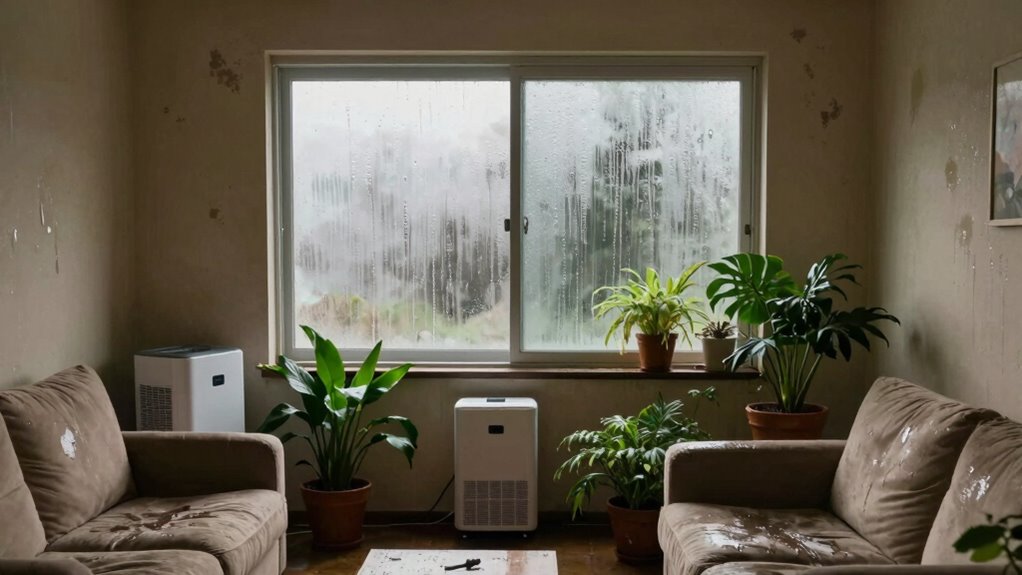
To create a comfortable, healthy indoor environment, it’s essential to maintain proper humidity levels consistently. Humidity fluctuations can lead to discomfort, allergies, and mold growth, which threaten your home’s health and your well-being. Use a hygrometer to monitor moisture levels and adjust with humidifiers or dehumidifiers as needed. Stable humidity helps prevent mold, which thrives in damp conditions, and reduces the risk of musty odors and respiratory issues. Regular ventilation and fixing leaks also play crucial roles in mold prevention. By staying vigilant about humidity control, you’ll create a space that feels better, smells fresher, and is healthier for everyone. Consistent moisture management is key to avoiding the negative effects of humidity fluctuations and ensuring long-term comfort.
Frequently Asked Questions
Can Humidity Levels Fluctuate Throughout the Day Naturally?
Yes, humidity levels can fluctuate naturally throughout the day. Humidity fluctuations happen due to various factors like temperature changes, weather patterns, and indoor activities. As temperatures rise or fall, the air’s capacity to hold moisture shifts, causing natural variations. You might notice higher humidity in the evening and lower levels in the morning, reflecting these daily patterns. Understanding these natural variations helps you manage comfort indoors better.
How Does Indoor Humidity Impact Energy Efficiency?
Indoor humidity directly impacts your home’s energy efficiency. Proper moisture control helps your heating and cooling systems work less, saving energy. Don’t fall for humidity myths that suggest high humidity is harmless; excessive moisture strains your HVAC, increasing costs. By maintaining ideal humidity levels, you improve comfort and reduce energy bills. Good moisture control keeps your home more efficient, making sure you stay comfortable without wasting energy on unnecessary heating or cooling.
Are There Specific Rooms More Prone to Humidity Issues?
Think of your home as a living organism, with some rooms acting like damp, overgrown forests. Bathrooms and kitchens are especially prone to humidity issues because moisture escapes easily during showers and cooking. Installing humidity sensors helps you detect trouble spots, while ventilation systems serve as the lungs, breathing fresh air in and moisture out. Prioritizing these areas keeps your entire home balanced and comfortable.
What Are Long-Term Health Risks of Poor Indoor Humidity Control?
Poor indoor humidity control can lead to long-term health risks like respiratory issues, allergies, and asthma. When humidity is too high, mold growth worsens, harming your air quality and increasing allergy symptoms. Conversely, low humidity can cause dry skin and irritation. Maintaining balanced humidity levels helps prevent mold, improves air quality, and reduces health risks, ensuring a healthier, more comfortable living environment over time.
How Do Climate and Seasonal Changes Influence Indoor Humidity Management?
Climate and seasonal changes heavily influence your indoor humidity management. During seasonal moisture fluctuations, you need to adapt your approach—using humidifiers in winter when air is dry and dehumidifiers in summer when it’s humid. Climate adaptation means adjusting your home environment to maintain ideal humidity levels year-round, preventing discomfort and health issues. Being proactive ensures your indoor air stays comfortable, regardless of outside weather swings.
Conclusion
So, next time your home feels like a sauna or a swamp, remember—it’s probably your humidity playing tricks on you. Don’t let moisture monsters or dry air turn your sanctuary into a stress factory. Take control, measure, adjust, and maybe call in a pro if things get truly wild. Because, honestly, who needs a tropical rainforest or a desert in their living room? Keep it comfy, keep it sane—your home’s humidity should work for you, not against you.