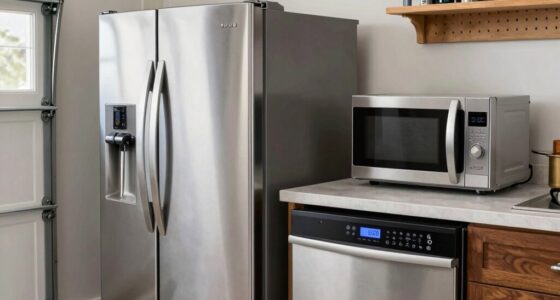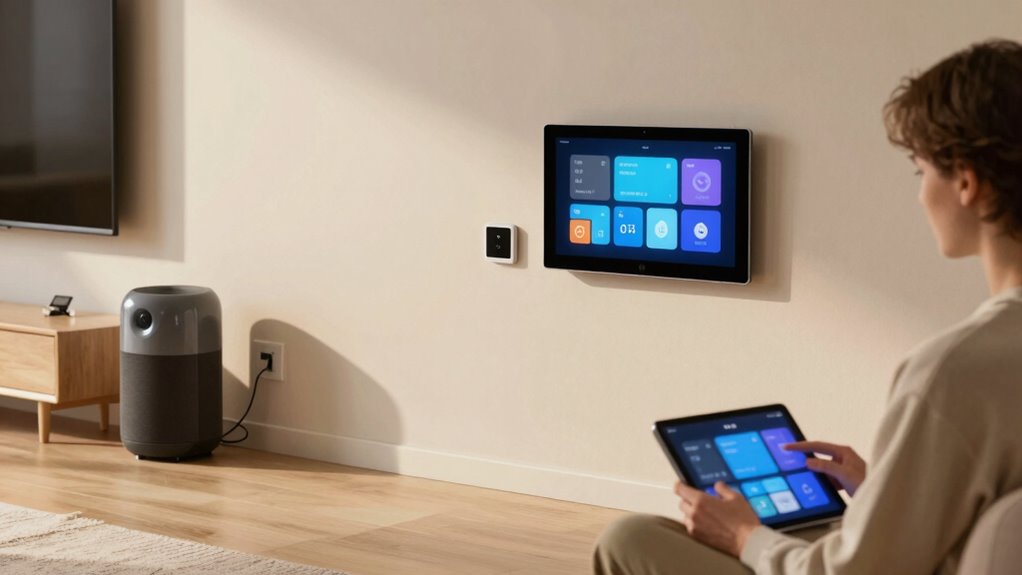

To make your smart home more reliable and less annoying, start by ensuring all your devices are compatible with your chosen voice assistant and follow setup instructions carefully. Keep your firmware up to date and use a high-quality router or mesh network to maintain a strong, stable connection. Simplify your setup by reducing unnecessary devices and creating routines for automation. If issues linger, troubleshooting basics like restarting devices or seeking support can help. Explore more tips to transform your smart home into a hassle-free space.

Get audio and creator gear delivered free with Prime
- Fast, free delivery on millions of items
- Prime Video, Amazon Music and more included
- Member-only deals all year
Key Takeaways
- Ensure all devices are compatible with your chosen voice assistant to prevent communication issues.
- Regularly update firmware and follow setup instructions to maintain device reliability.
- Use a strong, stable Wi-Fi network, possibly with a mesh system, to avoid disconnections.
- Limit the number of connected devices and remove outdated gadgets to reduce network congestion.
- Troubleshoot promptly by restarting devices and consulting support resources when problems arise.
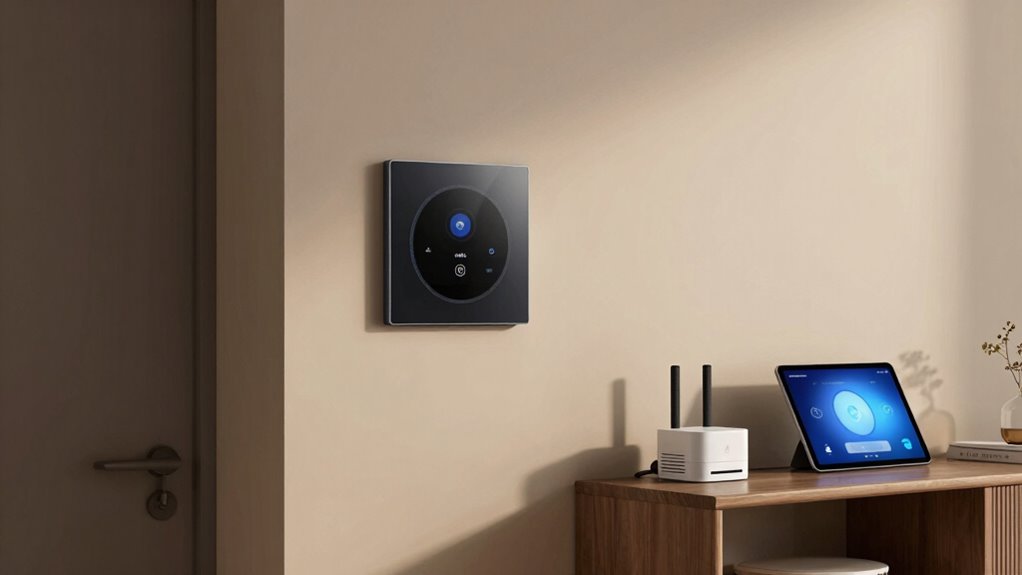
Smart homes promise convenience, but they can quickly become frustrating when devices glitch or fail to communicate. When you rely on voice control to manage your smart devices, it’s especially annoying if your commands aren’t recognized or if different gadgets respond unpredictably. To keep frustration at bay, focus on guaranteeing your devices are compatible with your chosen voice assistant, like Alexa, Google Assistant, or Siri. Device compatibility is vital because if your smart home gadgets aren’t designed to work seamlessly with your voice control system, you’ll find yourself repeating commands or manually troubleshooting issues. Before buying new devices, research their compatibility with your existing ecosystem. Stick to brands and products that explicitly support your preferred voice platform to avoid compatibility headaches later on.
Ensure device compatibility with your voice assistant for a seamless, frustration-free smart home experience.
Once you’ve assembled a compatible lineup, set up your devices carefully. Follow manufacturer instructions precisely, and update firmware regularly. Firmware updates often fix bugs that cause devices to glitch or disconnect. When your smart devices are up to date, they’re more dependable and respond more accurately to voice commands. Additionally, keep your Wi-Fi network strong and stable. Smart devices depend heavily on a reliable internet connection, and a weak or congested network can cause devices to disconnect or respond slowly. Use a high-quality router, place it optimally, and consider a mesh network if you have a larger home to guarantee consistent coverage.
Another way to improve reliability is to simplify your smart home setup. Avoid overcrowding your network with too many devices, which can cause congestion and slow response times. Instead, prioritize essential devices and periodically review your setup to remove or replace outdated or non-functional gadgets. When adding new devices, double-check that they are compatible with your existing system to prevent future issues. Also, consider creating routines or scenes that automate multiple actions with a single command—this reduces the chances of miscommunication, especially when devices are supposed to work together.
Finally, maintain a troubleshooting mindset. When something doesn’t work, don’t immediately assume a device is broken; often, a simple restart or re-pairing can resolve the issue. Keep a list of known compatibility issues and solutions handy, and don’t hesitate to consult online forums or customer support. By focusing on device compatibility, maintaining your network, and keeping your setup streamlined, you’ll find your smart home becomes more reliable and less frustrating, making your everyday life smoother and more enjoyable.
smart home compatible voice assistant devices
As an affiliate, we earn on qualifying purchases.
As an affiliate, we earn on qualifying purchases.
Frequently Asked Questions
How Can I Secure My Smart Home From Hackers?
To secure your smart home from hackers, you should prioritize strong user authentication, like two-factor authentication, to keep unauthorized users out. Enable encryption protocols on all devices and networks to protect your data from interception. Regularly update your firmware and software to fix security vulnerabilities. Also, change default passwords and use unique, complex ones. By implementing these measures, you make it much harder for hackers to access your smart home systems.
What Is the Best Way to Troubleshoot Connectivity Issues?
Imagine your smart lights flickering during a movie—frustrating, right? To troubleshoot connectivity issues, start by checking for Wi-Fi interference from other devices or thick walls blocking signals. Make sure your smart devices are compatible with your network. Moving your router closer or changing Wi-Fi channels can improve performance. Restart devices and update firmware regularly. This proactive approach keeps your smart home running smoothly and avoids those annoying disconnections.
How Do I Update My Smart Home Devices Safely?
To update your smart home devices safely, start by checking for firmware updates through your device’s app or manufacturer’s website. Make certain your devices are compatible with the latest firmware, avoiding updates that could cause issues. Connect your device to a stable Wi-Fi network, follow the update instructions carefully, and don’t interrupt the process. This approach helps improve performance, security, and reliability without risking compatibility problems.
Can I Integrate Third-Party Devices Easily?
Yes, you can integrate third-party devices easily if they offer compatible protocols like Zigbee or Z-Wave. Check for third-party compatibility with your smart home hub or system before purchasing. Most platforms support device integration through apps or dedicated settings, making setup straightforward. Just make certain the devices you select are compatible with your existing smart home ecosystem, and follow instructions to connect them seamlessly for a more integrated, reliable experience.
How Do I Manage Smart Home Device Privacy Settings?
You can manage your smart home device privacy settings by accessing the device or app’s privacy controls. Turn off features you don’t need, like voice recording or location sharing. Confirm data encryption is enabled to protect your information. Regularly review privacy settings and firmware updates to maintain security. By actively controlling these options, you reduce risks and keep your smart home more private and secure.
Conclusion
To keep your smart home from becoming a headache, stay proactive with updates and troubleshoot issues early. Set clear boundaries for device use and avoid overloading your system. Remember, it’s better to fix a small problem now than face a big headache later. Keep things simple and stay patient—your smart home should serve you, not stress you out. With a little effort, you’ll turn your tech into a trusted ally, not an endless source of frustration.
Columbus Day / Indigenous Peoples' Day Picks
long weekend sales
As an affiliate, we earn on qualifying purchases.