

The secret to better vocal clarity isn’t more EQ; it’s about boosting your natural resonance, focusing on microphone placement, and creating a good acoustic environment. By resonating in your chest and mouth areas, you add fullness and presence to your voice. Proper microphone positioning prevents unwanted noise and distortion. A quiet, well-treated space helps your voice come through clear and natural. Keep exploring these techniques, and you’ll discover how to make your voice sound its best without over-editing.

Get audio and creator gear delivered free with Prime
- Fast, free delivery on millions of items
- Prime Video, Amazon Music and more included
- Member-only deals all year
Key Takeaways
- Focus on developing natural vocal resonance through chest and mouth exercises.
- Proper microphone placement captures clearer sound without relying on EQ adjustments.
- Optimize your recording environment to reduce background noise and echo for better voice capture.
- Enhance vocal presence by practicing resonance techniques, making your voice naturally clearer.
- Over-relying on EQ can mask underlying issues; prioritize resonance and technique for true clarity.
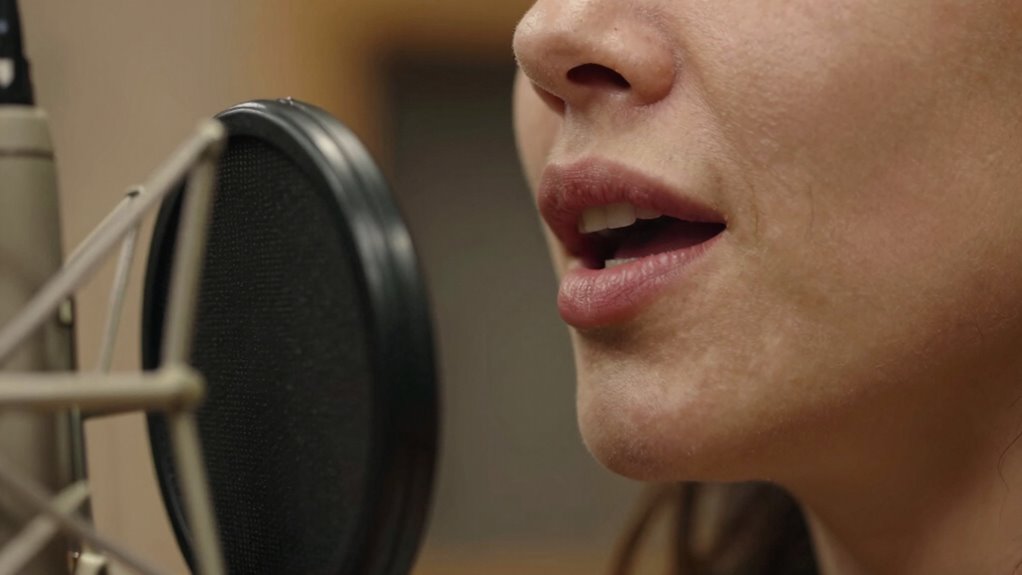
Have you ever struggled to make your voice clear and understandable? If so, you’re not alone. Many people assume that boosting their EQ is the answer, but the real secret to better vocal clarity often lies elsewhere. Instead of focusing solely on sound adjustments, pay attention to your vocal resonance and how you position your microphone. These factors can make a significant difference in how your voice comes across, and they’re often overlooked.
Vocal resonance plays an essential role in how clear and natural your voice sounds. When you speak or sing, your voice isn’t just coming from your throat—it’s shaped by your chest, mouth, and nasal passages. If you’re not aware of how to harness this resonance, your voice may sound dull, muffled, or strained. To improve clarity, focus on resonating more in your chest and mouth, which adds richness and projection. Practicing voice exercises that encourage you to feel vibrations in these areas can help you develop a fuller, more resonant sound. This naturally enhances clarity because your voice is more present and easier for listeners to understand without relying heavily on post-production tweaks. Understanding the importance of vocal resonance can help you make more targeted improvements. Additionally, exploring acoustic environment considerations, such as room size and soundproofing, can further optimize how well your voice is captured and heard.
Enhance your voice by resonating in your chest and mouth for richer, clearer sound naturally.
Another key element often overlooked is microphone positioning. Even the clearest voice can sound muddy or distant if you don’t position your microphone correctly. Keep the microphone close enough to capture your voice’s nuances but not so close that it picks up unnecessary plosives or breaths. Typically, placing the mic about an inch or two from your mouth, slightly off-center, allows your vocal resonance to shine through without distortion. Adjusting the angle and distance can help you find the sweet spot where your voice sounds most natural and intelligible. Proper microphone placement ensures that your vocal resonance is captured accurately, reducing the need for excessive equalization or editing. Additionally, understanding and optimizing your sound environment can significantly improve your vocal clarity by reducing background noise and echo, allowing your voice to stand out more distinctly. Focusing on these aspects—enhancing your vocal resonance, perfecting your microphone positioning, and creating a suitable environment—can dramatically improve your vocal clarity. When your voice resonates naturally and the microphone captures it properly, your speech becomes more understandable and engaging. It’s a subtle art, but once you master it, you’ll notice a marked difference in how your voice projects and communicates. Remember, the goal isn’t to artificially alter your sound but to bring out what’s already there, making your voice as clear and compelling as possible.
Products Worth Considering

Jackery Explorer 2000 v2 Portable Power Station with Two 200W Solar Panels

Amazon Kindle Scribe Colorsoft 64GB (1st Generation)

Apple iPad Air 13-inch (M4), 128GB, Wi-Fi 7, Space Gray
As an affiliate, we earn on qualifying purchases.
Frequently Asked Questions
How Does Microphone Choice Affect Vocal Clarity?
Your microphone choice directly impacts vocal clarity through sensitivity and polar pattern selection. A microphone with high sensitivity captures more detail, but can also pick up background noise. Choosing the right polar pattern, like cardioid, helps focus on your voice and reduces unwanted sounds. By selecting a microphone suited to your environment and voice, you’ll achieve clearer, more focused vocals, making your performances sound professional and polished.
What Role Does Vocal Technique Play in Clarity?
Vocal technique acts like a finely tuned engine, propelling your voice with clarity. You shape your sound through vocal resonance, ensuring your voice projects with warmth and fullness, and by mastering breath control, you keep your tone steady and confident. These elements work together to clear the fog from your voice, making every word crisp and understandable. Focus on refining your technique, and your vocal clarity will shine brighter than ever.
Can Room Acoustics Improve Vocal Sound Quality?
Room acoustics can definitely improve your vocal sound quality. By managing room resonance, you reduce unwanted echoes that muddle your voice. Sound absorption materials, like acoustic panels or curtains, help dampen excessive reverberation, making your vocals clearer and more focused. Adjusting your space to balance resonance and absorption creates an ideal environment, ensuring your voice sounds professional and easy to understand without relying solely on EQ tweaks.
How Important Is Proper Vocal Hydration?
Forget hydration myths—proper water intake is essential for your vocal health. You might think sipping tea or juice counts, but plain water keeps your vocal cords lubricated and flexible. Without it, your voice could sound hoarse, strained, or foggy, ruining your performance. So, don’t fall for hydration myths; drink enough water daily, and give your voice the hydration it truly needs to stay clear and strong.
What Are Common Mistakes That Hinder Vocal Clarity?
You often hinder your vocal clarity by neglecting intonation consistency and breath support. When your pitch wavers or you run out of breath, your voice sounds uncertain and muddled. To improve, focus on maintaining steady intonation and practicing proper breath support techniques. These habits help your voice stay clear, confident, and resonant, ensuring your message comes through loud and clear without relying solely on EQ adjustments.
Conclusion
Remember, achieving crystal-clear vocals isn’t about turning up the EQ; it’s like tuning a delicate instrument to perfection. Focus on the natural beauty of your voice, removing the fog rather than adding more brightness. When you clear the clutter, your voice can soar like a bird breaking through the clouds, reaching new heights with effortless grace. Trust in the process, and watch your clarity shine brighter than ever, illuminating your music with pure, unfiltered truth.